Curiosity, with all its quills showing.
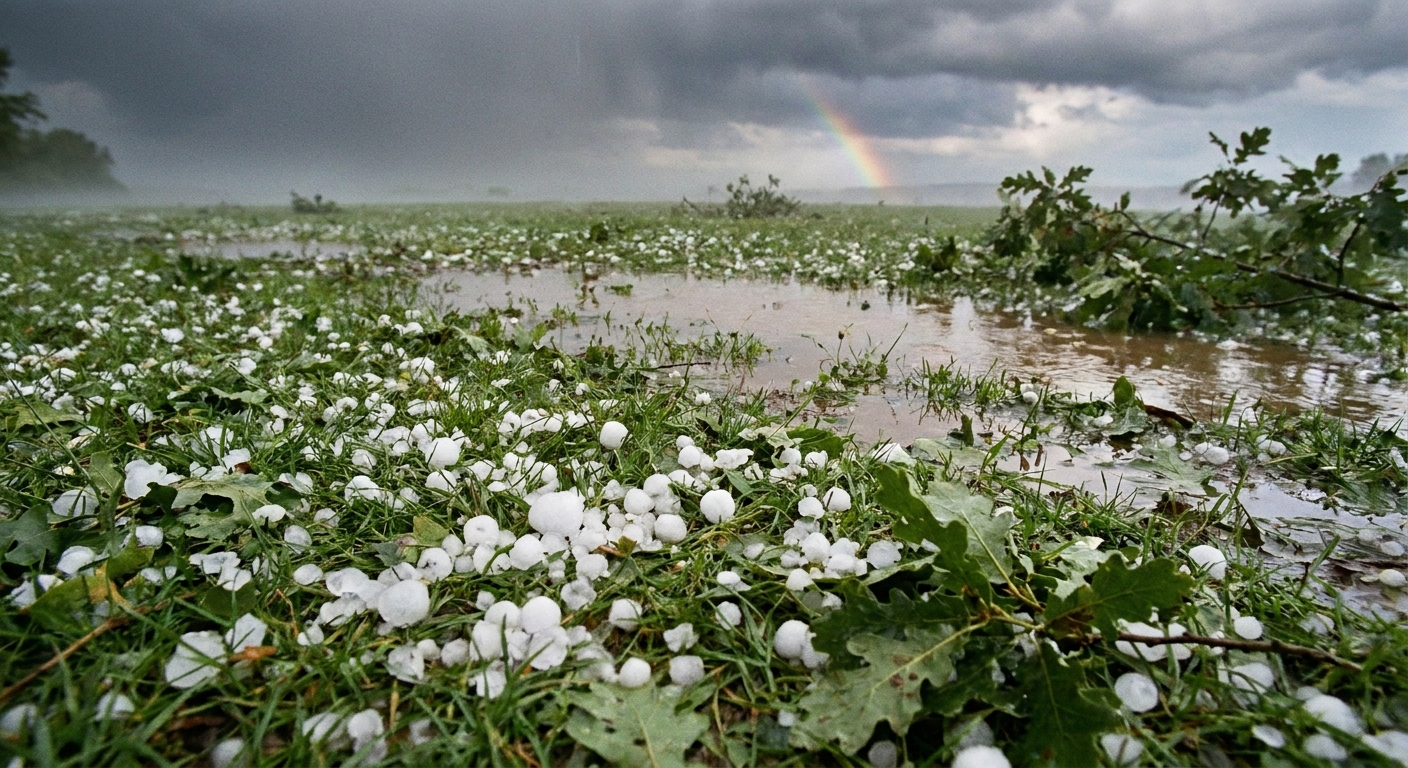
Hail feels like a logic puzzle when it arrives on a day that was hot enough for short sleeves. How can ice fall out of a sky that just a moment ago seemed dedicated to sunshine?
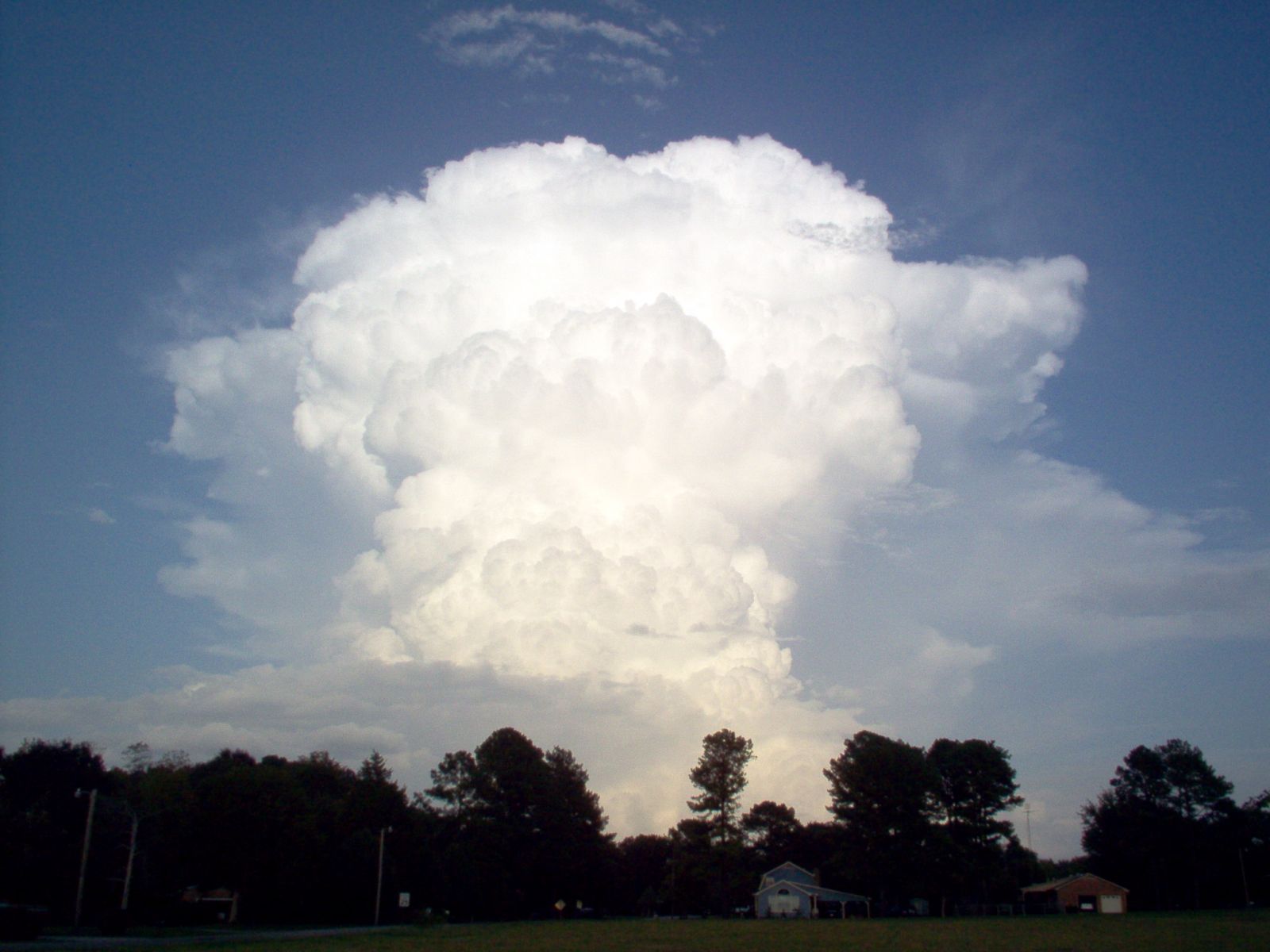
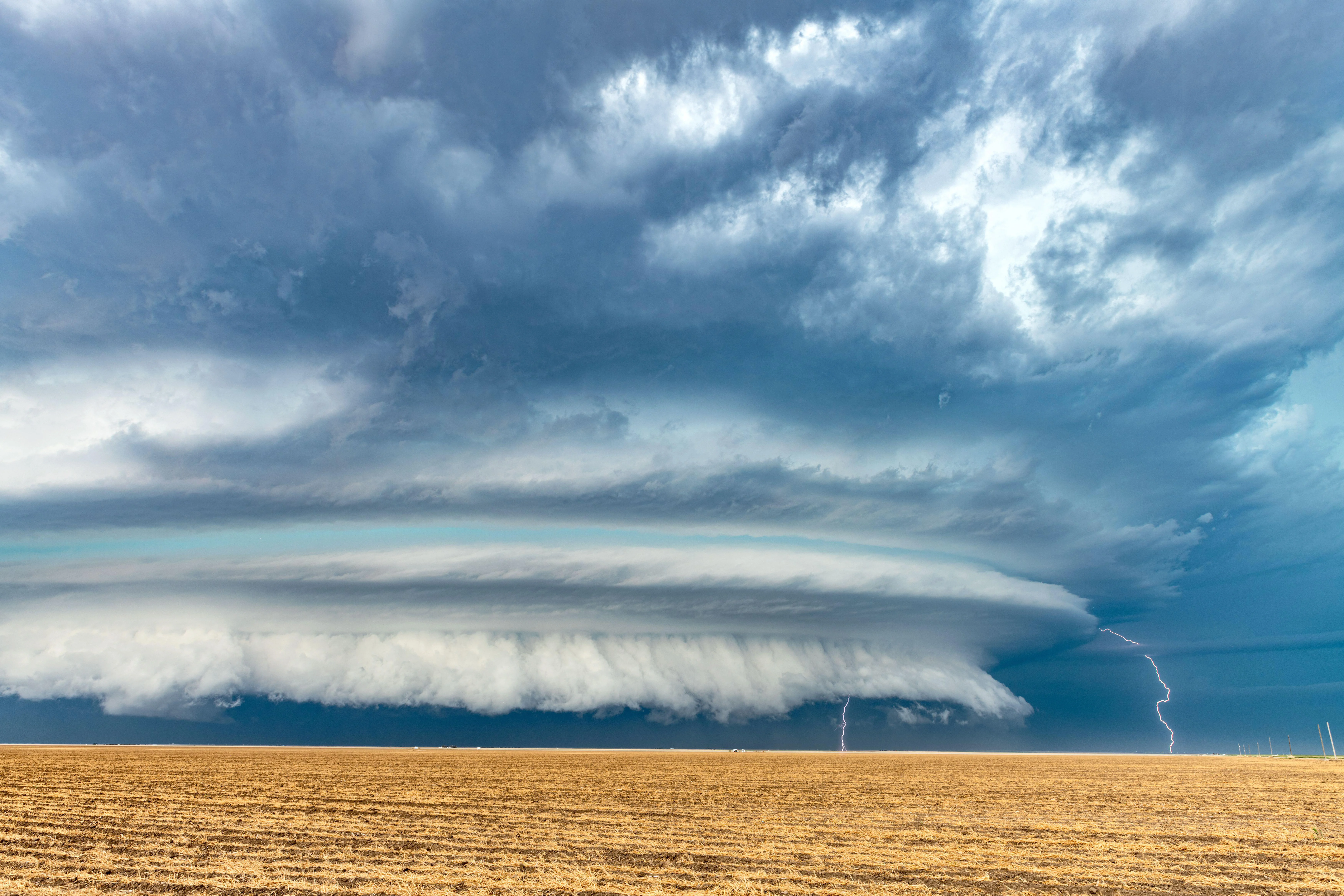
The trick is that a thunderstorm is not one temperature. It is a tall, churning machine that spans warm air near the ground and much colder air several miles up. Hail is made in that cold upper region, then dropped through the warm layer below.
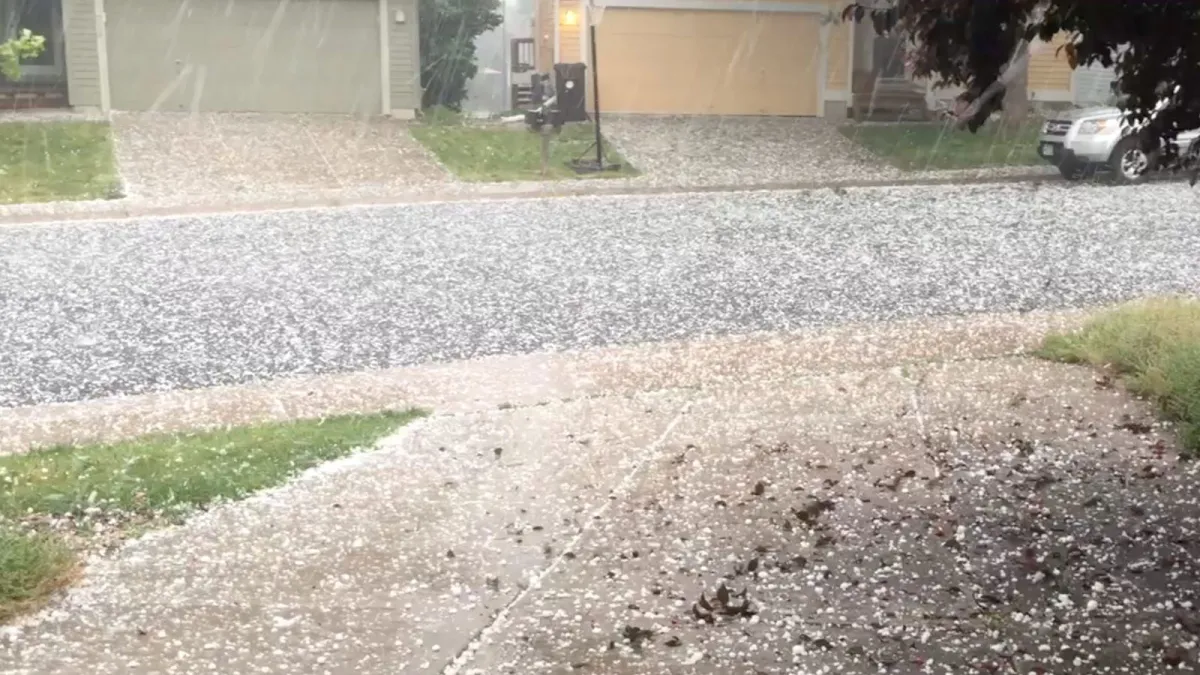
Warm at the ground, freezing above
On many warm days, the air temperature decreases with height. Meteorologists call the altitude where the air temperature reaches 0 C (32 F) the freezing level. On a hot summer afternoon, that freezing level can be very high, sometimes several kilometers above the ground.
So when hail falls on a warm day, it is not forming near your head. It is forming high in the storm, above the freezing level, where the air is cold enough for liquid water droplets to freeze or for ice to grow.
That is why the “paradox” is only at the surface. The storm has a built-in vertical temperature ladder.
The storm engine that builds hail
Hail needs more than cold air. It needs a storm strong enough to lift pieces of ice repeatedly into regions packed with supercooled water droplets.
Updrafts: the hailstone elevator
In a robust thunderstorm, warm, humid air near the ground rises rapidly. This rising column is the updraft. In severe storms, updraft speeds can be intense enough to keep growing hailstones suspended for long stretches of time.
While a small ice pellet is lofted, supercooled droplets collide with it and freeze on contact, adding layers. The stronger and deeper the updraft, the longer the hailstone can keep cycling through growth zones before it becomes too heavy to carry.
Supercooled water: liquid below freezing
Clouds above the freezing level often contain supercooled droplets, meaning liquid water that is colder than 0 C (32 F) but still liquid because there is no convenient particle to freeze onto until it collides with one. When those droplets hit an ice embryo, they can freeze quickly and add mass.
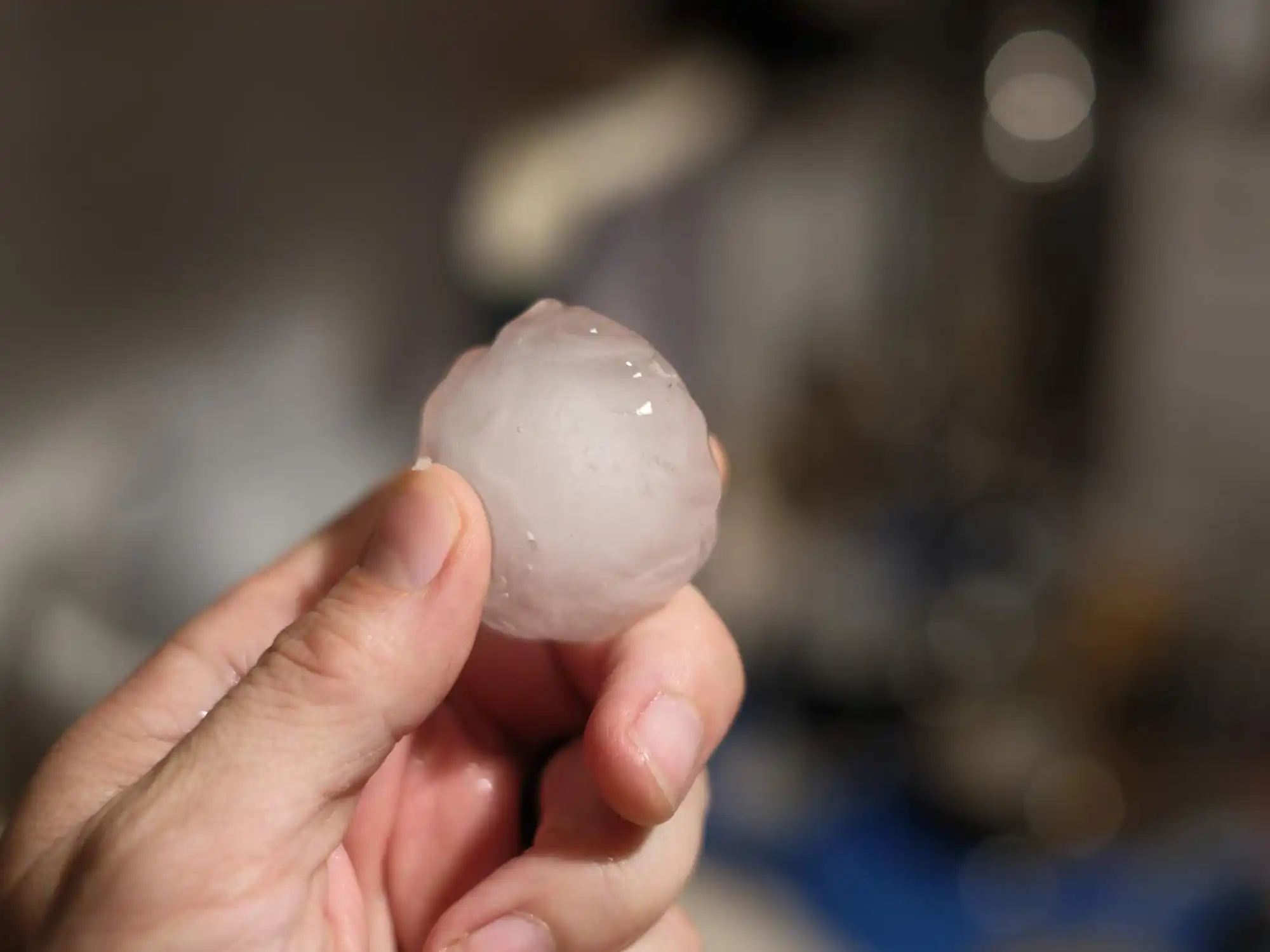
Why the hailstone does not melt immediately
If the air near the ground is warm, melting is absolutely happening during the fall. The question is whether the hailstone has enough time and enough heat transfer to melt completely before it reaches the ground.
Hail falls fast
Large hailstones have a lot of mass and fall quickly, often reaching the ground in minutes. A fast fall means less time for warm air to do its work. Small hail, or softer graupel, is more likely to melt away before it arrives, turning into cold rain instead.
Melting costs energy
Ice does not turn to liquid the moment it crosses into above-freezing air. It must absorb a substantial amount of energy to melt. Scientists call this the latent heat of fusion. In plain terms: changing phase takes effort. Warm air supplies that energy, but it may not supply enough quickly enough.
A protective cold shell
As a hailstone begins melting, its surface can become wet and near 0 C (32 F), even if the surrounding air is much warmer. That thin, cold, melting layer helps slow further warming of the interior. The bigger the stone, the more insulated its center effectively becomes during the short trip down.
Dry air can slow melting too
In some storms, the air below the cloud base is relatively dry. Evaporation of the meltwater can cool the hailstone’s surface, a bit like how sweat cools skin. That cooling can slightly reduce the net melting rate during descent.
Why summer is peak hail season in many places
It is tempting to assume hail would be most common in winter, since winter is when the ground is cold. But hail is strongly tied to thunderstorm intensity, not surface chill.
Heat and moisture feed stronger updrafts
Summer often provides two key ingredients for powerful storms: warm surface air and ample moisture. Warm, moist air is buoyant. When it rises, it can accelerate upward, building the kind of deep, vigorous updrafts that keep hailstones aloft long enough to grow.
Tall storms create a bigger hail factory
In many regions, summer thunderstorms reach high altitudes where the air is well below freezing. That gives hail a broad vertical workspace: strong lift below and a deep freezing zone above.
Season and region matter
Peak hail season varies by location. Some areas see their worst hail in late spring, when wind shear can help organize severe storms, even while the atmosphere still has plenty of instability. Other regions peak in midsummer. The common thread is not the temperature at your doorstep. It is whether the day supports thunderstorms with strong, sustained updrafts.

Does warm weather mean smaller hail?
Not reliably. A warmer day often means a higher freezing level, which does increase the depth of the warm layer a hailstone must fall through. That can lead to more melting, especially for small hail.
But hail size is dominated by the storm’s internal dynamics: updraft strength, the amount of supercooled water available, and how long a stone can grow before falling out. A very intense storm can produce large hail even with a thick warm layer below, because the stones start larger and fall faster.
What it feels like on the ground
If you have ever watched hail arrive on a hot day, you may have noticed the air suddenly turns cooler and gustier. That shift is not just your imagination.
Thunderstorms often produce downdrafts, sinking air that can be cooled by rain evaporation and by melting hail. When that cooled air spreads out along the ground, it forms a gust front that can arrive ahead of the heaviest precipitation. The first few stones can be the storm’s calling card, delivered with a burst of cooler air.
Hail vs. sleet
Hail and sleet are both ice, but they come from different atmospheric stories.
- Hail forms in strong thunderstorms, built by updrafts and layers of freezing supercooled droplets. It can happen in warm weather.
- Sleet usually forms when snow melts into rain in a warm layer aloft and then refreezes into ice pellets as it falls through a colder layer near the ground. It is tied to wintertime temperature inversions.
If there is thunder involved, hail is the usual suspect.
FAQ
Can it hail when it is 80 F or 90 F (27 C to 32 C) outside?
Yes. Surface temperature does not prevent hail if the storm is tall enough to reach freezing air aloft and strong enough to grow hailstones. The hailstone may melt somewhat on the way down, but larger stones can still reach the ground.
Why does hail sometimes happen with sunshine still out?
Hail can fall from the edge of a thunderstorm where sunlight still reaches the ground. Storms can have sharp boundaries, and winds can blow hail outward from the main rain core. It is also possible to see bright sky in one direction while a powerful storm sits nearby.
Why do some storms produce heavy rain but no hail?
Not every thunderstorm has a strong, sustained updraft or the right mix of supercooled water and ice. If the updraft is weaker, hail embryos may not stay aloft long enough to grow. If the freezing region is less favorable, precipitation may fall as rain instead.
Does climate change affect hail?
Researchers are actively studying how warming temperatures, moisture patterns, and storm environments may influence hail frequency and hail size. The physics of hail still depends on updrafts, storm structure, and the height of the freezing level, but how those ingredients change over time is a complex, region-specific question.
The pocket version
Hail on a warm day is a reminder that weather is three-dimensional. The ground can be hot while the upper storm is well below freezing. Strong updrafts build hail high above you, then gravity drops it through warm air fast enough that some ice survives the trip.
Once you picture a thunderstorm as a towering, rotating elevator of air rather than a flat cloud overhead, the “how can this be ice?” moment starts to feel less like a contradiction and more like a clue.