Curiosity, with all its quills showing.
When hail starts bouncing across the driveway, nobody wants a lecture. They want a ruler. Weather reports often use familiar objects like a penny or golf ball because most of us can picture them instantly, even without a tape measure in hand. This page is that picture, pinned down with numbers.
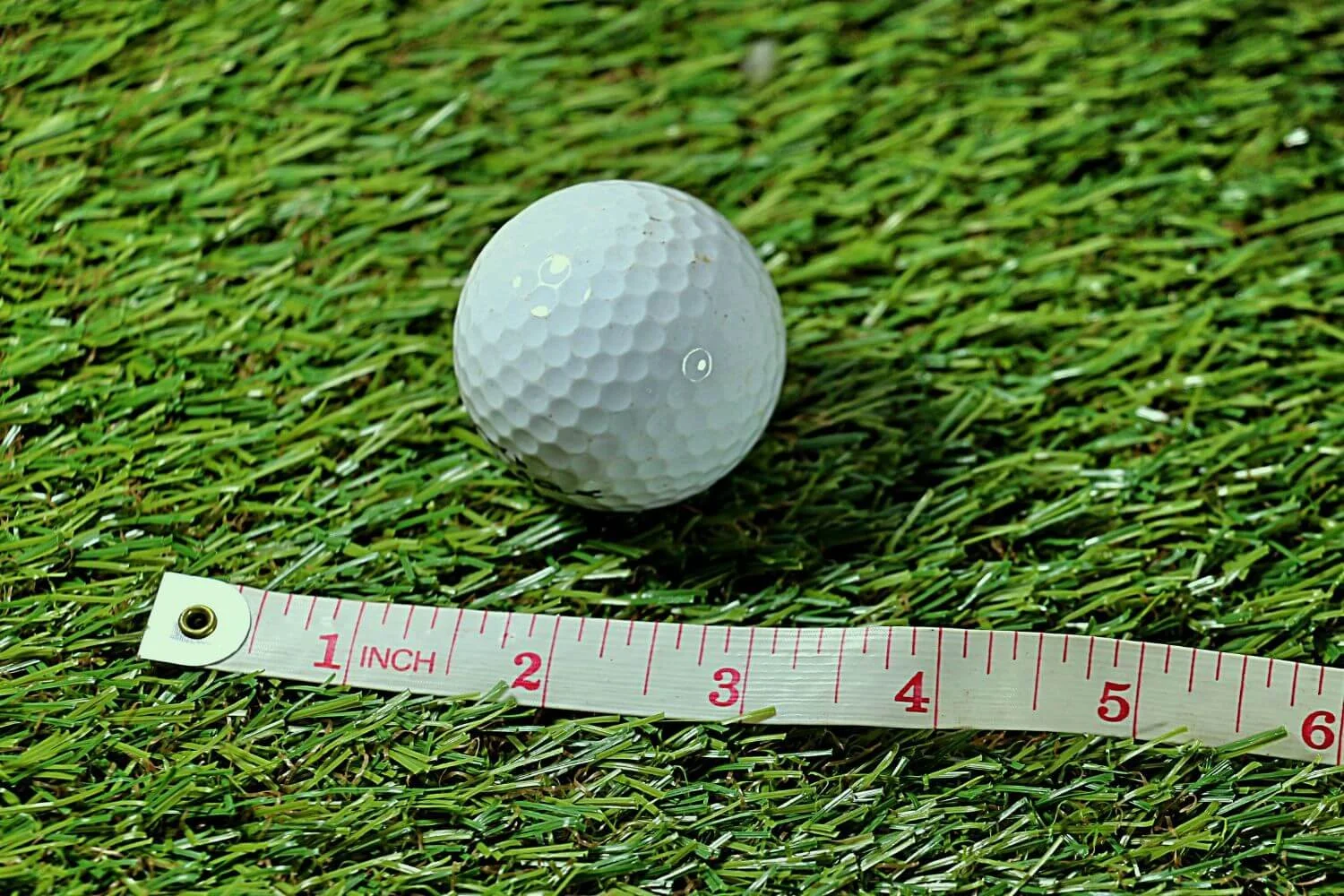
Hail size chart (inches and millimeters)
Hailstones are rarely perfect spheres, so any single number is an approximation. In U.S. reporting, the reference diameter is typically the largest width across the hailstone, also called the maximum dimension.
One important nuance: the coin and sports-ball labels below are widely used meteorological size categories. They are designed for fast, consistent reports, so they do not always match the exact real-world object down to the last millimeter.
| Common comparison | Diameter (inches) | Diameter (mm) | What it often means |
|---|---|---|---|
| Pea | 0.25 in | 6 mm | Usually minor damage risk |
| Penny | 0.75 in | 19 mm | Can mark soft metals, shred tender plants |
| Nickel | 0.88 in | 22 mm | Increasing risk for leaves, screens, and vehicles |
| Quarter | 1.00 in | 25 mm | Common severe threshold in the U.S. |
| Half dollar | 1.25 in | 32 mm | Often dents siding and gutters, breaks some windows |
| Ping-pong ball | 1.57 in | 40 mm | Higher chance of roof and vehicle damage |
| Golf ball | 1.75 in | 44 mm | Common benchmark for significant property damage |
| Tennis ball | 2.50 in | 64 mm | Serious damage likely, safety risk outdoors |
| Baseball | 2.75 in | 70 mm | Major damage risk, including roofs and skylights |
| Softball | 4.00 in | 102 mm | Extreme damage potential, dangerous impacts |
Quick note on “golf ball hail”: A regulation golf ball is at least 1.68 inches (42.7 mm) in diameter. In storm reports, “golf ball” is commonly rounded to 1.75 inches (44 mm) as a convenient category.
Why storms get described with coins and sports balls
Object comparisons are not there for poetry. They are there because hail is often reported in the moment, under stress, without tools.
- Speed: “Quarter size” is faster than “about 25 millimeters.”
- Shared mental picture: Most people can visualize a coin or ball more reliably than a fraction on a ruler.
- Better field reporting: Emergency managers and meteorologists can use consistent shorthand when reports come in from many locations.
The tradeoff is precision. Hailstones can be lumpy, spiky, partially melted, or broken, which changes how they hit and what they do.
What counts as severe hail
In the United States, the National Weather Service severe hail criterion is 1.00 inch (25.4 mm) or larger, which is why you hear quarter-size hail called out so often. Criteria have shifted over the years, but 1.00 inch is the modern headline number used for public warnings.
Also worth keeping straight: “severe” is a warning category, not a guarantee of damage at every address. Damage depends on many practical details, especially wind (hail driven sideways hits harder), hailfall intensity (how much falls and how fast), and the stone itself (layering, hardness, and whether it shatters on impact).
Damage expectations by size
If you are using this chart for a quick gut check, here is a plain-language way to think about it. These are typical outcomes, not promises.
Pea to penny (0.25 to 0.75 in | 6 to 19 mm)
- Often brief and noisy with limited property damage
- Can still shred gardens, bruise fruit, and clog gutters
Nickel to quarter (0.88 to 1.00 in | 22 to 25 mm)
- Higher chance of denting softer metal surfaces
- May damage window screens and some exterior fixtures
Half dollar to golf ball (1.25 to 1.75 in | 32 to 44 mm)
- Vehicle dents become common
- Roofing and siding damage becomes more likely, especially with wind
Tennis ball and larger (2.5 in+ | 64 mm+)
- Significant roof damage risk and broken windows become more likely
- Dangerous impacts outdoors, treat like falling rocks
How to measure hail accurately
If it is safe and you can do it quickly, a simple measurement improves storm reports and insurance documentation. If hail is still falling, stay inside. Measure only after the storm has moved on and it is safe to do so.
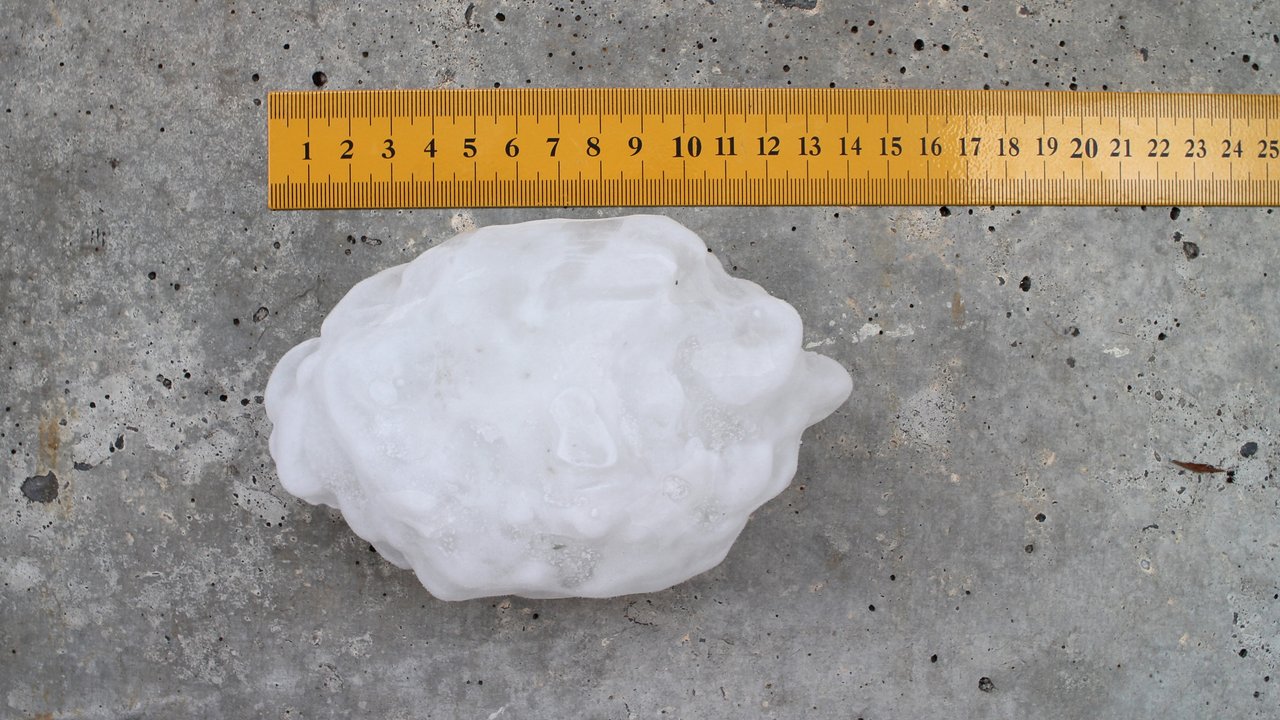
- Measure the widest point: Use a ruler or tape and measure across the hailstone at its maximum width.
- Use a flat surface: Put the hailstone on a table and line the ruler up across it.
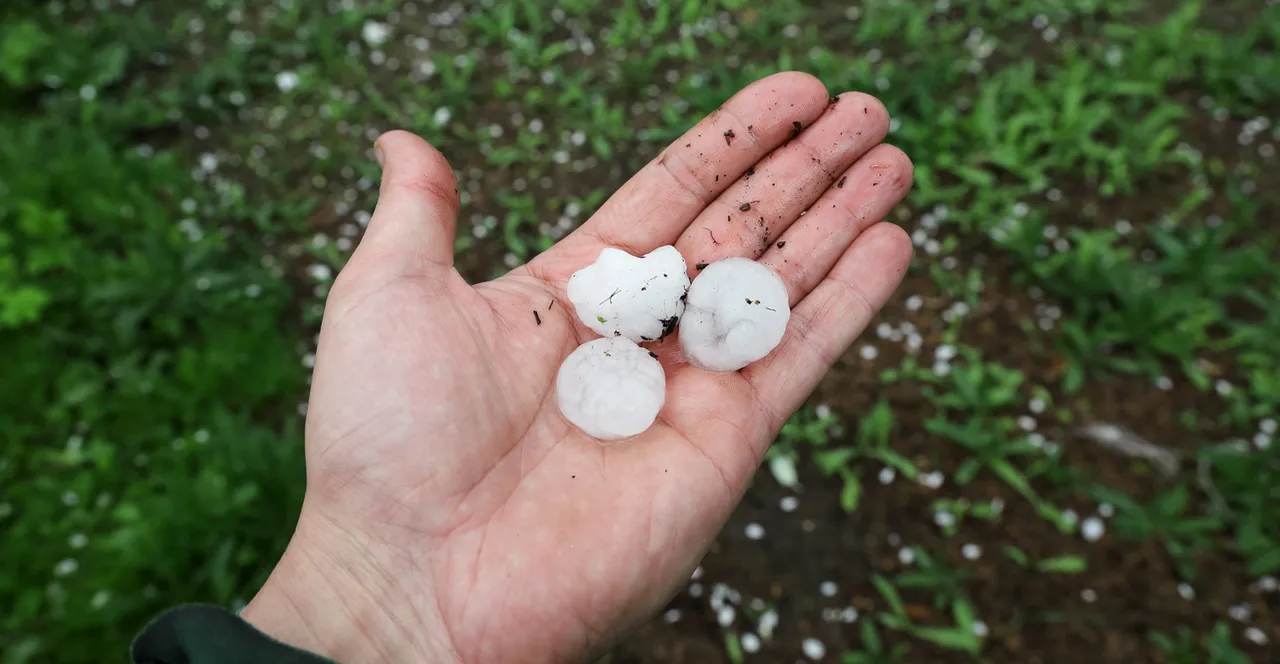
- Photograph for scale: A photo with a ruler is more useful than a photo with only a hand for reference.
- Expect melting: Hail shrinks fast. If you are comparing to objects, do it immediately.
FAQ: hail size questions
How big is penny-size hail?
Penny-size hail is about 0.75 inches, or 19 mm.
How big is quarter-size hail?
Quarter-size hail is about 1.00 inch, or 25 mm. That lines up with the National Weather Service severe hail criterion of 1.00 inch (25.4 mm) or larger.
How big is golf ball hail?
Golf ball hail is commonly listed as about 1.75 inches, or 44 mm. A regulation golf ball is slightly smaller (minimum 1.68 inches), but storm categories often round.
Is hail size the only thing that matters for damage?
No. Wind can drive hail into surfaces with much higher force, and intense hailfall can cause more cumulative damage than a few large stones. Structure matters too. Hard, well-layered stones tend to hit differently than slushy, partly melted hail. But size is still a useful first number because it correlates with impact energy.
Why do different sources list slightly different hail sizes?
Some charts round differently, and some use slightly different comparison baselines. Also, hailstones are irregular and can break or partially melt before being measured, which makes any category fuzzy at the edges.