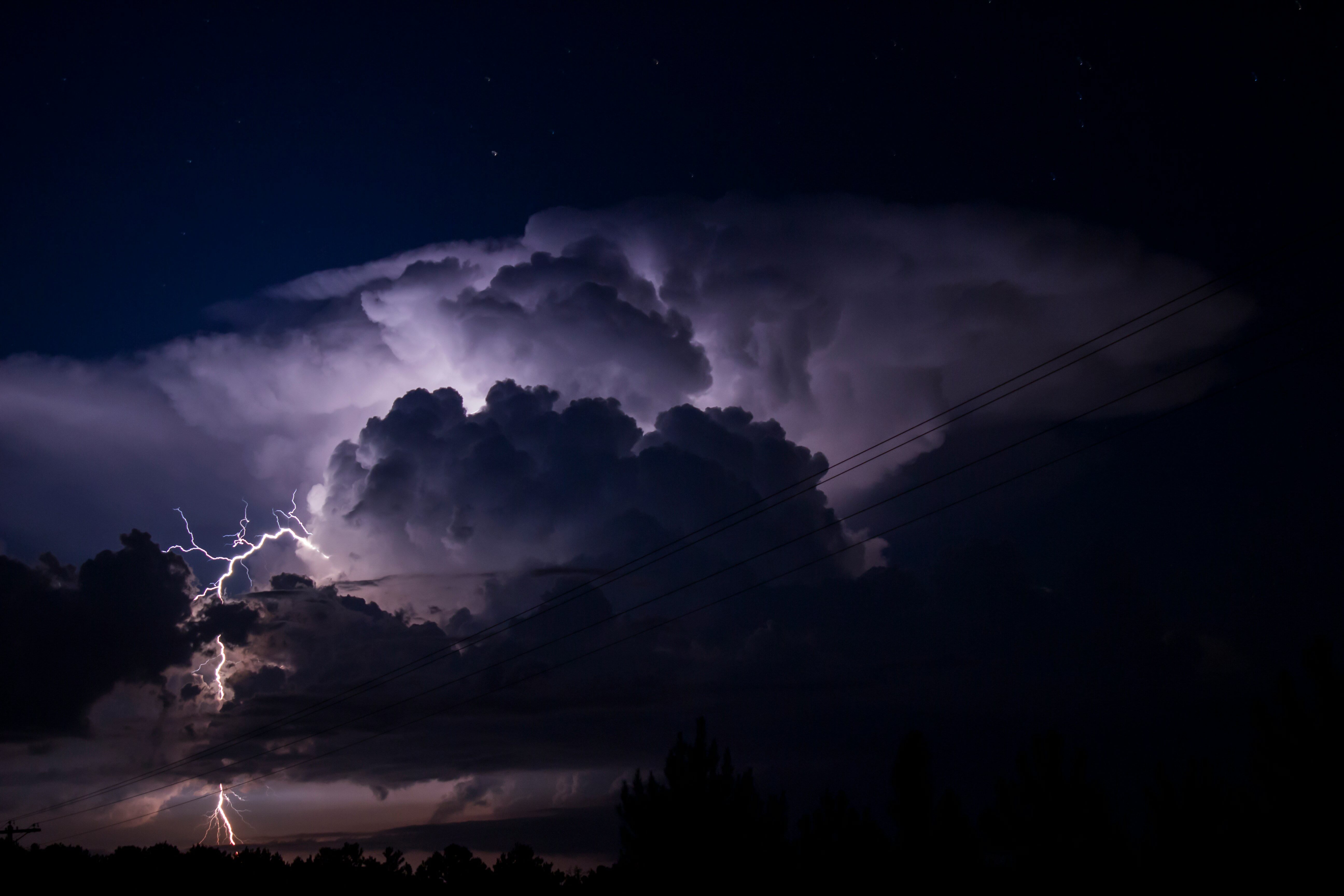
If you have ever watched a storm roll in and thought, “Why do lightning and thunder always come as a package deal?”, you are asking a great physics question. The short answer is that thunder is not a separate thing that follows lightning. Thunder is what the lightning does to the air.
Lightning is a gigantic electrical spark that forms when a storm cloud separates electric charge. Thunder is the sound made when that spark heats the air so fast that the air expands explosively, launching a shock wave (followed by a rapid pressure drop). One cause, two sensations: light and sound.
Step 1: How storms separate electric charge
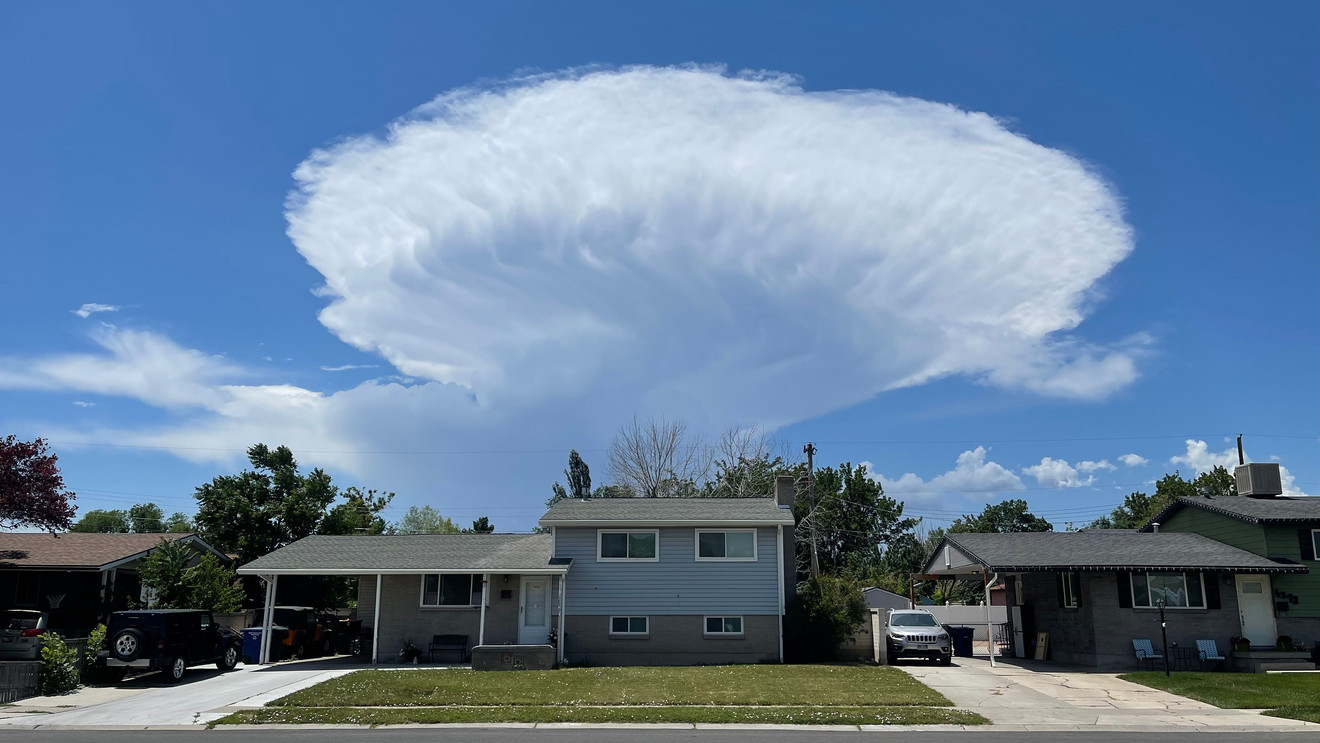
Most thunderstorms are built inside tall, turbulent clouds called cumulonimbus clouds. Inside them, air is rising and sinking at the same time, like an elevator system with some cars going up while others plunge down. That chaos matters because it makes ice and water particles collide constantly.
Up high in the cloud it is cold enough for ice crystals, snow-like graupel (soft hail), and supercooled water droplets (liquid water below freezing) to all exist together. When these particles bump into each other, electrons get transferred. Exactly who “wins” electrons depends on temperature, size, and the type of ice, but the end result is a large-scale sorting of charge:
- The upper part of the cloud tends to become positively charged.
- The middle to lower part of the cloud tends to become negatively charged.
Then the storm’s strong updrafts loft lighter, positively charged ice crystals upward, while heavier, negatively charged graupel falls lower. You can think of it like shaking a mixed jar of beads where the lighter beads drift up and heavier beads settle down, except the “beads” are carrying electrical charge.
Once enough charge separation builds up, the electric field between regions becomes intense. Large imbalances create strong electric fields, and lightning is one way the atmosphere can reduce them quickly.
Step 2: How lightning forms
A lightning bolt is not a single simple zap. It is a fast, branching process where air, which acts as an insulator until the electric field becomes strong enough to break it down, turns into a conductor for a moment.
The invisible setup: ionizing the air
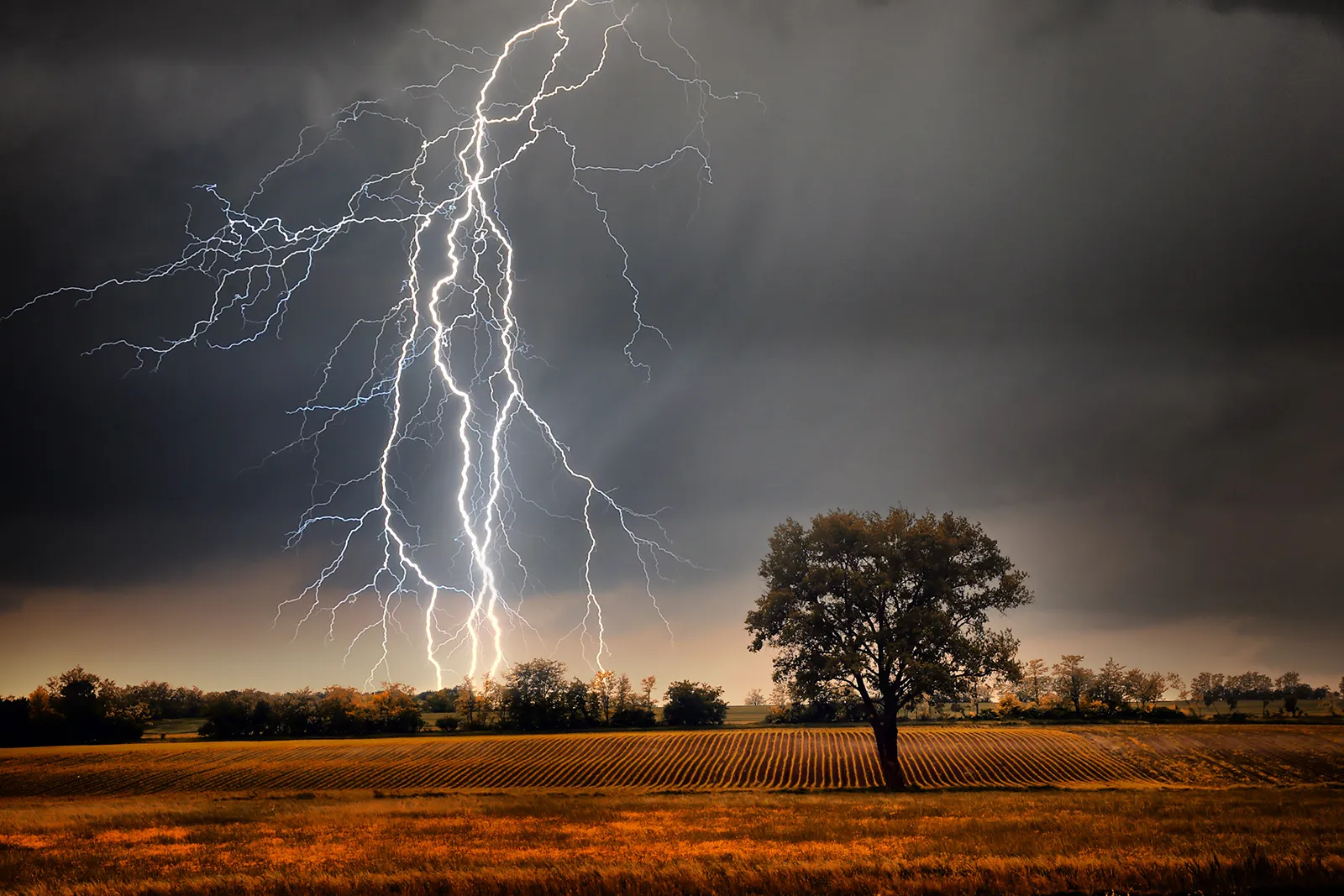
When the electric field gets strong enough, it starts ripping electrons off air molecules. That creates a path of ionized air, essentially a temporary wire in the sky. The first part of the bolt, called a stepped leader, moves in jumps, branching and searching for the easiest route through the air.
The bright flash: the return stroke
As the leader approaches the ground, objects on the surface like trees, rooftops, and even people can launch upward streamers of charge. When a downward leader and an upward streamer connect, the circuit completes.
Then comes the part you see: an intense surge of current races through the channel. This is the return stroke, and it heats the air in that narrow path to roughly 25,000 to 30,000 K, several times hotter than the Sun’s surface (about 5,800 K), for a tiny fraction of a second. That is what makes the channel glow brilliantly. Many flashes also include multiple return strokes, which is why lightning can look like it flickers.
Lightning can happen:
- Within a cloud (intra-cloud), which is very common and often lights up the whole cloud.
- Between clouds (cloud-to-cloud).
- Between cloud and ground (cloud-to-ground), the classic dramatic strike.
All of these discharges can make thunder, because all of them involve rapid heating of air along a channel.
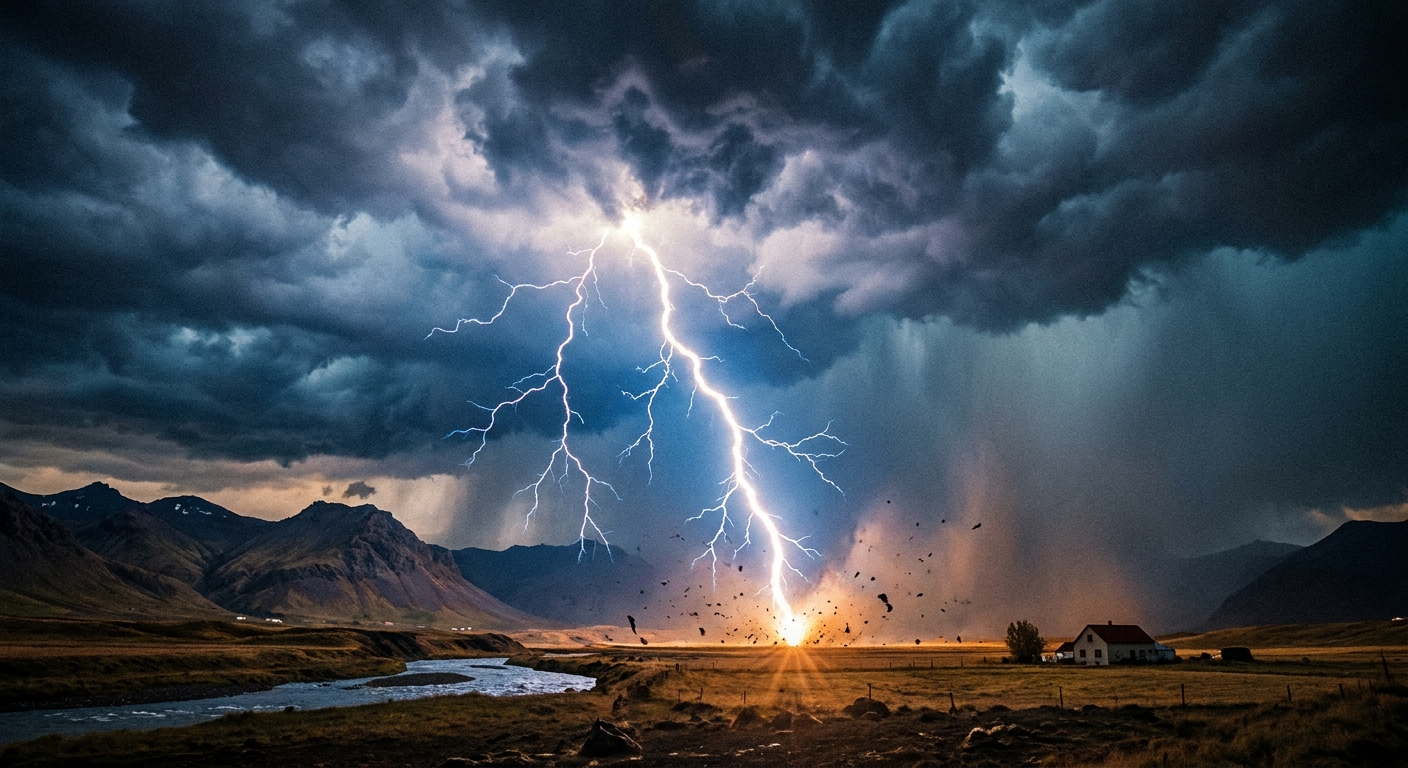
Step 3: Why lightning creates thunder
Here is the key idea: thunder is a shock wave made by air that expands violently after being superheated by lightning.
In everyday life, air expands when it warms up. Usually it does so gently, like a balloon slowly swelling in the sun. But lightning heats a narrow column of air so quickly that the air does not have time to drift out of the way. Pressure spikes almost instantly.
That rapid pressure jump launches a powerful wave outward. Close to the strike, it starts as a shock wave, similar in concept to a sonic boom. As it travels away and spreads out, it becomes the rolling sound we call thunder.
Why thunder rumbles
Thunder has texture, and the atmosphere is the reason. A few effects stack together:
- The lightning channel is long. Sound from the top, middle, and bottom reaches you at slightly different times.
- The bolt branches. Each branch can generate its own pressure wave.
- Wind and temperature layers bend sound. Warm and cool layers refract sound like a lens, stretching and reshaping what you hear.
- Echoes and reflections. Hills, buildings, and even cloud layers can reflect parts of the sound back to you.
That is why a nearby strike can sound like a sharp crack at first and then fade into a long growl.
Why you see lightning before thunder
Lightning and thunder are created at essentially the same time, but light and sound travel at wildly different speeds.
- Light moves at about 300,000 kilometers per second in air. For storm distances, it arrives basically instantly.
- Sound moves at about 343 meters per second in air at room temperature, and it can be slower or faster depending on temperature.
So your eyes get the message first, and your ears get it later.
A handy rule of thumb: count the seconds between the flash and the thunder, then divide by 3 to estimate the distance in kilometers (or divide by 5 for miles). For example, a 9-second delay is roughly 3 km away, about 2 miles.
Safety note: If you can hear thunder, the storm is close enough to be dangerous. Lightning can strike well away from the rain core, sometimes up to around 10 miles (16 km) or more. Go indoors when thunder is audible.
FAQ
Why is thunder heard after lightning?
Because light from the lightning reaches you almost instantly, while the sound of thunder travels much more slowly through air. Both are produced by the same event: the lightning heats and rapidly expands the air, creating the shock wave you hear as thunder.
Why does the delay between lightning and thunder change?
The delay mainly changes because the lightning is sometimes closer and sometimes farther away. Sound takes longer to travel longer distances, so a bigger flash-to-bang delay usually means the strike was farther from you.
Secondarily, the speed of sound depends on air temperature. Warmer air lets sound travel a bit faster, and colder air slows it down. Wind and layered temperatures can also bend sound paths, which can make thunder seem to arrive in strange ways during certain storms.
Can there be lightning without thunder?
If there is lightning, it produces thunder. But you might not hear it if the strike is far away, if wind carries the sound elsewhere, if terrain blocks it, or if the atmosphere absorbs and spreads out the sound. You may also see silent-looking “heat lightning,” which is often regular lightning from a distant storm below the horizon, with the thunder lost to distance and background noise.
Is thunder louder when lightning is closer?
Usually, yes. Sound intensity drops with distance as the wave spreads out. Nearby strikes also tend to produce sharper, more explosive cracks because less of the high-frequency sound gets absorbed before it reaches you.