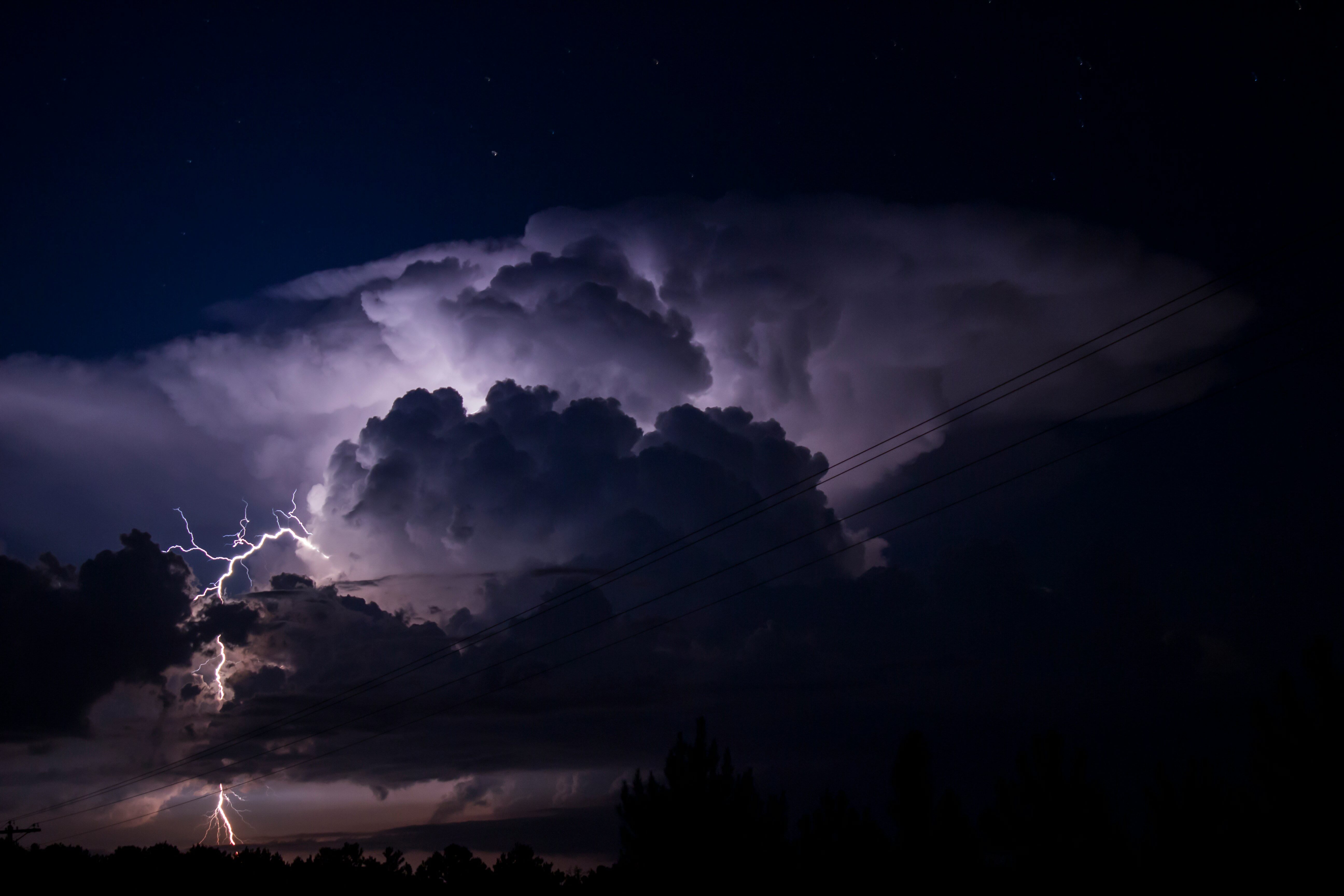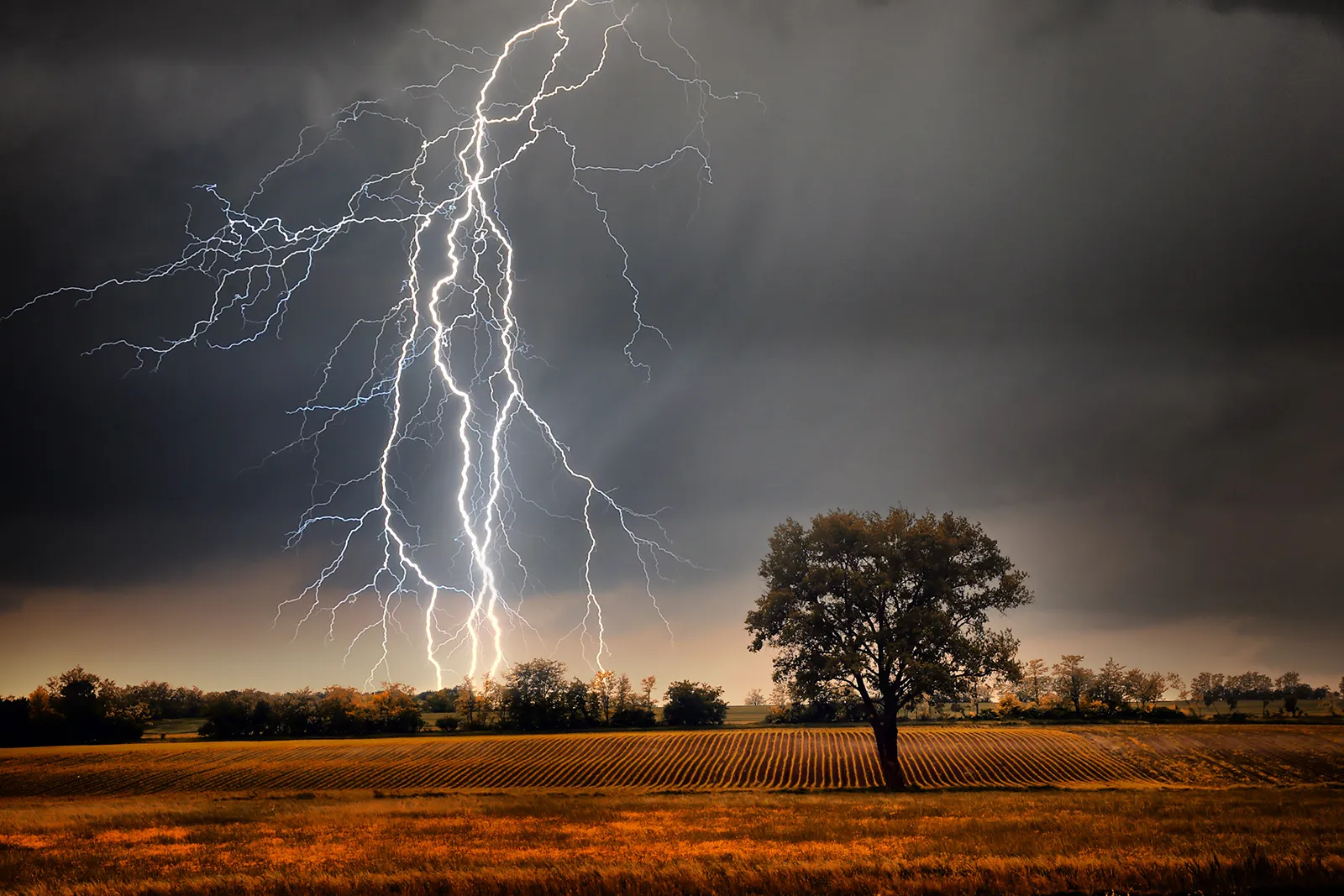
If a thunderstorm is nature’s live concert, lightning is the spotlight and thunder is the speaker system catching up. The part most of us never see is the setup inside the cloud: billions of tiny collisions sorting electric charge until the air can’t insulate anymore. Then, in a fraction of a second, the sky draws a glowing line and the sound arrives afterward like applause that arrives late.
Let’s walk through what’s happening inside a storm cloud in everyday language, but with the real physics intact.
The storm cloud as a charge factory
Thunderstorms are built tall. A classic thunderstorm cloud, called a cumulonimbus, can stretch from warm, humid air near the ground up into freezing air miles overhead. That vertical range matters because it creates a busy mix of:
- Updrafts lifting warm, moist air upward
- Downdrafts dragging cooled air and precipitation downward
- Ice crystals, supercooled water droplets, and graupel (soft hail, tiny icy pellets)
Inside that churning column, particles are constantly bumping into each other. Those collisions are the start of charge separation.
Charge separation
Air is usually an excellent insulator. For lightning to happen, a storm has to create a big enough electric imbalance that the insulating air starts to break down.
The leading explanation for how storms build that imbalance is often called the ice collision or non-inductive charging process. Here’s the plain-English version:
- In the middle of the cloud, graupel collides with small ice crystals while supercooled liquid water is around.
- During these collisions, electrons get transferred. In many common storm setups, graupel ends up more negative and small ice crystals more positive.
- Then the cloud’s winds do the sorting: lighter ice crystals get carried upward by strong updrafts, while heavier graupel falls or hangs lower.
Two quick reality checks, because storms love to be complicated:
- The charge sign can flip depending on temperature and how much liquid water is coating the ice. Some conditions favor graupel becoming positive instead of negative.
- The charge layers can shift as a storm evolves, and different storm types can stack charge a bit differently.
Still, many thunderstorms roughly organize into a common pattern you can picture like a layered battery:
- Positive charge concentrated higher up
- Negative charge concentrated in the mid to lower cloud
- Often, a smaller positive pocket near the cloud base
You can think of it like rubbing a balloon on your hair, except the balloon is a multi-mile cloud and the rubbing is millions of icy collisions per second.
From charge to a lightning channel
Once the charge regions are separated, an electric field grows between them, and between the cloud and the ground. The stronger the field, the more stress on the air’s ability to stay non-conductive.
Step 1: The leader
Lightning usually does not begin as one clean, bright bolt. It begins as a branching electrical probe called a leader. It is often faint compared with the later flash, although parts of it can sometimes be seen, especially in low light.
- Inside the cloud, a leader can start as charge pushes through weak spots in the air.
- For cloud-to-ground strikes, a common starter is a stepped leader, which advances downward in short jumps.
Why the “steps”? Because the leader is forcing air to ionize in bursts. Ionized air is air whose atoms have lost or gained electrons, making it much more conductive. Each step extends a little farther until the path can continue.
Step 2: Streamers from the ground
As the stepped leader approaches the ground, the electric field near the surface intensifies dramatically, especially near tall or pointy objects like trees, antennas, and rooftops.
At that point, thin filaments of ionized air called upward streamers can launch from the ground toward the descending leader. Several may rise, and one connects.
Step 3: The return stroke
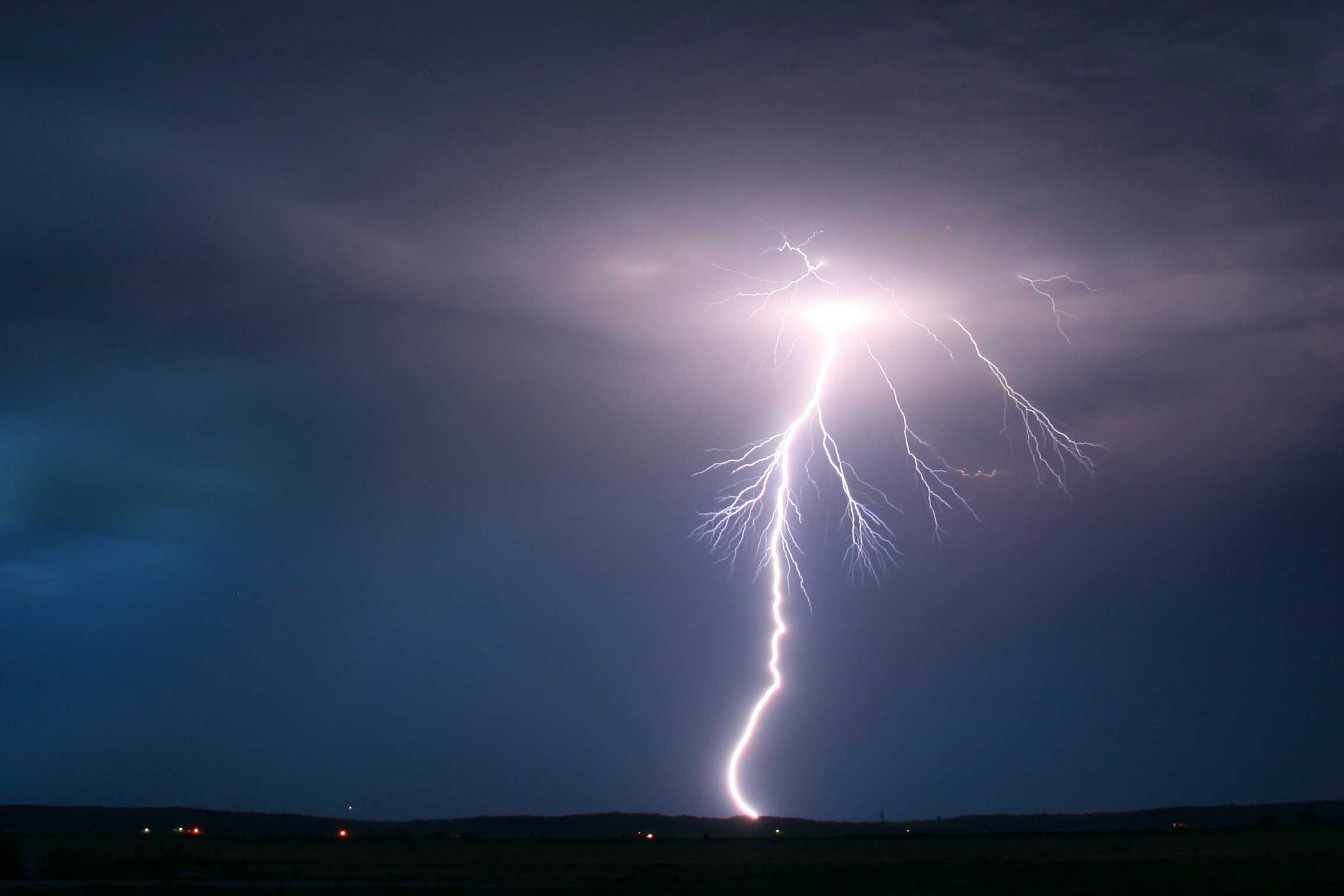
When a leader and a streamer connect, the circuit is essentially completed. Then comes the part we recognize as lightning: a powerful surge of current that races along the channel, heating the air intensely and making it glow.
This brilliant surge is called the return stroke. It often travels from the ground upward along the established channel, even though the setup started in the cloud.
Why lightning flickers
Many flashes contain multiple return strokes along the same general path. The first stroke ionizes and heats the channel, and then additional surges can follow milliseconds later, producing the rapid flicker your eyes catch.

Why thunder comes after lightning
Lightning superheats the air in its channel in a tiny fraction of a second. That rapid heating makes the air expand explosively, creating a shock wave that quickly becomes an acoustic wave we hear as thunder.
The key reason thunder arrives later is simple: light travels much faster than sound.
- Light from the flash reaches you almost instantly.
- Sound travels through air at roughly 343 meters per second (about 1,125 feet per second) depending on temperature.
The flash-to-bang rule
You can estimate how far away lightning is with a quick count:
- Count the seconds between the flash and the thunder.
- Divide by 5 to get an approximate distance in miles (or divide by 3 to get kilometers).
Example: 10 seconds between flash and boom is about 2 miles away.
Why thunder rumbles
Thunder is a messy sound because the lightning channel is long and jagged. You are hearing sound from different parts of the channel arriving at different times, bouncing around clouds and terrain, and sometimes stretching over several miles.
Cloud-to-ground vs intracloud
Lightning can connect different parts of the cloud, or it can connect the cloud to the ground. Most lightning is actually intracloud, but cloud-to-ground strikes are the ones that most often cause direct injuries and damage.
Cloud-to-ground (CG)
What it is: An electrical discharge between the storm’s charge region and the ground.
How it often lines up:
- Mid-lower cloud: often dominated by negative charge
- Ground below: becomes positively charged in response (charges in the ground shift around)
- Connection: a stepped leader descends, streamers rise, then a return stroke makes the bright bolt
What you might notice: A distinct bolt to a tree, field, building, or ridge line.
Intracloud (IC) and cloud-to-cloud (CC)
What it is: Electrical discharge within one cloud (intracloud) or between two clouds (cloud-to-cloud).
How it often lines up:
- Upper cloud: often more positive
- Lower cloud: often more negative
- Connection: leaders thread through the cloud, lighting it up from within
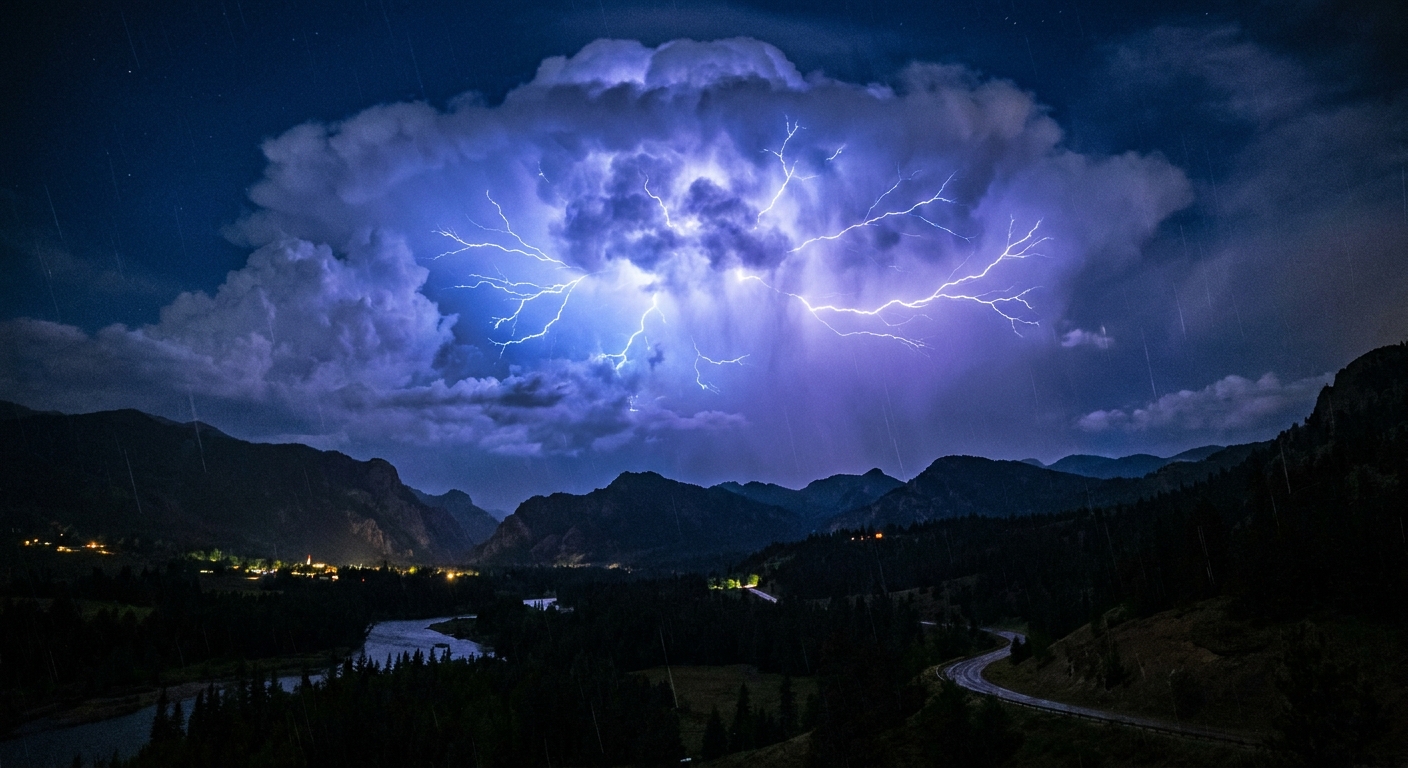
What you might notice: The whole cloud flashes or pulses, sometimes called “sheet lightning” because the cloud acts like a lampshade hiding the channel.
Common lightning myths
“Lightning comes down from the sky”
The visible flash is the bright current surge that happens after a connection forms. The process is a two-way handshake: a leader often works downward, and streamers reach upward.
“Rubber shoes or car tires protect you”
Not really. The protection of a car comes from its metal body acting like a Faraday cage, guiding current around the occupants. Tires are not the main safety feature, especially since lightning can jump through air gaps and across surfaces easily. If you are in a vehicle, keep your hands off metal parts and avoid touching plugged-in chargers or wired electronics.
“If it’s not raining where I am, I’m safe”
Lightning can strike miles from the main rain shaft. Storms can throw lightning outward from their cores, sometimes called “bolts from the blue.” If you can hear thunder, you are close enough to be struck.
Lightning safety that works
Lightning safety is mostly about lowering your exposure during the window when strikes are possible.
What to do
- Follow the 30–30 rule: If the time between flash and thunder is 30 seconds or less, go indoors. Wait 30 minutes after the last thunder before resuming outdoor activity.
- Go to a real shelter: A substantial building with wiring and plumbing is best. A fully enclosed metal-topped vehicle is also good.
- Inside, avoid conductive pathways: Stay off corded phones, avoid showering, and keep away from windows during intense storms.
What to avoid
- Open fields where you are the tallest thing around
- Isolated trees and tall poles
- Ridgetops and exposed peaks
- Water, including swimming, boating, or fishing in a storm
- Small shelters like picnic pavilions, tents, or bus stops that do not offer real enclosure
If you are outside with no shelter
This is last-resort territory, and nothing you do out in the open makes you “safe.” Your best move is still to get to a substantial building or enclosed vehicle as fast as you can.
If you truly cannot reach shelter in time, spread out from others (to reduce multiple injuries), avoid tall isolated objects, and move away from water and metal fences. If you feel hair standing up or hear crackling, lightning may be imminent. As an emergency measure only, you can crouch low with feet together to reduce ground contact, but treat it as a temporary move while you seek better shelter, not a protective solution.
Quick recap
Inside a thunderstorm, collisions between ice particles help separate electric charge, often leaving the lower cloud more negative and the upper cloud more positive, although storms can vary. When the electric field becomes strong enough, leaders and streamers create a conductive channel, and a powerful return stroke makes the bright flash. Thunder is the delayed sound of air explosively expanding along that superheated channel.
If you want a fun at-home mental model, picture the storm as a gigantic battery being charged by turbulent wind and ice. Lightning is what happens when the battery finally finds a wire.