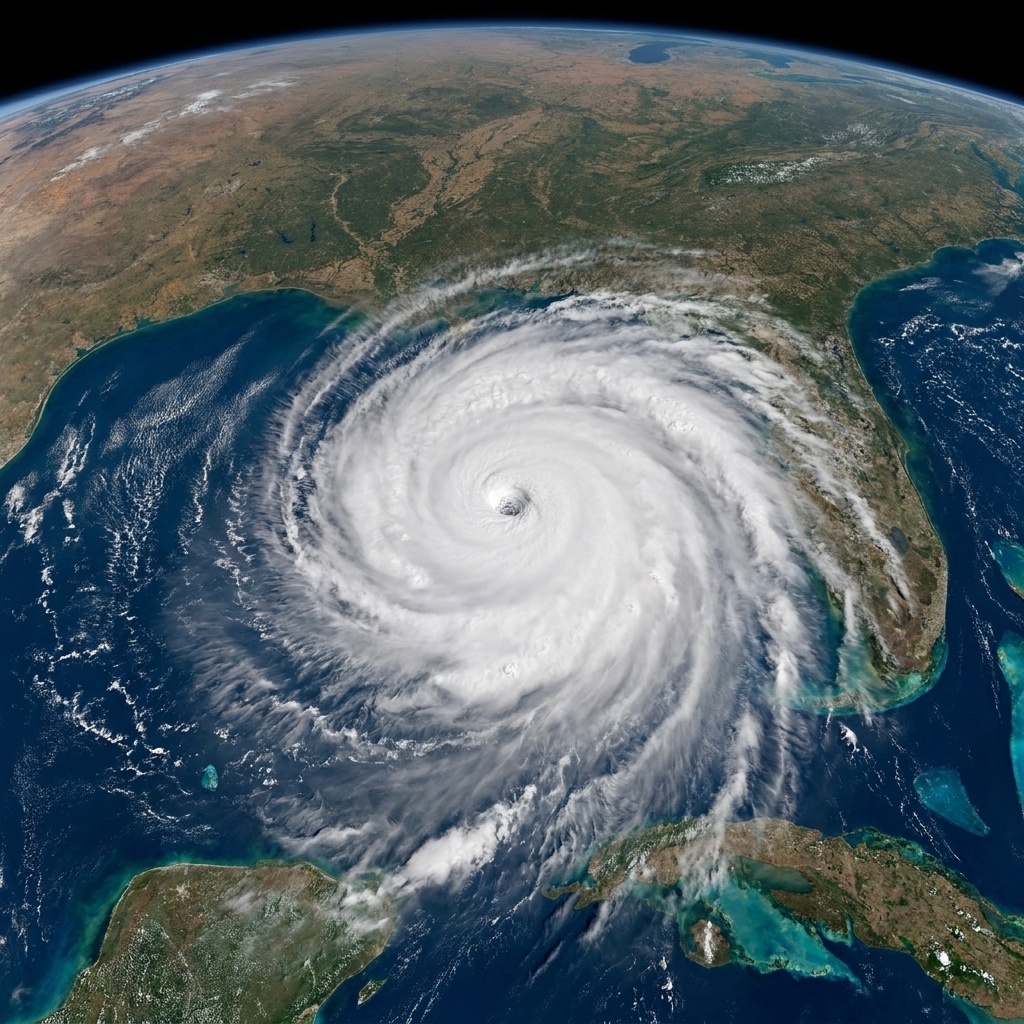
Lightning looks like a jagged streak of pure chaos, but the physics behind it is surprisingly orderly. A thunderstorm is basically a roaming battery: it separates electric charge, builds up voltage, and then discharges in a sudden, violent rush through the air. Thunder is what you hear when that lightning channel flash-heats the air and makes it expand outward as a shock wave, just arriving to your ears a little late.
Let’s walk through what is happening in the cloud, what a lightning strike actually does step by step, and why thunder always plays catch-up.
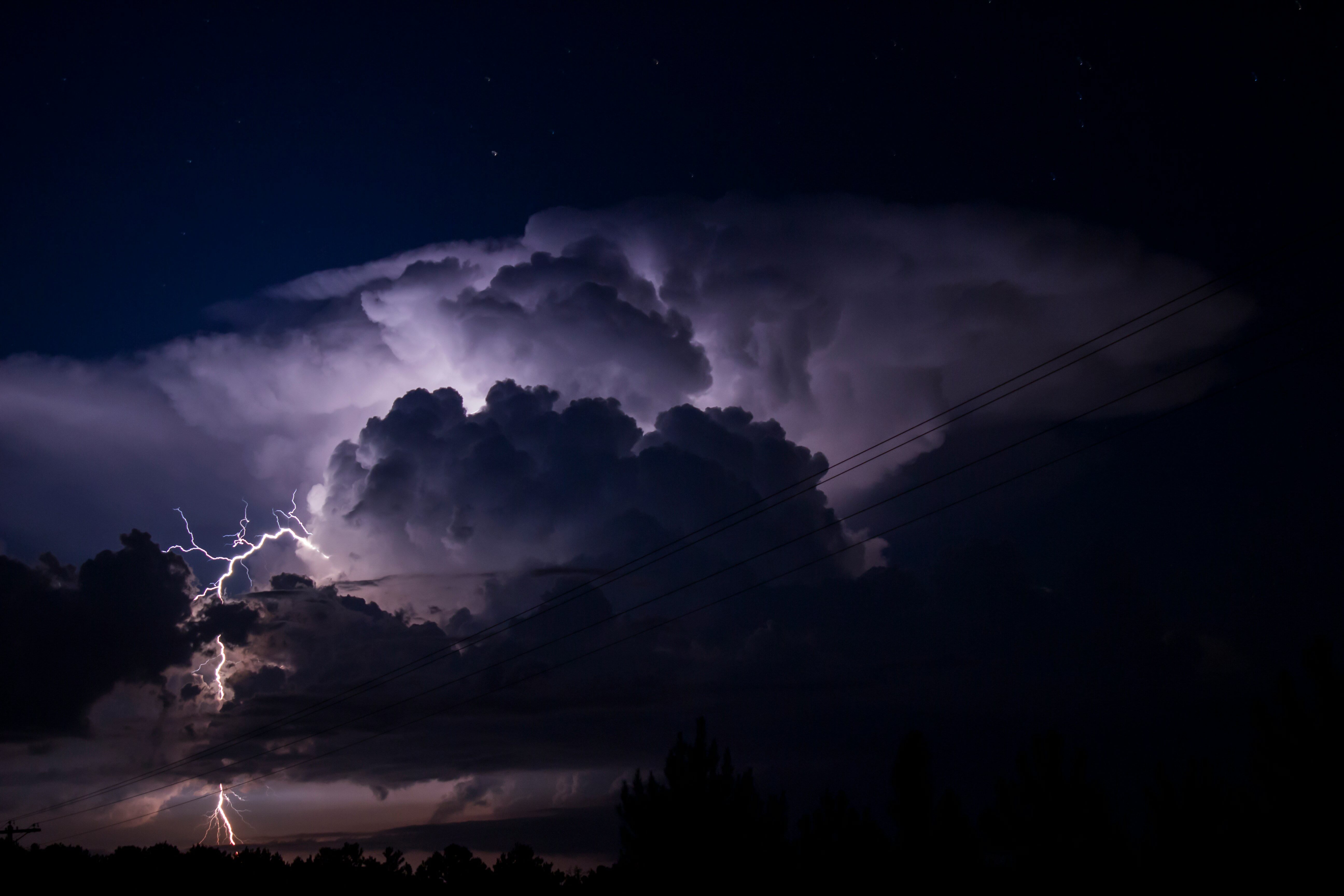
Storms separate charge
On a calm day, the air is an excellent electrical insulator. Charges can exist, but they do not have an easy path to move long distances. Thunderstorms change that by doing two things at once: they separate charge and they create conditions where air can briefly conduct electricity.
How charges sort inside a cloud
Inside a thundercloud, you have a busy vertical conveyor belt of air called an updraft. It lofts water droplets, ice crystals, and soft hail called graupel (think snow pellets) upward through temperature layers, where particles collide, separate, and recirculate in the storm’s churning flow.
When ice particles collide, electrons get transferred. The details depend on temperature and particle type, but the common outcome is this:
- The upper part of the cloud tends to become positively charged.
- The middle to lower part of the cloud tends to become negatively charged.
Once those regions are established, the cloud behaves like a huge capacitor: opposite charges separated by kilometers of air. That separation creates a powerful electric field.
Why the ground gets involved
The negatively charged lower cloud repels electrons in the ground. That leaves the surface beneath the storm with a stronger positive charge than usual, especially on tall objects like trees, poles, and buildings. The storm and the ground are now “staring each other down” electrically.
How lightning happens
A lightning flash is not usually one continuous stroke from cloud to ground. It is more like a negotiation that suddenly turns into a shout. Also, most lightning occurs within clouds or between clouds; cloud-to-ground strikes are just the most famous because they are personal.
Step 1: A stepped leader probes a path
When the electric field becomes strong enough, the air begins to break down in tiny regions, forming ionized channels. A faint, branching channel called a stepped leader propagates downward from the cloud in short jumps, typically on the order of tens of meters per step. Electrons surge through this growing channel as it extends.
You do not usually see this part clearly from far away because it is relatively dim compared with what comes next.
Step 2: Upward streamers reach up
As the stepped leader gets close to the surface, the electric field at the ground intensifies. Positive charge can launch upward in bright tendrils called streamers, often from multiple objects at once.
The lightning strike “chooses” the point where one upward streamer successfully connects with the descending leader.
Step 3: The return stroke makes the flash
Once a connection is made, the channel becomes a superhighway for charge. A powerful surge of current travels upward from ground to cloud called the return stroke. This is the blinding flash most of us think of as lightning.
That channel can heat the surrounding air to roughly 20,000 to 30,000 K for a very brief moment. The flash you see might also include multiple return strokes along the same channel, which is why lightning can flicker.
Step 4: The storm reloads
After the discharge, the electric field is reduced, but not necessarily eliminated. If the storm is still vigorously separating charge, another leader can form and the cycle repeats.
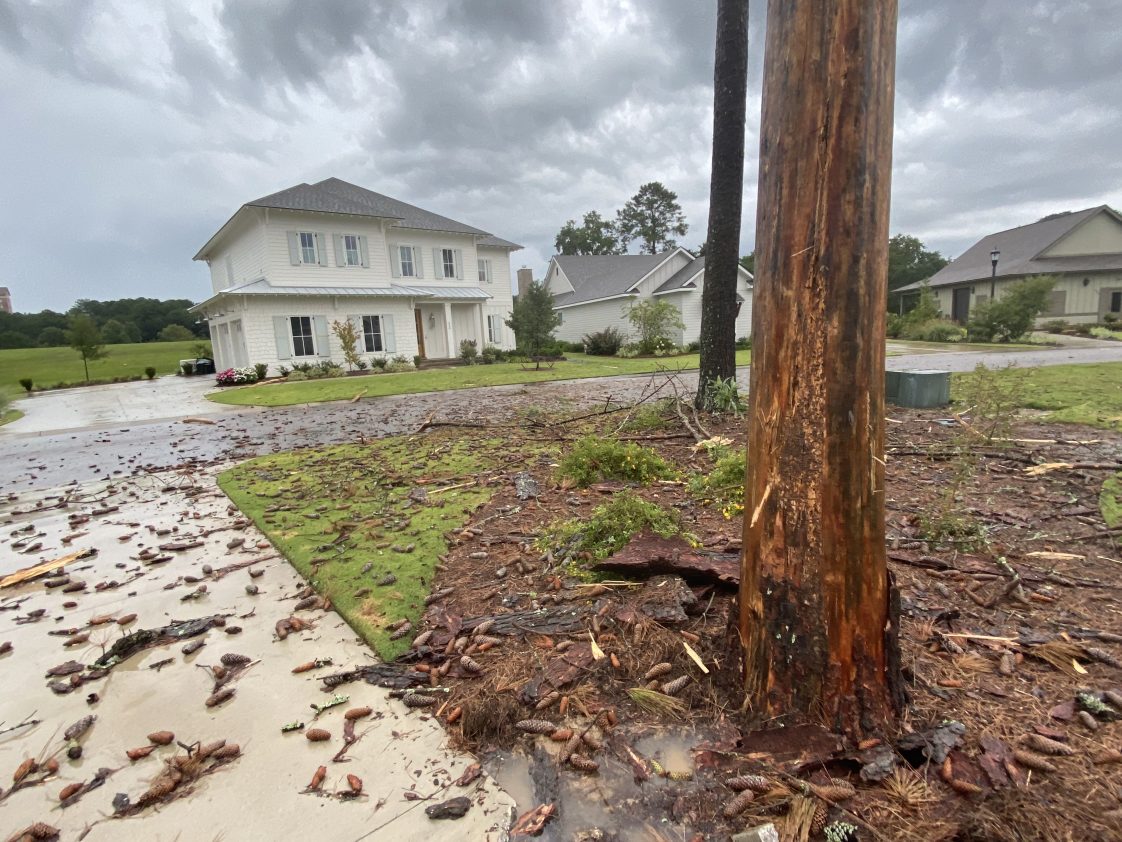
What thunder is
If lightning is the electrical event, thunder is the air’s mechanical reaction.
When the lightning channel heats the air almost instantly, that air expands explosively. The rapid expansion creates a shock wave that quickly becomes a loud pressure wave we hear as thunder.
Why thunder rumbles
Thunder is rarely a single “bang” for a few simple reasons:
- Lightning is long. Different parts of the channel are different distances from you, so sound arrives at different times.
- Sound reflects and refracts. Hills, buildings, and layers of warmer and cooler air bend and bounce sound.
- Multiple strokes happen. Many flashes include several return strokes, adding extra pulses.
Put that together and you get the rolling, layered rumble that can last several seconds.
Why thunder lags behind
This one is all about speed. Light travels so fast that, on storm scales, it effectively arrives instantly. Sound is much slower.
At typical temperatures, sound moves through air at roughly 343 m/s (about 1,125 ft/s). A handy rule of thumb is:
- Count the seconds between the flash and the thunder.
- Divide by 3 to estimate distance in kilometers, or divide by 5 to estimate distance in miles.
Example: If thunder arrives 10 seconds after the flash, the lightning is roughly 2 miles away (or about 3.3 kilometers).
Important safety note: if you can hear thunder, you are close enough to be struck. Lightning can travel well away from the heaviest rain.
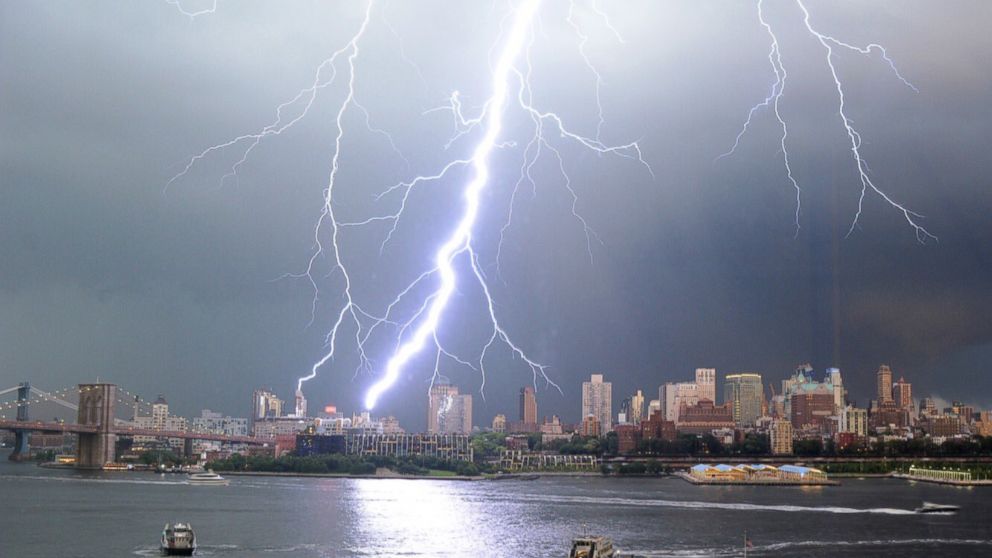
Lightning myths
“Lightning never strikes the same place twice”
It absolutely can, and it often does. Tall structures that provide an easy path for streamers, like towers and skyscrapers, can be struck repeatedly during active storms.
“Rubber tires protect you in a car”
The main reason a car is relatively safe is the metal shell, which can conduct current around the outside (a Faraday cage effect). Tires are not a reliable lightning shield. The safer takeaway is: stay inside a fully enclosed, metal-roofed vehicle, avoid touching metal parts connected to the outside, and wait out the storm.
“Lightning comes from clouds rubbing together”
The cloud is not a balloon building static charge from friction alone. The key driver is collisions between ice particles in a strong updraft, which separates charge within the storm.
“If it’s not raining, I’m safe”
Not necessarily. Lightning can strike miles from the rain core, especially from the anvil region of a storm. Clear sky overhead does not guarantee a clear sky nearby.
Quick safety notes
I know this is Empiric Folio, not a safety brochure, but the physics points to a few practical rules:
- Best shelter: a substantial building with wiring and plumbing, or a fully enclosed metal vehicle.
- Avoid: isolated tall objects, open fields, ridge lines, water, and small shelters like picnic pavilions.
- Indoors: stay away from corded electronics and plumbing during close storms, since lightning can travel through conductive paths.
The big picture
A thunderstorm is nature doing charge separation on a massive scale. Lightning is the atmosphere’s way of balancing the books when the electric field gets too intense, and thunder is the acoustic footprint of air being flash-heated and shoved outward.
Next time you see a lightning flash and instinctively start counting, you are not just passing time. You are using the speed of sound as a measuring tape, one thunderclap at a time.
FAQ
How hot is lightning?
The air in the lightning channel can briefly reach roughly 20,000 to 30,000 K, though the exact value varies by strike. It is the rapid heating, more than the absolute temperature, that drives thunder.
Is thunder dangerous by itself?
Thunder is a pressure wave, and at typical distances it is more startling than harmful. The danger is that thunder means lightning happened nearby, and another strike can occur.
What causes different lightning colors?
Color can shift with brightness, rain, dust, and what the light passes through. Some flashes look bluish or violet through heavy rain, while others look warm white or yellowish when viewed through thicker air or haze.
Why do some lightning bolts look wiggly?
The lightning channel follows a path where the air breaks down most easily, and that path is shaped by turbulence, humidity, and local electric fields. The stepped leader’s branching search creates the familiar jagged geometry.