
If you have ever touched a doorknob and gotten a surprise zap, you have met static electricity in its most dramatic mood. The good news is that the science behind it is wonderfully ordinary. Static electricity is not a special kind of electricity. It is the same old electric charge, just stuck in place until it finds a path to move.
Let’s unpack how static charge builds up, why it feels worse in dry air, and how it turns into tiny shocks, crackles, and that frustrating laundry cling.

What static electricity is
Everything around you is made of atoms. Atoms have positively charged protons and negatively charged electrons. In most objects, the positive and negative charges balance out, so the object is electrically neutral.
Static electricity happens when that balance gets nudged. If an object gains extra electrons, it becomes negatively charged. If it loses electrons, it becomes positively charged. Either way, you now have an imbalance of charge sitting on the surface.
The word static means the charge is not moving as a continuous current like it does in a wire. It is parked, temporarily, until nature finds a way to even things out.
How charge builds up
Electrons can move from one material to another, but how easily they move depends a lot on the material. In conductors (like metals) electrons can move around more freely. In insulators (like many plastics) they are more stuck in place, so charge tends to stay localized on the surface.
When two materials touch and then separate, some electrons can transfer from one to the other. Rubbing usually makes the effect bigger, not because friction “creates” charge, but because rubbing increases contact area and repeats the touch-separate cycle many times.
Why electrons move between some materials
Different materials tend to hold onto electrons with different levels of stubbornness. When they contact, electrons often shift toward the material that, in that situation, is more likely to hang onto them.
This is the basic idea behind the triboelectric effect, although the real story can be messier. Surface chemistry, tiny contamination layers, and humidity can all change what happens.
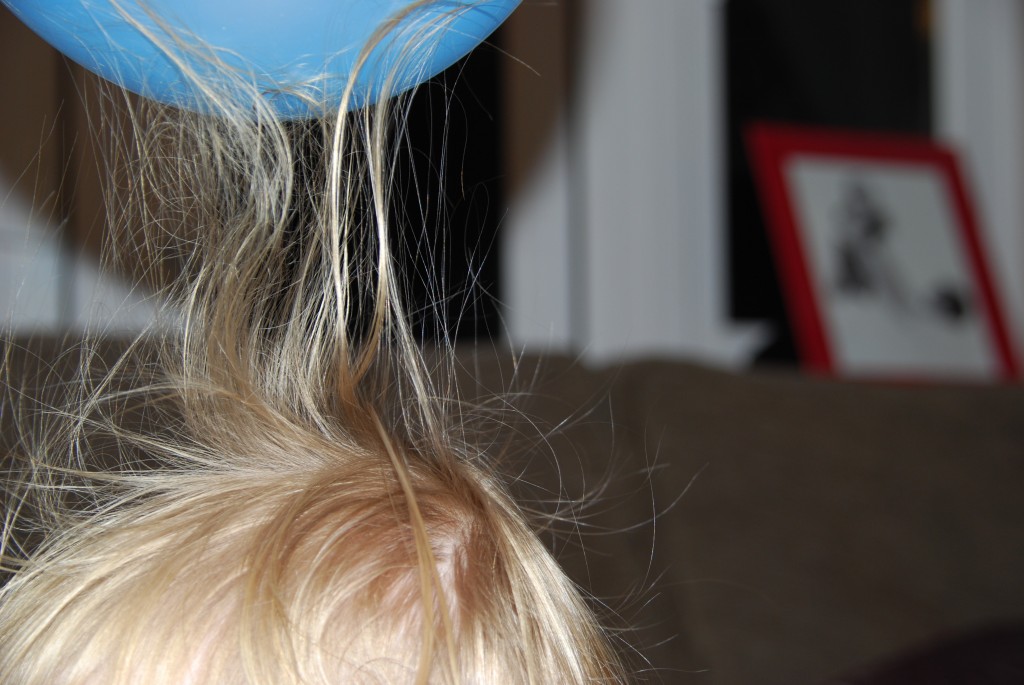
That is why classic classroom demos work so reliably, like rubbing a balloon on hair. Often, hair gives up electrons to the balloon, leaving your hair positively charged and the balloon negatively charged. But the exact direction can vary with the balloon material, hair products, and how dry the air is. Either way, you end up with opposite charges that attract, so the balloon may stick, and your hair may lift and spread as the strands repel each other.
Why dry air makes static worse
If static feels like a winter-only prank, you are not imagining it. Humidity is the big reason.
Moist air helps charge leak away
Water molecules in humid air can form a very thin, invisible layer of moisture on surfaces. That layer helps charges move, so any extra electrons can slowly leak away instead of piling up. In other words, humidity makes the world a slightly better electrical “drain.”
Dry air is a better insulator
When the air is dry, surfaces stay dry. Many common culprits in static build-up, like plastic, rubber soles, and synthetic fabrics, are good insulators, meaning charge does not move through them easily. Wool is also an insulator, but it can absorb moisture and behave differently depending on humidity and what it is touching. Your own skin and clothing moisture matter too.
So in a dry room, the extra electrons you picked up have fewer escape routes and can accumulate to higher voltages. That is why walking across a carpet in socks during a dry winter day is such a reliable recipe for getting zapped.

From build-up to zap
A static shock is a rapid discharge of built-up charge. You might have only picked up a tiny amount of extra charge, but it can produce a surprisingly high voltage because your body acts like a small capacitor, storing charge on its surface. In everyday situations, that voltage can climb into the thousands of volts, even though the total energy involved is small.
Why it hurts even though it is tiny
Static shocks are typically high voltage but very low current and very short duration. Current and time are the big factors for danger to your body. That is why a static zap is usually more annoying than harmful.
When your finger approaches a metal doorknob, the electric field between you and the knob can become strong enough to push electrons through the air. Air normally insulates, but at a high enough electric field, it breaks down and becomes momentarily conductive. That is the little spark.
You also will not feel a shock every time you touch something. Sometimes charge leaks off gradually through slightly conductive air, a damp surface, or your clothing. Other times, you just do not reach the breakdown threshold, so nothing dramatic happens.
Why you sometimes see or hear it
In a dark room, the spark can be visible as a tiny flash. You may also hear a sharp snap. That sound comes from the air heating and expanding very quickly along the spark’s path, creating a tiny pressure wave.
Static cling
Static cling is the same charge story, just less dramatic than a doorknob zap.
In a dryer, fabrics tumble, rub, and separate constantly. Some materials (especially many synthetics) exchange electrons easily and do not let charge spread out and dissipate. The result is patches of positive and negative charge.
- Opposite charges attract: A negatively charged sock sticks to a positively charged shirt.
- Like charges repel: Two similarly charged fabrics may push apart, making items “float” away from each other when you pull them from the dryer.
Fabric softeners and dryer sheets help by adding chemicals that reduce static build-up and by slightly increasing surface conductivity so charge can spread out and leak away.

Easy experiments
Static electricity is one of those topics where the world becomes your lab bench. A few safe, low-stakes experiments can make the idea feel real.
1) Balloon and hair
- Inflate a balloon and rub it on clean, dry hair for 10 to 20 seconds.
- Hold the balloon near your hair or a wall and watch it attract.
You are seeing charge transfer and the force between charges.
2) The “sticky” plastic comb
- Run a plastic comb through dry hair or a wool sweater.
- Bring it near small bits of paper.
The paper bits jump because the comb’s electric field polarizes the paper, shifting charges slightly inside it and creating attraction.
3) A gentler doorknob touch
If you are tired of surprises, try touching the metal with a key first. The discharge can still happen, and you might even see a bigger spark, but it often feels less sharp because you are not discharging through the sensitive nerves in your fingertip.
How to reduce shocks
If static is making your winter feel like a constant game of “guess that zap,” here are practical ways to turn the volume down.
- Add humidity: A humidifier, or even simmering water briefly while cooking, can raise indoor humidity and help charge dissipate.
- Moisturize skin: Dry skin is more insulating. Lotion can reduce the intensity of shocks for some people.
- Choose materials wisely: Rubber-soled shoes and synthetic fabrics tend to build static more easily than leather soles or natural fibers.
- Use dryer strategies: Dryer balls, dryer sheets, or slightly shorter drying times can reduce static. Over-drying is a common culprit.
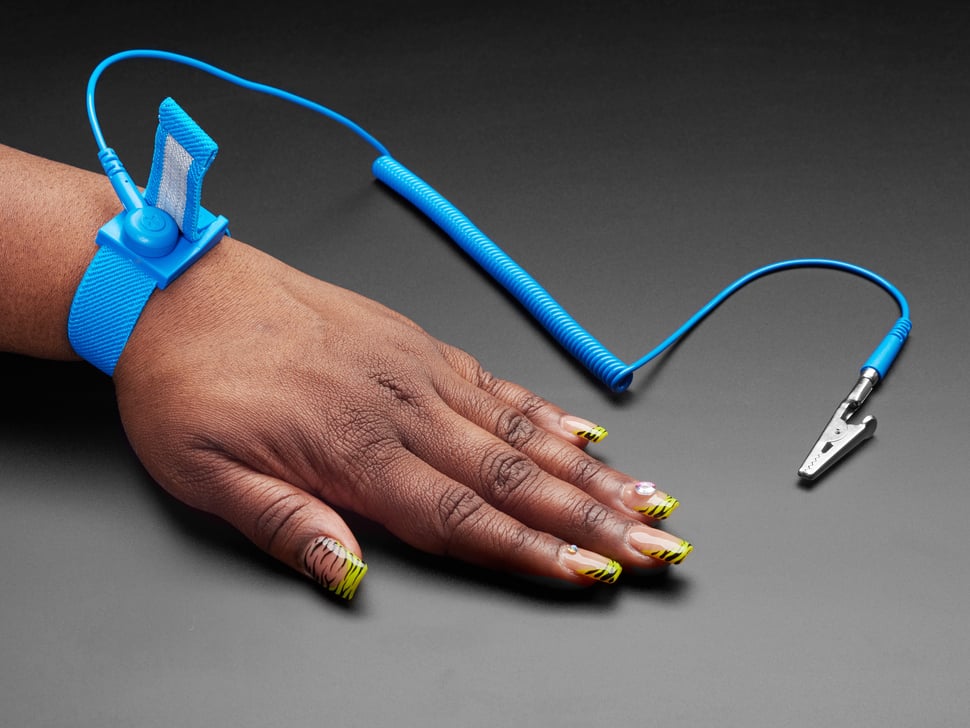
- Discharge yourself before electronics: Touch a truly grounded metal object first, like the metal case of a plugged-in, properly grounded appliance. In many homes, metal plumbing can also be grounded, but it is not guaranteed. If you are not sure what is grounded, play it safe and use an anti-static strap when working on sensitive components.
Is static electricity dangerous?
For everyday life, static shocks are usually harmless. The bigger concern is not your finger, it is your environment and your electronics.
When static matters more
- Electronics: Static discharge can damage sensitive components. That is why people use anti-static wrist straps when building PCs.
- Flammable vapors: In places with gasoline fumes or certain industrial settings, a spark is a real hazard. Those environments use grounding, bonding, and strict safety procedures to prevent charge build-up.
In normal home conditions, the main risk is startling yourself into dropping something fragile. Or stepping on a Lego. That one is not static’s fault, but it still feels like physics is picking on you.
Quick FAQ
Why do I get shocked more than other people?
It often comes down to your shoes, the flooring you walk on, the fabrics you wear, and how dry your environment is. Insulating soles plus dry air plus carpet is a perfect static recipe.
Why does metal seem to cause the shock?
Metal is a great conductor, so it offers an easy path for charge to move. The shock is the charge equalizing between you and the metal object, not the metal “creating” electricity.
Can you build up static without rubbing?
Yes. Any repeated contact and separation can transfer charge, including peeling tape, pulling on a sweater, sliding out of a car seat, or even removing certain plastic packaging.
Is lightning just static electricity?
Lightning is the same basic idea of charge separation and discharge, but scaled up massively inside storm clouds. It is not “static” in the everyday sense, but the physics rhyme is very real: charge builds, air breaks down, and a sudden discharge follows.
The takeaway
Static electricity is your daily reminder that electrons are real, mobile, and a little mischievous. Charge builds up when materials swap electrons and the environment prevents that charge from leaking away. Dry air helps it accumulate, and when the electric field gets strong enough, the charge discharges in a tiny spark that you feel as a shock.
Once you know what to look for, static stops being a mystery and starts being a small, teachable moment hiding in your laundry basket and waiting by the doorknob.