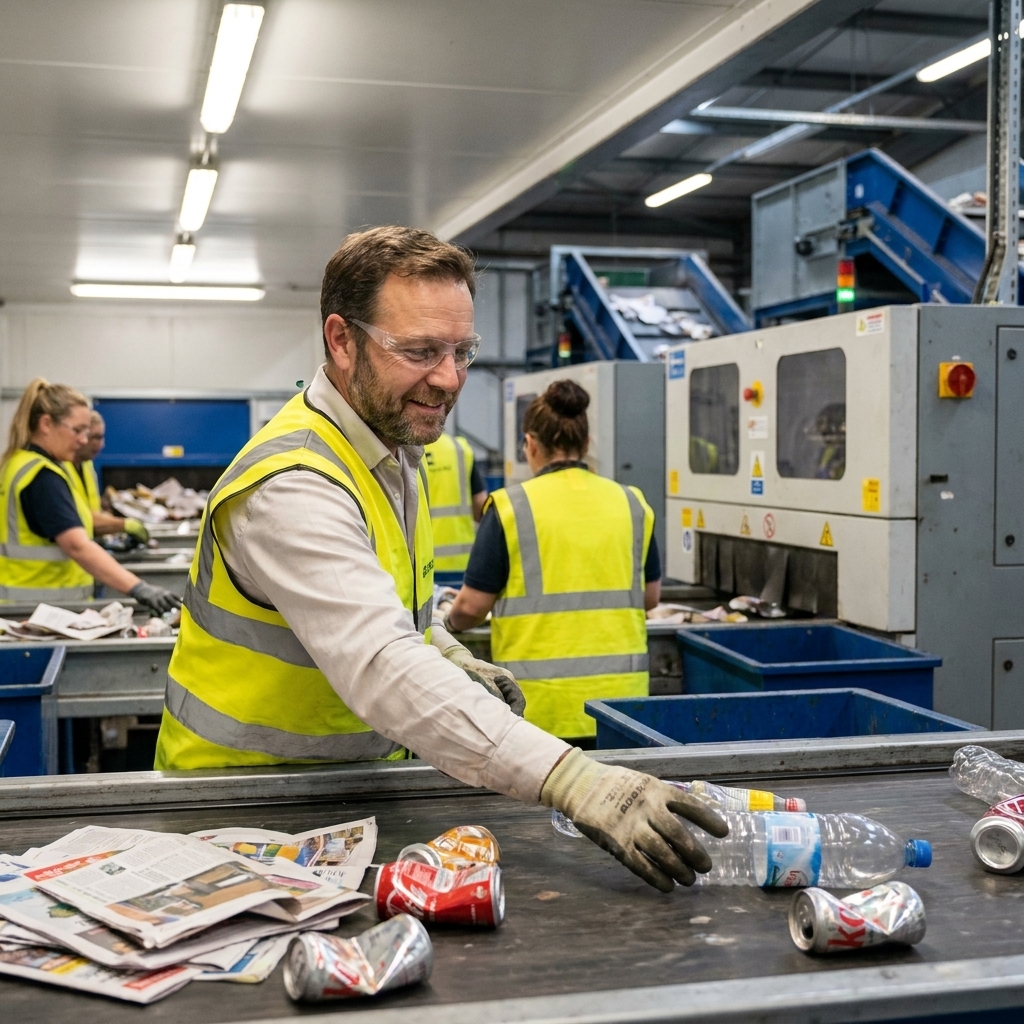
If you have ever opened the cabinet under the sink and caught a whiff of “mystery citrus” mixed with “industrial thunderstorm,” you are not alone. Most homes quietly collect a mini chemistry lab: bleach, ammonia cleaners, drain openers, paints, thinners, pesticides, pool chemicals, and assorted sprays with labels you stopped reading years ago.
Handled well, these products do their jobs and mind their business. Handled poorly, they can leak, react, corrode shelves, off-gas irritants, or in the worst cases, start a fire. The goal here is not to make you afraid of your cleaning supplies. It is to make your home a place where chemistry stays predictable.
Know what counts as hazardous
In chemistry, “hazardous” does not mean “evil.” It means the substance has a property that can harm you or your home if it escapes its container or meets the wrong partner. The most common hazard categories you will see on labels or Safety Data Sheets are:
- Corrosive: eats through skin and some metals. Think strong acids and bases, like many drain cleaners and some toilet bowl cleaners.
- Flammable: lights easily or produces flammable vapors. Many paints, varnishes, thinners, nail polish remover (acetone), and gasoline fall here.
- Oxidizer: makes fires burn hotter and faster, even if it is not flammable itself. Pool shock (calcium hypochlorite) is a classic.
- Toxic: harmful if swallowed, inhaled, or absorbed. Pesticides, some solvents, and certain automotive fluids.
- Reactive: can generate heat, pressure, or hazardous gases when mixed with water or other chemicals. Some drain openers and pool chemicals.
If a product label includes words like DANGER, POISON, CAUSTIC, FLAMMABLE, or OXIDIZER, treat it as a high-risk product that deserves deliberate storage.
Child and pet safety
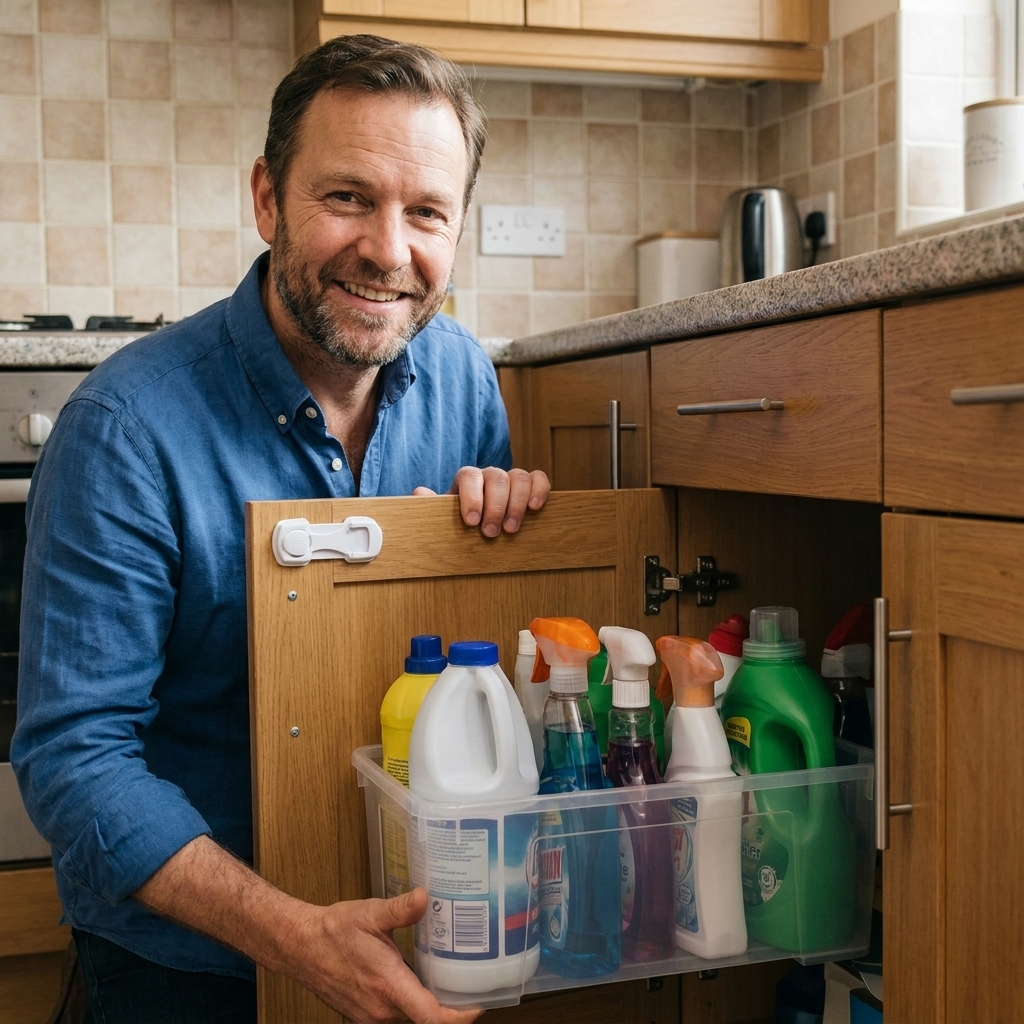
If kids or pets are in the home (or visiting), your storage plan needs one extra rule: limit access. “Child-resistant” caps help, but they are not child-proof, and they do nothing if a bottle leaks into a curious paw’s reach.
- Store high and locked: a latched cabinet or locked utility closet beats an under-sink cabinet every time.
- Use lidded bins: they add a second barrier and contain drips.
- Keep originals: original labels and child-resistant caps are part of the safety design.
Keep original containers
I know the temptation: “I’ll just pour this into a nicer bottle.” In practice, relabeling fails more often than it succeeds. Caps get swapped. Sharpie fades. Someone assumes it is water. The safest container is almost always the one designed, tested, and labeled for that chemical.
If you must transfer
- Use a container rated for that chemical (many solvents dissolve certain plastics).
- Label immediately with the full product name and hazard warnings.
- Never use food or drink containers, not even temporarily.
Safe storage basics
When I taught high school labs, the easiest way to prevent accidents was not heroic technique. It was boring organization. Home chemical safety is the same.
1) Separation
Some pairings are notorious because they generate toxic gases or vigorous reactions. Here are the big ones to avoid:
- Bleach + ammonia: can create chloramine gases that irritate lungs and eyes and can be dangerous in enclosed spaces.
- Bleach + acids (vinegar, many toilet bowl cleaners, descalers): can release chlorine gas.
- Hydrogen peroxide + vinegar (mixed in the same bottle): can form peracetic acid, a strong irritant and corrosive.
- Drain cleaners: mixing different brands or types can cause heat, splattering, or fumes.
- Pool chemicals (especially chlorine products): keep away from acids, ammonia products, and anything organic like oil, sawdust, or greasy rags.
Storage tip: Put incompatible products in separate bins, not just separate spots. A leak does not respect shelf boundaries.
Extra separation that matters in storage: keep acids away from bleach even if you never plan to “mix” them, keep oxidizers away from flammables and other organics, and keep strong corrosives away from bare metal shelving when possible (corrosion plus leaks is a bad combo).
2) Stability
- Keep containers upright with caps tightened. Sounds obvious, until a half-closed solvent bottle tips in the garage.
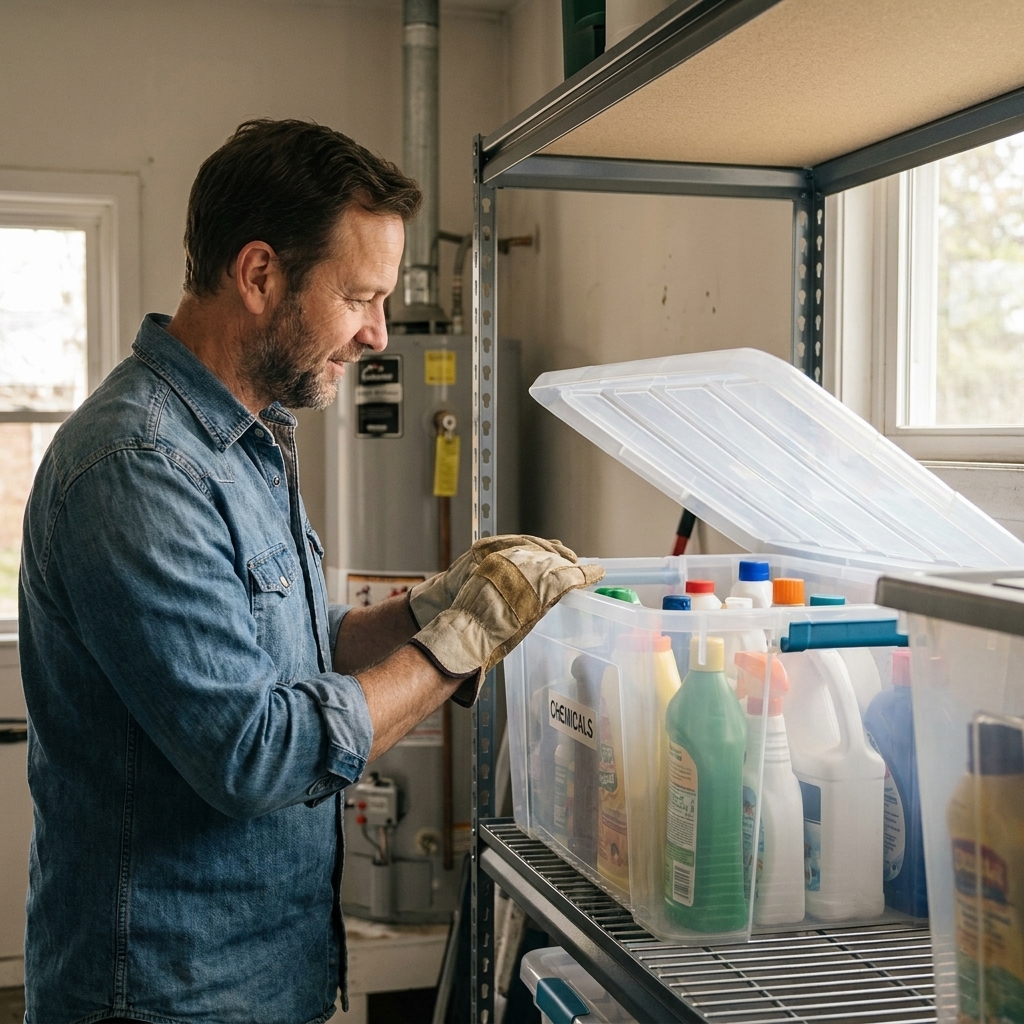
- Use secondary containment: a plastic tote or tray catches leaks and keeps bottles from rolling.
- Avoid heat and sunlight: heat increases vapor pressure, which can swell containers and intensify fumes. Sunlight can degrade plastics and some chemicals.
- Keep off the floor in flood-prone basements or near water heaters where pilot lights may exist.
3) Air and ignition
Many solvents release vapors that can travel and find an ignition source. Store flammables away from:
- Furnaces, water heaters, space heaters
- Anything that sparks (some switches, tools, chargers)
- Smoking areas
Also, skip storing flammables in household refrigerators or freezers. If a product truly requires refrigeration, it should go in a unit specifically rated for flammables, which is not typical home equipment.
If you routinely store paint thinner, gasoline for equipment, or large amounts of solvent-based products, consider a purpose-built flammable storage cabinet. Most households do fine with “small quantities, tightly sealed, cool location,” but the key is keeping vapors from building up.
Where to store what
Under the sink
Usually not ideal. Under-sink cabinets are humid, close to plumbing leaks, and often where kids and pets can access. If you store anything there, keep it minimal and in a latching bin.
Kitchen pantry
No. Chemicals should not share space with food, cookware, or anything edible. This is about preventing accidental contamination and mix-ups.
Bathroom
Only what you use regularly. Ventilation is often poor, and many bathrooms are warm and humid. Store daily-use cleaners in small quantities, tightly sealed, and ideally in a high, latched cabinet.
Garage or shed
Often the best spot for paints, solvents, automotive fluids, and pesticides, provided it stays reasonably cool and dry. Keep chemicals off the floor and away from ignition sources. In very hot climates, a climate-controlled utility closet can be safer than a baking garage.
Laundry area
A common mixing hazard. Laundry zones often host bleach, detergents, stain removers, and ammonia-based products. This is where accidental combinations happen. Use separate bins for bleach and ammonia cleaners and keep everything capped.
Handling chemicals safely
You do not need a full face respirator to wipe down a counter. You do need a few habits that cut risk dramatically.
Read the first 20 seconds
Focus on: ventilation advice, protective gear, and “do not mix with” warnings. Manufacturers put those there because people mixed it.
Ventilation is physics
Fumes are molecules in motion. In a small bathroom, concentrations build quickly. When using strong cleaners or solvents:
- Open a window if you have one
- Run the exhaust fan
- Keep the door partially open to allow fresh air in
- Take breaks if you notice irritation
Use the right gloves
Latex gloves are fine for some mild cleaners, but many solvents go right through. Nitrile is a solid all-around choice for household chemical tasks. For strong corrosives, check the product guidance.
Skip the sniff test
If you need to identify an odor, waft from a distance like you are gently fanning a campfire, not inhaling directly from the bottle.
Spills and leaks
Most household chemical incidents are small leaks that become big problems because nobody notices until the smell does. Here is a simple playbook.
Step 1: Protect people and pets
- Ventilate the area
- Keep kids and animals out
- If you feel dizzy, short of breath, or your eyes burn, leave the area and get fresh air
Step 2: Identify the substance
Use the label. If the label is damaged, do not guess. Treat as hazardous and avoid mixing anything into it.
Step 3: Contain, then absorb
- For many liquids: use kitty litter, sand, or a commercial absorbent. Avoid using sawdust for oxidizers or unknown spills.
- Do not hose spills down a drain unless the label explicitly says it is safe and legal in your area.
Step 4: Dispose of cleanup materials safely
Rags and absorbents soaked with solvents or oil-based paints can be a fire risk, including spontaneous combustion in some conditions. One common approach is to place them in a metal container with a tight-fitting lid until you can bring them to the proper drop-off site. Another is to lay them flat to dry outdoors away from buildings and ignition sources, then dispose according to the product label and local rules.
When to call for help: If the spill is large, you cannot identify it, it involves mercury (old thermometers), or you suspect toxic gas formation, contact your local poison control center for guidance (in the US: 1-800-222-1222) and your local emergency line if there is immediate danger.
Disposal
Disposal rules vary by city and county, but the chemistry behind the rules is consistent: we want to keep hazardous materials out of groundwater, waterways, and waste streams where they can ignite, corrode equipment, or expose workers.
One guiding note: local rules vary. When you are not sure, keep products in their original containers, do not mix anything together, and use your household hazardous waste (HHW) program as the default safe option.
Do not
- Do not pour solvents, paint, pesticides, or automotive fluids down drains or into storm sewers.
- Do not burn chemicals or chemical-soaked materials in fireplaces or backyard fires.
- Do not mix leftovers into a “super jug.” Unknown mixtures are where bad reactions happen.
- Do not throw pressurized aerosols into a fire or puncture them.
Common items
- Latex (water-based) paint: If it is usable, donate it. If not, many areas allow disposal once fully dried and solidified. You can dry small amounts by leaving the lid off in a ventilated area away from flames and kids, or by mixing in paint hardener or absorbent. Check local rules before trashing.
- Oil-based paint, stains, varnishes, thinners, mineral spirits, acetone: Take to an HHW facility or event.
- Bleach and ammonia cleaners: Local rules vary. Some areas allow disposal in the trash if sealed in the original container, others prefer HHW. Never combine them, even “to save space.”
- Drain openers, strong acids, strong bases: HHW is the safest route for leftovers. Do not dispose of these by pouring into drains unless the product label explicitly instructs it and local rules allow.
- Pesticides and herbicides: HHW, and keep them sealed. Never dump outdoors.
- Propane cylinders and fuel canisters: Many retailers or local programs accept them. Do not place in curbside recycling unless explicitly allowed.
- Automotive fluids (motor oil, brake fluid, antifreeze): Many auto shops and recycling centers accept used oil and sometimes antifreeze. Brake fluid often needs HHW handling.
- Batteries: Rechargeables and button batteries should go to dedicated collection points. Alkaline disposal rules vary, but recycling is still preferable.
Find disposal options
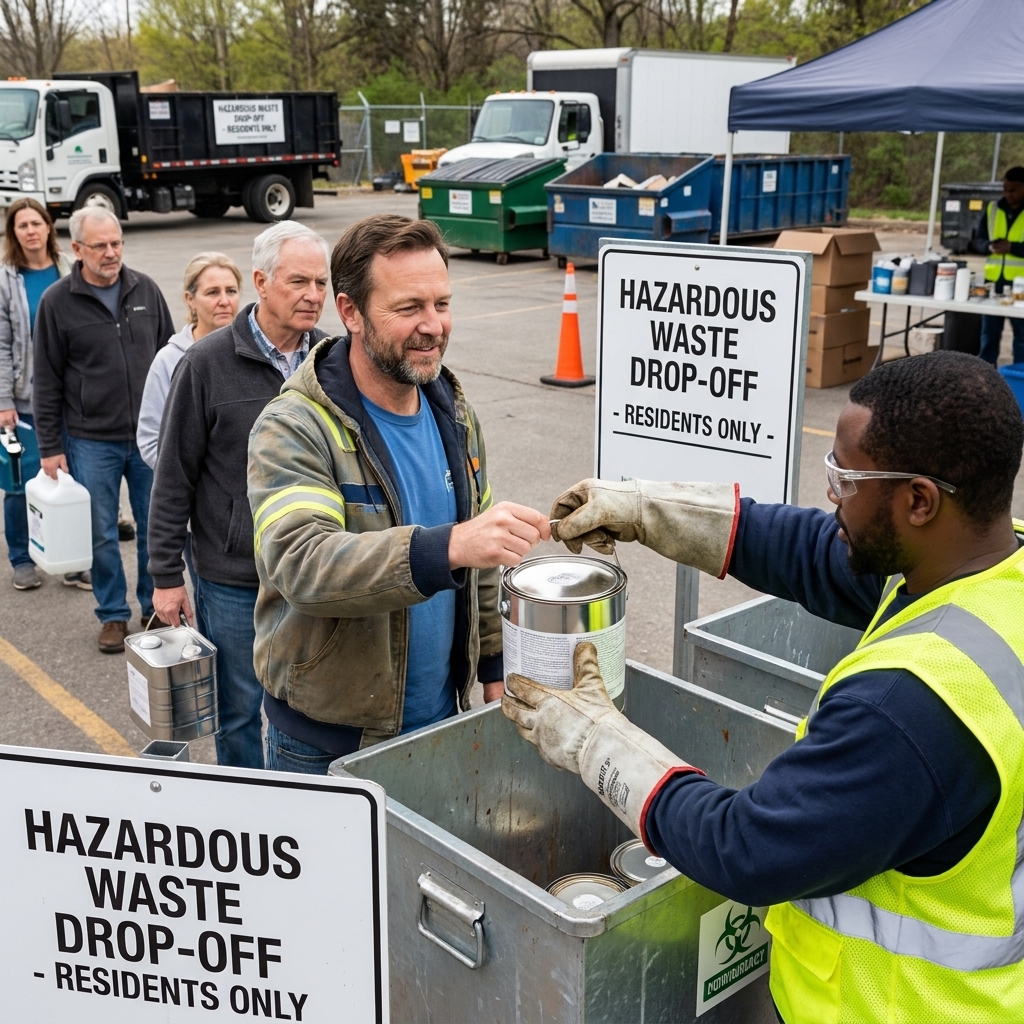
Most places handle hazardous household chemicals through one of three channels:
- Permanent HHW facilities run by the city, county, or a regional waste authority
- Scheduled collection events a few times per year
- Retail take-back programs for items like paint, batteries, or motor oil
Look up your local solid waste or environmental services website and search for “household hazardous waste.” They will list accepted items, container requirements, limits, and hours. Bring chemicals in a box, keep them upright in your trunk, and do not leave them in a hot car longer than necessary.
Aging and expiration
Chemicals are not immortal. Some get weaker, some get weirder, and some just become harder to use safely.
- Bleach degrades over time, especially if stored warm. Old bleach may not disinfect well, which can tempt people to use more than needed.
- Hydrogen peroxide loses strength once opened and with exposure to heat and light.
- Old, unknown products (especially crusty, swollen, or unlabeled containers) should go to HHW. If you cannot identify it, do not open it to investigate.
Common questions
Natural cleaners
Vinegar and baking soda are generally low hazard on their own, but “natural” does not automatically mean safe in every context. Vinegar is an acid. Essential oils are concentrated organics and can irritate lungs or skin. Use the same commonsense rules: label, ventilate, and store away from kids.
Neutralizing at home
In principle, acids and bases can be neutralized. In practice, home neutralization can generate heat and splattering, and you can easily overshoot and end up with another hazardous solution. Unless a product label gives explicit neutralization steps, skip the kitchen chemistry and use HHW services.
Empty containers
Only recycle containers if they are truly empty and your local program accepts that type of plastic or metal. For pesticide containers, follow the label exactly. Some require triple-rinsing and specific disposal steps. When in doubt, treat it as hazardous waste.
Mystery bottles
If you cannot identify it, do not open it to investigate. Keep it sealed, place it upright in a secondary container, and bring it to HHW. Unknown chemicals are where “I’ll just…” turns into “we need to air out the house.”
A simple setup
If you want a quick upgrade that makes a big difference, here is my favorite “one Saturday afternoon” system:
- Two lidded bins: one labeled “Bleach and oxidizers,” one labeled “Ammonia and acids.” Keep them physically separate on the shelf.
- One flammables bin: paints, thinners, solvents, and fuel, stored cool and away from ignition sources.
- One small PPE pouch: nitrile gloves, safety glasses, and a few disposable towels.
- A calendar reminder twice per year: check for leaks, rusting cans, swollen bottles, and products you no longer need.
It is not fancy. It is just good chemistry hygiene.
Quick checklist
- Store chemicals in original containers, tightly sealed.
- Store high, locked, and out of reach of kids and pets.
- Keep bleach away from ammonia and acids, including in storage.
- Keep oxidizers away from flammables and other organics.
- Keep flammables cool, ventilated, and away from ignition sources.
- Use bins or trays for secondary containment.
- Ventilate when using strong cleaners or solvents.
- Do not pour hazardous liquids down drains or into storm sewers.
- Use your local HHW program for paints, solvents, pesticides, pool chemicals, and unknowns.
If you take nothing else from this: chemistry is happiest when it stays in the bottle it came in, on the shelf it belongs on, far away from the one thing it should never meet.