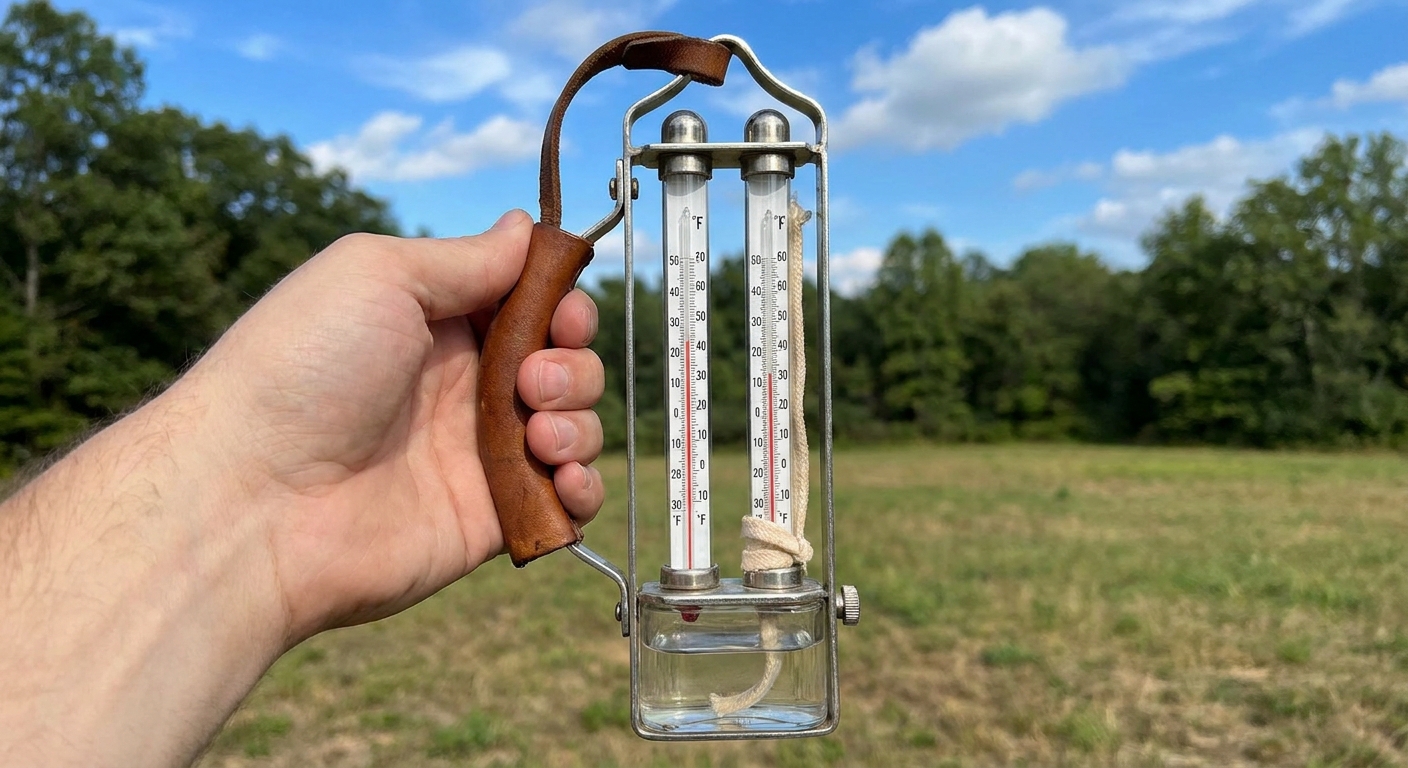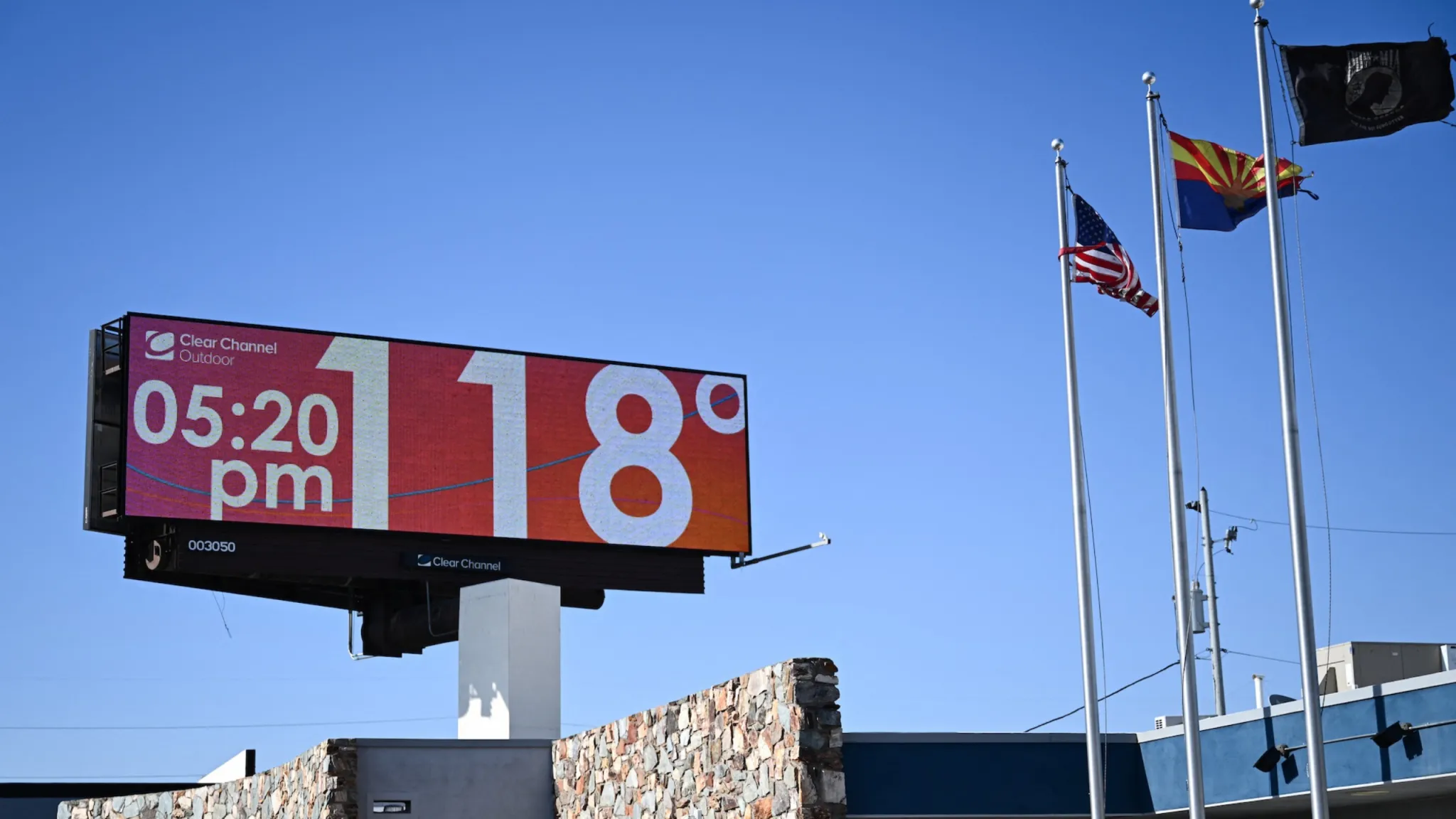
One summer afternoon when I was still teaching physics, a student walked in and said, “It’s only 45% humidity. Why does it feel like I’m breathing through a warm towel?” That question shows up every year, usually right around the first sticky heat wave.
The short answer is this: relative humidity is a percent that depends on temperature, while dew point is a temperature that tells you how much water vapor is actually in the air. That difference is why the air can feel more oppressive even when the relative humidity number goes down.

What dew point means
Dew point is the temperature at which the air becomes saturated with water vapor. Cool the air to that temperature, and water vapor starts condensing into liquid water, like dew on grass or fog near the ground.
It is easiest to think of dew point as the best quick indicator of how much moisture is in the air. If the dew point is higher, there is more water vapor in the air. If the dew point is lower, the air is drier.
Why temperature tracks moisture
You will often hear that warm air can “hold” more water vapor. As shorthand, that is fine. More precisely, higher temperatures allow a higher saturation vapor pressure, meaning the saturation point moves upward as air warms.
The dew point tells you how far you would have to cool the air before it reaches saturation and condensation begins. If you barely have to cool it at all, the air is already loaded with moisture.
- High dew point means the saturation point is close, so the air has lots of water vapor.
- Low dew point means the saturation point is far away, so the air has less water vapor.
What relative humidity means
Relative humidity (RH) is a percentage: how close the air is to saturation at the current temperature.
In plain language, RH answers: “Compared to the maximum water vapor the air could support right now, what fraction is actually in it?”
Because that “maximum” changes a lot with temperature, RH can swing dramatically over a single day even if the actual moisture in the air barely changes.

Why dew point rises while RH falls
This is the part that confuses people, and it is not your fault. RH is a moving target because temperature changes the size of the “bucket” of possible water vapor.
When afternoon heat kicks in:
- The air temperature rises, so the air’s saturation point rises.
- If the amount of water vapor stays the same, RH often drops, because the same moisture now represents a smaller fraction of a larger capacity.
- If moisture is also being added, from evaporation, plants, nearby water, or a wind shift that brings in a different air mass, then dew point can rise even as RH falls.
A simple bucket analogy
Imagine RH as the percentage full a bucket is, and dew point as a clue to how much water is actually inside. If the bucket suddenly gets bigger, the percent full drops even if you did not remove any water.
Examples side by side
Below are a few real-world style scenarios that separate the three common numbers people mix up: dew point, relative humidity, and the heat index.
Example 1: Same dew point, different RH
Morning: 70°F air temperature, dew point 65°F. RH is high because the air is not far from saturation.
Afternoon: 90°F air temperature, dew point still 65°F. RH is lower because 90°F air has a higher saturation point.
What changed? The moisture content stayed about the same, but RH fell because temperature rose.
Example 2: RH drops but it feels worse
Noon: 88°F, 55% RH, dew point about 69°F (rounded).
Later afternoon after a wind shift: 92°F, 52% RH, dew point about 70°F (rounded).
Many people see the RH drop (55% to 52%) and expect relief. But the dew point increased (about 69°F to about 70°F), which means there is more water vapor in the air. That extra moisture makes sweat evaporate less efficiently, so you often feel stickier.
Example 3: Same RH, different feel
Day A: 80°F with 60% RH. That might correspond to a dew point around the mid 60s°F.
Day B: 95°F with 60% RH. The dew point is much higher, often well into the 70s°F.
Same RH percentage, but Day B has dramatically more moisture in the air. That is why “60% humidity” is not a universal comfort rating.
How heat index fits
Heat index is a “feels like” number that combines air temperature and relative humidity to estimate heat stress on the human body, typically assuming shade and light wind. In direct sun, the apparent temperature can be noticeably higher.
Here is the key distinction:
- Dew point: moisture amount signal (temperature where saturation occurs).
- Relative humidity: closeness-to-saturation signal (percent that depends on current temperature).
- Heat index: heat stress estimate (a calculated index from temperature and RH).
A subtle but important point: heat index uses RH, but RH can be misleading by itself. Two afternoons can have similar heat index values and different dew points, meaning they can feel “sticky” in different ways, especially if you move between sun and shade or if wind changes.
Dew point comfort guide
Different regions and bodies adapt differently, but these ranges are a helpful rule of thumb in Fahrenheit:
- Below 50°F: dry air. Many people find it crisp, sometimes too dry for skin and sinuses.
- 50 to 60°F: comfortable to slightly humid.
- 60 to 65°F: noticeably humid.
- 65 to 70°F: muggy. Sweat evaporation slows.
- 70°F and above: oppressive for many people, especially with heat and low wind.
If you prefer Celsius, a rough translation is: 10°C and below is dry, 10 to 16°C is comfortable, 16 to 21°C is humid, and 21°C+ often feels oppressive.
Quick self-check
If you are trying to decide whether the air will feel sticky, which measurement you reach for depends on the question you are asking.
Use dew point for true humidity
- Planning a run or outdoor work
- Wondering why a “low” RH day still feels swampy
- Comparing humidity between morning and afternoon
Use RH for saturation risk
- Will fog or dew form overnight if temperatures drop?
- How close is the air to 100% right now?
Use heat index for heat stress
- Outdoor events, sports practices, labor safety planning
- Figuring out when heat feels dangerous, not just unpleasant
FAQ
Is dew point the same as humidity?
Not exactly. Dew point is a way of expressing how much moisture is in the air using a temperature. Relative humidity is a percentage that depends on current temperature.
Can relative humidity be 100% without rain?
Yes. 100% RH means the air is saturated. Water can condense into fog, haze, or dew without producing rain. Rain usually requires clouds with droplets that grow large enough to fall.
Why is humidity highest at dawn?
Overnight temperatures usually drop. Cooler air has a lower saturation point, so RH rises even if the amount of water vapor stays similar. This is also why dew is common in early morning.
Does dew point change during the day?
It can. Dew point often changes more slowly than RH, but it can rise or fall with air masses, wind direction, evaporation after rain, irrigation, and plant transpiration.
The takeaway
If you remember just one thing, make it this: relative humidity tells you how full the air’s moisture capacity is at the current temperature, while dew point tells you how much moisture is actually in the air.
So when the afternoon forecast shows falling RH but rising dew point, you are not seeing a contradiction. You are seeing temperature increase the air’s capacity while the moisture content stays high, or climbs even higher. Your skin, unfortunately, notices.