When you are outside on a clear night and you spot a bright streak, your brain immediately starts sorting it into a mental folder: meteor? satellite? airplane? The good news is you do not need an astronomy degree or a fancy app to tell them apart. In most cases, your eyes already have everything you need. You just need a couple of timing and motion clues.
Think of this as a quick field guide for your next backyard sky watch. I will walk you through what each object typically does across the sky, and then we will end with a no-nonsense checklist you can use in the moment.
The four usual suspects
Most "mystery lights" fall into one of these categories:
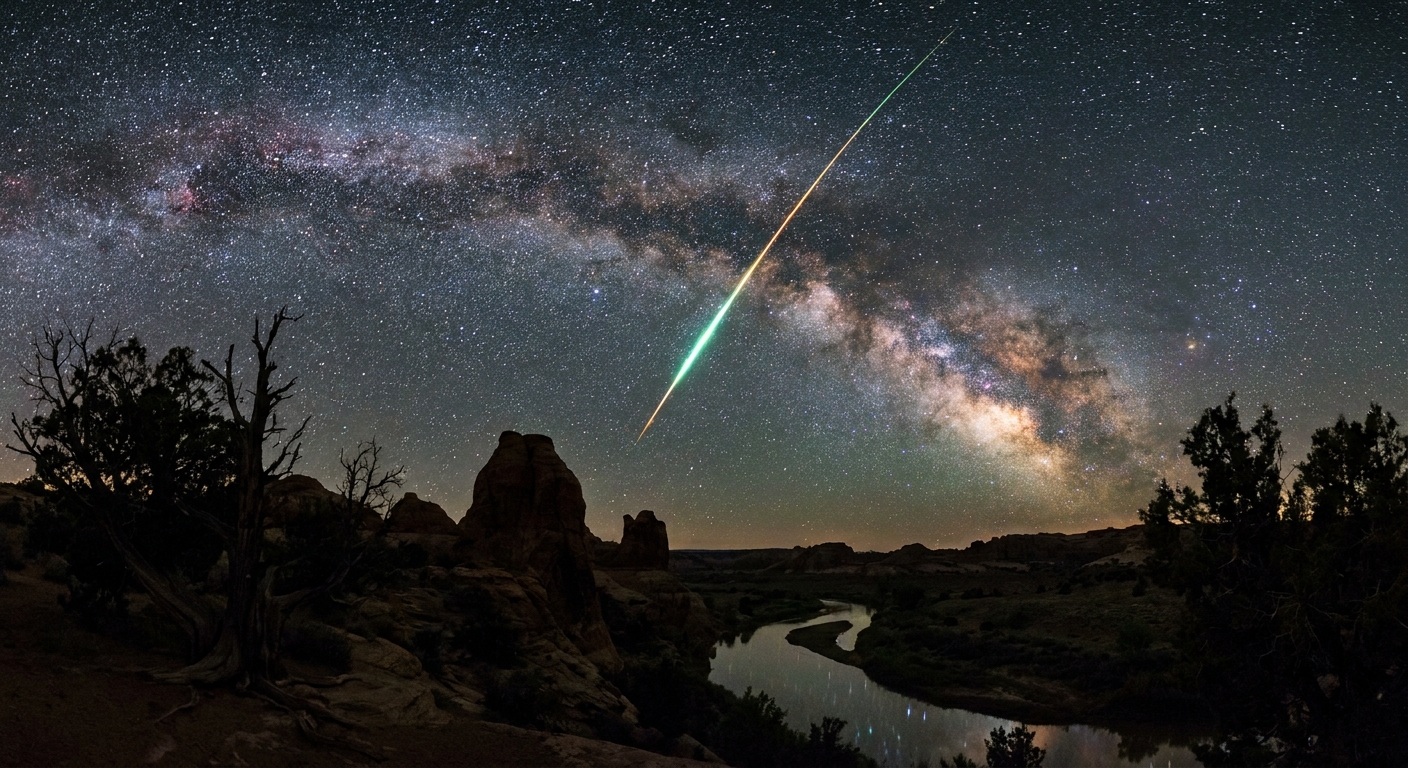
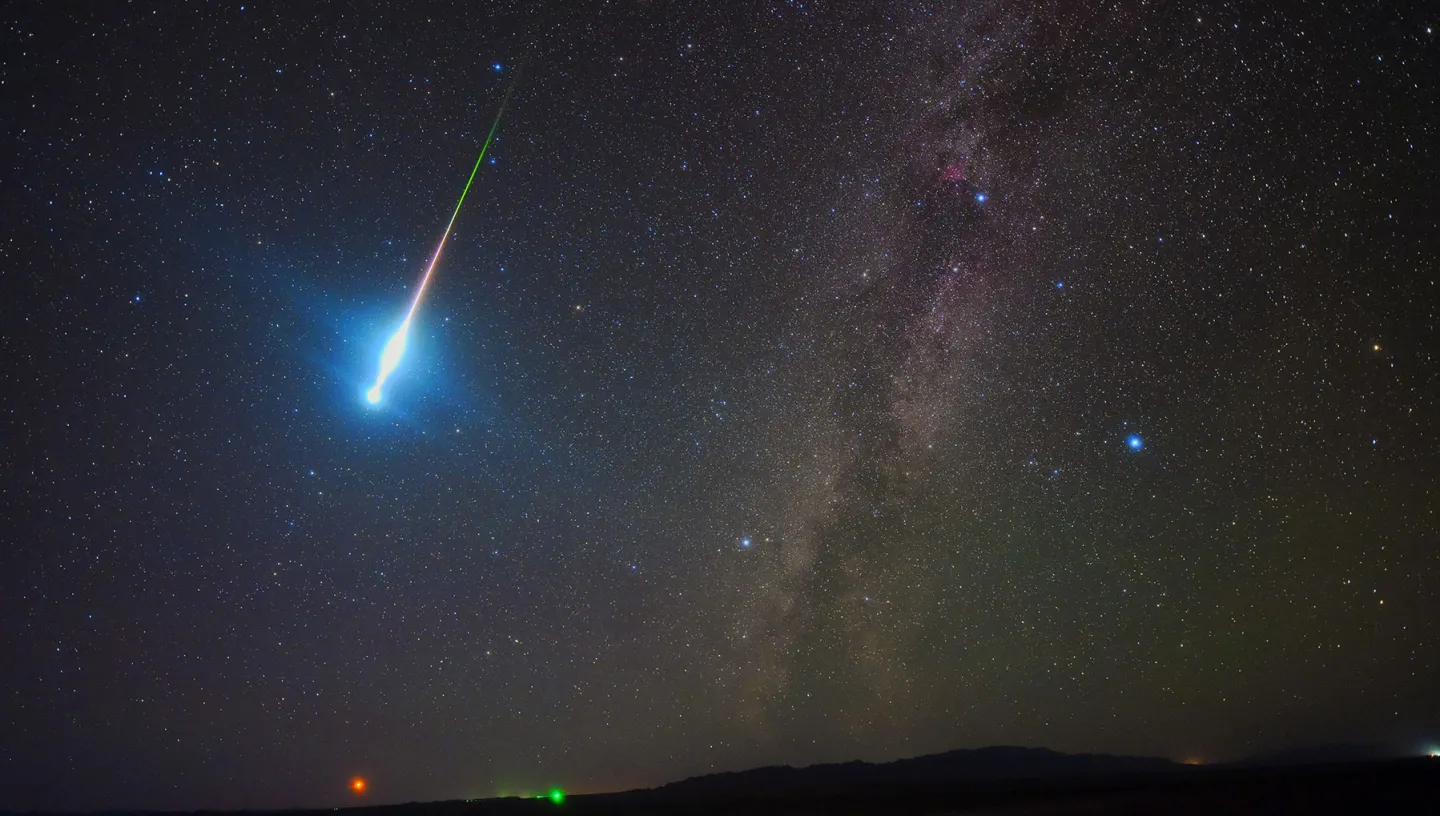
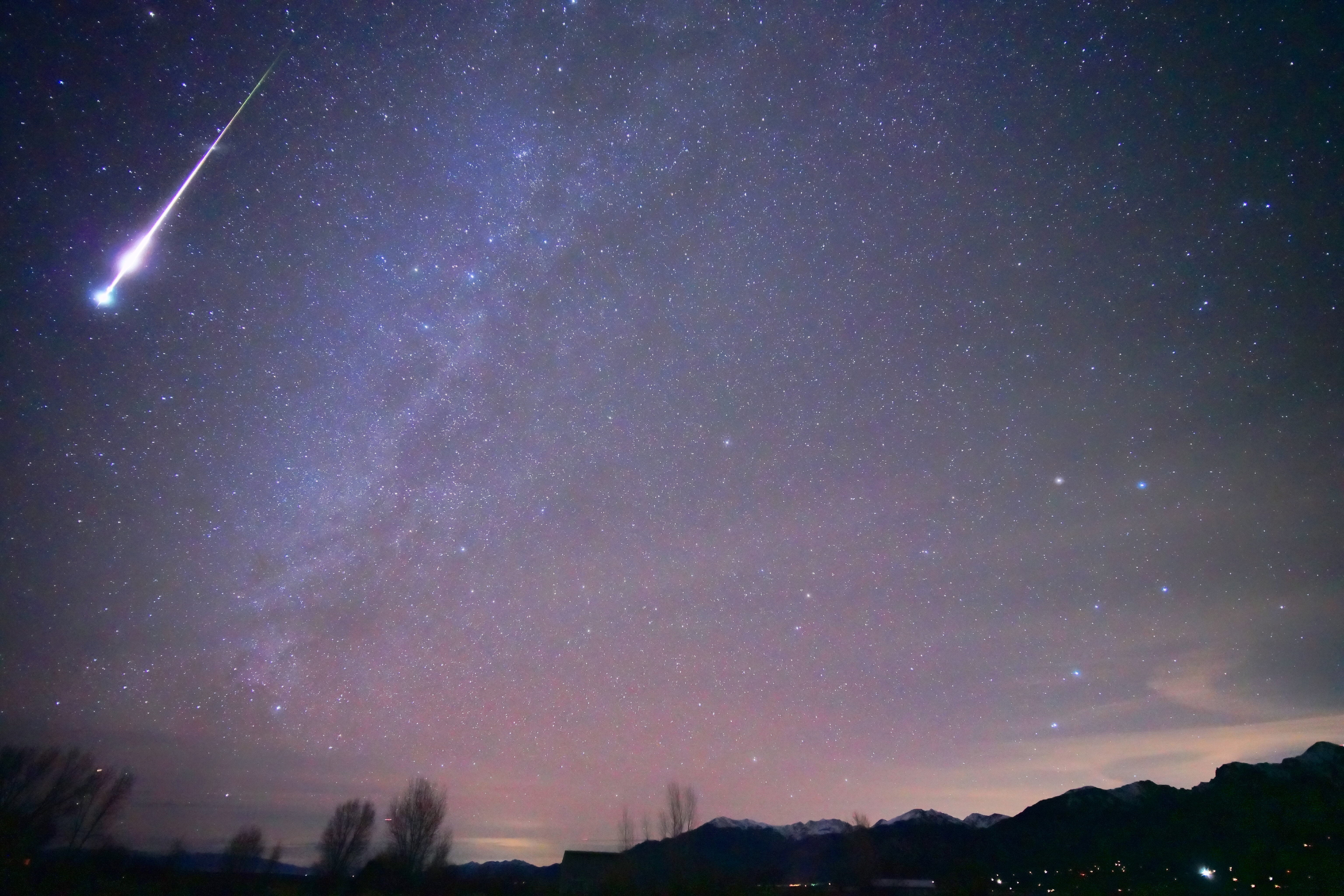
- Meteor: a tiny piece of rock or dust burning up in Earth’s atmosphere. If it is bright enough, people call it a fireball.
- Satellite: a human-made object in orbit reflecting sunlight. (The International Space Station is the celebrity version.)
- Airplane: navigation lights plus a blinking strobe, moving steadily with occasional brightness changes.
- Space debris: leftover rocket bodies or fragments in orbit. Visually, it often behaves like a satellite, with a few extra quirks.
The trick is not memorizing trivia. It is watching for speed, smoothness, blinking, and how long the show lasts.
Meteors: fast and brief
If you remember only one number, make it this: meteors are usually over in a second or two. Plenty last a few seconds, and bright fireballs can hang around longer, but the classic meteor is a quick swipe of light and then it is gone.
What a meteor looks like
- Duration: typically a fraction of a second to a few seconds. Bright fireballs can last 5 to 10+ seconds.
- Motion: a rapid streak, often with a clear start and stop.
- Brightness: can flare up suddenly, sometimes changing intensity along the path.
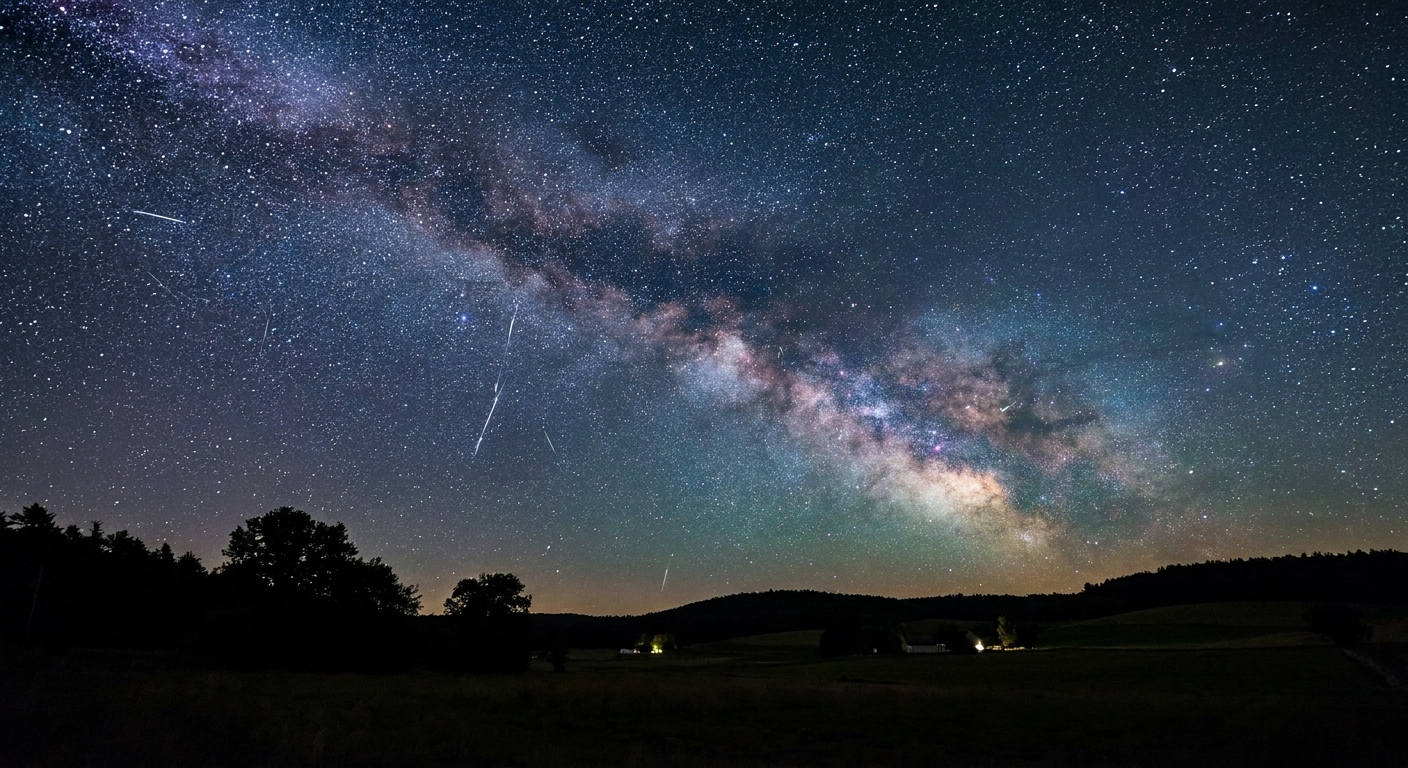
- Trail: sometimes leaves a faint glowing train that lingers for a moment, especially during meteor showers.
Two easy meteor tells
1) The “blink and you miss it” rule. If you barely have time to point and say, “There,” you are in meteor territory.
2) It does not blink like a plane. Meteors can flicker due to fragmentation, but they do not do the repeating aircraft strobe pattern.
Satellites: smooth gliders
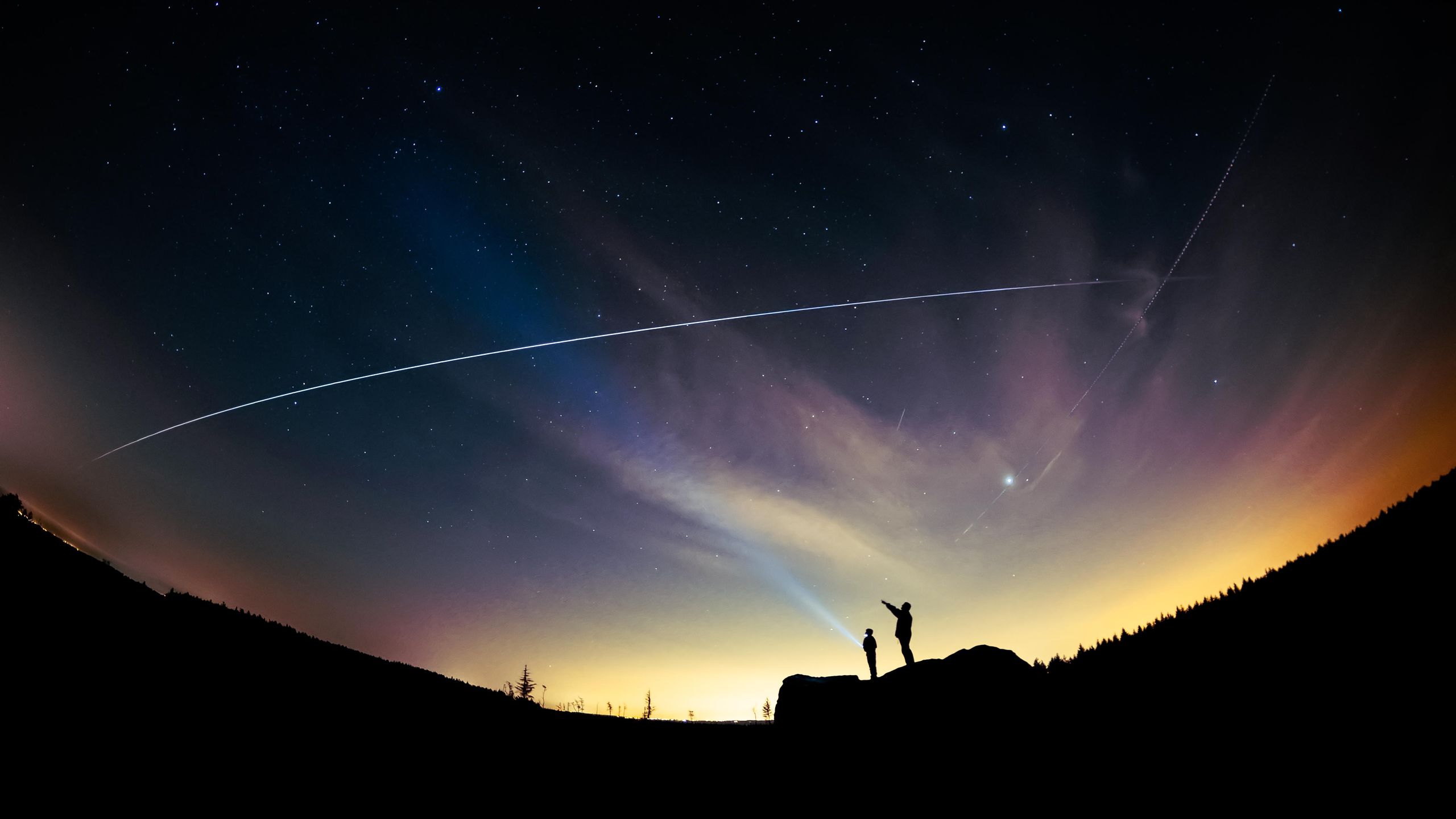
Satellites are the opposite of meteors in one key way: they are patient. They drift smoothly across the sky, often taking minutes to cross from one side to the other.
What a typical satellite looks like
- Duration: often 30 seconds to several minutes visible.
- Motion: smooth and continuous, like a star that decided to go for a walk.
- Brightness: usually steady, but it can slowly brighten or fade as the angle between you, the satellite, and the Sun changes.
- Blinking: no rhythmic aircraft-style strobe, but some satellites can show brief glints or periodic brightening.
- Color: usually white. Red and green points strongly suggest aircraft, but keep one caveat in mind: bright stars and planets low on the horizon can sparkle with color due to atmospheric twinkling.
Why satellites sometimes “turn off”
This confuses people all the time: a satellite can appear to vanish mid-flight. Usually it did not disappear; it just slipped into Earth’s shadow, or it rotated so it stopped reflecting sunlight toward you. (You notice this most often not long after sunset or before sunrise, when satellites are sunlit but your ground is dark.) The key detail is that it faded out while continuing the same smooth path, rather than flashing or abruptly streaking.
A quick note on Starlink “trains”
If you see multiple evenly spaced dots moving together on the same path, you are probably watching a group of satellites (often Starlink) rather than aircraft. They do not show the red-green navigation lights or the repeating strobe rhythm you would expect from planes.
Airplanes: blinkers and colors
If you suspect “airplane,” you are often right, especially near cities, airports, or along common flight paths. Planes can look surprisingly star-like until you notice the blinking.
Airplane giveaways
- Blinking: the biggest tell. Many aircraft have a bright white strobe that flashes regularly, plus red and green navigation lights.
- Color: red and green are common. Satellites and meteors are usually white.
- Motion: steady and generally slower than your intuition expects because they are far away.
- Brightness changes: a plane can get brighter when it turns and its landing lights face you. That can mimic a “flare,” but the strobe pattern remains.
The “two-beat” check
Watch for about five seconds. If you see a repeating flash rhythm, even faintly, put it in the airplane category.

Space debris: glints and odd flashes
Space debris is a catch-all for non-functional human-made stuff in orbit: old rocket stages, fragments, and retired satellites. Visually, most pieces look like satellites because the basic physics is the same: sunlight reflecting off an object moving smoothly through orbit.
How debris can stand out
- Irregular brightening: tumbling objects can “glint,” producing brief specular flashes or repeated bright pulses as they rotate.
- Still no aircraft-style strobe: glints are reflective flashes, not the hard-edged, repeating on-off pattern of a plane strobe.
- Path remains smooth: even when brightness changes, the motion stays satellite-smooth, not meteor-fast.
If you see a point of light cruising like a satellite but throwing occasional sparkle flashes, debris is a reasonable suspect. (A normal satellite can glint too, so treat this as a clue, not a guarantee.)
Reentries: the slow, messy exception
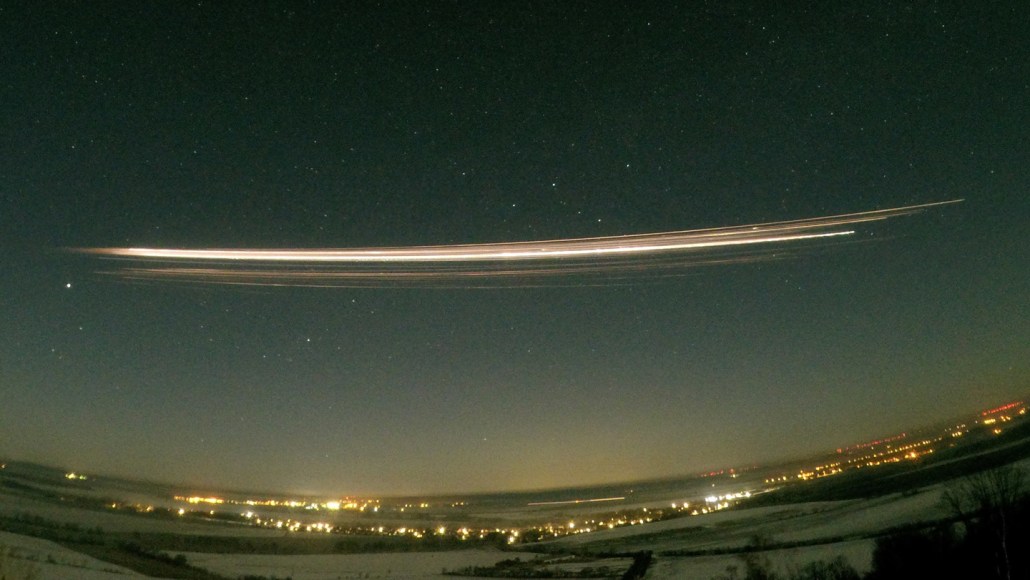
A reentry can look like a slow meteor that breaks into many pieces. The big difference is timing: reentries can last tens of seconds to minutes, with multiple fragments traveling together along a similar track.
Quick tests you can use
Here are quick checks you can do without any tools, just by watching carefully.
1) Count to three
- Gone before you reach 3: likely a meteor.
- Still moving at 10, 20, 60 seconds: likely a satellite, debris, or airplane.
2) Track versus streak
- Streak: a line that appears quickly and then vanishes, meteor-like.
- Track: a dot that changes position smoothly over time, satellite-like or airplane-like.
3) Check for blinking, then check again
Aircraft blinking can be subtle when the plane is far away. If you are unsure, keep watching. A real airplane pattern repeats.
4) Notice how the light behaves
- Meteor: often a sudden brightening, sometimes with a taper at the end.
- Satellite: steady, or slow brighten-then-fade.
- Debris: steady motion with occasional glints or pulses.
- Airplane: multiple lights, color hints, and rhythmic flashes.
Common mix-ups
“It was a streak, so it must be a meteor”
Long-exposure phone photos can turn a moving dot (satellite or plane) into a streak. Your camera is not lying; it is just collecting light over time. Trust your memory of how long it lasted. Seconds to minutes points away from meteors.
“It disappeared, so it must have burned up”
Satellites can fade out when they enter Earth’s shadow, especially around dusk or dawn viewing. The fade tends to be smooth. Meteors end abruptly.
“It was really bright, so it cannot be a satellite”
The ISS can be extremely bright, often brighter than any star in the sky. Brightness alone does not decide it. Duration and blinking do.
“It split into pieces”
That can happen with bright meteors (fragmentation), and it can also happen during a reentry event where debris breaks apart. The timing helps: meteors are usually over fast; reentries can last longer and may show multiple fragments traveling together.
“That light is changing colors”
If the object is not moving much, you might be watching a bright star or planet twinkling through the atmosphere, especially low on the horizon. Stars twinkle; satellites and airplanes change position.
A quick checklist
If you want a simple decision tool, run through this list in order.
- 1) How long did it last?
- Less than 2 seconds: meteor is most likely.
- More than 10 seconds: probably satellite, debris, or airplane.
- 2) Did it blink in a repeating pattern?
- Yes: airplane.
- No: keep going.
- 3) Was it a smooth moving dot?
- Yes: likely satellite or debris.
- No, it was a quick streak: likely meteor.
- 4) Did it flare or sparkle while staying on a smooth path?
- Yes: could be a glinting satellite or tumbling debris.
- 5) Any red or green color hints?
- Yes: strongly suggests airplane (unless the light is basically stationary, in which case you may be seeing a twinkling star or planet).
If you want to level up, try this simple habit: when you spot something, quietly say out loud, “one Mississippi, two Mississippi…” while you watch. That tiny time anchor makes the meteor-versus-satellite call dramatically easier.
Skywatcher’s rule of thumb: meteors are sprinting sparks, satellites are silent joggers, airplanes are joggers with blinking shoes.