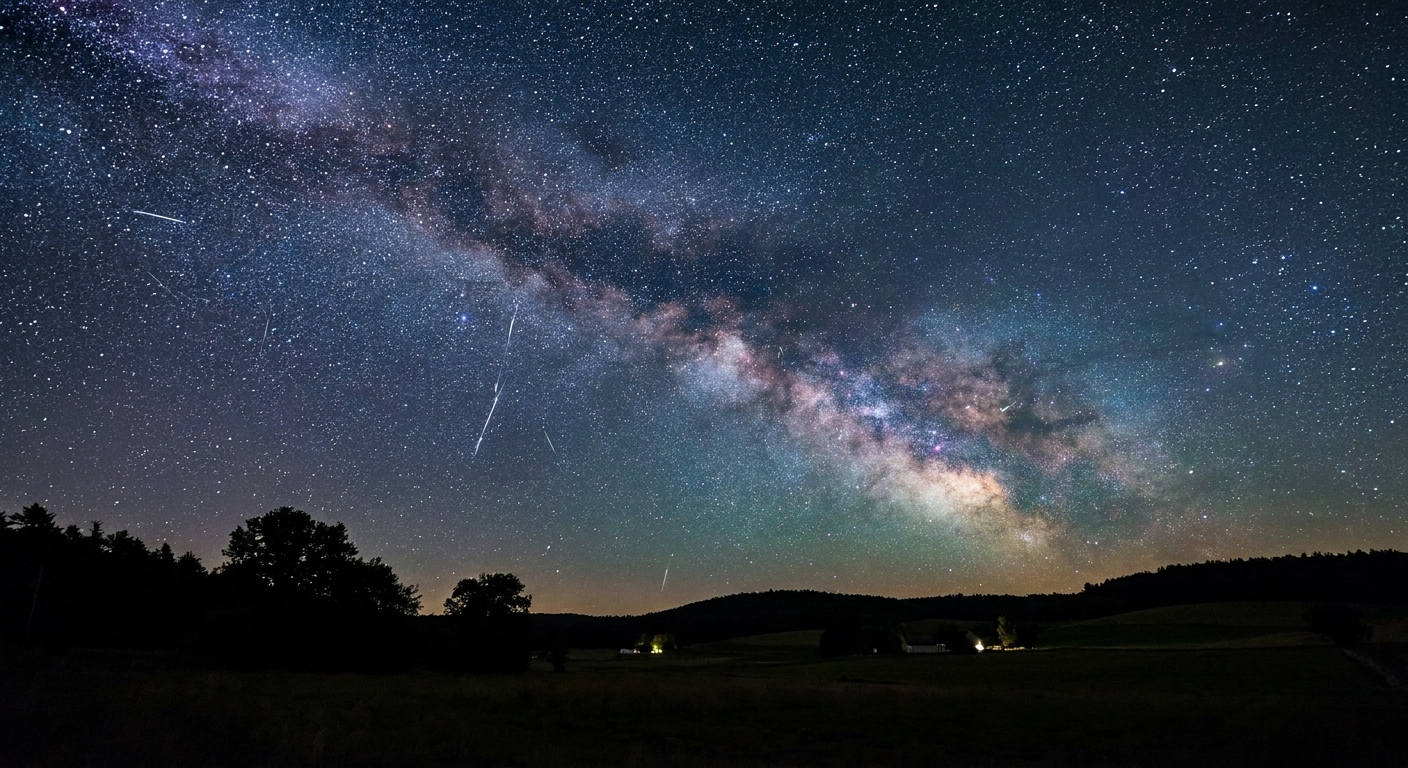
The night sky is full of moving lights, and not all of them are “shooting stars.” Some are satellites gliding silently overhead. Some are airplanes blinking their way across the horizon. And once in a while, you will catch a true meteor: a tiny grain of space dust lighting up the upper atmosphere for a heartbeat.
Here is how to tell what you are seeing, using nothing but your eyes and a little patience.
The core difference: heat vs. reflection
If you remember one idea, make it this: meteors glow because they heat up and ablate, while the surrounding air is excited and ionized, while satellites glow because they are reflecting sunlight.
That one physics fact explains most of the visible clues you will use below: speed, duration, brightness changes, and whether the light blinks.
What a meteor looks like
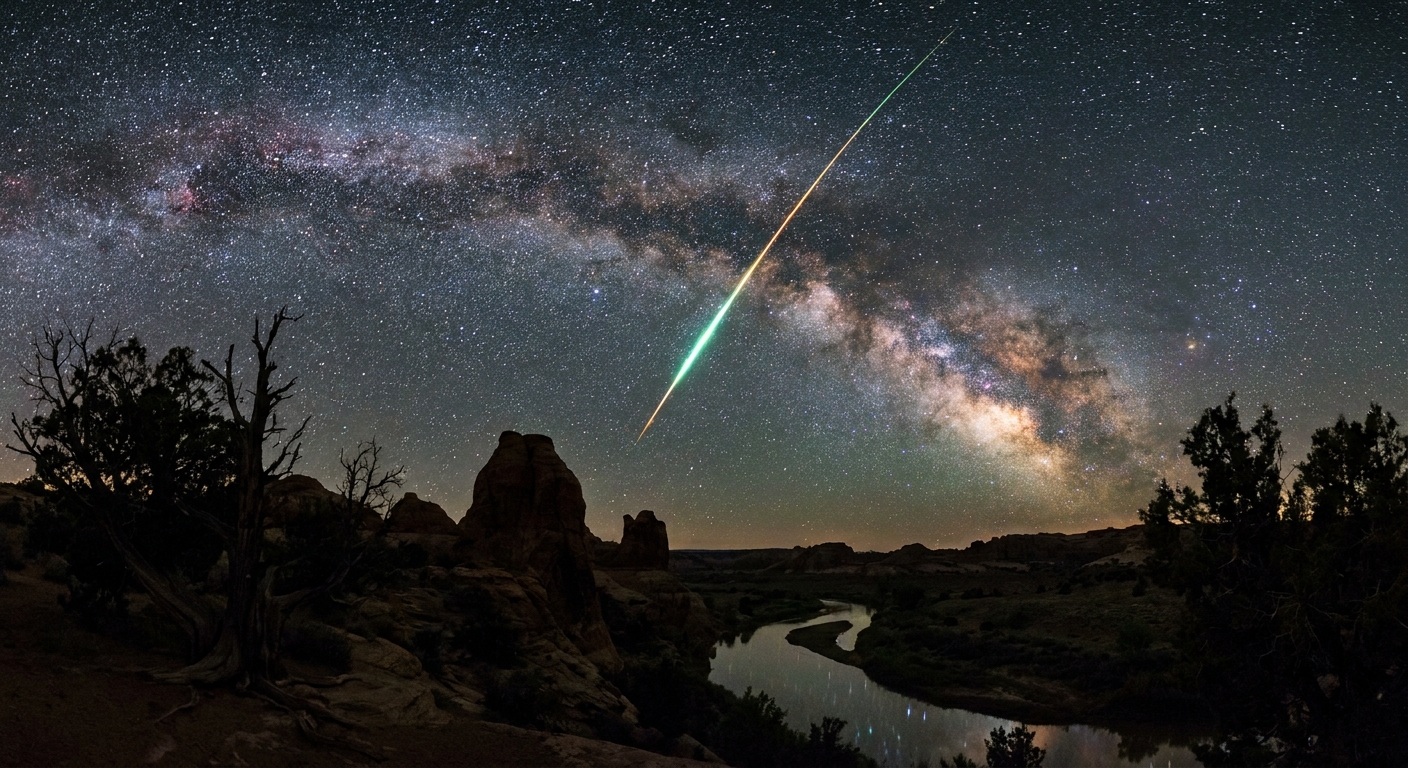
Meteors (the streaks of light) happen when meteoroids (space rocks, often sand-grain sized) slam into Earth’s atmosphere at tens of kilometers per second. The air in front of them compresses violently, forming a shock and heating the air and the object. That heating drives ablation and makes the surrounding gases glow.
Visual clues
- Duration: short. Many visible meteors last a fraction of a second up to about 2 seconds. Bright fireballs can linger longer, sometimes several seconds.
- Speed: extremely fast, like a spark off a grinder.
- Shape: a sudden straight streak that appears and disappears quickly. Sometimes it leaves a brief glowing trail that fades.
- Brightness: can be modest or very bright. The brighter the meteor, the more “dramatic” it feels.
- Path: brief and instantaneous, not a steady point of light tracking across the sky for minutes.
Bonus clue: During a meteor shower, meteors seem to “radiate” from one region of the sky (the shower’s radiant). They are still random in timing, but the directions line up if you watch long enough.
What a satellite looks like
Most visible satellites are in low Earth orbit. You often see them after sunset or before sunrise because they are still sunlit while your backyard is already dark. That said, some higher-orbit satellites can stay sunlit later into the night depending on season, latitude, and geometry.
Visual clues
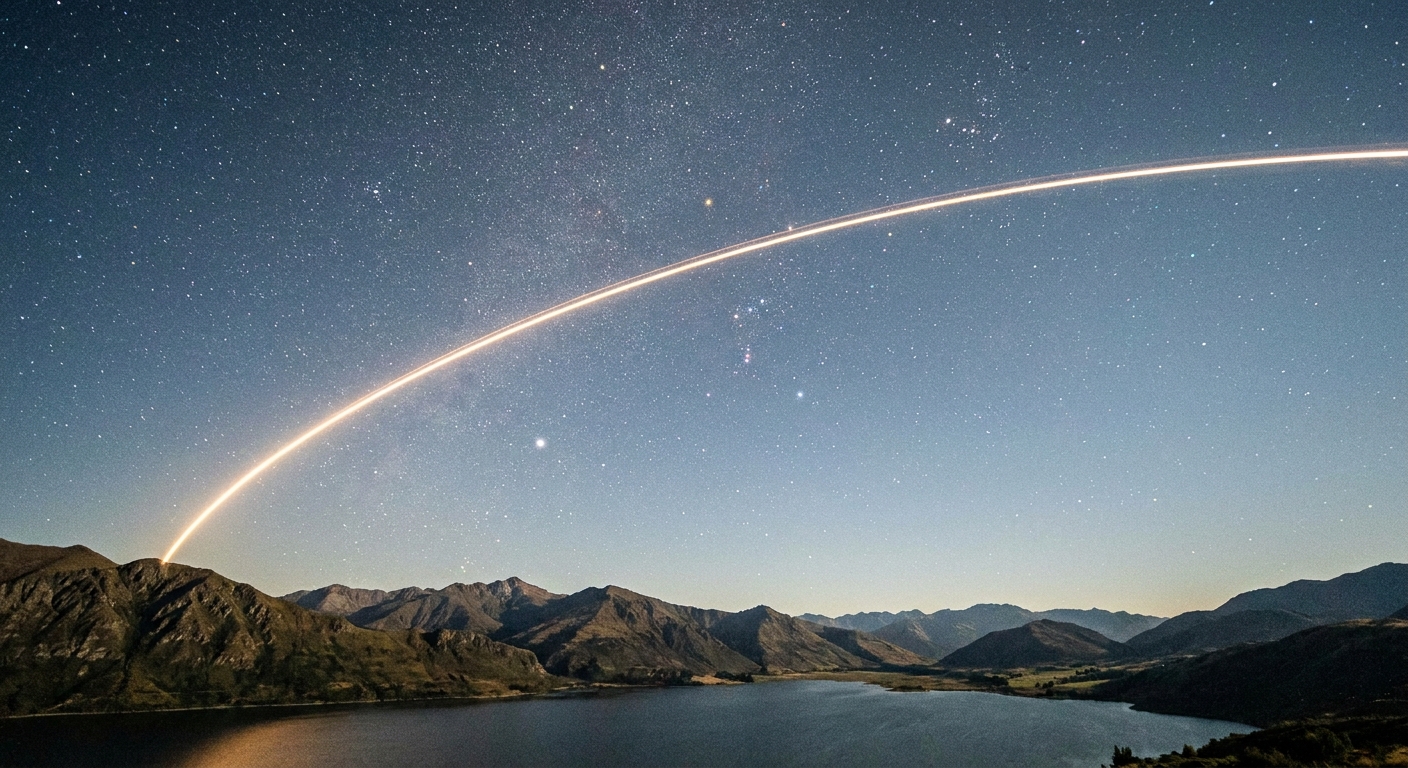
- Duration: long. Commonly 30 seconds to several minutes as it crosses part of the sky.
- Speed: steady and moderate, usually taking a few minutes to go from one side of the sky to the other.
- Shape: a point of light, not a streak.
- Blinking: no blinking in most cases. It looks like a moving star.
- Brightness changes: often slowly brightens or fades. Sometimes it “vanishes” when it enters Earth’s shadow, like someone turned down a dimmer switch.
The International Space Station is the celebrity example: it can look startlingly bright, and it moves steadily like any other satellite, just more obvious.
Some satellites can “flare” briefly when they reflect sunlight just right. The old Iridium flare shows were mostly a product of the original Iridium satellites, which are now deorbited, but other spacecraft can still flash or brighten. The key is that the motion stays smooth and the brightening usually feels like a quick swell, not a rhythmic blink.
What an airplane looks like
Airplanes are the most common meteor impostors, especially near cities and suburbs.
Visual clues
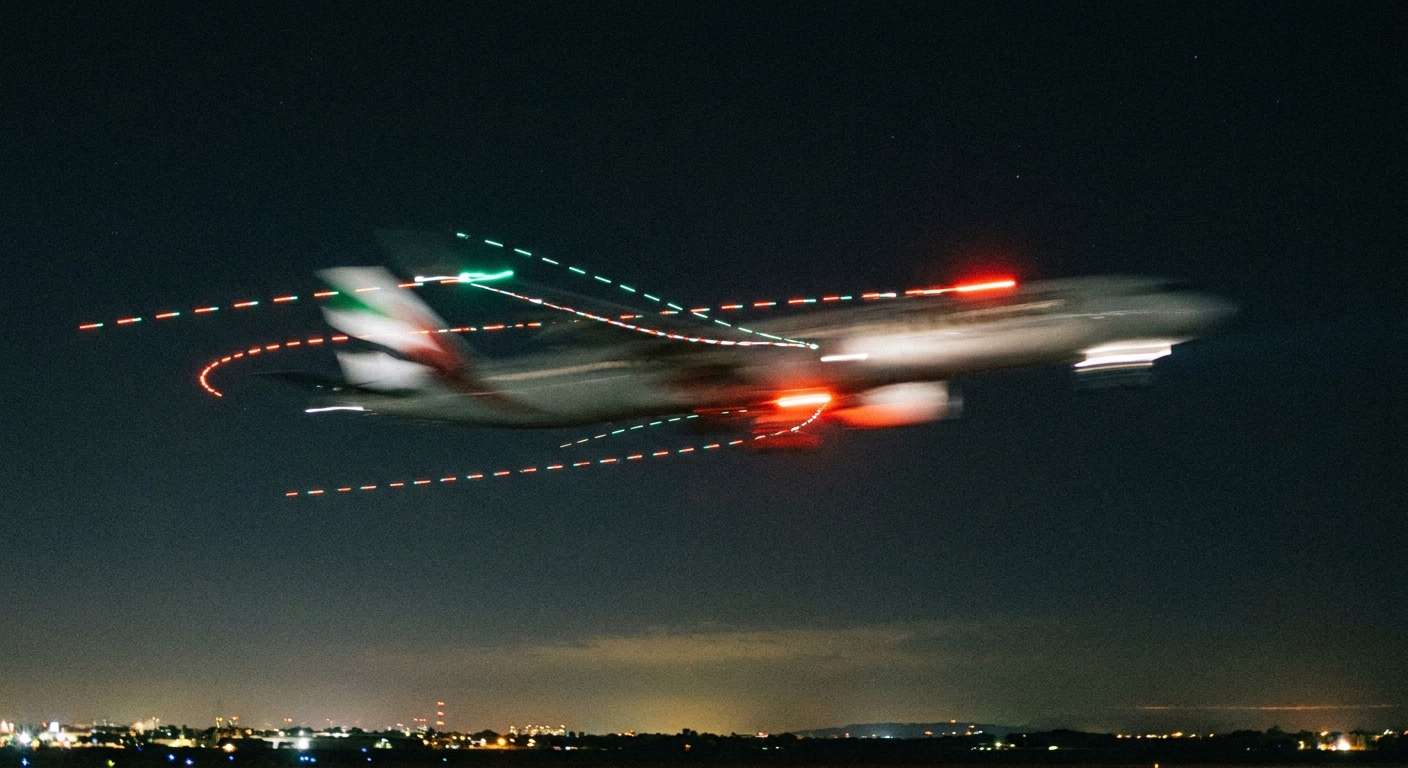
- Blinking: the giveaway. Airplanes have repeating flashes (often red or white), on a regular rhythm.
- Colors: may show red and green navigation lights, plus white strobes.
- Speed: steady, but often slower than a satellite when high overhead, and it can appear even slower near the horizon.
- Sound: sometimes you will hear it, but sound can lag or be masked by wind and distance.
- Trail: may show a faint strobing “dotted line” effect if you are watching through thin clouds.
If it blinks like a turn signal, treat it like a plane until proven otherwise.
Urban note: Drones and helicopters can also confuse things. Drones often hover or move in short, stop-and-go bursts. Helicopters may seem to creep along and can have prominent blinking lights, sometimes with a visible searchlight.
What space debris or a reentry looks like
Most of the time, “space debris” you can see is just a satellite-like point of light. The more dramatic events are reentries, when an object comes down through the atmosphere and breaks apart. These are rare but unforgettable.
Visual clues
- Duration: longer than a meteor, often 10 to 60+ seconds.
- Shape: can look like a slow meteor that fragments into multiple pieces, sometimes like a string of glowing embers.
- Speed: fast, but often slower than a typical meteor and more drawn out.
- Fragmentation: the key sign. Multiple bright bits moving together along a similar path.
If you see something that looks like a meteor that refuses to quit and breaks into several glowing chunks, you may be watching a reentry, not a single meteor.
Quick checklist: identify it in 20 seconds
- Did it blink regularly? Yes: probably an airplane. No: keep going.
- Was it a streak that lasted about 2 seconds or less? Yes: very likely a meteor (especially if it appeared and vanished suddenly).
- Was it a steady point of light moving for a minute or more? Yes: likely a satellite.
- Did it slowly fade out like a dimmer switch? That is common for a satellite entering Earth’s shadow.
- Did it break into multiple glowing pieces? Possible reentry (space debris) or a rare fragmenting fireball.
- Was there a long-lasting glowing smoke-like trail? That can happen with a bright meteor (fireball).
Common look-alikes
Starlink “trains”
Newly launched satellites can appear as a line of evenly spaced lights moving together. They do not blink like planes, and they move steadily across the sky for minutes. Over time, they spread out and become less “train-like.”
High-altitude aircraft without obvious color
Some planes at high altitude can look like a steady light at first. Give it 10 to 20 seconds. The repeating strobe pattern usually reveals itself.
“It was bright and then it disappeared”
Satellites commonly vanish when they enter Earth’s shadow. A meteor, on the other hand, ends abruptly because it burns out. The difference is timing: satellites tend to fade or wink out over a second or two, while meteors typically flash out faster.
When you are most likely to spot each
Meteors
- Best time: after midnight into early morning, when your location on Earth is rotating “into” the oncoming meteoroid stream.
- Best place: dark skies help a lot, but bright meteors can be seen even from suburbs.
- Best conditions: clear, dry air and a wide view of the sky.
Satellites
- Best time: often 1 to 2 hours after sunset and 1 to 2 hours before sunrise, when satellites are sunlit but your sky is dark. Some higher satellites can be visible later, too.
- Best place: anywhere with a broad view, especially away from tall trees and buildings. Dark skies make fainter satellites easier.
- Tip: If you see one, keep watching. Another often follows within minutes.
Airplanes
- Best time: any time, but especially noticeable in early evening when you are already looking up.
- Best place: near flight paths, cities, and anywhere under common routes between major airports.
- Tip: Thin clouds can make the strobe reflections look extra bright.
Reentries (space debris)
- Best time: unpredictable. They can happen day or night, but night makes them more obvious.
- Best place: wide regions can see them if the track passes overhead, sometimes across multiple states or countries.
- Tip: If many people report the same slow, fragmenting “fireball” moving across the sky, a reentry becomes more likely.
FAQ
Can a satellite look like a meteor?
Not usually. A typical satellite is a steady point of light moving for minutes. The confusion happens when you only catch a brief moment of it, or when it brightens or fades quickly. If it was a split-second streak, that is meteor territory.
Do meteors ever change direction?
A real meteor will not make a sharp turn. If you think it “turned,” it is often an illusion from watching through tree branches or clouds, or it may have been two separate events close together. Aircraft can appear to curve because of perspective as they change course.
What about something that flashes once and then keeps moving?
That is commonly an airplane strobe you caught mid-cycle. Watch for the next flash. Satellites can flare, too, but the brightening is usually smoother than a single hard blink.
What is the easiest way to confirm a satellite?
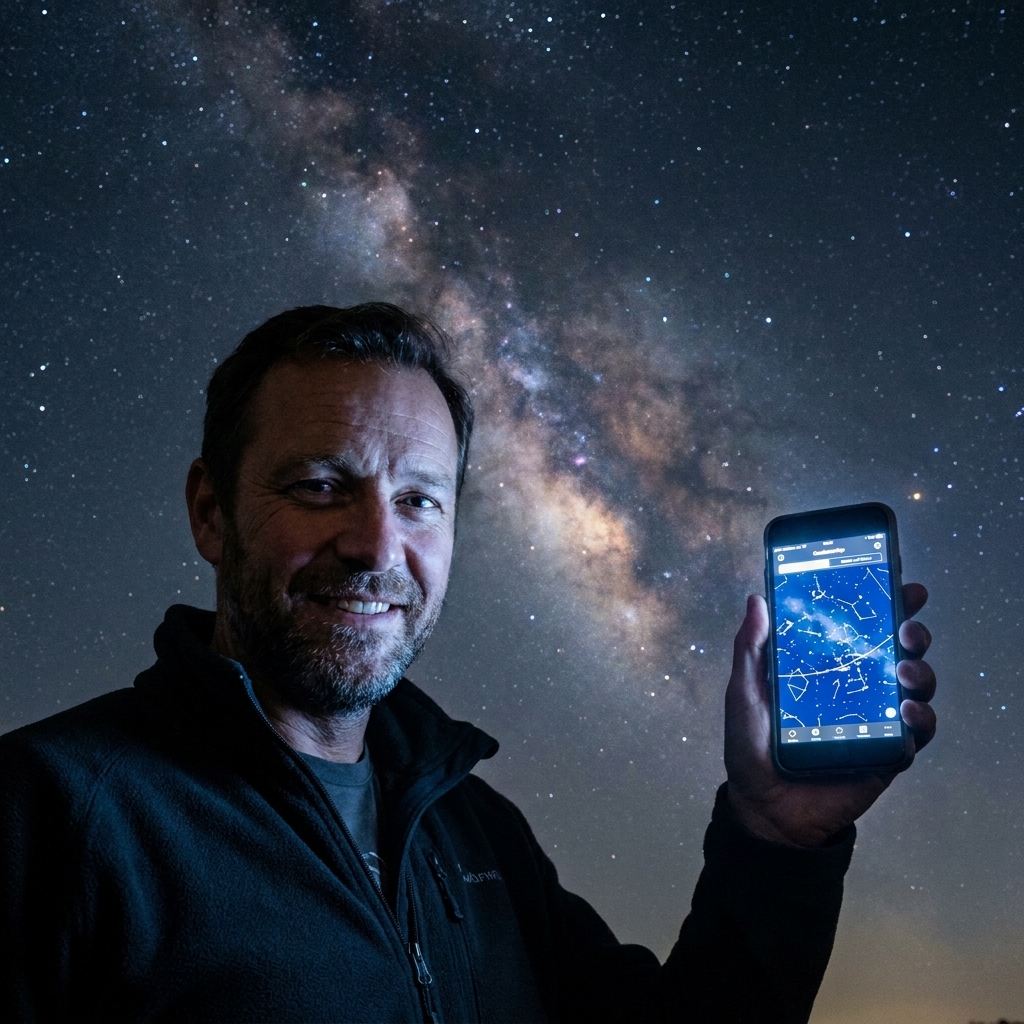
Time it. If it stays visible and moves steadily for more than about a minute without blinking, you are almost certainly watching a satellite. If you want a second confirmation, check a real-time sky map app for satellite passes, but your eyes alone can get you most of the way there.
Where should I look during a meteor shower?
Give yourself the biggest patch of sky possible and avoid staring directly at the radiant. Meteors can show up anywhere, but longer, more dramatic streaks are often seen 30 to 60 degrees away from the radiant.
A final skywatching tip
When I taught physics, the best “aha” moments came from slowing down and observing carefully. The same trick works outdoors. If you are unsure, do not chase the first impression. Watch for 20 seconds. Meteors are over before your brain finishes its sentence. Satellites and airplanes stick around long enough to reveal their habits.
And if you do catch a true meteor, take a second to appreciate the scale of the moment. Something smaller than a pea just turned its final plunge into a little burst of starlight for you.