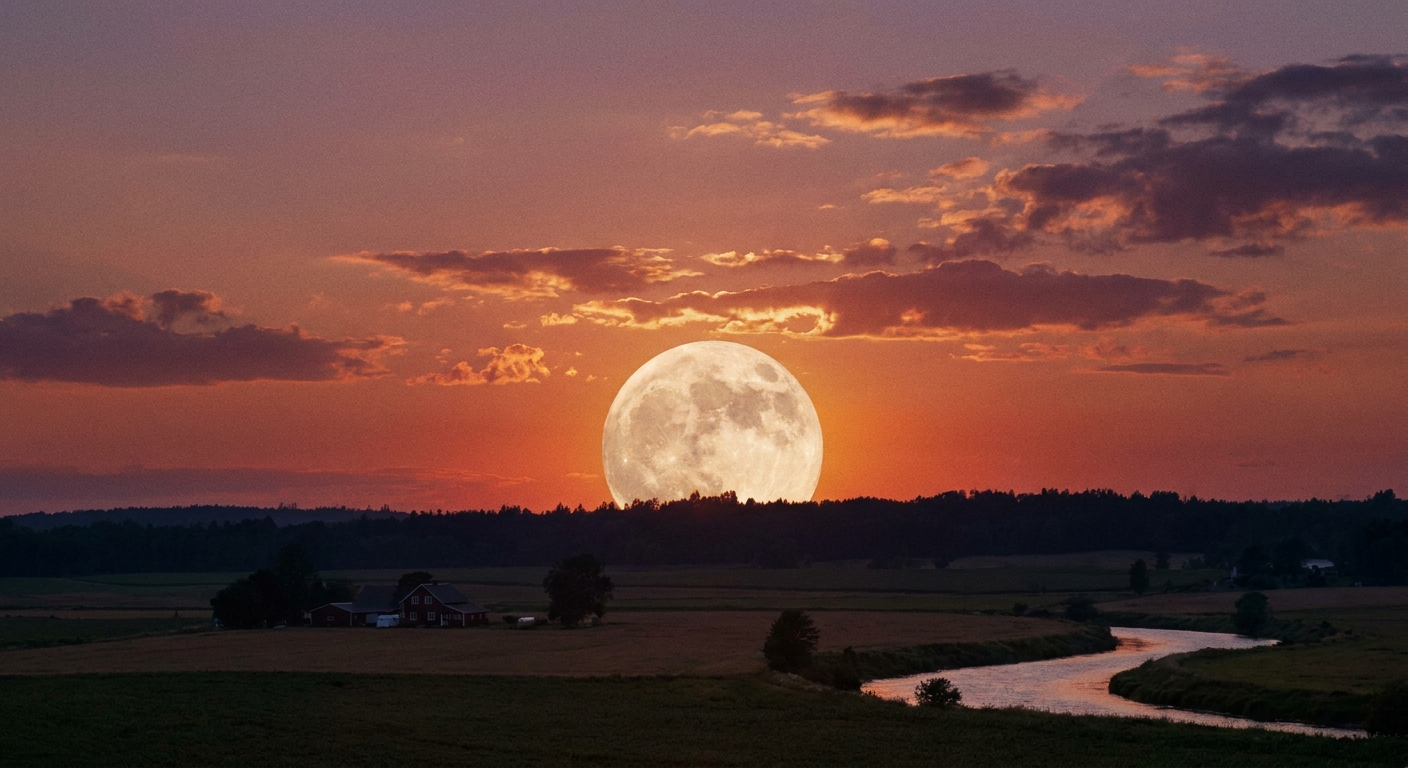
If you have ever watched the sky go from pale gold to neon pink to deep ember-red and thought, How is the atmosphere pulling off this paint job? you are asking a physics question. The short version is this: sunlight is made of many colors, and Earth’s air is better at bouncing some colors around than others. At sunrise and sunset, the Sun’s light has to travel through extra atmosphere, giving the “bouncy” colors more chances to get scattered away from the direct beam. What is left looks warmer, redder, and richer.
White sunlight is a rainbow in disguise
Sunlight looks white or slightly yellow to our eyes, but it is really a mix of many wavelengths, from short-wavelength violet and blue to long-wavelength orange and red. You can see this yourself when a glass prism or even a sprinkler mist spreads sunlight into a spectrum.
In the atmosphere, those wavelengths do not all behave the same way. The key is that shorter wavelengths get scattered more easily by tiny particles and molecules in the air.
The main actor: Rayleigh scattering
Most of the time, the “stuff” doing the scattering is simply the air itself, mainly nitrogen and oxygen molecules. These molecules are much smaller than the wavelength of visible light, and that puts us in a regime called Rayleigh scattering.
Rayleigh scattering strongly favors shorter wavelengths. In everyday language: blue light is a better pinball than red light (because scattering strength rises sharply at shorter wavelengths). Blue gets knocked around in many directions, while red is more likely to keep going straight.
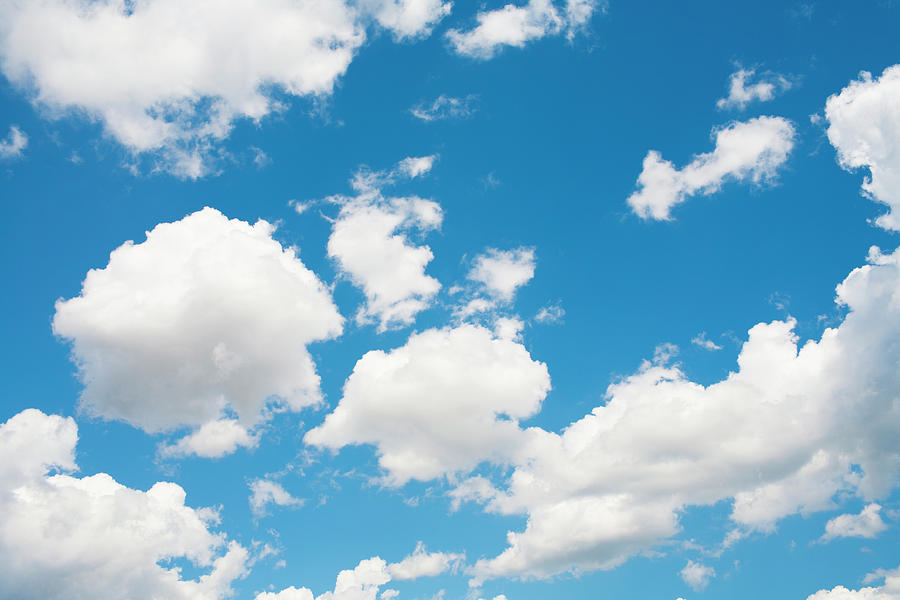
This is why the midday sky looks blue. When the Sun is high, its light takes a relatively short path through the atmosphere. A portion of the blue light gets scattered in all directions, and some of that scattered blue reaches your eyes from every part of the sky, not just from the direction of the Sun. The sky becomes a dome of “borrowed” blue light.
Why the sky turns red at sunrise and sunset
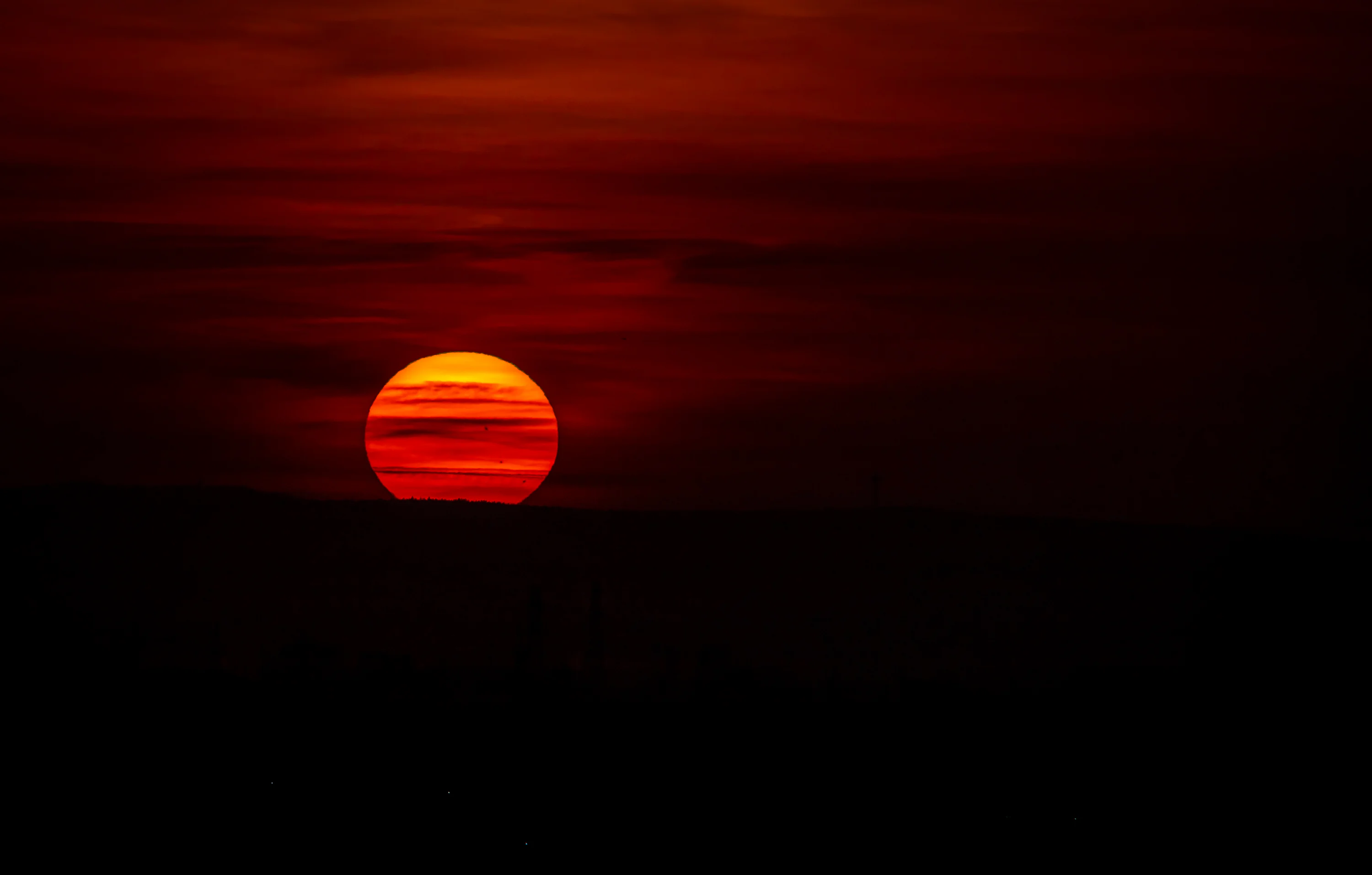
At sunrise and sunset, the Sun sits near the horizon. That geometry matters because sunlight now travels through a much longer slice of the atmosphere before it reaches you. More air along the path means more opportunities for scattering and absorption.
The simple chain reaction
- Longer path: The low Sun forces light to cross more atmosphere.
- More scattering: Blue and violet wavelengths get scattered out of the direct beam again and again.
- Warmer light survives: The direct light that reaches your eyes from the Sun’s direction is depleted in blues, leaving more oranges and reds.
One nuance that helps: scattering is not just subtraction. The blues that get scattered out of the direct beam do not vanish, they get redirected. Some of that redirected light is what fills the sky with color away from the Sun, while the beam aimed at you becomes progressively “de-blued.”
One fun detail: violet light is scattered even more than blue, so why is the sky not violet? A few reasons stack up. The Sun emits a bit less violet than blue, our eyes are more sensitive to blue than violet, and the atmosphere (including ozone) absorbs more strongly as you approach the ultraviolet, trimming some of the violet and near-UV before it ever reaches the ground.
You might also notice the Sun looks slightly “lifted” near the horizon. That is atmospheric refraction bending its apparent position a bit. It changes where you see the Sun, but the main reason for the reds and oranges is still the long, low-angle path that boosts scattering.
Why clouds boost the color
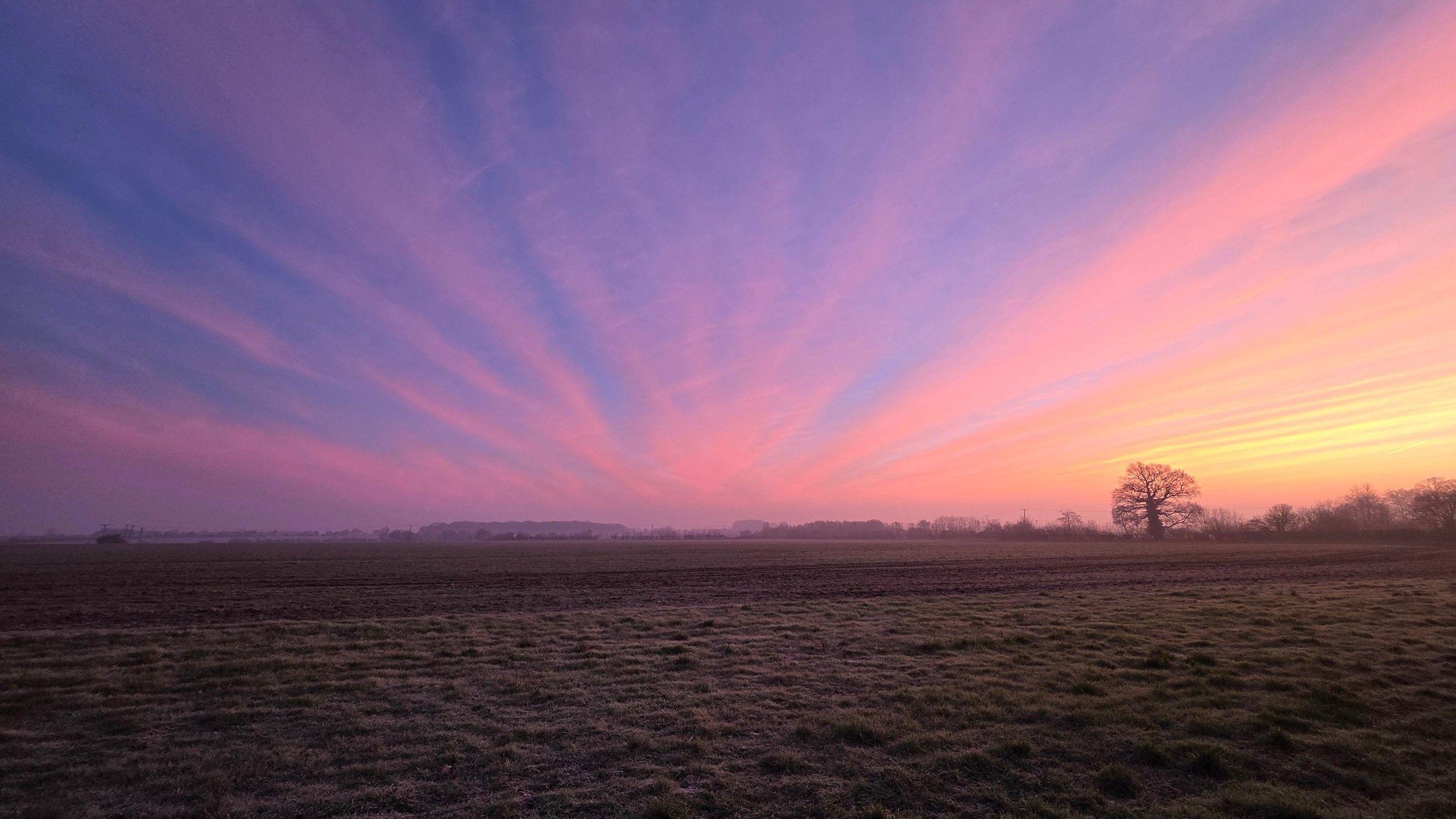
Clouds do not create the colors from scratch, but they can display them brilliantly. Think of clouds as giant screens in the sky. When low-angle sunlight hits the underside of clouds, it can light them up with whatever warm tones remain in the incoming beam.
Cloud type and position matter
- High, thin clouds (cirrus): Often catch sunlight after the ground is already in shadow, producing glowing pinks and reds.
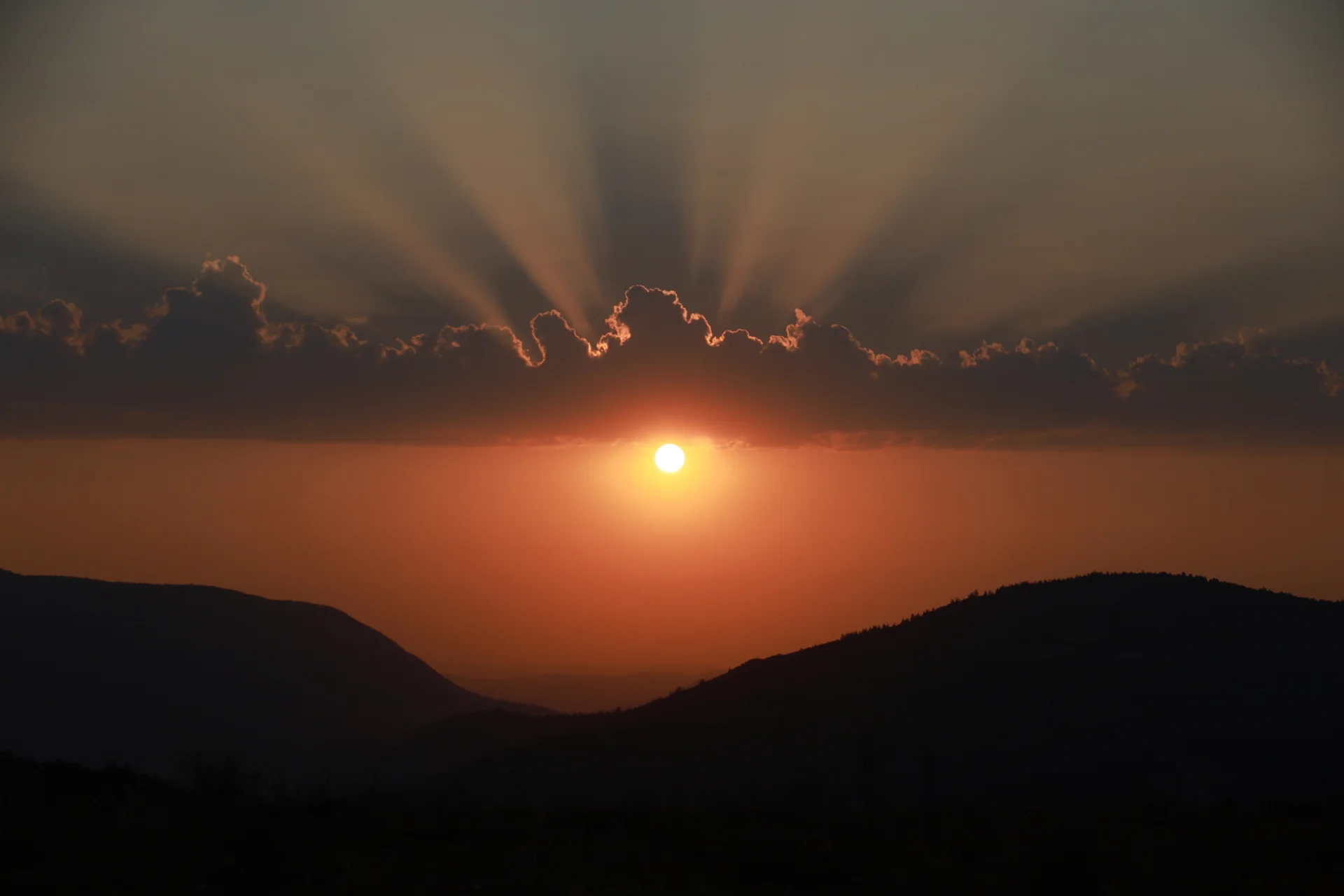
- Mid-level broken clouds: Can create dramatic “rays” and layered gradients as light threads through gaps.
- Very thick low clouds: Sometimes mute the show by blocking the Sun’s light entirely, turning a sunset gray and flat.
Dust, smoke, and pollution
Besides air molecules, the atmosphere can contain larger particles like dust, sea salt, soot, smoke, and pollution aerosols. These particles change the scattering game because they are closer in size to the wavelengths of visible light.
When particles are larger than molecules, you move beyond Rayleigh scattering into what is often called Mie scattering. It is less “blue-only” and more dependent on particle size and mixture. In many cases, extra particles:
- Knock out more of the shorter wavelengths from the sunlight traveling toward you, enhancing oranges and reds.
- Increase haze, which can spread warm colors over a larger part of the sky, not just near the horizon.
This is why sunsets can look especially intense after events that load the air with particles, like wildfires, dust storms, or volcanic eruptions. But there is a tipping point. Too much smoke or pollution can also dull the view into a flat, brownish wash by blocking and scattering light so heavily that contrast disappears.
Humidity, haze, and pastel skies
Humidity itself is water vapor, and individual vapor molecules are too small to scatter visible light in a dramatic way. But humid conditions often go hand in hand with haze: tiny liquid droplets (or swollen aerosol particles) suspended in the air. Those droplets and aerosols can scatter light in a way that is less picky about wavelength.
The result is often:
- Softer, milkier skies because more light of many colors is scattered.
- Pastel sunsets when warm colors are spread out and blended rather than sharply separated.
If you have ever noticed a sunset that looked like it was airbrushed, with peach and lavender fading smoothly into each other, haze and fine aerosols are often part of the recipe.
Why some sunsets are fiery and others are boring
Two sunsets can happen at the same beach and still look totally different. The sky’s color palette depends on the atmosphere’s mix that day and where the clouds sit relative to the horizon.
A quick mental checklist
- Clear air + some high clouds: Often the most vivid, high-contrast reds and pinks.
- Too many low clouds: The Sun gets blocked and the scene goes gray.
- Moderate aerosols (dust, smoke, sea salt): Can intensify warm colors and spread them across the sky.
- Very heavy haze: Can wash everything out into dull orange or brownish tones.
In other words, the best sunsets are a balancing act: enough particles and clouds to catch and spread the warm light, but not so much that the whole system turns into a light-blocking blanket.
Everyday observations you can try
You do not need fancy equipment to “do science” with sunsets. Here are a few easy experiments your eyes can run.
- Compare horizon vs overhead: Near sunset, look at the sky overhead (often cooler and deeper blue) versus near the horizon (warmer and brighter). You are sampling different light paths through the atmosphere.
- Watch the sequence: Colors often can peak when the Sun is just below the horizon, because the direct glare is gone but the upper atmosphere and cloud bases are still lit. Cloud height and haze layers can shift the timing.
- Notice post-rain clarity: After a rainstorm, the air can be cleaner. Sometimes you get crisper, less hazy colors, especially if thin high clouds move in afterward.
- Look for crepuscular rays: Those fan-like beams happen when sunlight threads through cloud gaps, and the scattered light makes the beams visible.
Common questions, answered
Is the Sun actually changing color?
The Sun is not changing what it emits. What changes is which wavelengths survive the trip to your eyes along that long, low-angle path through the atmosphere.
Why are sunsets often redder than sunrises?
They can be either, but sunsets sometimes appear richer because the day’s heating and human activity can increase dust and aerosols by evening. Local weather patterns also matter, so this is an “often, not always” rule.
Why is it sometimes purple or magenta?
Purple and magenta sunsets usually mean you are seeing a mix of scattered blue light plus strong reds from the low Sun, often with the help of high clouds or fine particles that spread the colors across the sky.
Does latitude or season change the colors?
Yes, indirectly. Season and latitude affect the Sun’s angle, typical humidity, and aerosol conditions. A lower Sun angle for longer (common in winter at mid to high latitudes) can stretch out the warm-color phase, giving you more time to watch the gradient evolve.
The takeaway
Sunrise and sunset colors are a daily demonstration of light physics in the real world. When the Sun is low, its light takes the scenic route through Earth’s atmosphere. Along the way, blue light gets scattered around like confetti, and the longer-wavelength reds and oranges push through to the horizon. Add clouds as a projection screen and sprinkle in dust or haze, and the sky turns into a living lab you can visit for free, right on your evening walk.