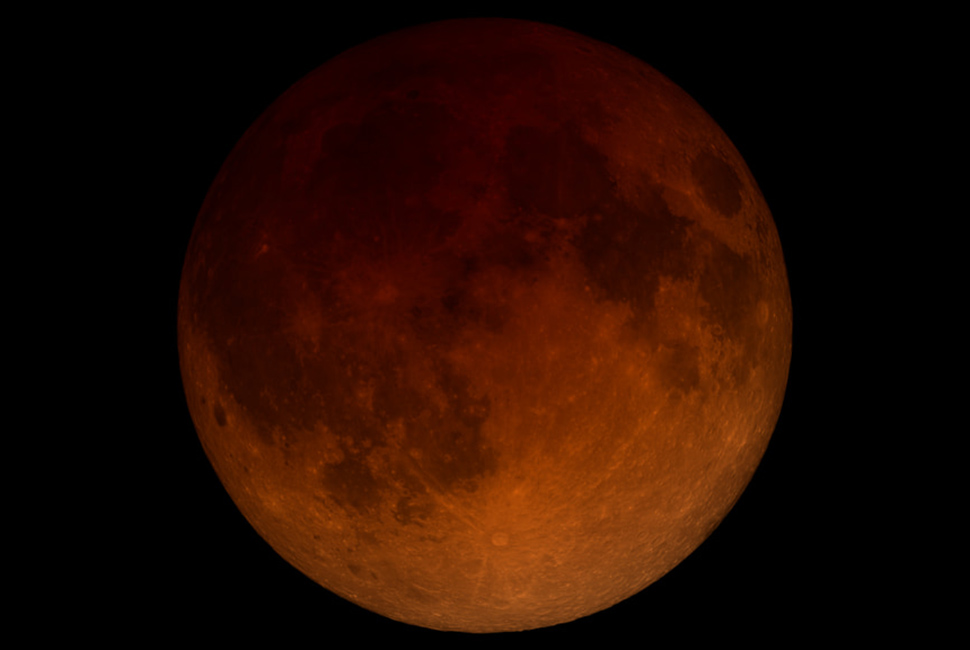
If you have ever looked up during a lunar eclipse and thought, “Why does the Moon look like someone turned the saturation up to copper?” you are seeing a neat piece of physics that combines shadows, sunsets, and a thin layer of air wrapped around our planet.
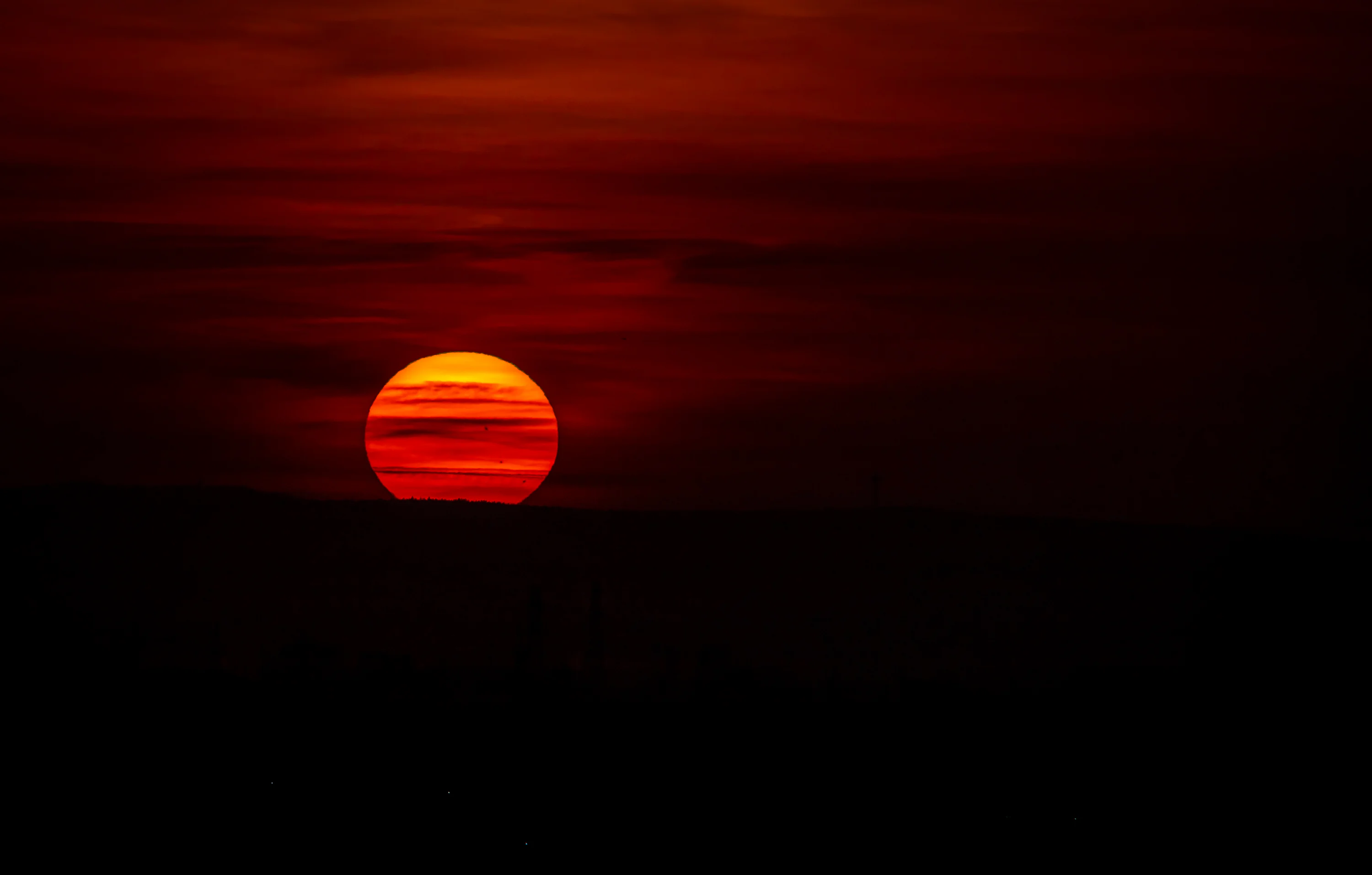
A lunar eclipse is not the Moon changing color on its own. It is the Moon borrowing Earth’s filtered light. The Moon goes orange or red for the same reason the Sun looks orange at sunset: our atmosphere tends to scatter bluer light out of the beam, so the light that keeps traveling in the same general direction ends up warmer in color.
Quick timing note: lunar eclipses happen at full Moon, but not every full Moon has an eclipse because the Moon’s orbit is slightly tilted relative to Earth’s path around the Sun.
The simple setup: Earth gets in the way
A lunar eclipse happens when the Sun, Earth, and Moon line up, with Earth in the middle. Under normal conditions, the Moon is lit by direct sunlight. During an eclipse, Earth blocks that direct sunlight, and the Moon slides into Earth’s shadow.
Two shadows, two vibes
Earth’s shadow has two parts, and knowing them makes the whole event easier to picture:
- Penumbral shadow: the “fuzzy outer” shadow where Earth blocks only some sunlight. The Moon may look slightly dimmer, like someone lowered the brightness.
- Umbral shadow: the darker central shadow where Earth blocks the Sun much more completely. This is where the dramatic dark bite appears, and where the Moon can turn orange or red during a total eclipse.
So why is it orange instead of disappearing?
Here is the key idea: Earth blocks direct sunlight, but it does not block all sunlight. Some sunlight skims through Earth’s atmosphere, bends slightly, and reaches the Moon anyway.
And a vocabulary word that helps: totality is the phase of a total lunar eclipse when the entire Moon is inside Earth’s umbra.
If Earth had no atmosphere, the Moon during totality would be dramatically darker, potentially very dim or near-black to your eyes. But our atmosphere acts like a giant ring of glass around the planet, refracting (bending) and filtering sunlight into Earth’s shadow.
Earth’s atmosphere is a “sunset filter” for the Moon
Imagine every sunrise and sunset happening all around Earth at once. During a total lunar eclipse, the Moon is lit by that global rim of sunrise and sunset light. And sunset light is warm-colored because of how our atmosphere scatters different wavelengths.
The color physics: scattering does the paint job
Sunlight is a mix of colors. When it passes through Earth’s atmosphere, it runs into gas molecules and tiny particles. Shorter wavelengths (blues and violets) scatter more easily than longer wavelengths (reds and oranges). This is the same basic reason the daytime sky is blue.
During a lunar eclipse, sunlight is taking a long, grazing path through the atmosphere, like light at sunset traveling through a thicker slice of air. Along that path:
- Bluer light gets scattered out in many directions before it can make it through along a straight-ish path.
- Redder light survives the trip more effectively and continues onward.
- That surviving red-orange light is refracted into Earth’s shadow and lands on the Moon.
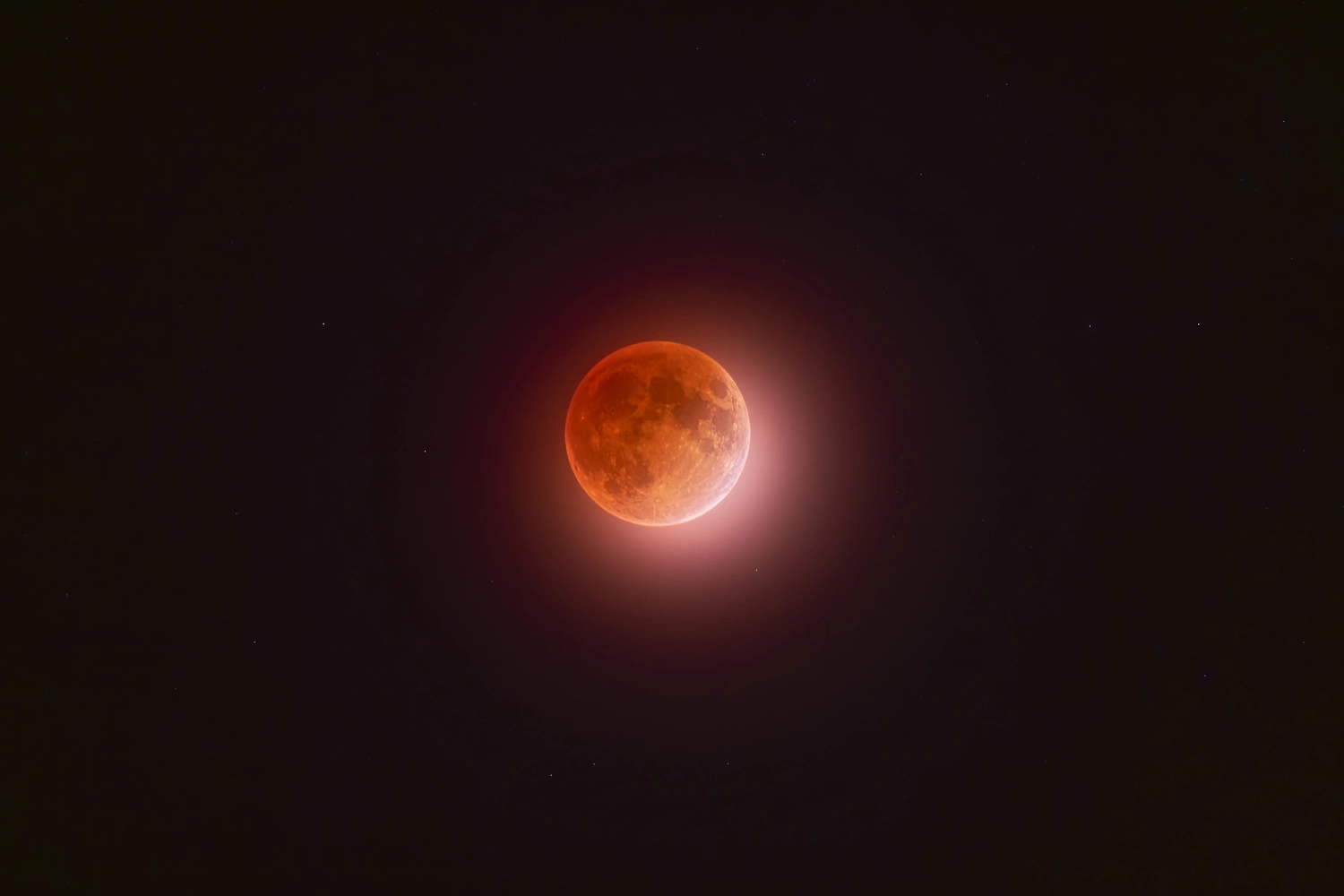
Result: the Moon glows with a red, orange, or copper tone, even though it is sitting in Earth’s darkest shadow.
Why eclipses do not match
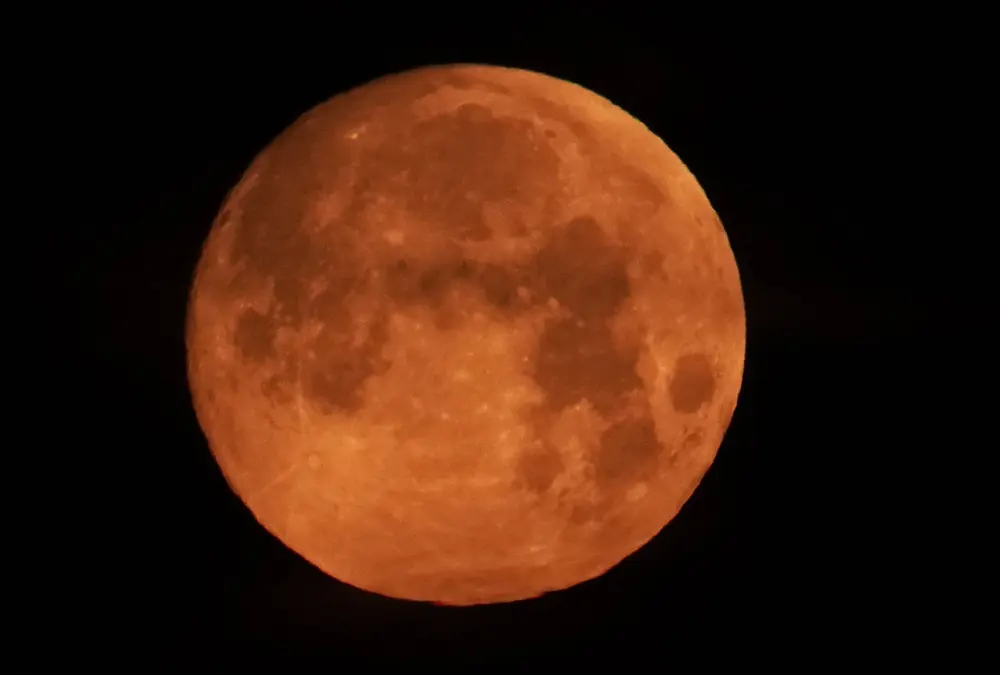
If you have seen photos of eclipses ranging from pale orange to dark brick red, you are not imagining it. The exact color depends on how Earth’s atmosphere is behaving along the sunrise-sunset ring at that moment.
What makes the Moon brighter
- Cleaner, clearer air: Fewer aerosols and particles can mean less overall dimming, sometimes producing a brighter copper or orange Moon.
- Moon not perfectly centered in the umbra: If the Moon passes closer to the edge of Earth’s umbral shadow, it can look brighter because more refracted light reaches it.
What makes the Moon darker
- Dust and aerosols: Tiny particles in the atmosphere can absorb and scatter additional light, dimming the Moon and pushing it toward a deeper red or rusty brown.
- Volcanic stratospheric aerosols: After major eruptions, sulfur dioxide can form sulfate aerosols high in the stratosphere. These can linger and make eclipses noticeably darker by blocking more sunlight along that long atmospheric path.
- Clouds along Earth’s limb: Thick cloud decks near the edge of Earth primarily reduce how much light gets through, which usually means a dimmer eclipse overall.
In other words, a lunar eclipse is also a qualitative, low-resolution snapshot of Earth’s atmospheric transparency. The Moon becomes a screen that hints at how much filtered sunlight Earth is sending into its shadow.
If you ever want to put a label on it, observers sometimes describe eclipse darkness and color using the Danjon scale (from very dark to bright coppery).
When you see red, orange, or just dim
Not every lunar eclipse delivers a dramatic “blood Moon” look. It depends on how deeply the Moon enters Earth’s umbra.
Penumbral eclipse
The Moon stays in the penumbra only. The change can be gentle, like the Moon looks smudged or slightly grayer on one side.
Partial eclipse
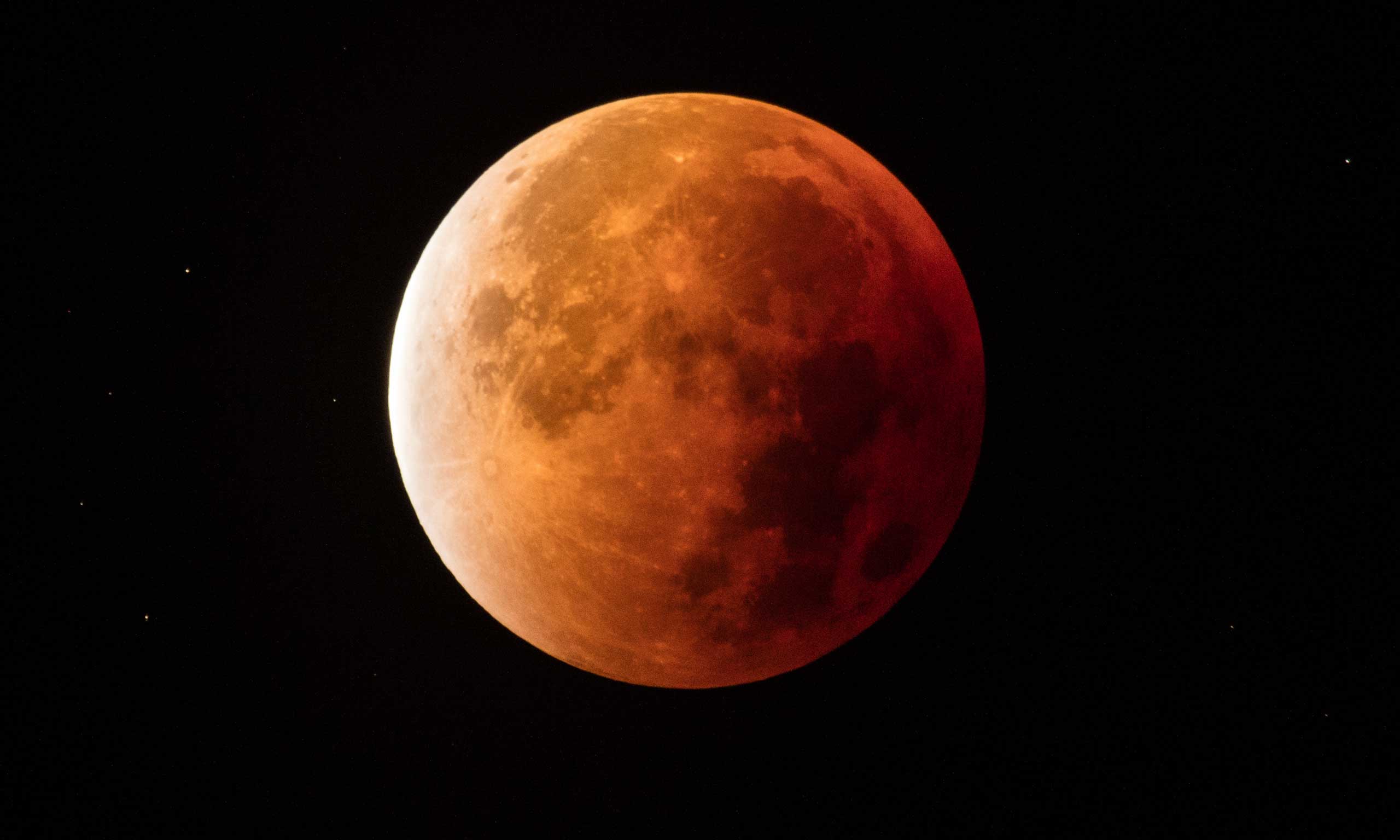
Part of the Moon enters the umbra. You will see a dark, curved bite taken out of the lunar disk, while the rest remains bright. The portion in the umbra can look slightly reddish, but the bright uneclipsed part often steals the show.
Total eclipse
The entire Moon is inside the umbra. This is when the orange, copper, or red glow is most obvious, because all the light reaching the Moon has been filtered through Earth’s atmosphere.
Telling an eclipse from other orange Moons
The Moon can look orange for reasons that have nothing to do with an eclipse. Here are quick ways to tell what you are seeing.
Clue 1: Shadow shape
Lunar eclipse: A clean, curved shadow moves across the Moon. That curve is Earth’s round shape projected into space. The change is gradual over hours.
Not an eclipse: The Moon is uniformly orange or hazy with no crisp shadow edge.
Clue 2: Timing and motion
Lunar eclipse: The darkening and reddening follow a predictable sequence: dimming, a growing shadow, then potentially totality, then the reverse. You can watch it evolve in real time.
Not an eclipse: The color may stay fairly constant, or it may flicker with drifting clouds or changing haze near the horizon.
Clue 3: Where the Moon is
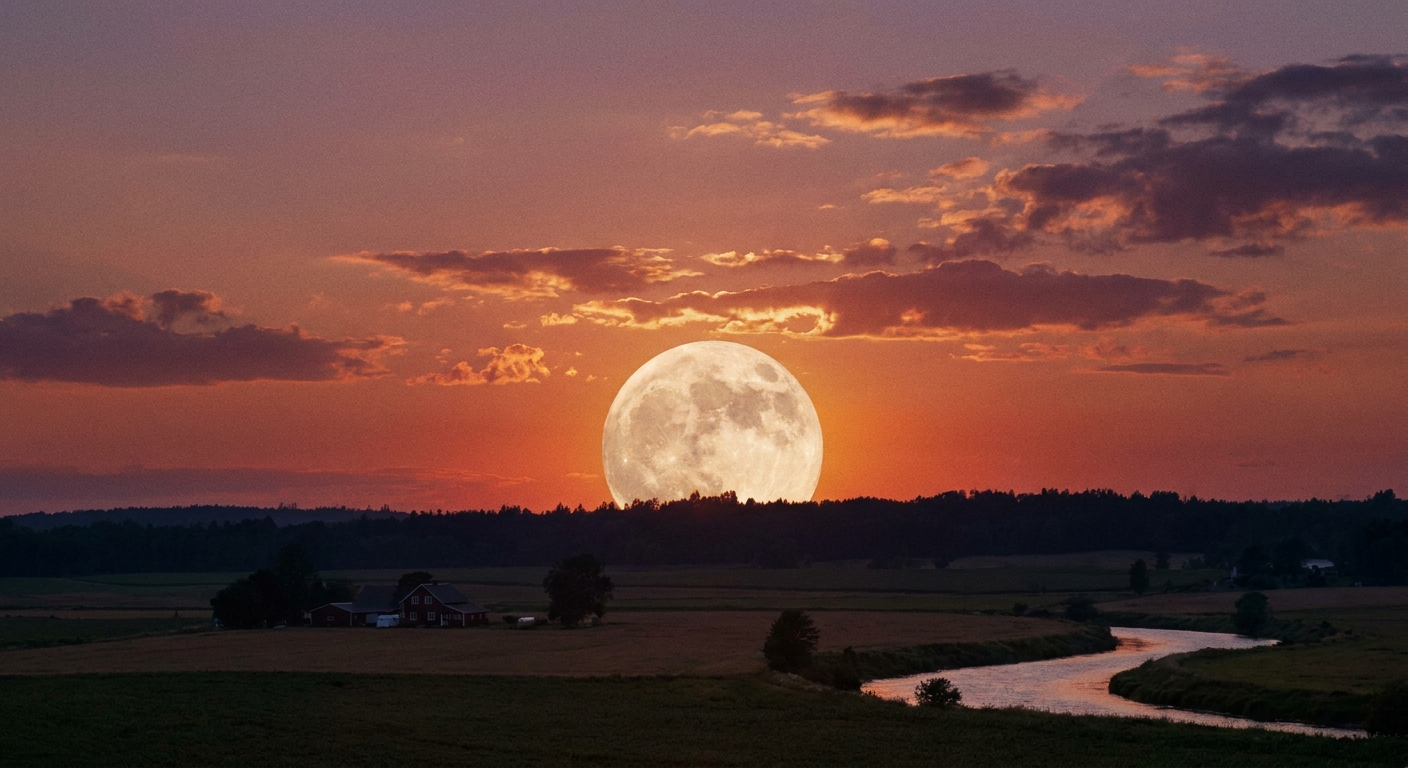
Near the horizon: The Moon often looks orange because its light travels through more atmosphere, similar to a sunset. That is atmospheric filtering, but it is happening along your line of sight, not Earth’s limb lighting the Moon from afar.
Clue 4: The “milky” look
Smoke, dust, or thin clouds: These can mute the Moon and tint it yellow-orange. If the whole sky looks hazy and the Moon lacks a distinct shadow boundary, you are probably seeing local air conditions rather than an eclipse.
A quick mental picture
If you want a single image in your head, use this: during a total lunar eclipse, the Moon is lit by all the sunsets and sunrises around Earth at once. Blue light gets scattered away, red-orange light bends through, and the Moon catches that warm glow while sitting in Earth’s shadow.
It is one of my favorite “the universe is doing physics in public” moments. No telescope required, just a clear night and a little patience.
FAQ
Is the Moon actually turning red?
No. The Moon is reflecting sunlight like always. During an eclipse, the only sunlight reaching it has passed through Earth’s atmosphere first, which scatters away a lot of the blue and leaves more red-orange in the beam.
Why do some eclipses look more orange than red?
It depends on how much light makes it through Earth’s atmosphere and how strongly that light is filtered. Clearer conditions and a path closer to the edge of the umbra can produce a brighter orange-copper look.
Can a lunar eclipse make the Moon look gray or almost invisible?
Yes. Some total eclipses are unusually dark when Earth’s atmosphere contains extra aerosols that block more light. In those cases, the Moon can look deep brown, dark red, or very dim and grayish.
Is it safe to look at a lunar eclipse?
Yes. Unlike a solar eclipse, a lunar eclipse is safe to view with your eyes at all times.