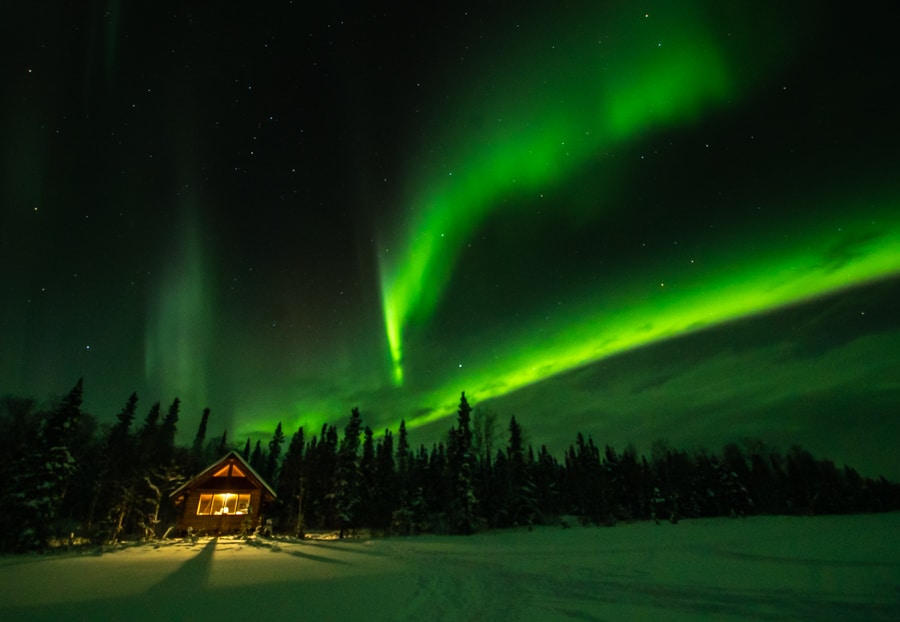
The Northern Lights look like nature’s mood ring in the sky: sometimes a quiet green arc, sometimes red wisps, sometimes a whole curtain that seems to ripple like silk in a breeze. None of that is random. Auroras are physics you can see, and their colors and shapes are basically a live readout of what the Sun is doing, what gases your atmosphere is made of, and where you happen to be standing when the show starts.
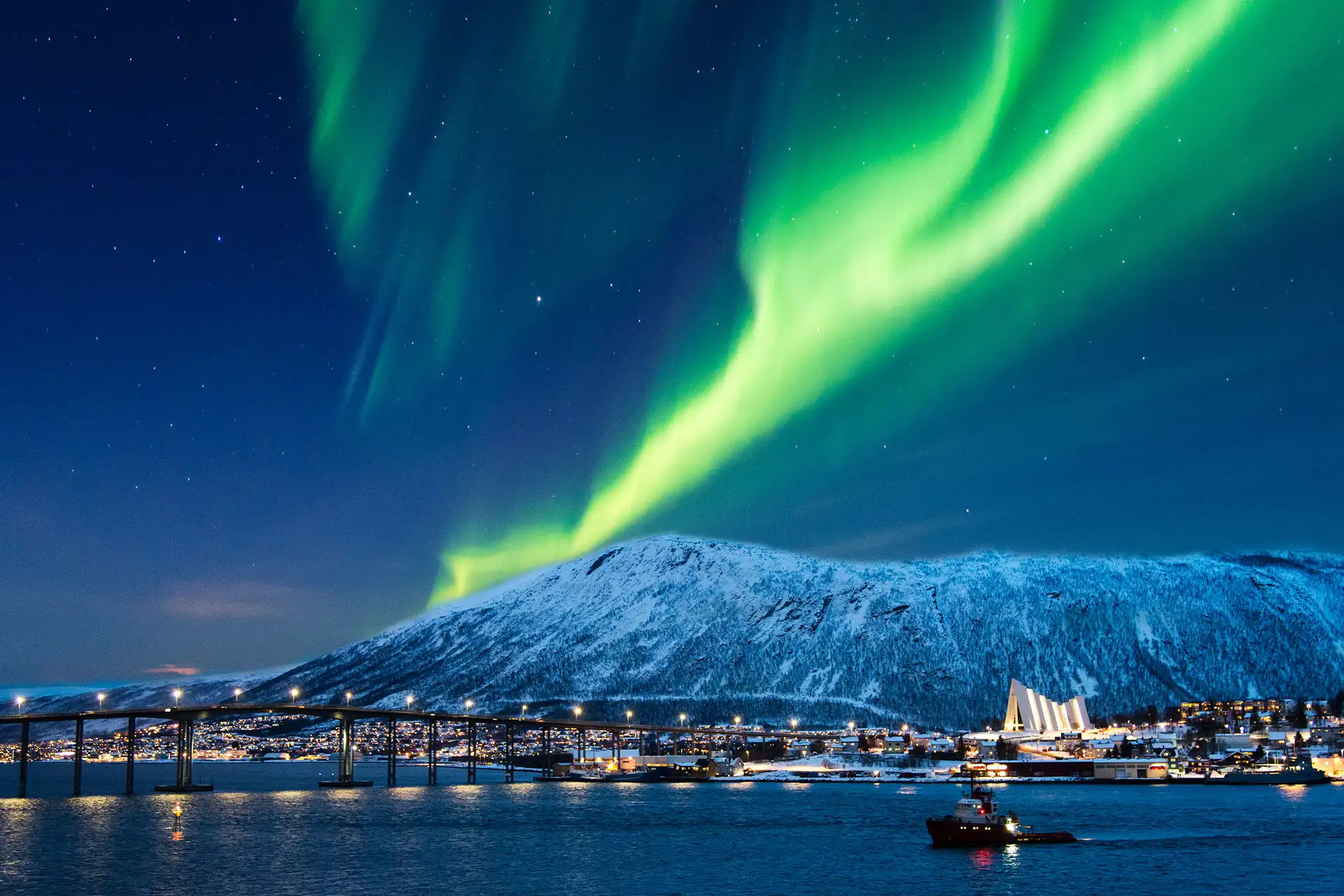
The quick idea: a space weather lightbulb
At the heart of every aurora is the same recipe:
- Energy source: charged particles from the Sun (mostly electrons and protons) carried by the solar wind
- Wiring: Earth’s magnetic field, which guides those particles toward the poles
- Lightbulb gas: oxygen and nitrogen in our upper atmosphere
- Switch: collisions that excite atoms and molecules, followed by the release of light when they relax
If you have ever seen a neon sign, you have the right mental model. Pump energy into a gas, the gas glows a characteristic color. The aurora is that same concept, scaled up to a planet and powered by the Sun.
What causes auroras in the first place
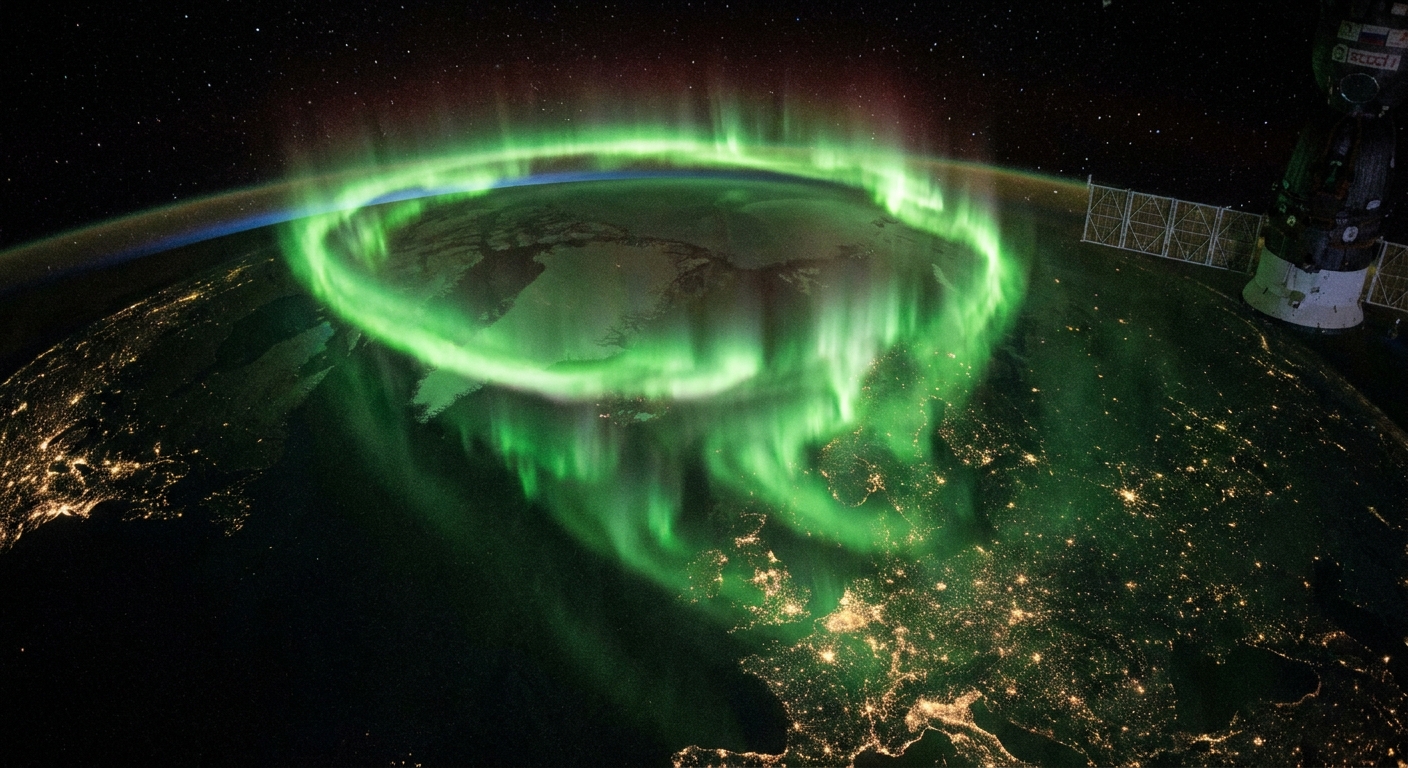
The Sun constantly releases a stream of charged particles called the solar wind. Most days, Earth’s magnetic field deflects much of it. But when the solar wind is stronger, or when its magnetic field is oriented in a way that couples efficiently with Earth’s field, more particles get funneled into the magnetosphere and then down along magnetic field lines toward the polar regions.
When those particles plunge into the upper atmosphere, they collide with atoms and molecules, transferring energy. That energy “kicks” atmospheric particles into excited states. When they drop back down to lower-energy states, they emit photons. That emitted light is the aurora.
Why auroras have different colors
Aurora colors mainly depend on two things:
- Which gas is glowing: oxygen or nitrogen (and in what form)
- Where in the atmosphere the collisions happen: altitude changes the density of air and the types of transitions that dominate
Green: the classic aurora color
Green is most commonly produced by oxygen at roughly 100 to 150 km above the ground. This is the “default” aurora because those altitudes are a sweet spot: enough oxygen to glow, and enough incoming electrons to excite it efficiently.
Red: high-altitude oxygen, longer-lasting glow
Red auroras often come from oxygen higher up, roughly 200 km and above. At these altitudes the air is thinner, so excited oxygen can stay excited longer before it gets bumped (and de-excited) by another collision. That favors red emission lines.
Red auroras can look like diffuse crimson clouds or faint pink arcs above green structures. They are also easier to miss because our night vision is less sensitive to red light.
Blue and purple: nitrogen joins the party
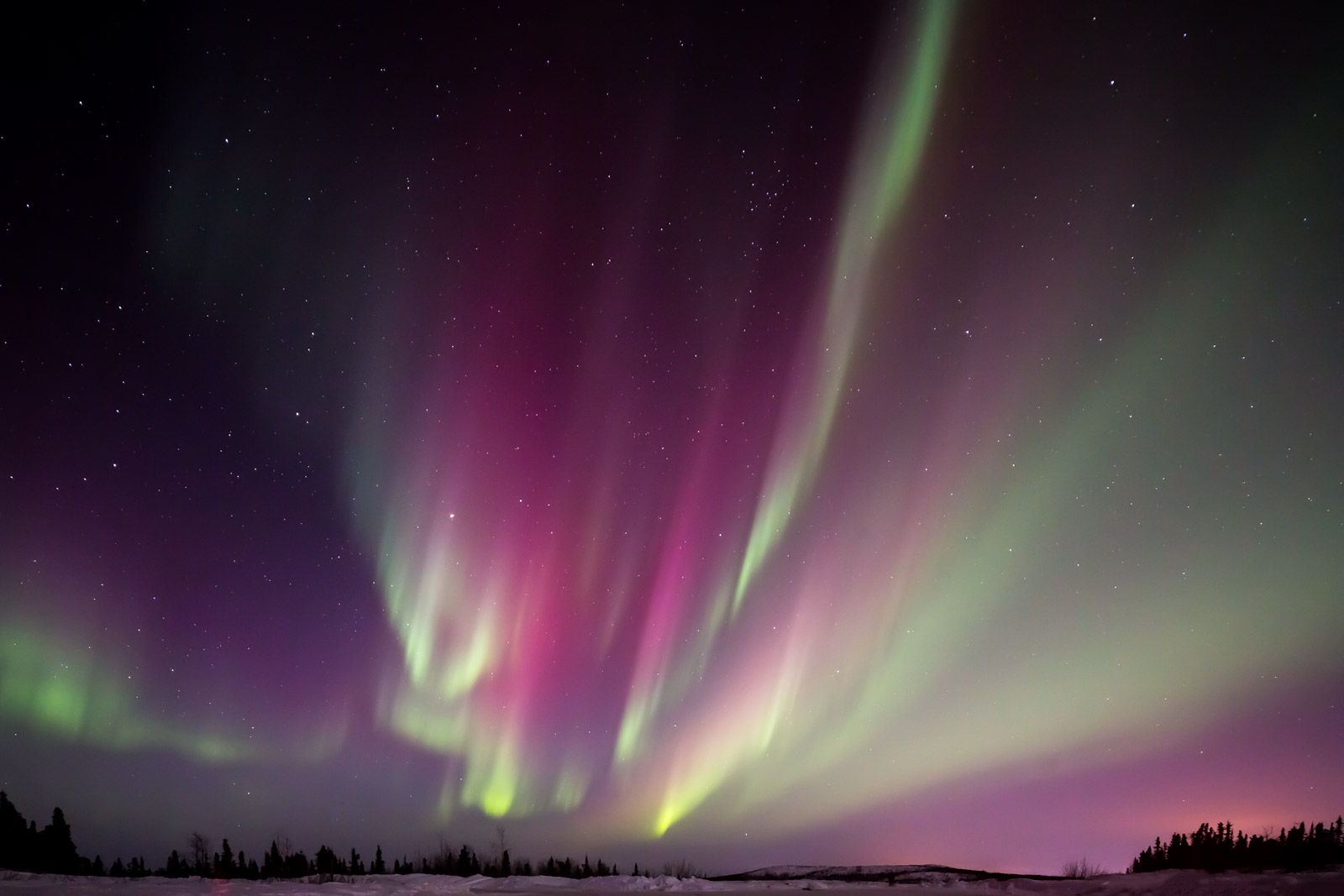
Nitrogen tends to produce blue and purple tones, often along the lower edges of bright aurora curtains, where particles penetrate deeper and collisions are more frequent. You might see:
- Purple/violet: excited nitrogen molecules higher in the lower aurora region
- Blue: more energetic interactions and different nitrogen emissions closer to the bottom of the display
Why the same aurora can be multiple colors at once
An aurora is not a flat sheet. It is a 3D structure spanning a range of altitudes. If the lower part is dominated by green oxygen emission and the upper part is dominated by red oxygen emission, you can literally see stacked colors. Add nitrogen contributions at the bottom edge and the curtain can look green with purple trim, like a cosmic sunset.
Why the lights change shape
If color tells you what is glowing, shape tells you how particles are arriving and how Earth’s magnetic field is steering them.
Arcs: the opening act
A quiet aurora often begins as a smooth arc across the northern sky. That arc is a view of the auroral oval, the ring-shaped region around the geomagnetic pole where particles most often precipitate into the atmosphere.
Curtains: ripples in a glowing sheet
Those famous waving curtains happen because the aurora forms along sheets of electric current aligned with Earth’s magnetic field. Small changes in the incoming particle flow, plus waves and instabilities in the magnetosphere, create folds and ripples. Imagine a long theater curtain caught in shifting gusts. The fabric is the glowing region. The gusts are changing electric and magnetic conditions in near-Earth space.
Rays: you are seeing magnetic field lines
Rays look like vertical columns or comb-like streaks. This is one of my favorite “aha” facts: those rays are often aligned with magnetic field lines. You are, in a sense, seeing the geometry of Earth’s magnetism traced out in light.
Coronas: the burst overhead effect
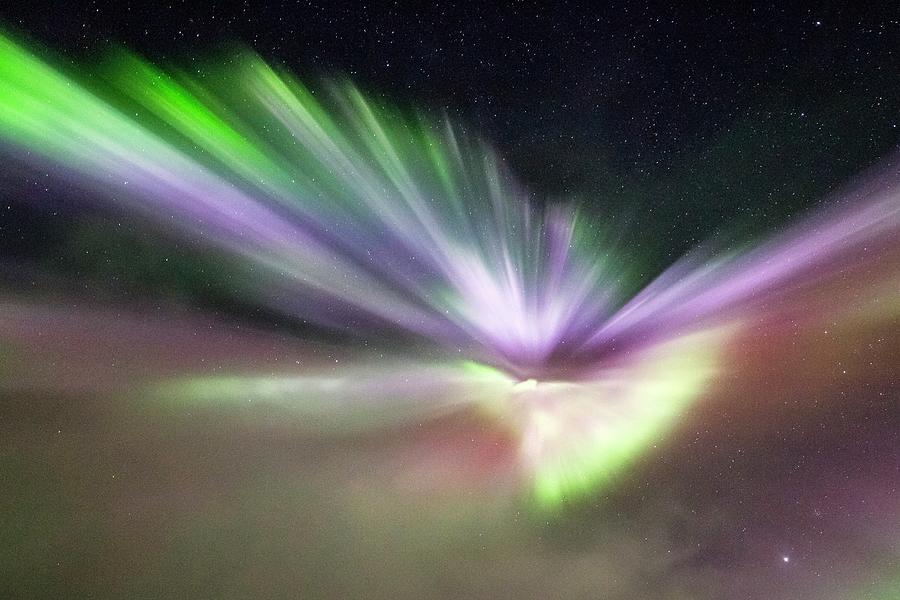
When rays converge near the point directly overhead, you can get a corona, a dramatic starburst pattern. It is partly perspective: parallel rays seem to converge, like railroad tracks meeting at the horizon, except the vanishing point is above you.
Solar activity: why some nights are quiet and others explode
The aurora is sensitive to space weather. A few solar events can crank the dial up:
- Coronal mass ejections (CMEs): huge blobs of magnetized plasma that can slam into Earth and trigger strong geomagnetic storms
- High-speed solar wind streams: faster-than-average wind, often from coronal holes, that can stir up repeated aurora activity over multiple nights
- Solar flares: bursts of radiation that can affect Earth’s ionosphere, often alongside CMEs but not always the direct cause of a big aurora
When a storm is strong, the auroral oval can expand toward lower latitudes. That is when people far south of typical aurora zones sometimes get a surprise show, often with more visible reds because high-altitude emissions can spread widely.
Atmosphere matters: altitude, density, and quenching
Even with the same incoming solar particles, your atmosphere changes the outcome.
Altitude sets the stage
Higher altitudes mean thinner air. Thinner air means fewer collisions. That affects which excited states can survive long enough to emit light. Lower altitudes are busier and “rougher,” and excited states can get knocked out before they glow, which scientists call collisional quenching.
Energy shapes the vertical structure
More energetic particles can penetrate deeper before colliding. That can brighten the lower edges of curtains and boost nitrogen colors. Less energetic particles deposit energy higher up, favoring softer, higher-altitude glows.
Viewing angle: why your eyes and camera may disagree
Two people can watch the same aurora and swear they saw different colors. They might both be right.
Your eyes switch modes at night
In low light, your vision leans more on rod cells, which are great at detecting dim light but poor at color, especially reds. That is why faint red aurora can look grayish or “white” to the naked eye, while a camera reveals deep crimson.
Looking through more atmosphere changes what reaches you
An aurora low on the horizon is seen through a thicker slice of atmosphere. That can dim and shift the perceived color, and it can smear fine structure. When the aurora is overhead, you are looking through less air and the detail can snap into focus.
Cameras gather light over time
Phone night modes and long exposures collect photons for seconds. Your eyes effectively “expose” for a much shorter time. So cameras often show:
- more saturated colors
- finer rays and bands
- faint structures that were invisible in real time
When and where the Northern Lights are most visible
Best places: think auroral oval
The most reliable viewing is under the auroral oval, a ring around the geomagnetic pole. In practical travel terms, that usually means high-latitude regions such as:
- Alaska and northern Canada
- Iceland
- Norway, Sweden, and Finland (especially above the Arctic Circle)
- Greenland
- Parts of northern Scotland can occasionally catch stronger displays
During stronger geomagnetic storms, the oval expands and auroras can be visible farther south than usual.
Best times: dark skies win
- Season: Auroras happen year-round, but they are easiest to see during local winter and shoulder seasons simply because nights are longer.
- Time of night: Activity often peaks around local midnight, but good displays can happen any time it is dark.
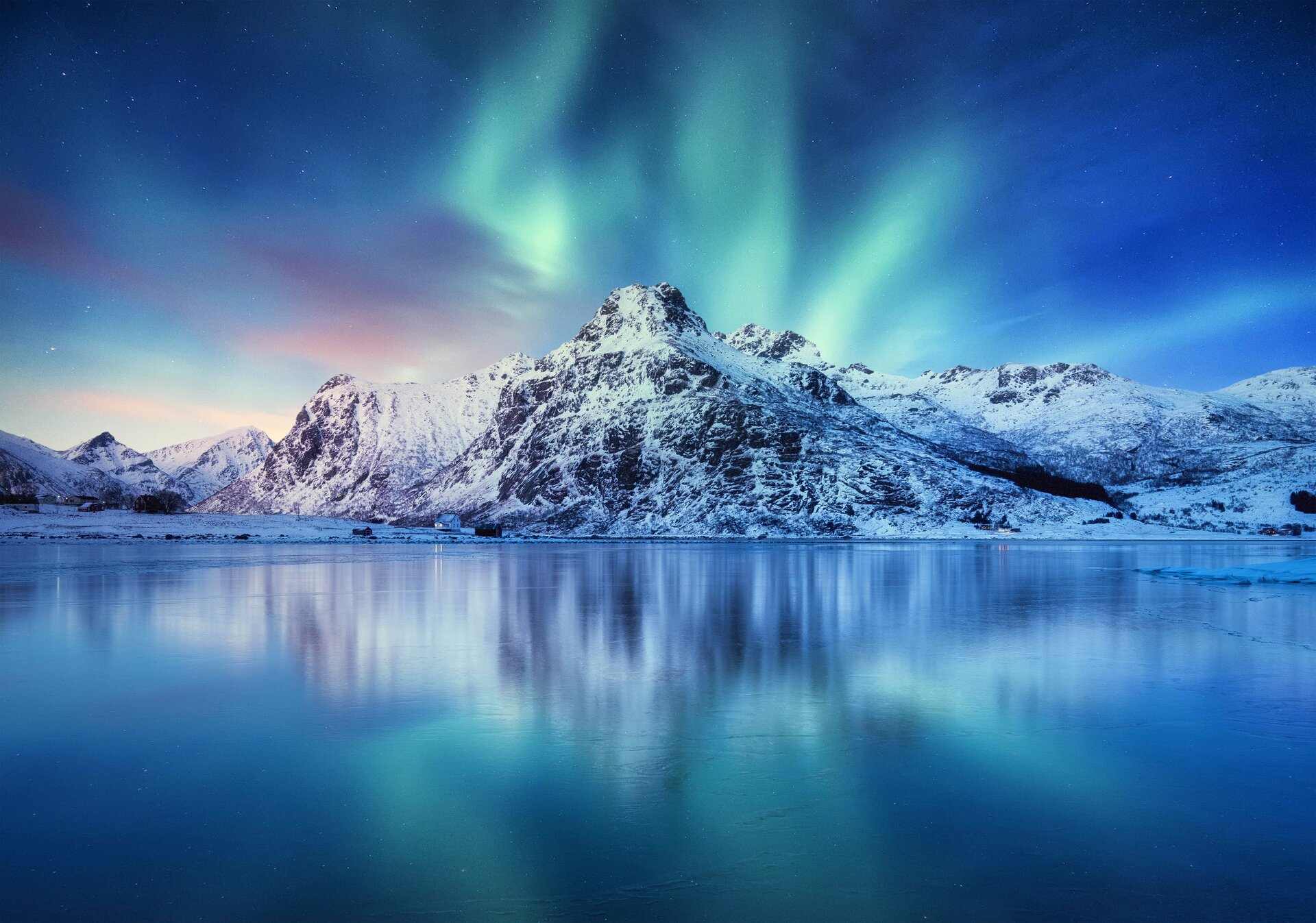
- Sky conditions: Clear skies and low light pollution matter as much as solar activity. A modest aurora in a dark rural sky can beat a stronger one washed out by clouds or city glare.
A simple aurora checklist
If you want the best odds without turning it into a full-time hobby, focus on four knobs you can control or track:
- Get north (or south in the Southern Hemisphere): closer to the auroral oval, better odds.
- Get dark: avoid bright city lights, and give your eyes 15 to 30 minutes to adapt.
- Get clear: clouds are the ultimate off switch.
- Watch geomagnetic activity: higher activity means brighter, more widespread auroras.
And bring patience. Auroras are not a static landmark. They are a weather system made of charged particles. Sometimes they simmer for an hour and then, without warning, the whole sky starts dancing.
Common questions
Are the Northern Lights dangerous?
Not to watch. The particle collisions happen high above the ground. However, the same geomagnetic storms that power bright auroras can disrupt satellites, radio communication, and power grids. So the sky show is harmless for you, but it is a real engineering challenge for our tech infrastructure.
Do auroras make sound?
Most aurora light is produced far too high up for sound to travel down in any straightforward way. There are anecdotal reports of faint crackling sounds during intense displays, and researchers continue to investigate possible explanations, but it is not something most observers will hear.
Why do auroras dance so fast?
You are watching rapid changes in the flow of charged particles and electric currents in near-Earth space, plus waves moving through the magnetosphere. The atmosphere is responding in real time, glowing wherever the energy is being dumped.
Do the Southern Lights work the same way?
Yes. The aurora australis is the same physics, just centered on the southern auroral oval.
The take-home message
The Northern Lights change color because different atmospheric gases, at different altitudes, glow in different wavelengths when energized by particles from the Sun. They change shape because Earth’s magnetic field and space-weather dynamics funnel those particles into ever-shifting sheets, rays, and curtains. When you see an aurora, you are not just seeing “pretty lights.” You are watching Earth’s magnetic shield in action, turning solar chaos into something astonishingly beautiful.