Curiosity, with all its quills showing.
There is a particular kind of dry day that feels like the air is tugging at everything with moisture in it: leaves, soil, lips, laundry on the line. Meteorologists and plant scientists have a number for that tug. It is called vapor pressure deficit, or VPD.
VPD can sound abstract at first, but the idea behind it is simple: it is the gap between how much water vapor pressure the air could have at a given temperature and how much it actually has. A bigger gap means the air has more capacity, in pressure terms, to take on water vapor, so evaporation and plant water loss can speed up.
VPD in plain language
Air contains water vapor. Warm air can support a higher water vapor pressure than cool air. When the air is holding as much water vapor as it can at that temperature, we call that saturation.
Vapor pressure deficit is the difference between:
- Saturation vapor pressure (es): the water vapor pressure the air could have at the current air temperature if it were saturated.
- Actual vapor pressure (e): the water vapor pressure the air is actually carrying right now.
That difference is the “deficit.” The larger the deficit, the more strongly the air can pull water vapor away from wet surfaces, soils, and plants.
One quick intuition check
If the temperature rises but the amount of water vapor in the air stays the same, saturation vapor pressure rises. The air’s capacity expands, so the gap gets larger. That is why a hot afternoon can have a high VPD even if the humidity reading does not look shockingly low.
A quick numbers anchor
As a rough example, at 30°C and 50% relative humidity, VPD is about 2.1 kPa. That is a fairly “thirsty air” kind of day for plants and people alike.
Why higher VPD dries things faster
Evaporation and transpiration happen when water molecules escape into the air. The rate depends on several factors, but one big driver is the gradient between water vapor pressure at the evaporating surface and water vapor pressure in the surrounding air.
VPD captures that gradient in a useful way. For plants, the immediate gradient is often between the moist interior of the leaf (near saturation at leaf temperature) and the outside air (at ambient vapor pressure). When VPD is high:
- Plants can lose water faster, at least up to the point where many species begin to partially close stomata, which can cause transpiration to plateau even while the air’s demand keeps rising.
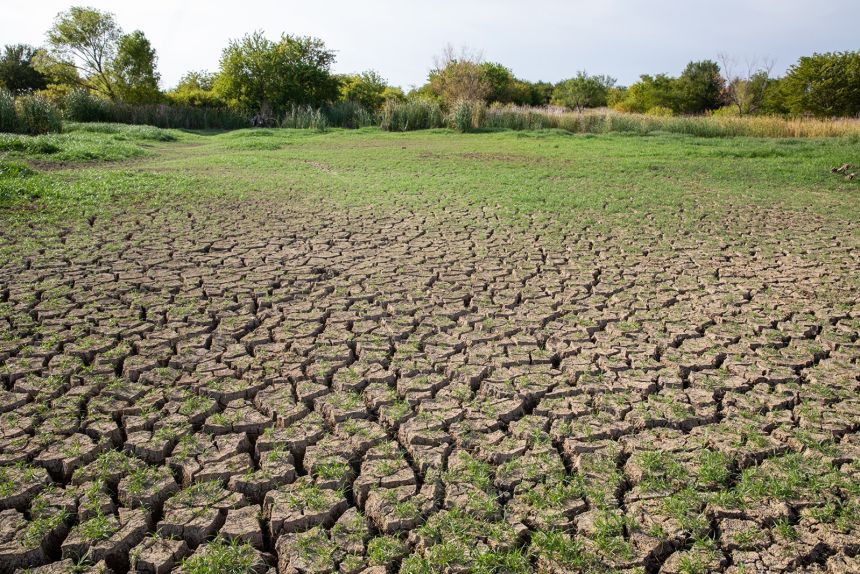
- Soils dry quicker, especially near the surface, because evaporation accelerates.
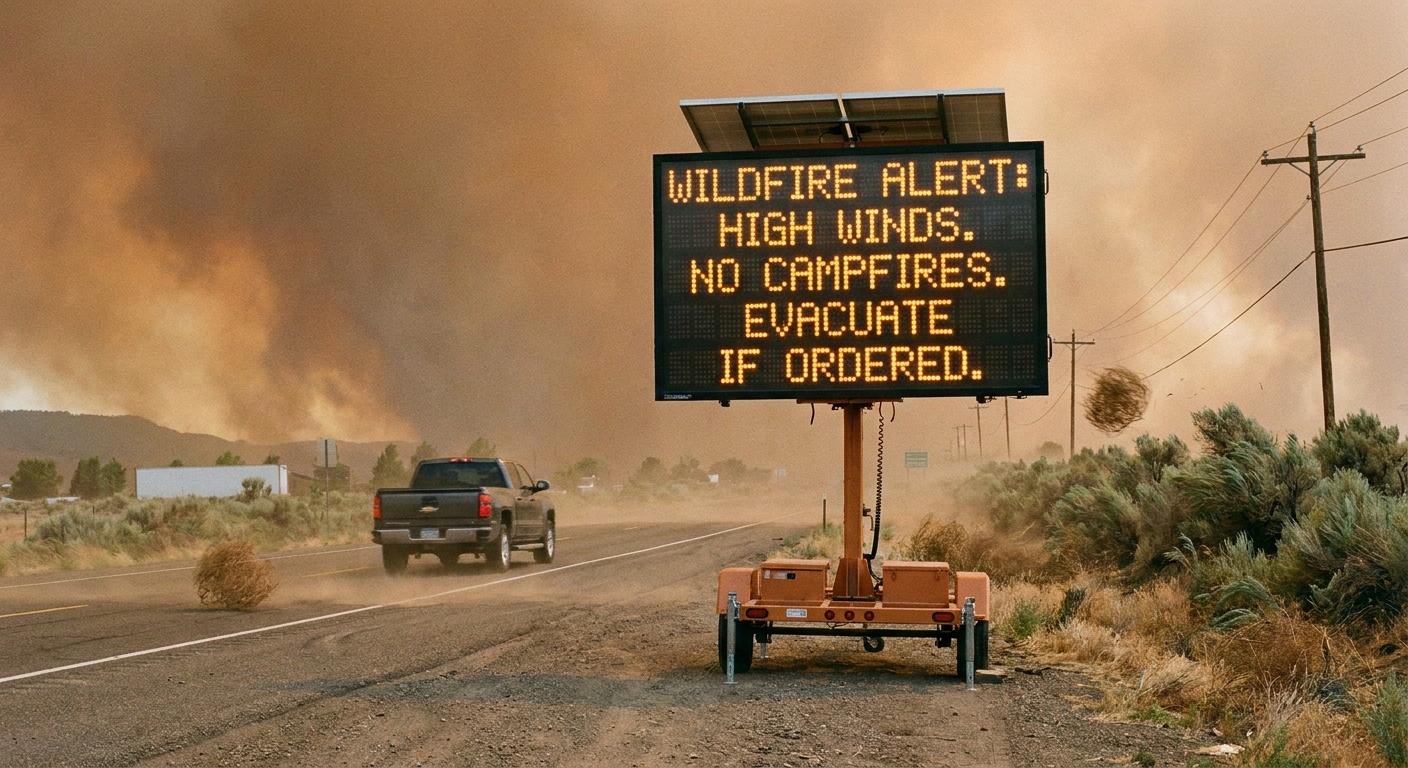
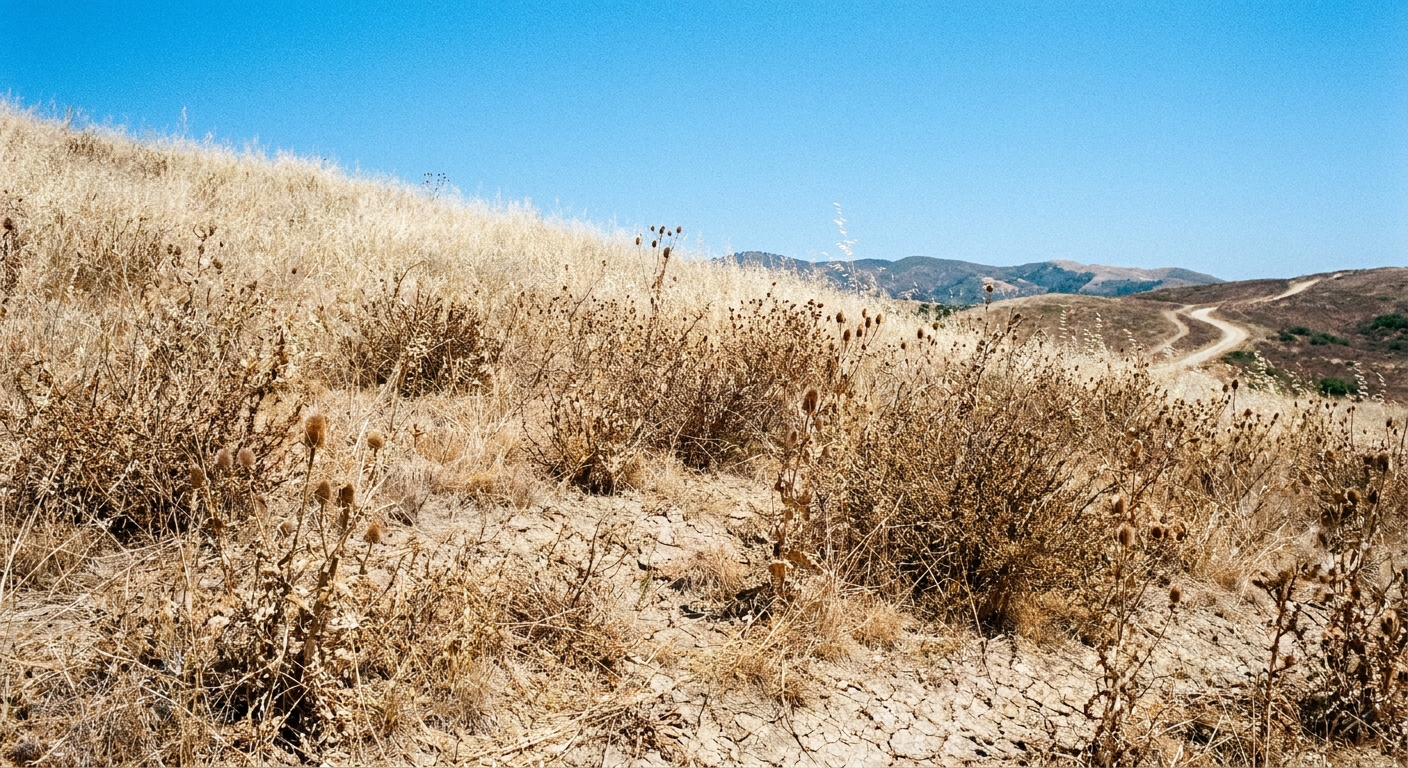
- Dead fuels dry out, like grasses, needles, and small twigs, which can make wildfire ignition and spread more likely.
When VPD is low, the air is already relatively “full” of moisture for its temperature, so evaporation generally slows.
VPD vs relative humidity vs dew point
These three ideas are related, but they answer different questions.
Relative humidity: percent of “full”
Relative humidity (RH) tells you how close the air is to saturation at that temperature, expressed as a percentage. RH is useful, but it can be misleading if you treat it as a direct measure of drying power.
Because warm air can support much more water vapor pressure than cool air, the same RH can correspond to very different actual moisture levels and very different VPD values.
Dew point: how much moisture is in the air
Dew point is the temperature you would have to cool the air to reach saturation. Higher dew point usually means the air contains more water vapor in an absolute sense.
Dew point is often the most intuitive “how muggy is it really?” measure. But dew point alone does not tell you the full drying story, because drying demand also depends on temperature. Hot air with a moderate dew point can still produce a large vapor pressure deficit.
VPD: drying demand in one number
VPD pulls temperature and moisture into one value aimed at a specific question: how strong is the air’s pull on water vapor right now?
If you remember one contrast, make it this: RH is a ratio, dew point is a moisture proxy, and VPD is a pressure gap tied to drying demand.
How VPD is measured
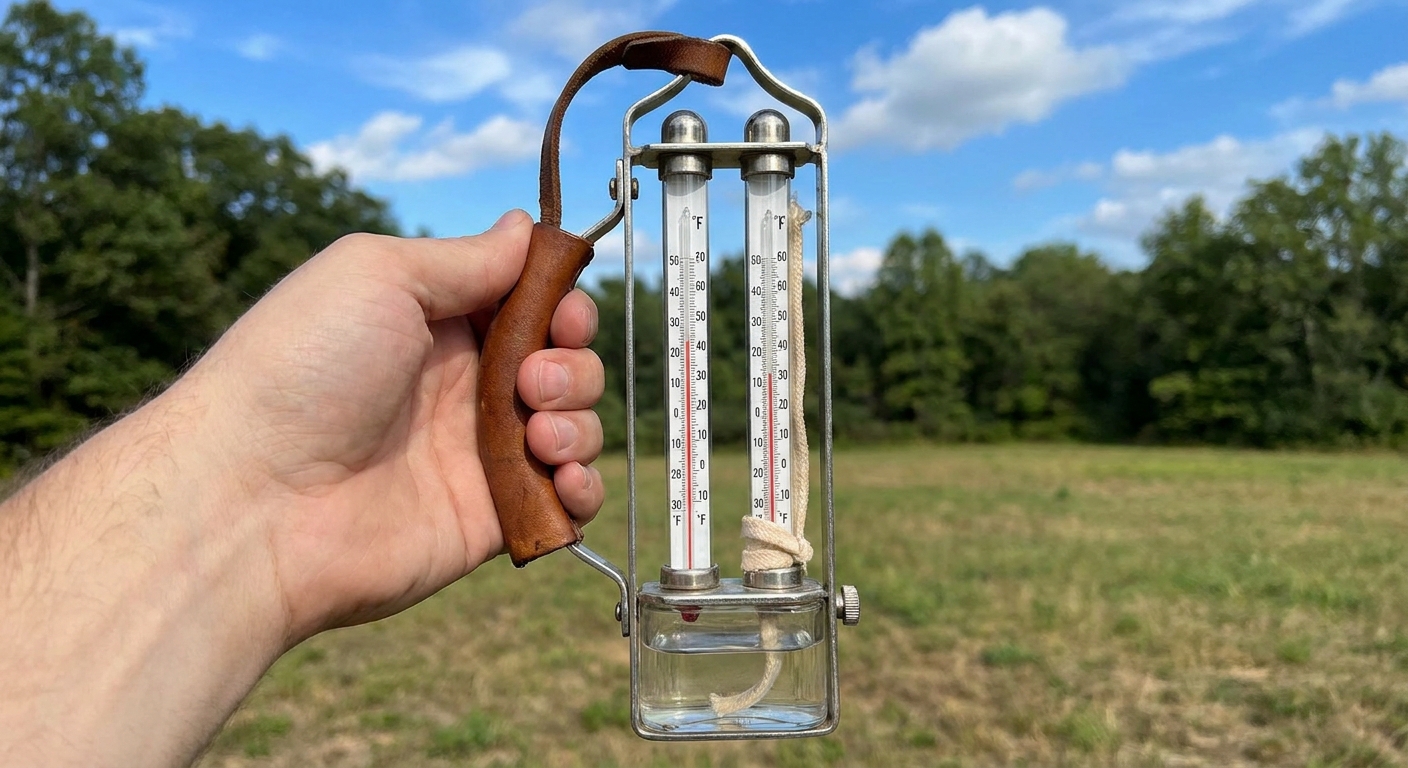
VPD is usually expressed in kilopascals (kPa), a pressure unit. Weather stations can compute it from temperature and humidity measurements. Many agricultural sensors and greenhouse controllers display VPD directly.
You will sometimes see related terms like:
- Vapor pressure (e): the actual water vapor pressure.
- Saturation vapor pressure (es): the maximum vapor pressure possible at that temperature.
- VPD = es − e: the deficit.
The key point is not the formula, but what it represents: how far the air is from saturated, expressed as a pressure difference.
VPD and fire weather
Fire weather is not one variable. It is a chorus: heat, wind, dryness in vegetation, dryness in soil, and the timing of rain and recovery. VPD is valuable in that chorus because it describes the atmosphere’s evaporative demand, which helps set the pace of drying.
Why it matters for fuels
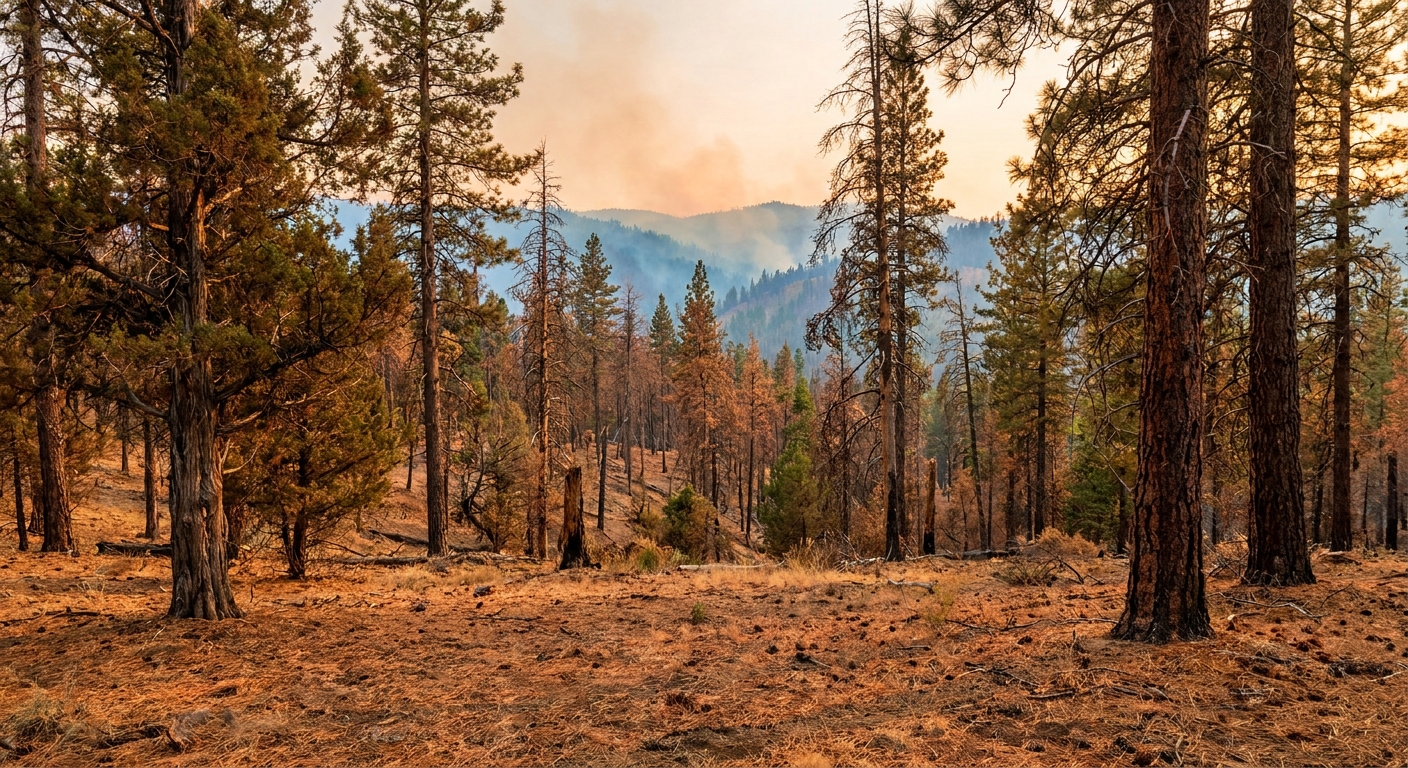
Fine fuels like grasses and small twigs exchange moisture with the air quickly. When VPD spikes, those fuels can lose moisture fast, sometimes over hours rather than days. Lower fuel moisture generally makes ignition easier and fire spread faster, especially when wind cooperates.
VPD is not a fire forecast by itself. But during heat waves and droughts, persistently high VPD can be one reason landscapes dry out and stay dry.
A practical reading habit
If you follow fire weather, try pairing VPD with wind and recent precipitation. High VPD plus gusty wind is a different kind of day than high VPD with calm air. Both can dry fuels, but wind adds rapid spread potential.
VPD for gardeners and growers
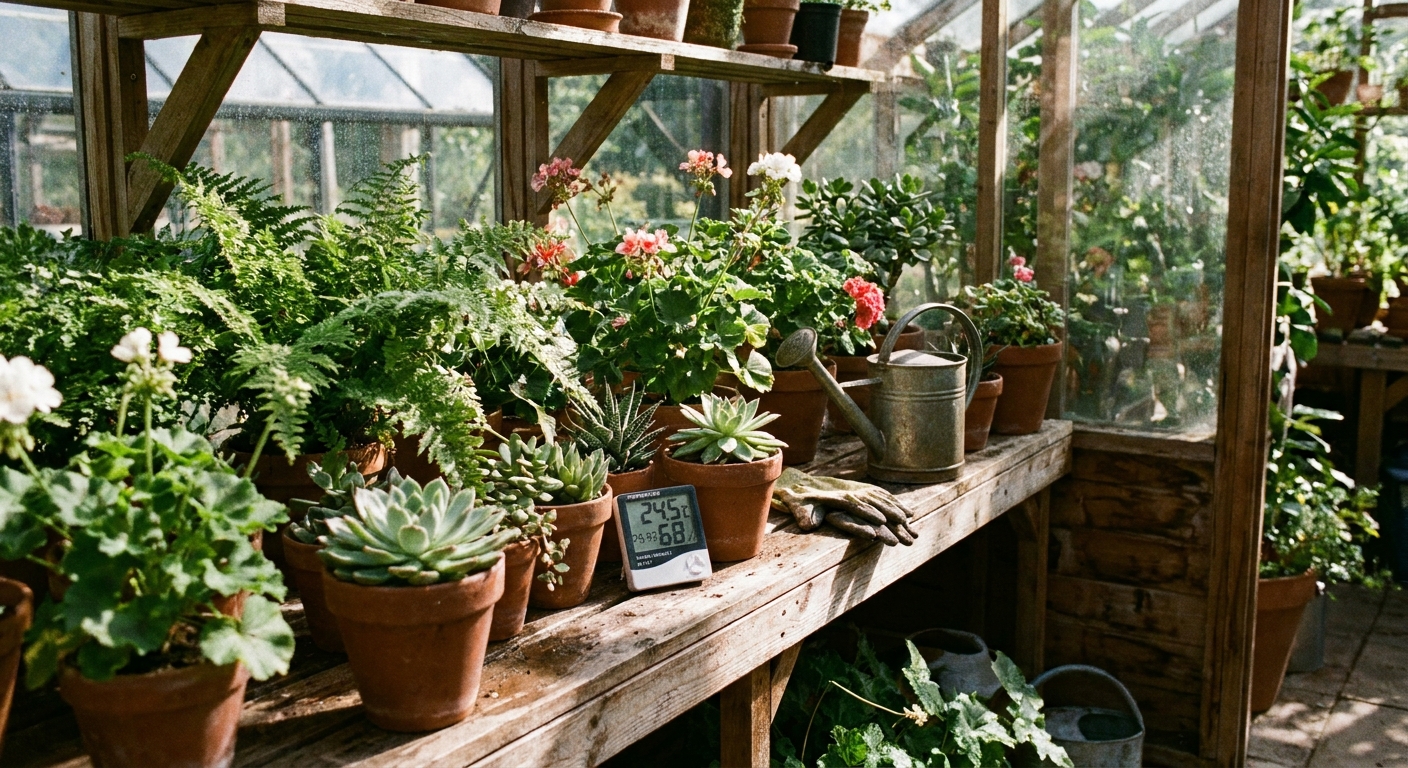
Plants live at the intersection of light, temperature, water, and air. VPD is popular in controlled environment agriculture because it speaks directly to plant water loss and stomatal behavior.
Low and high VPD effects
- Very low VPD (air close to saturated) can slow transpiration. Some crops may struggle with nutrient transport (since calcium and other nutrients ride the transpiration stream). Low VPD also often coincides with high RH and higher condensation risk, which can increase disease pressure when leaves stay damp.
- Very high VPD (very “thirsty” air) can drive rapid water loss. Many plants respond by closing stomata partway to conserve water, which can reduce CO2 uptake and slow growth. Leaf edges can scorch if water supply cannot keep up.
Typical ranges (ballpark)
There is no single perfect VPD for every crop and every stage, but greenhouse conversations often circle around rough bands like:
- About 0.8 to 1.2 kPa: a common “comfortable middle” target for many leafy crops in active growth.
- Below about 0.4 kPa: air is very humid, transpiration can be sluggish, and condensation risk rises.
- Above about 1.6 to 2.0 kPa: air is very drying and plant stress becomes more likely unless irrigation and root uptake can keep pace.
These are not rules. Crop type, growth stage, light intensity, airflow, and root zone health all matter. In high light, leaf temperature can run warmer than air temperature, which means the effective “leaf VPD” experienced by the plant can be higher than what an air sensor suggests.
How growers influence VPD
Since VPD depends on temperature and moisture, you can shift it by changing either:
- Raise humidity (misting, fogging, wet pads, reducing ventilation) to lower VPD.
- Lower humidity (dehumidification, ventilation) to raise VPD.
- Change temperature (heating or cooling), which changes saturation vapor pressure and can raise or lower VPD depending on the direction and moisture supply.
Outdoors in a garden, you cannot control the air the same way, but the same physics applies. Hot, dry, windy afternoons are a classic high-VPD setup. Mulch, shade cloth, and timing irrigation earlier in the day are ways to reduce stress when the air’s demand is high.
VPD questions
Is VPD just the opposite of humidity?
Not exactly. Relative humidity and VPD move in opposite directions much of the time, but VPD also responds strongly to temperature. Two days with the same RH can have very different VPD if one day is much warmer.
Can VPD be high when it feels humid?
It can. If dew point is high but temperature is even higher, the air can still have plenty of extra capacity for water vapor pressure. That extra capacity shows up as a larger VPD, which can still increase plant water loss.
Does high VPD always mean drought?
No. VPD is about the atmosphere’s demand, not the water supply. After rain, a hot, clear day can produce high VPD even while the ground is temporarily wet. Drought is about longer-term imbalance between supply and loss.
What should I watch for during heat waves?
Heat waves often raise VPD because temperature climbs faster than atmospheric moisture. That combination can intensify drying of soils and vegetation, and it can raise irrigation needs and wildfire fuel flammability.
Takeaway
Vapor pressure deficit is the air’s thirst, written as a number: the gap between saturation vapor pressure (at the current temperature) and the air’s actual vapor pressure. When that gap widens, the atmosphere can pull water out of plants and landscapes faster, with real consequences for crop stress, garden watering, and fire weather.
If you already keep an eye on relative humidity or dew point, VPD is a useful companion because it translates temperature plus moisture into the question you often care about most: how aggressively will the air dry things out today?