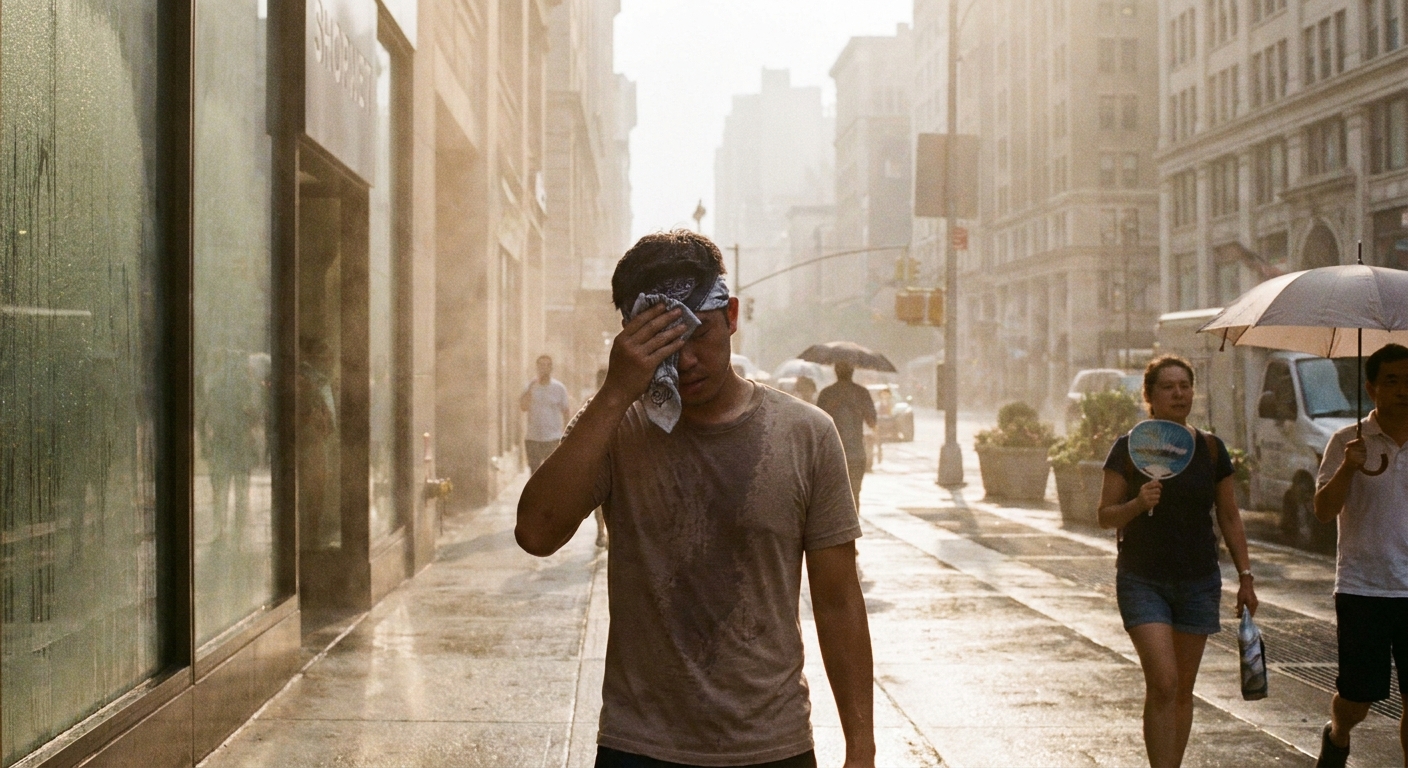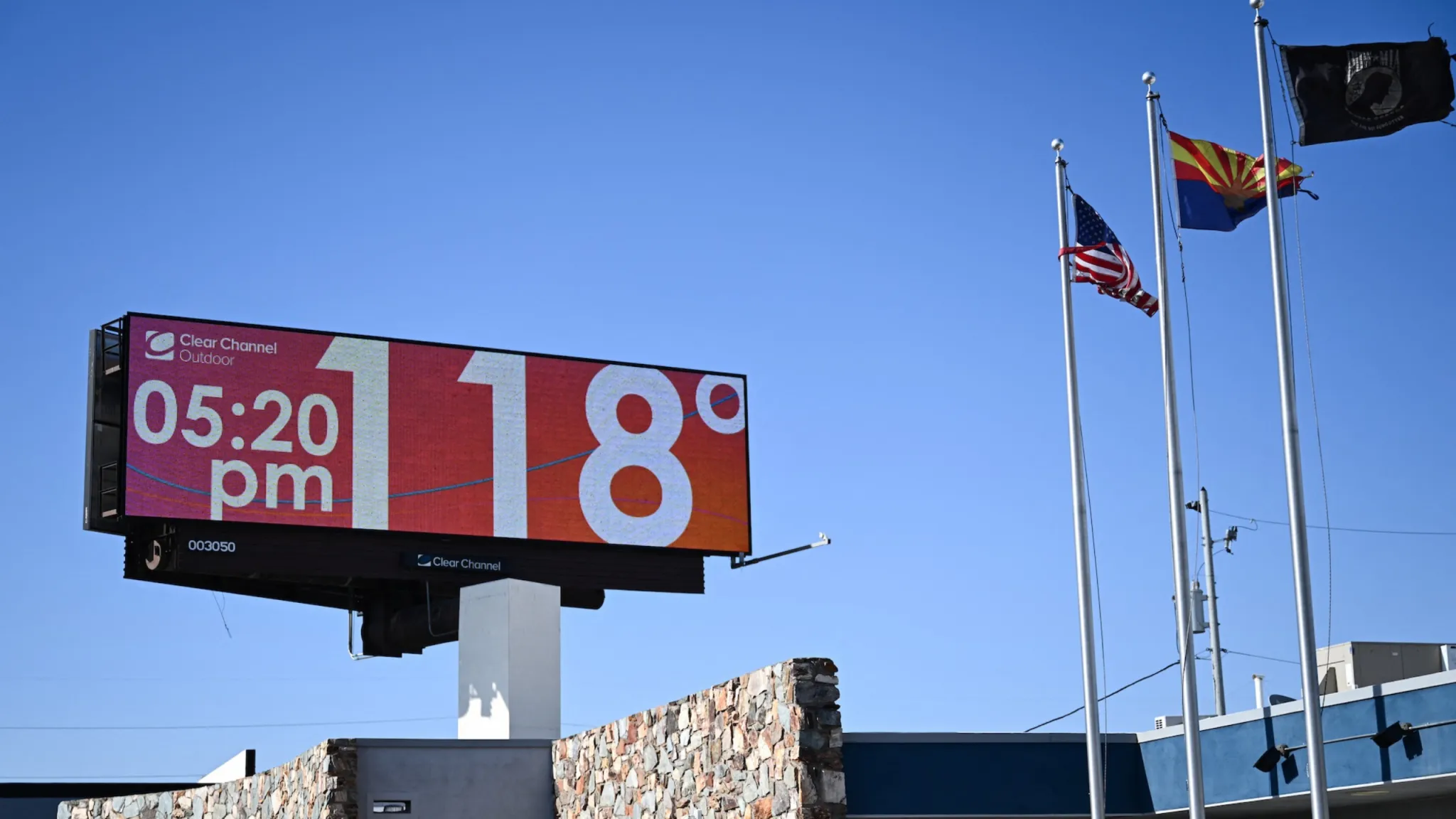
I used to do a little classroom magic trick with two thermometers: one dry, one wrapped in a damp wick. The room temperature would read the same on the dry one every time, but the “wet” thermometer would dip lower, sometimes by a lot. Students would squint at it like it was cheating. It was not cheating. It was physics doing what physics does when water evaporates.
That lower reading is wet-bulb temperature, and it answers a surprisingly deep question: How far can evaporation cool a wetted surface in this air, right now?
Wet-bulb temperature, defined
Wet-bulb temperature is the equilibrium temperature a well-wetted, well-ventilated surface reaches through evaporation under the current atmospheric conditions, mainly air temperature, humidity, and barometric pressure.
Think of evaporation as a tiny energy thief. For a water molecule to escape from liquid into vapor, it needs energy. It steals that energy as heat from whatever the water is touching, which cools the water and the surface around it.
Two key points make wet-bulb temperature special:
- It is a real temperature you can measure, not a “feels like” estimate.
- It builds humidity into the number, because humidity controls how easily water can evaporate.
If the air is very dry, evaporation is easy, so wet-bulb temperature can be much lower than ordinary air temperature. If the air is already humid, evaporation struggles, and wet-bulb temperature rises toward the air temperature.
Three numbers, three different questions
On hot days, people often mix up three related ideas: air temperature, heat index, and wet-bulb temperature. They are connected, but they answer different questions.
1) Air temperature
Question it answers: How hot is the air itself?
This is the “dry-bulb” temperature, the value you see on a standard weather app. It is about the average kinetic energy of air molecules. It does not care whether the air is dry or sticky.
2) Heat index
Question it answers: How hot might it feel to a typical person in the shade, with light wind, assuming the body is trying to cool by sweating?
The heat index is a human comfort and risk estimate built from air temperature and relative humidity. It depends on assumptions about physiology and environment. It is useful, but it is not a thermodynamic ceiling.
3) Wet-bulb temperature
Question it answers: How effective can evaporation be as a cooling process right now?
Wet-bulb temperature is closer to the “rules of the game” for evaporation. It is a physical limit for an evaporating, ventilated wet surface at that pressure, not just a perception metric.
How you measure it
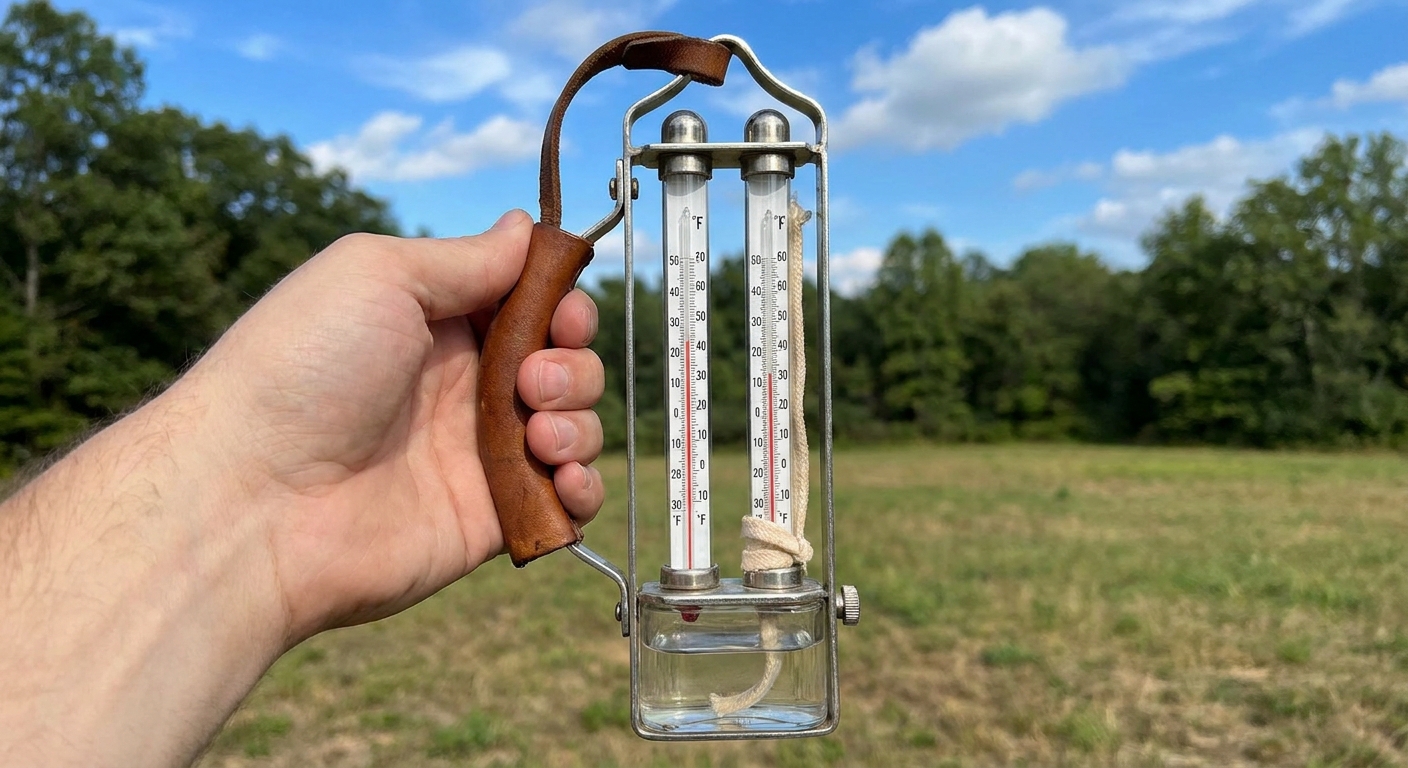
The classic tool is a psychrometer: two thermometers side by side.
- One is dry and reads the air temperature.
- The other has its bulb wrapped in a wet wick.
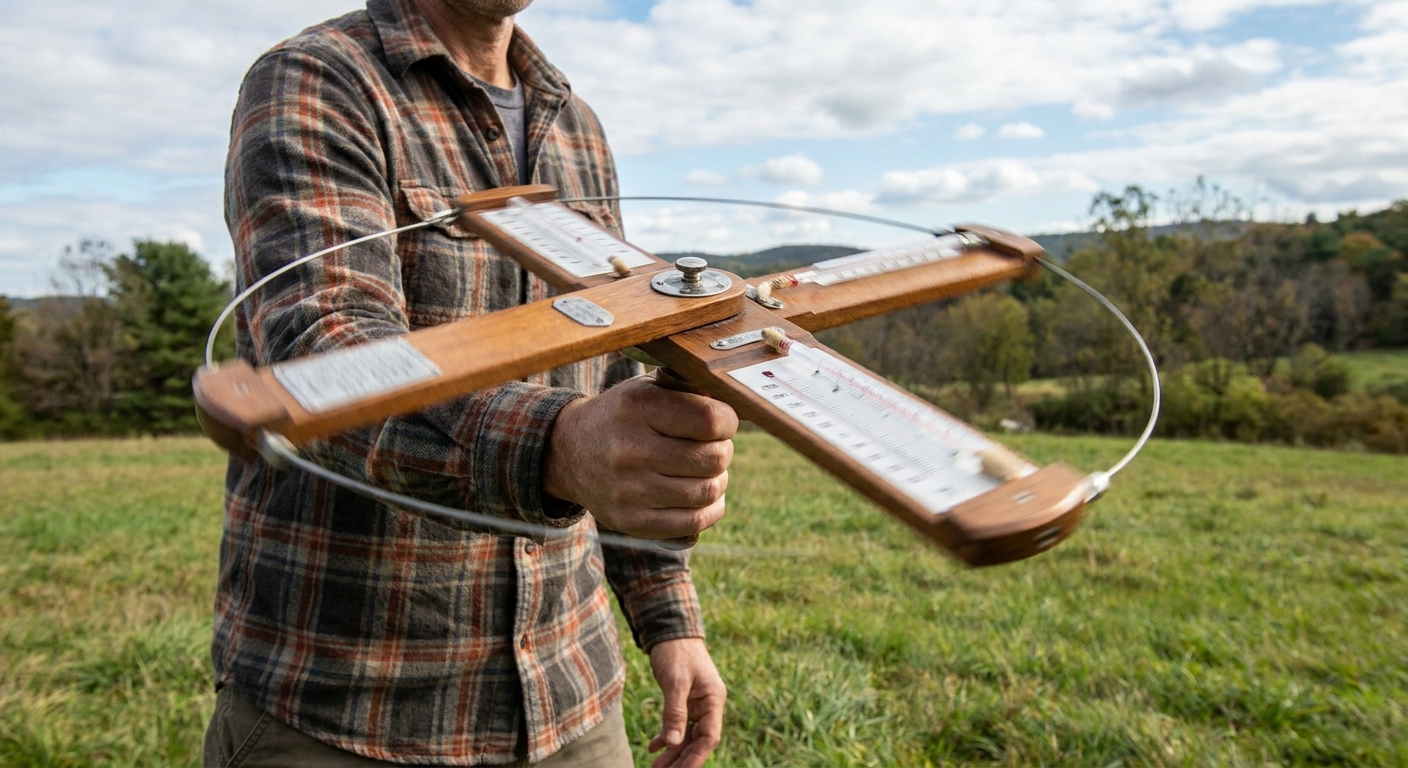
As water evaporates from the wick, it cools that thermometer. With enough airflow over the wick (either by swinging it or using an aspirated design), it settles to a steady value after a minute or two: the wet-bulb temperature.
A couple of practical gotchas matter for accuracy:
- Ventilation is part of the measurement. Without airflow, the wet bulb can read too warm.
- Radiation matters. Direct sun or heat radiating off nearby surfaces can bias readings unless the instrument is properly shielded.
- The wick has to be truly wet with clean water, or you are no longer measuring the standard thing.
The gap between the two thermometers tells you something crucial:
- Big gap means evaporation is working well (drier air).
- Small gap means evaporation is struggling (more humid air).
Why humidity pushes wet-bulb upward
Evaporation is driven by a difference in water vapor pressure: water “wants” to move from the wet surface into the air when the air can still accept more vapor.
When humidity is high, the air is already crowded with water vapor molecules. Fewer liquid molecules can escape, so evaporation slows. With less evaporation, you get less cooling. The wet thermometer does not drop much. That is why, on a muggy day, wet-bulb temperature creeps closer and closer to the regular air temperature.
The 35°C wet-bulb limit
The reason wet-bulb temperature shows up in conversations about human heat risk is that people cool themselves partly by evaporation, specifically by sweating.
When sweat evaporates from your skin, it removes heat from your body. If the surrounding air conditions make evaporation ineffective, that cooling channel narrows or shuts down.
You will often hear 35°C wet-bulb (about 95°F wet-bulb) described as an upper theoretical neighborhood. In plain terms, it is the point where, for a healthy person at rest with ideal conditions (shade, minimal clothing barriers, and enough airflow across the skin), the environment is approaching a thermodynamic wall where evaporation cannot remove heat fast enough to keep core temperature stable.
Two important clarifications keep this honest:
- Dangerous heat stress can happen well below 35°C wet-bulb once you add sun, weak airflow, heavy clothing, illness, dehydration, or physical activity.
- This is physics, not fortune telling. It is not the same thing as a city declaring a heat emergency, and it is not a promise of what will happen to any specific individual.
One worked comparison
Let’s keep air temperature fixed and change only the humidity. This is where wet-bulb temperature shines. (These are illustrative sea level style examples. Exact values shift with pressure, instrument details, and the psychrometric formula you use.)
Case A: 40°C with dry air
Imagine it is 40°C (104°F) with roughly 20% relative humidity. The wet-bulb temperature is on the order of 25°C to 28°C.
What that means physically: evaporation can still pull the “wet surface” down by roughly 12°C to 15°C below the air temperature. That is a lot of cooling headroom for sweat and for evaporative cooling systems.
Case B: 40°C with very humid air
Now keep it at 40°C, but raise humidity to around 70% to 80% relative humidity. The wet-bulb temperature might climb to roughly 33°C to 34°C.
What that means physically: evaporation can only pull temperatures down by about 6°C to 7°C, and as wet-bulb approaches 35°C that remaining headroom shrinks toward zero.
Same air temperature, very different evaporative “budget.” Wet-bulb temperature is the number that keeps score.
If air temperature tells you the size of the oven, wet-bulb temperature tells you whether your body’s built-in cooling fan can actually do anything, assuming you can move air across the skin.
Why wet-bulb is a limit
Here is the core idea in plain terms:
- Your body must dump heat to the environment to stay near a normal core temperature (roughly 36.5°C to 37.5°C for most people).
- On very hot days, radiation and convection can stop helping much, especially if the air is close to skin temperature or hotter.
- That leaves evaporation as the heavy lifter.
Wet-bulb temperature wraps up how well evaporation can work in a single value. As wet-bulb rises, the maximum possible evaporative cooling rate drops. At high wet-bulb values, the physics becomes brutally simple: the air is so warm and so moisture-loaded that sweat cannot evaporate fast enough to carry away the heat your body is continuously producing, especially if you are active or in the sun.
Common misconceptions
“Wet-bulb is just another ‘feels like’ temperature.”
No. The heat index is a “feels like” metric. Wet-bulb is a measurable temperature tied directly to evaporation.
“If the wet-bulb is 35°C, the air temperature must also be 35°C.”
Not necessarily. Wet-bulb temperature is usually lower than air temperature. It only equals air temperature when the air is fully saturated (100% relative humidity), because then evaporation cannot cool at all.
“35°C wet-bulb is a single magic cutoff for everyone.”
Human heat tolerance varies with health, hydration, activity level, clothing, wind, sun exposure, and access to cooling. The 35°C value is best understood as an upper theoretical neighborhood under ideal assumptions, not as a personalized forecast.
“Wet-bulb is the same as WBGT.”
No. Wet-bulb temperature is one physical measurement tied to evaporation. Wet-Bulb Globe Temperature (WBGT) is a separate heat stress index that folds in additional factors like radiant heat (sun) and wind using multiple sensors. People mix them up all the time.
A quick way to visualize it
If you want a mental model that sticks, try this:
- Picture your skin as a damp surface.
- The “best case” temperature that surface can reach by evaporation, given enough airflow and no extra radiant heating, is the wet-bulb temperature.
When wet-bulb is low, your body can run a strong cooling gradient. When wet-bulb is high, that gradient collapses. That is why humid heat can feel oppressive even when the air temperature is not record-breaking, and why direct sun can make the same wet-bulb feel far worse.

FAQ
Is wet-bulb temperature the same as dew point?
No. Dew point is the temperature you would need to cool air to (at constant pressure) for it to become saturated and start condensing water. Wet-bulb is about cooling by evaporation. They are related, but not interchangeable.
Why do weather apps show heat index more often than wet-bulb?
Heat index maps directly onto how hot conditions may feel for many people under common assumptions. Wet-bulb is more specialized, but it is extremely useful when you care about the physical limits of evaporative cooling.
Does wind change wet-bulb temperature?
Wind does not change the air’s moisture content, but it can change how fast evaporation happens at a surface by replacing moist boundary-layer air with drier air. A properly measured wet-bulb temperature assumes adequate ventilation around the wet sensor, which is why sling psychrometers are swung or aspirated.
Does altitude change wet-bulb temperature?
Yes, a bit. Wet-bulb temperature depends on barometric pressure as well as temperature and humidity. At different elevations, the same temperature and relative humidity can yield slightly different wet-bulb values, which is one reason precise work uses pressure-aware calculations.