Curiosity, with all its quills showing.
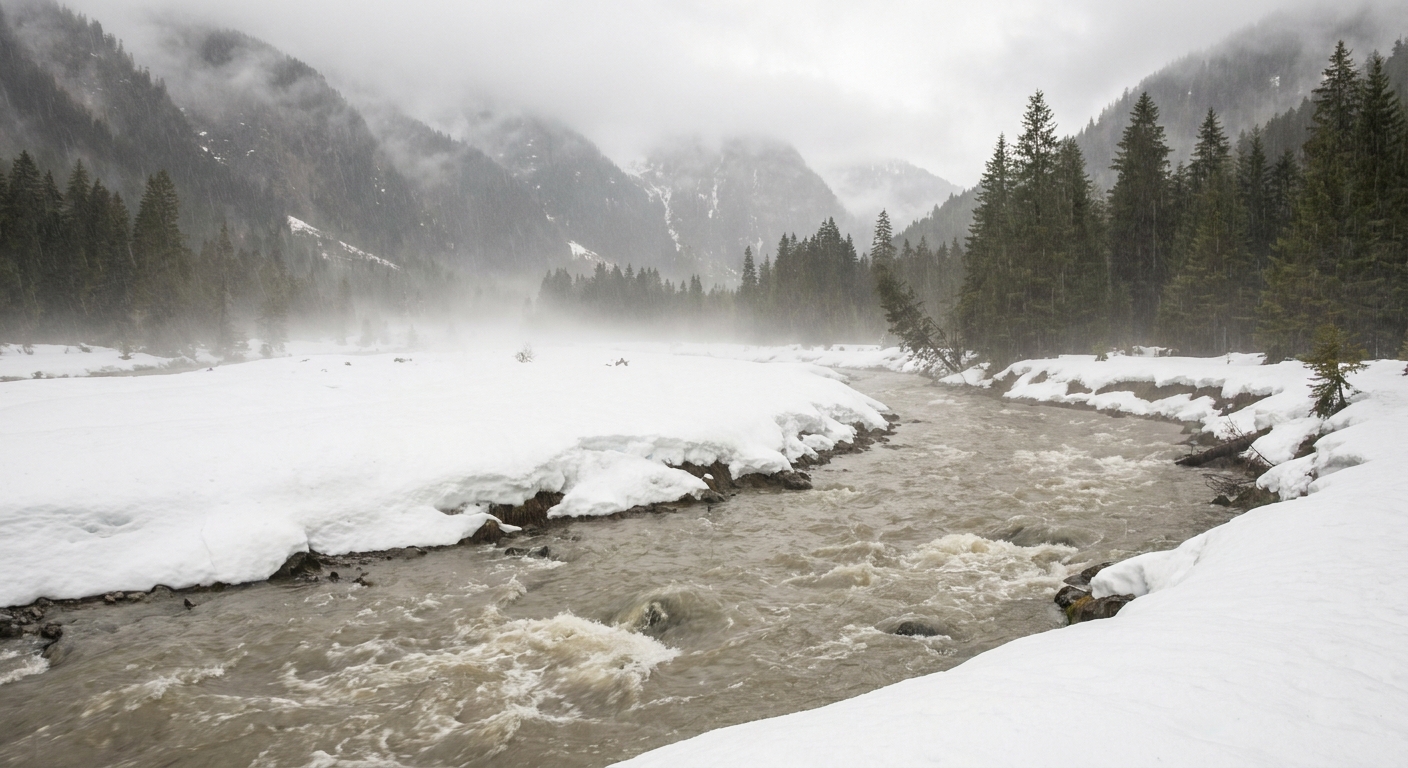
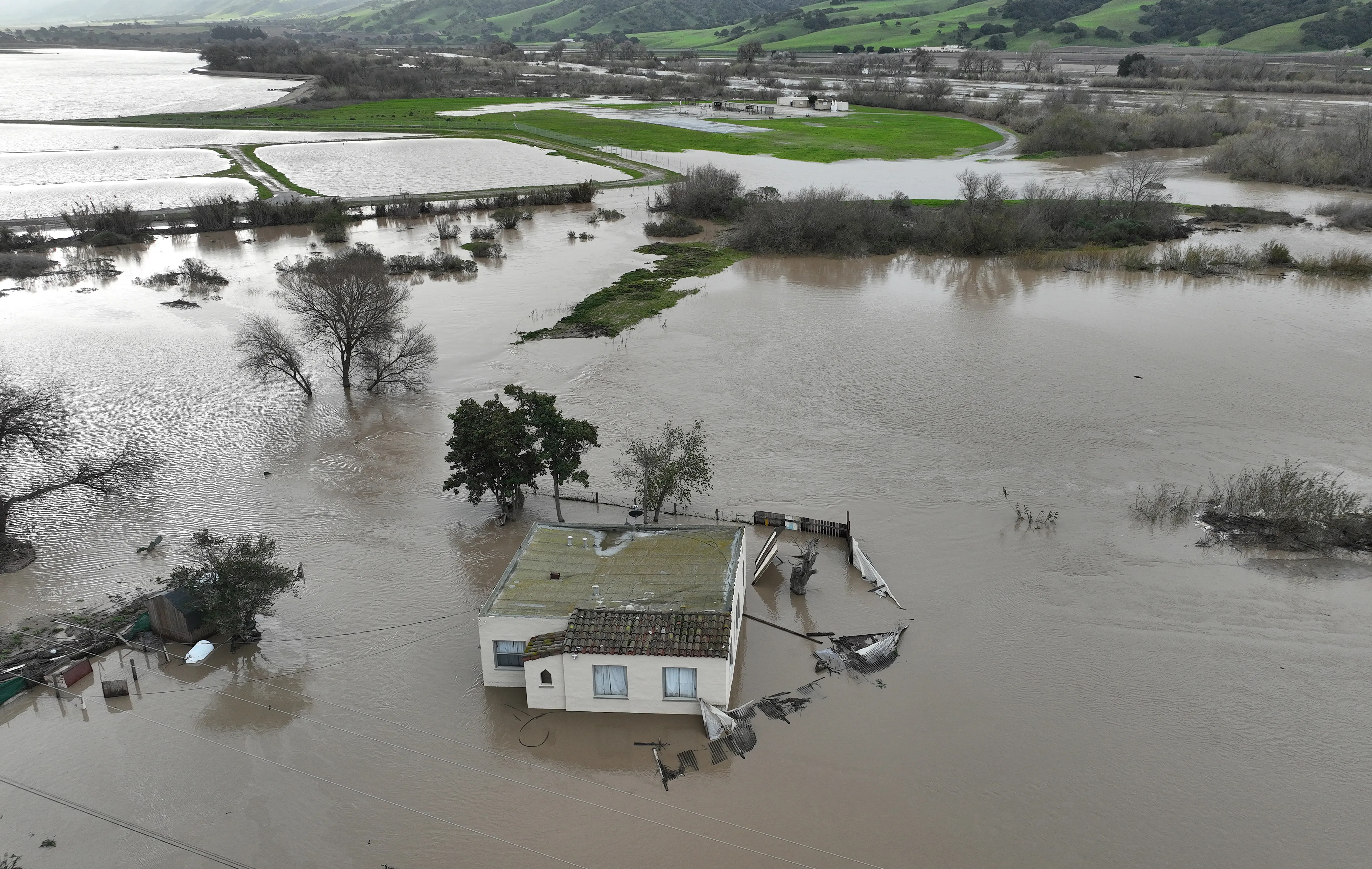
A river in flood is often mostly water, even when it is brown and turbulent. A debris flow is something else: a moving mass of water and earth, heavy enough to shove boulders, snap trees, and bulldoze through a channel like wet concrete. If you have ever wondered how a drainage that looks harmless and dry can suddenly become a roaring conveyor belt of rocks and mud, this is the mechanism.
Debris flow, in plain terms
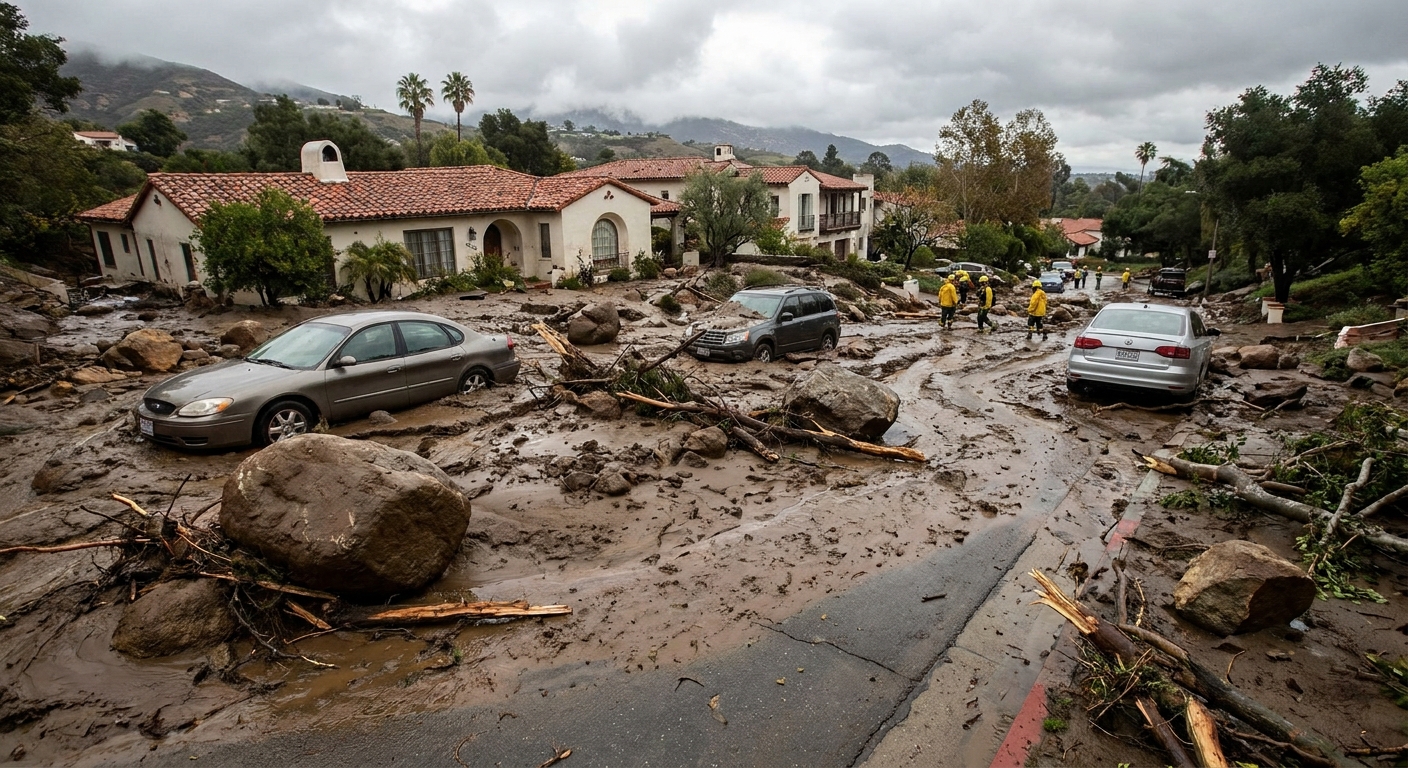
A debris flow is a fast-moving slurry made of water mixed with mud, sand, gravel, boulders, and often logs and branches. Instead of flowing like a normal stream, it moves as a thick, churning mass that can carry large objects because the water is packed with sediment and debris.
Scientists often describe debris flows as a type of landslide that travels along channels. That framing helps: it is not only a “flood problem,” it is also a “slope problem.” Gravity is doing a lot of the work.
What it looks and sounds like
Eyewitnesses commonly describe a debris flow as a rumbling or roaring surge that arrives in pulses. The front can be especially destructive because it may contain the largest rocks and woody debris, acting like a battering ram.
How debris flows form
A debris flow usually needs two things: loose material and a trigger that mobilizes it.
- Loose material: weathered soil, ash, sand, gravel, talus, and rock fragments sitting on slopes or in channels.
- Trigger: often intense rainfall, sometimes rapid snowmelt, a sudden release of water, or a smaller slope failure that liquefies and entrains more sediment.
As water runs downhill, it can pick up fine sediment that thickens the flow. A thicker flow can then pick up bigger particles. The result is a self-feeding process: more sediment makes the flow denser, and a denser flow can haul even more sediment. In some events, that bulking happens progressively as runoff scours a channel. In others, it can begin with a small slide or a sudden water release that turns into something much larger downstream.
Why steep slopes and burn scars raise the risk
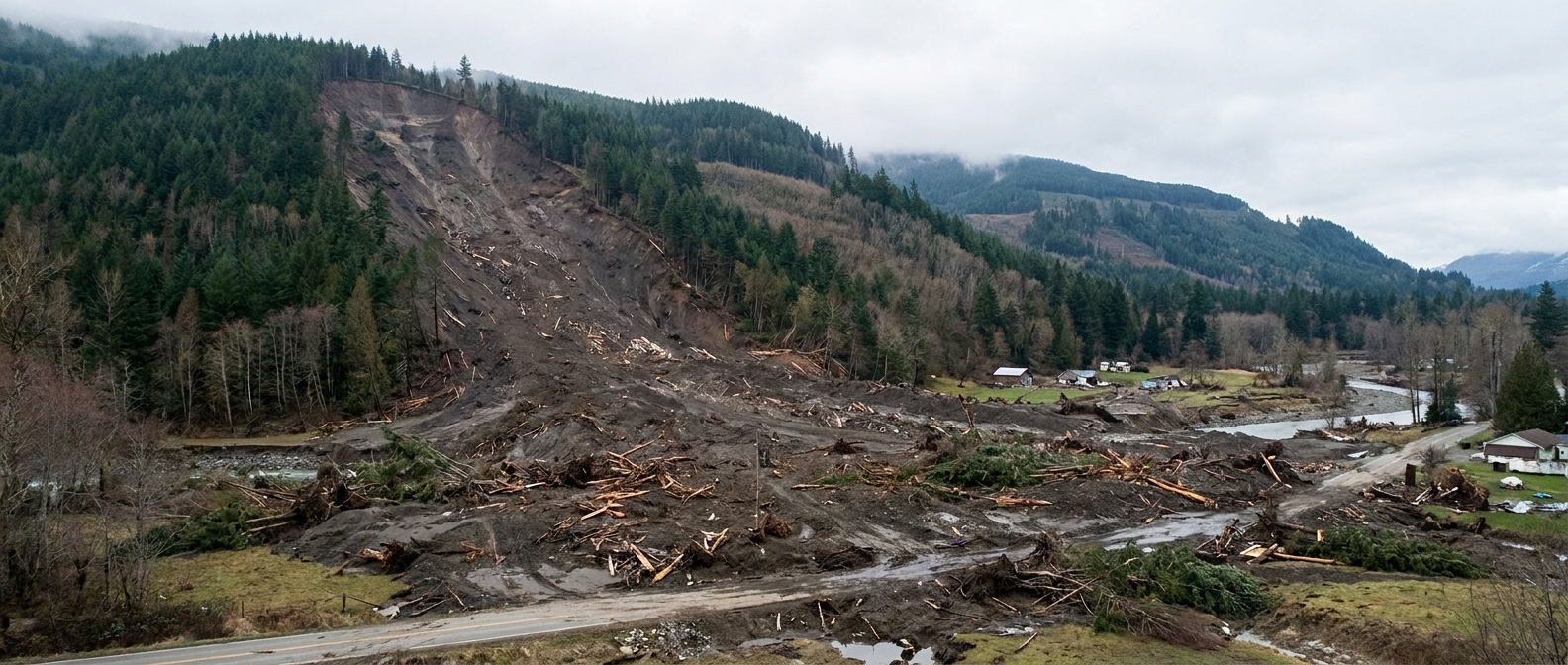
Debris flows are strongly linked to steep terrain because steep slopes give gravity more leverage. But the risk can jump dramatically after wildfire, especially when intense rain arrives before the landscape has had time to recover.
What wildfire changes
- Less vegetation to hold soil: roots that once reinforced the ground may be damaged, and plant cover that softened raindrop impact is gone.
- More loose material available: burned slopes can shed ash, soil, and rock fragments more easily.
- Faster runoff: some burned soils develop water-repellent layers that reduce infiltration, sending more water overland into channels.
Put those together and a short burst of heavy rain can produce a sudden, sediment-rich surge. This is why agencies often issue special warnings for recent burn areas when thunderstorms or strong winter rain bands are expected.
Debris flow vs. muddy floodwater
Not all brown water is a debris flow. Floods and debris flows can happen in the same storm and even in the same watershed, but they behave differently.
The key difference is the amount of solid material
- Flood: typically more water than sediment, though it can still carry lots of mud, sand, and debris. It spreads out, fills low areas, and usually follows the rules you expect from water.
- Debris flow: a dense mixture with so much sediment and debris that it moves like a heavy slurry. It can surge in pulses, push objects, and deposit thick piles of mud and rocks when it slows.
In practical terms, debris flows tend to be more forceful, more sudden, and harder to outrun or outdrive once you are in their path. They can also build their own temporary dams of boulders and logs, then break through in another surge.
A note on the in-between
Nature does not always give us neat categories. There is a continuum from floodwater with lots of sediment, to what scientists may call hyperconcentrated flow, to full debris flow. The labels differ, but the safety takeaway does not: once water starts moving like a thick, debris-choked slurry, it can behave less like a stream and more like a moving landslide.
Why it can strike channels that look dry
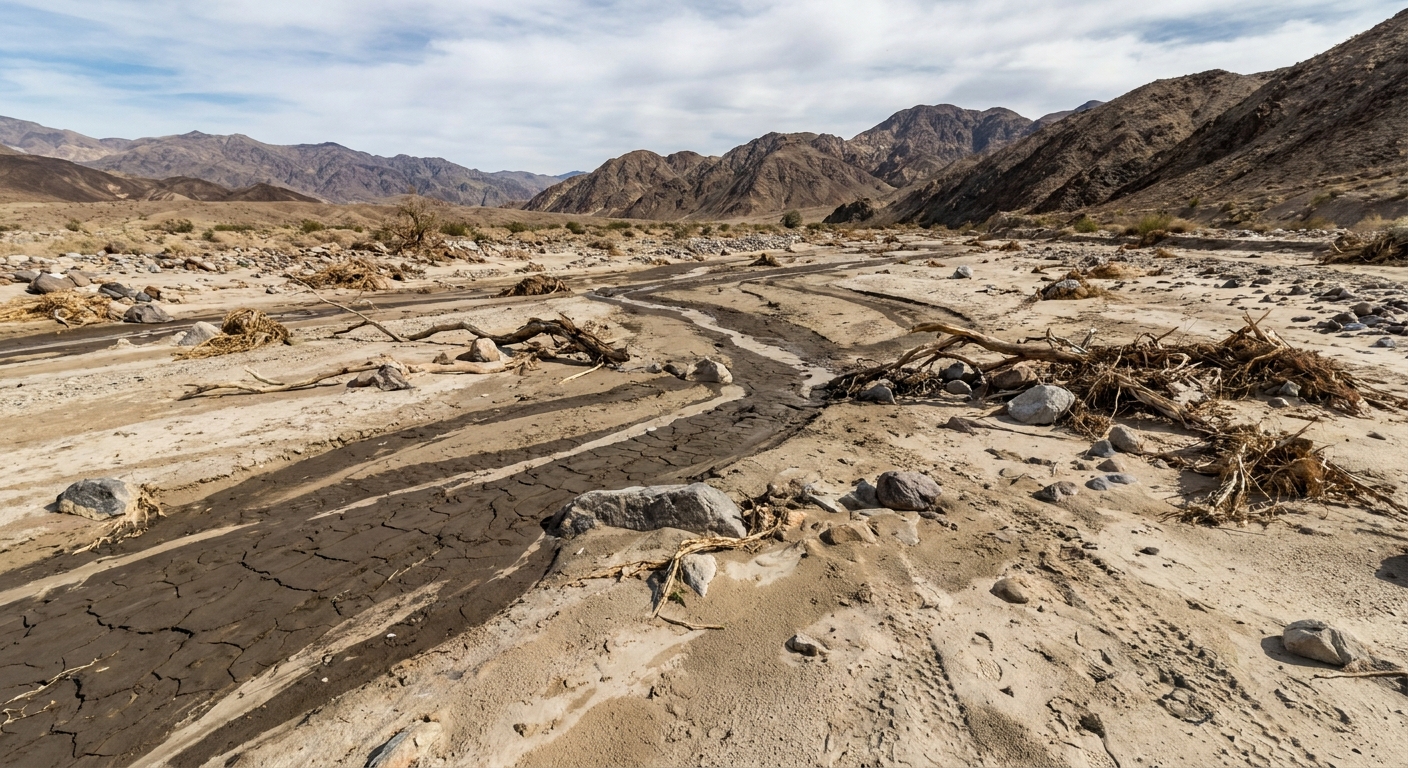
Dry-looking channels, arroyos, and washes can be deceptive because they are built to carry water only sometimes. In arid and mountainous regions, a channel can stay dry for weeks or months, then convey a dangerous flow for minutes.
Several factors make a sudden strike more likely:
- Rain falling upstream: you might be standing under a calm sky while intense rain hits higher elevations or a nearby burn scar.
- Fast runoff on steep ground: water reaches the channel quickly, with little time for you to notice gradual rising.
- Channelized flow: gullies and streambeds funnel moving water and sediment into a narrow corridor, which can increase speed and the height of a surge.
- Multiple surges: debris flows can arrive as a first pulse, pause, then send another, sometimes larger pulse.
Warning signs to take seriously
Debris flows can initiate quickly. Once one starts moving toward you in a channel, local warning time can be seconds to minutes, not hours. If you are near steep terrain, canyon mouths, or recently burned slopes during or after heavy rain, watch and listen for changes.
- A deep rumbling sound: like an approaching freight train, thunder that does not fade, or boulders grinding.
- Water that suddenly turns thick and lumpy: a rapid change from clear or lightly muddy water to a churning mix carrying sticks and rocks.
- A sudden rise or surge: especially a wall-like front that moves faster than normal streamflow.
- Falling or snapping trees: movement in the channel corridor can signal an incoming surge.
- Small slides upstream: fresh slumps or collapsing banks can be a prelude to a larger mobilization.
If you notice any of these, the safest move is usually to get to higher ground immediately and stay out of the channel and its low banks. Debris flows do not need a wide river to be dangerous. A narrow gully can deliver a powerful punch.
Where debris flows are most likely
Debris flows are strongly associated with certain landscapes and conditions:
- Steep mountain watersheds with narrow canyons and abundant loose rock.
- Recently burned areas, particularly within the first few years after a wildfire.
- Alluvial fans at canyon mouths, where flows spread out and deposit boulders, mud, and logs.
- Places with intense rainfall rates, such as thunderstorms, strong rain bands, or short periods of very heavy precipitation.
They also happen far from burn scars. A short, intense convective storm over steep terrain can do it. So can a channel that re-mobilizes loose sediment after an earlier storm, when the next burst of rain arrives and finds a fresh supply waiting.
It is worth a quick mental map: if you live, travel, or recreate below steep drainages, the “quiet” channel you cross on a sunny day is still part of the landscape’s plumbing.
What to do during heavy rain near steep terrain
This is general safety guidance, not a substitute for local alerts or emergency instructions.
- Avoid channels and canyon bottoms: do not hike, camp, or park in washes during storms, and do not assume a dry bed is safe.
- Be extra cautious after wildfire: burn scars can produce dangerous runoff and debris flows even in short storms.
- Know your exits: in a canyon, identify a path to higher ground that does not require crossing the channel.
- Do not drive into moving water or mud: debris-laden flow can be thicker and stronger than it looks, and roadways can be undermined.
- Use official alerts: check National Weather Service watches and warnings, local emergency management updates, and any burn-scar advisories for your area. The best warning is often the one you read before the first raindrop hits.
One more quill-prick of logic: if a channel is the lowest point, it is also where the landscape concentrates its surprises.
Quick questions
Is a debris flow the same as a mudslide?
People use mudslide as a catch-all. A debris flow is one specific kind of fast-moving, water-rich landslide that travels down channels and carries a mix of particle sizes, often including rocks and woody debris.
Can debris flows happen without a wildfire?
Yes. Wildfire raises risk by increasing runoff and sediment availability, but debris flows also occur in unburned terrain where intense rain, steep slopes, and loose material line up.
How fast do debris flows move?
Speeds vary widely with slope, channel shape, and sediment concentration. The important point is that they can move fast enough to overtake people in a channel and to leave very little time to react.
Why do debris flows come in pulses?
They can form in surges as temporary blockages upstream break, as pockets of loose sediment liquefy, or as the flow alternately entrains and deposits material along the channel.