Curiosity, with all its quills showing.
“40% chance of rain” sounds like it should be straightforward. Yet it is one of the most routinely misunderstood numbers in a forecast. People read it as time, as intensity, as certainty for a whole region, or as the forecaster hedging. In reality, it is the probability of measurable precipitation at your location during a specified window.

The plain-English meaning
In most everyday forecasts, a 40% chance of rain means:
- There is a 40% chance your location will receive measurable precipitation during the forecast period (often a given hour, afternoon, or day).
- “Measurable” is often defined (in many U.S. forecast products) as at least 0.01 inch (about 0.25 mm) of liquid-equivalent precipitation at the observation point, though thresholds can vary by agency and country.
It does not directly tell you how long it will rain, how hard it will rain, or what fraction of the region will be wet. Those are different pieces of the forecast.
How it is often explained
A common way Probability of Precipitation (PoP) is taught and explained is:
PoP = (Forecaster confidence) × (Areal coverage)
Where:
- Forecaster confidence is the probability that precipitation will occur somewhere in the forecast area during the time window.
- Areal coverage is the fraction of that area expected to receive measurable precipitation.
This is a useful mental model, not always a literal behind-the-scenes multiplication. Many modern forecast systems and apps lean on ensemble guidance, calibrated statistics, and automated grids, and the PoP you see may be derived rather than hand-computed.
Still, the confidence-times-coverage idea helps explain why a forecast might show 40% instead of 90% even on an unsettled day. Maybe rain is fairly likely to develop in the region, but it may stay scattered. Or maybe coverage would be wide if storms fire, but the setup is shaky.
A quick example
- A forecaster thinks there is an 80% chance that showers form in the forecast area.
- If they form, the forecaster expects about 50% of the area to get measurable rain.
- PoP = 0.80 × 0.50 = 0.40, or 40%.
Notice what that formula is doing. It turns “rain somewhere” plus “how spread out” into a single number that approximates the chance any given point in that area gets wet.
Point vs region
Forecast products are issued over areas. Your lived experience is at a point: your house, your commute, the soccer field. When showers are patchy, a forecast can be perfectly reasonable while still missing your specific driveway.
Two things can both be true:
- The forecast of “40% chance of rain” was a good estimate for the area and time window.
- You experienced either 0% rain (you stayed dry) or 100% rain (you got soaked), because the practical question “did I get measurable rain at my spot?” is a threshold yes-or-no.
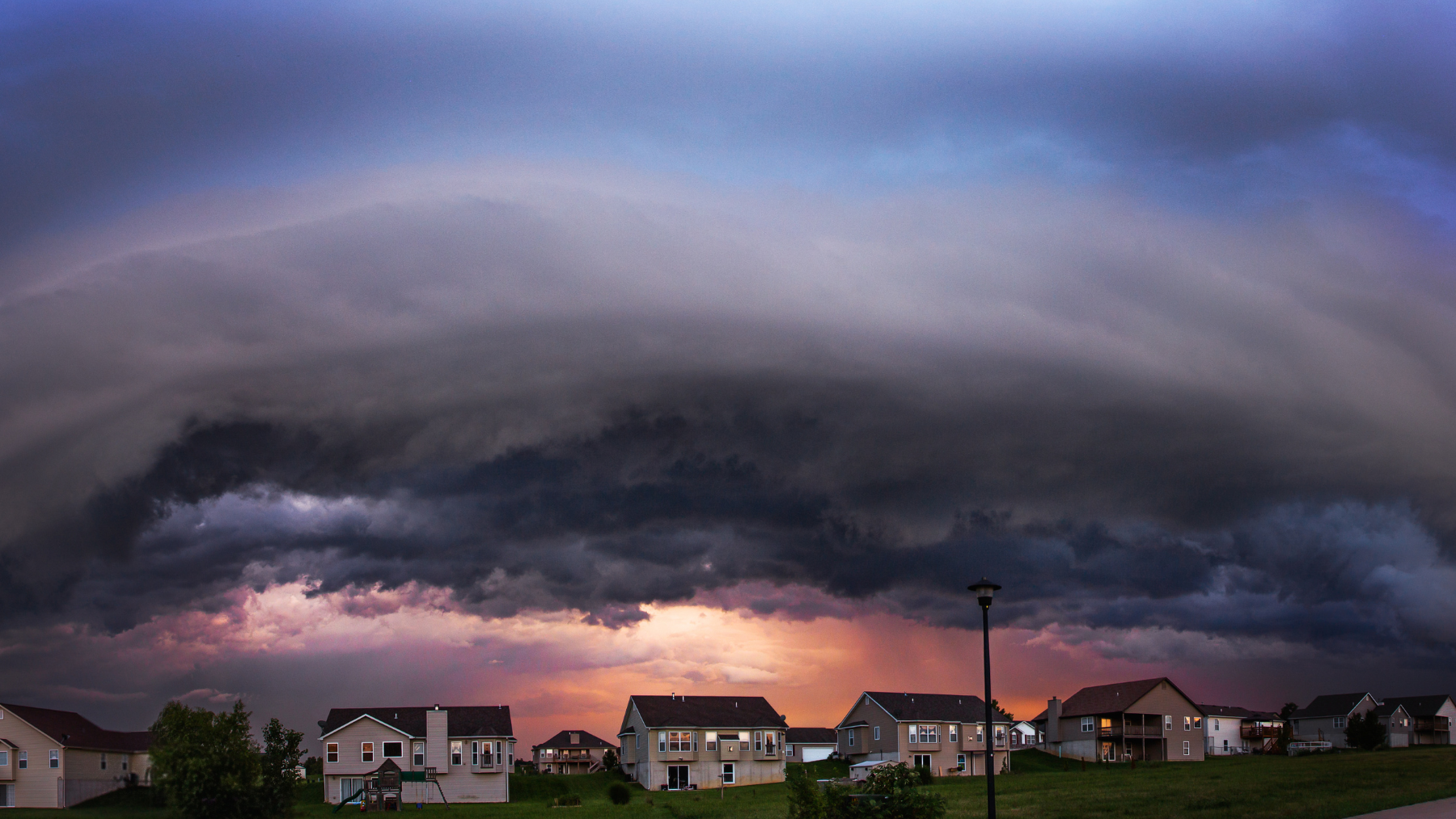
This is why scattered summer convection is a masterclass in forecast humility. One neighborhood gets a downpour. Another, a mile away, gets dusty sunbeams and a false sense of superiority.
Common misreads
“It will rain for 40% of the day.”
No. PoP is not a time fraction. A brief 10-minute shower can satisfy “measurable rain,” and so can a steady all-afternoon drizzle. Duration is a separate forecast element.
“40% means it will rain over 40% of the city.”
Not necessarily. While the confidence-times-coverage idea often underpins how PoP is communicated, the published percentage is best interpreted as the chance of measurable rain at a point for that period. “Coverage” may be discussed in text forecasts, but it is not always spelled out in the single app number.
“40% means light rain.”
No. Intensity is not encoded in PoP. You can have a 20% chance of a severe thunderstorm or a 90% chance of a whispery mist. For magnitude, look for expected rainfall amounts (often shown as QPF or “rain amount”), thunderstorm wording, radar, or precipitation rate guidance if available.
“If it rained, the forecast was wrong because it was less than 50%.”
Also no. A 40% probability event is expected to happen 4 times out of 10 in similar setups. Any one day is only one roll of the atmospheric dice.
“They just pick a number to sound unsure.”
There is uncertainty, but it is not guesswork. PoP reflects the limits of predicting where and when precipitation will develop, especially for small-scale features, and it is often informed by multiple models, observations, and local climatology.
The time window matters
A key detail is the time period attached to the percentage. Many weather apps show a daily PoP, but also an hourly PoP. A “40% today” can hide the fact that the risk is concentrated in a narrow window.
- 40% for the day: chance of measurable precipitation at your location at any time during that day.
- 40% at 4 pm: chance of measurable precipitation during that specific hour or app-defined time step (some products use rolling multi-hour windows).
If your plans are time-sensitive, the hourly view is often more actionable than the daily number.
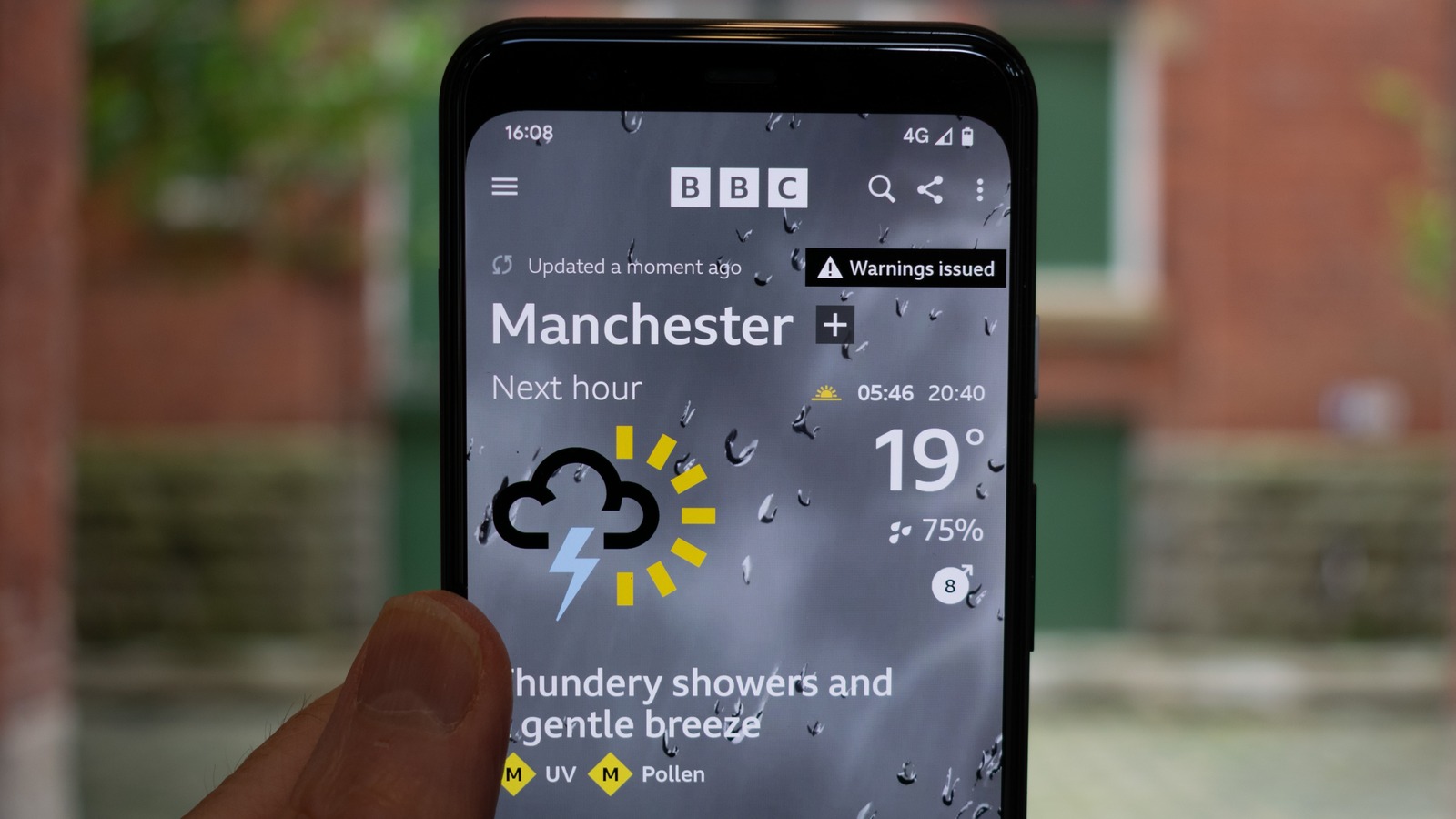
Umbrella at 40%
Instead of treating 40% like a yes or no, treat it like a trade-off between inconvenience and regret.
A simple decision
- Bring it if getting wet would be a big problem (walking commute, outdoor event, work clothes, electronics, kid pickup).
- Skip it if you can tolerate a quick shower (short car trip, flexible schedule) or if you can easily duck indoors.
Check two extra clues
- Coverage wording: terms like “isolated,” “scattered,” and “numerous” hint at how spotty rain may be.
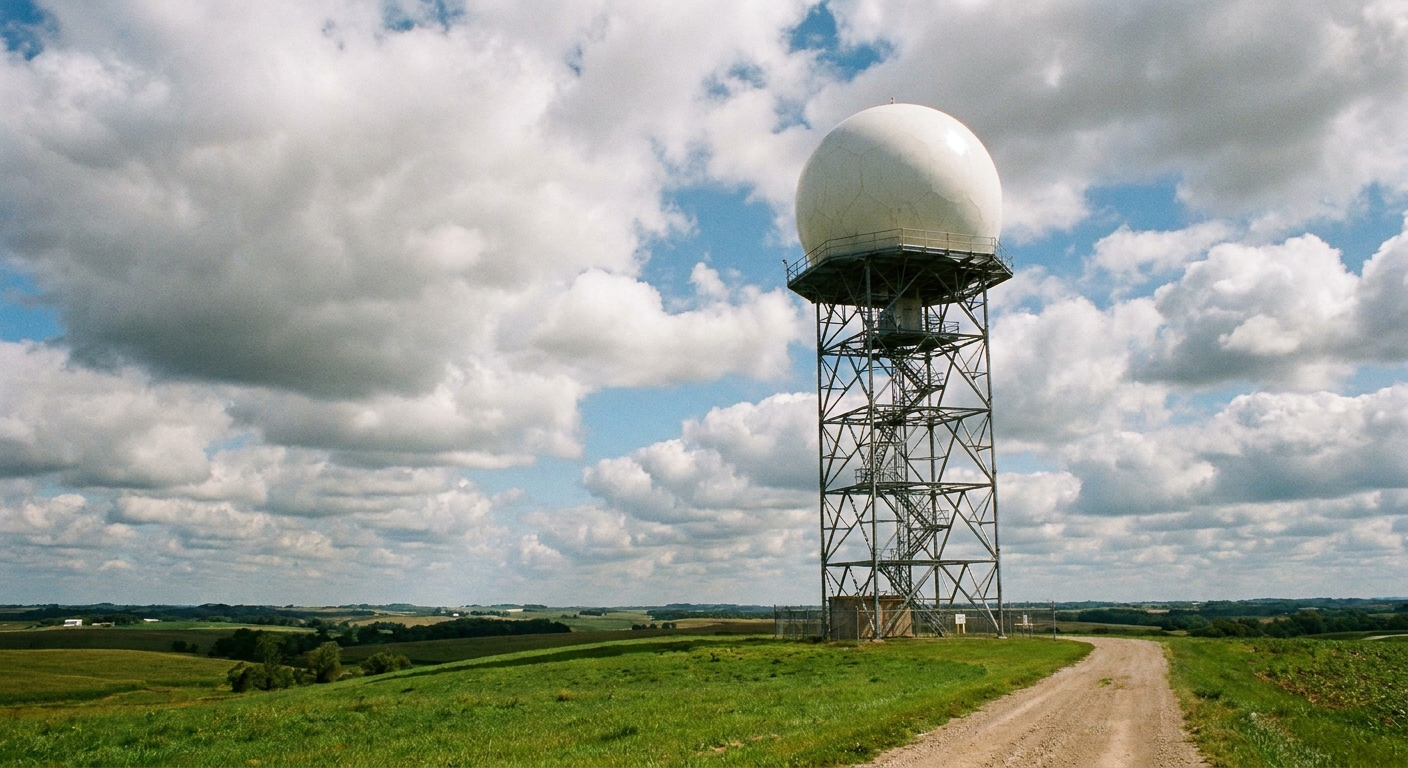
- Radar and nowcasts: if showers already exist upwind and are moving toward you, your personal odds may be higher than the broad-area PoP suggests.
If you want something that fits in your pocket: at 40%, an umbrella is a reasonable “maybe,” and the right call depends on how much you dislike being surprised by weather.
Does 40% mean uncertainty?
Yes, but in a very specific way. It often means the atmosphere supports precipitation somewhere, but the exact placement and timing are hard to pin down. That is especially true when:
- Rain depends on small triggers like outflow boundaries, sea breezes, or subtle temperature gradients.
- Storms are convective and pop up in narrow corridors.
- Dry air is nearby and may evaporate rain before it reaches the ground (virga), complicating “measurable” outcomes.
Sometimes, a lower PoP is not about doubt that clouds will build. It is about doubt that enough precipitation reaches the ground at your location to count.
FAQ
If it says 40% and it rains, was the forecast wrong?
No. A 40% forecast includes days where it rains at your location. Over many similar days, you would expect rain about 40% of the time.
Can two places in the same metro area have different rain chances?
Yes. Some apps and forecast grids provide location-specific PoP values. Terrain, lake breezes, and typical storm tracks can make odds differ noticeably even within one city.
Why does my app’s percentage change so often?
PoP updates as new observations arrive, newer model runs come in, and radar shows where storms are actually forming. In convective setups, the “best estimate” can shift quickly because the atmosphere is making up its mind in real time.
Is PoP the same as “chance of thunderstorms”?
Not exactly. Thunderstorm chances are sometimes communicated separately. You can have a chance of rain with no thunder, or a smaller chance of thunderstorms embedded within a broader chance of showers.
Why do different apps show different percentages?
Apps can pull from different forecast providers, blend multiple data sources, or smooth probabilities in different ways. Two “40%” values can also be tied to slightly different time windows.
A neat way to think about it
PoP is a bridge between a messy, continuous sky and a threshold question you actually care about: “Will I get wet enough to count?” A 40% chance of rain is not a promise of drizzle for 40% of the day. It is a statement of odds: in this forecast window, measurable rain at your spot is possible, but far from guaranteed.
And if you do bring the umbrella and it stays dry, that is not wasted preparation. It is you behaving like a creature who understands probability and dislikes soggy socks.