Every eclipse is basically a cosmic game of “who is standing in whose light?” But solar and lunar eclipses flip the roles of the players, change what you can see from Earth, and most importantly, change how you should watch.
If you remember one thing from this article, let it be this: looking at a lunar eclipse is always safe for your eyes, and looking at the Sun during a solar eclipse is only safe with proper solar viewing gear, except during the brief window of totality in a total solar eclipse.
The one sentence difference
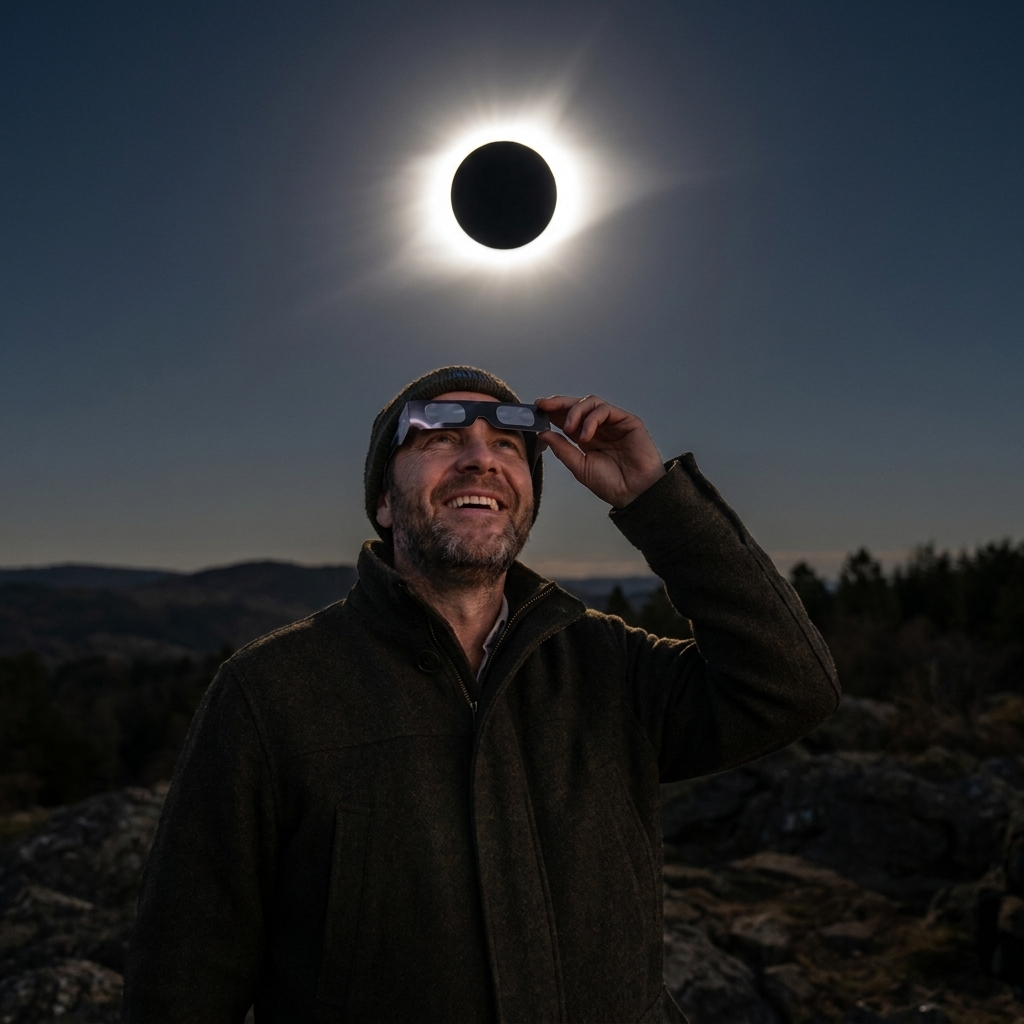
A solar eclipse happens when the Moon moves between Earth and the Sun, casting a shadow on Earth.
A lunar eclipse happens when Earth moves between the Sun and the Moon, casting Earth’s shadow on the Moon.
Same three objects. Same basic idea. Totally different experience from the ground.
Why not every month
This is the part I used to love teaching, because it feels like a magic trick until the geometry clicks.
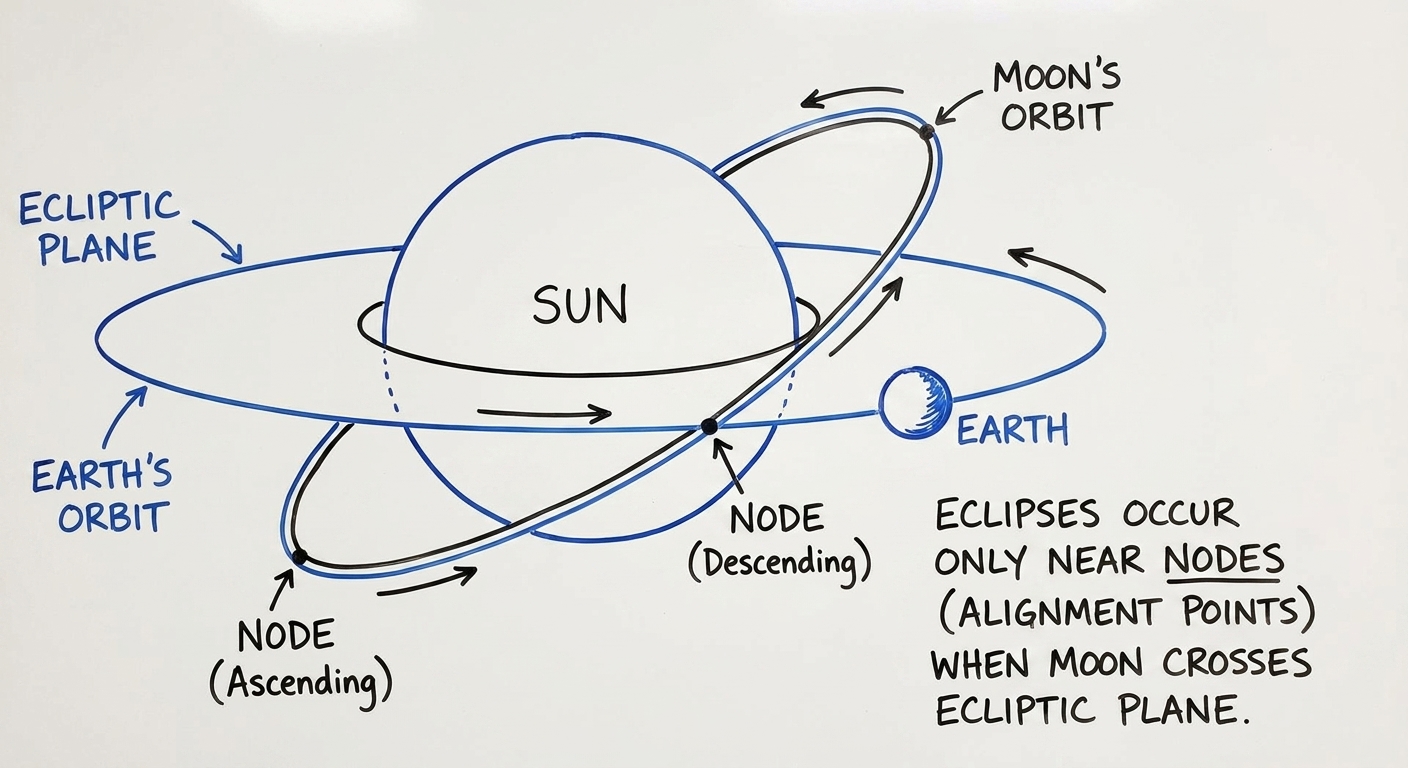
The Moon orbits Earth roughly once a month, so you might expect a solar eclipse at every new moon and a lunar eclipse at every full moon. But the Moon’s orbit is tilted by about 5.1 degrees relative to the ecliptic plane (Earth’s orbital plane around the Sun). That tilt means the Moon usually passes a little above or below the exact line needed for a shadow to land where it needs to.
Eclipses only occur when a new moon or full moon happens near one of the two points where the Moon’s orbit crosses the ecliptic. Those crossing points are called nodes. When the timing lines up, you get an “eclipse season” where eclipses are possible.
Solar eclipses: what you will see
Solar eclipses feel dramatic because the action is happening in our daylight sky. But they are also the ones that demand real safety habits.
Total solar eclipse
This is the famous one. The Moon fully covers the Sun’s bright disk, and day briefly turns into an eerie twilight. If you are inside the Moon’s narrow central shadow, called the umbra, you can see the Sun’s corona, prominences, and the “diamond ring” effect near the start and end of totality.
Key detail: totality is only visible along a narrow path on Earth, often around 100 to 200+ kilometers wide, and sometimes wider. Outside that path, you will see a partial eclipse instead.
Partial solar eclipse
The Moon takes a bite out of the Sun, but never covers it completely from your location. The sky may dim a bit, shadows can sharpen, and if you look at sunlight filtering through leaves, you might spot lots of tiny crescent Suns on the ground.
Important: there is no moment in a partial eclipse when it is safe to look at the Sun without proper solar filters.
Annular solar eclipse
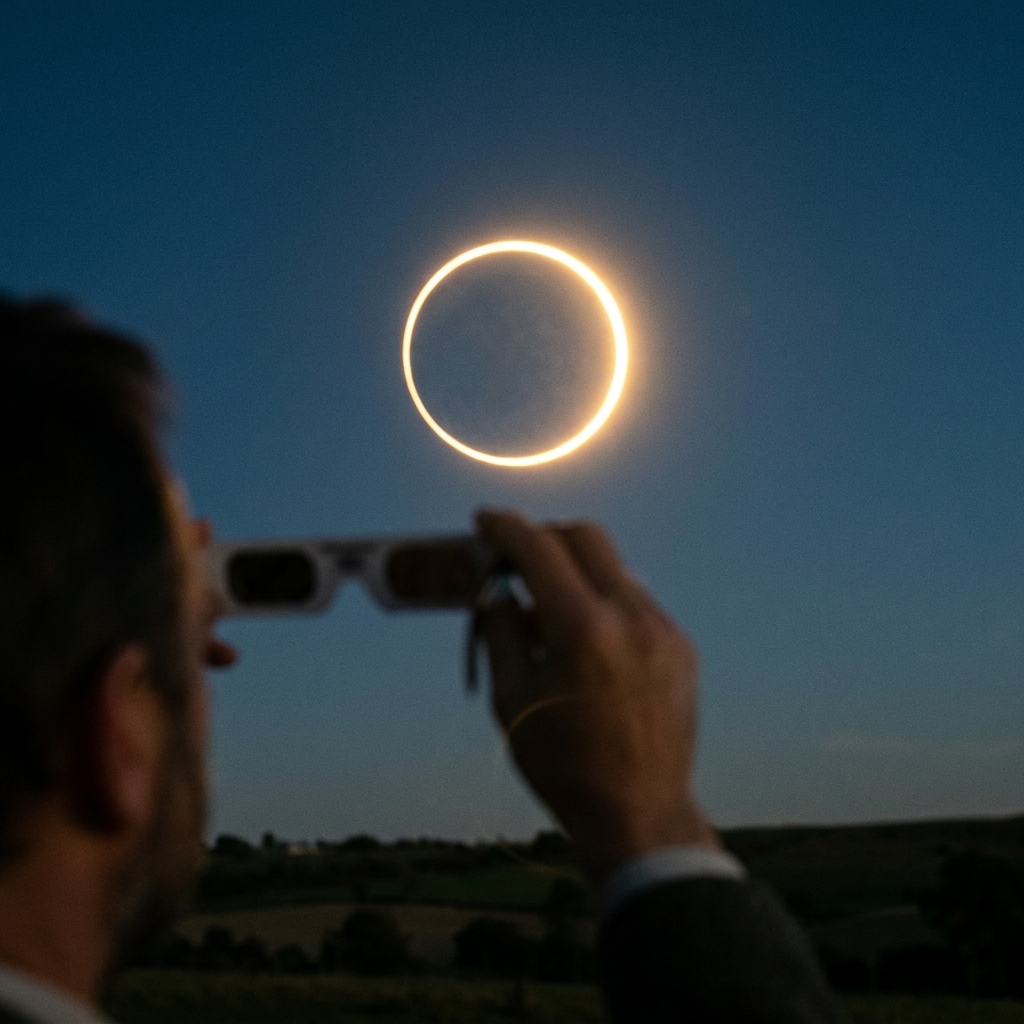
This happens when the Moon is a little farther from Earth, so it appears slightly smaller in the sky and cannot fully cover the Sun. You get a bright “ring of fire” around the Moon.
Important: annular eclipses never have a safe totality moment. That ring is still the Sun.
Lunar eclipses: what you will see
Lunar eclipses are the relaxed, everyone-invited version of eclipse watching. No special glasses required, no narrow path, and you can watch from anywhere on the night side of Earth where the Moon is above the horizon.
Penumbral lunar eclipse
The Moon passes through Earth’s outer, fuzzier shadow, the penumbra. The effect can be subtle, like someone turned down the brightness slightly on one side of the Moon.
Partial lunar eclipse
Part of the Moon dips into Earth’s darker central shadow, the umbra. You will see a distinct dark “bite” taken out of the Moon.
Total lunar eclipse
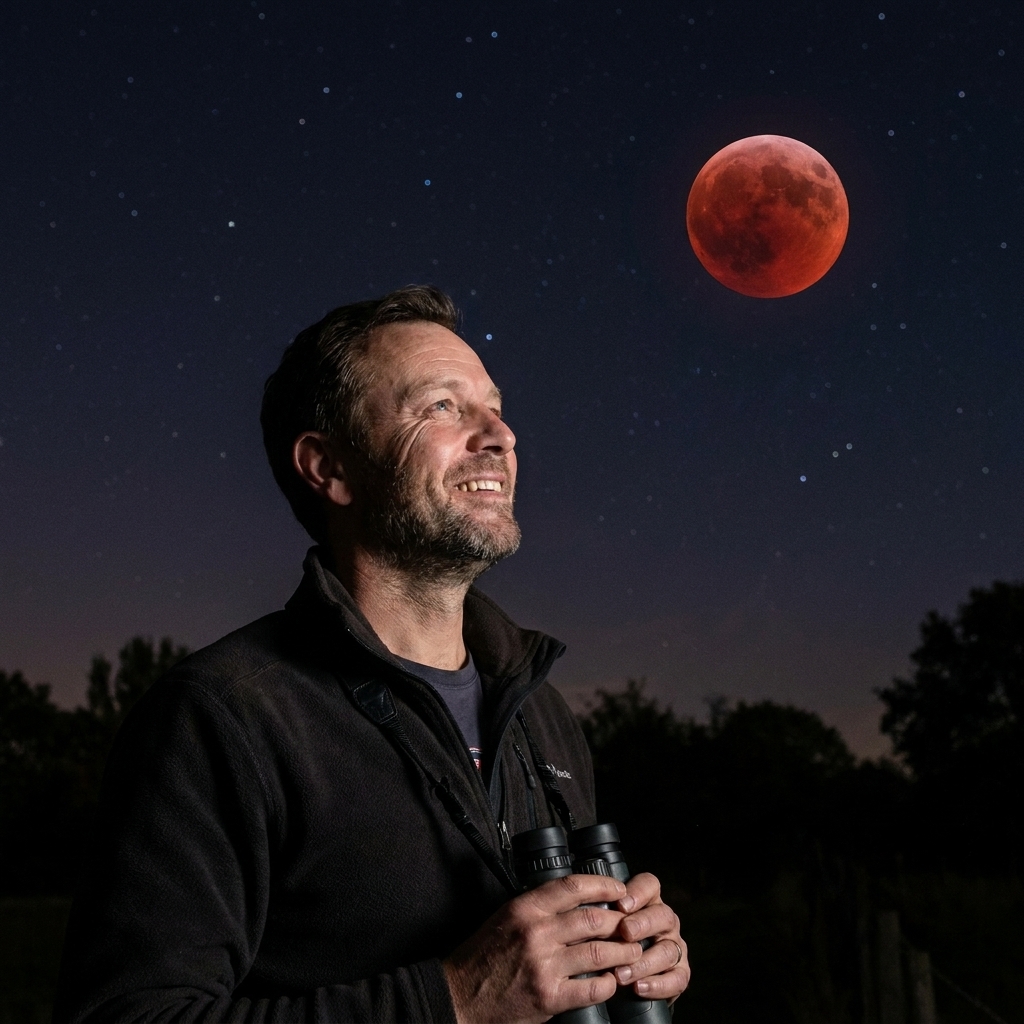
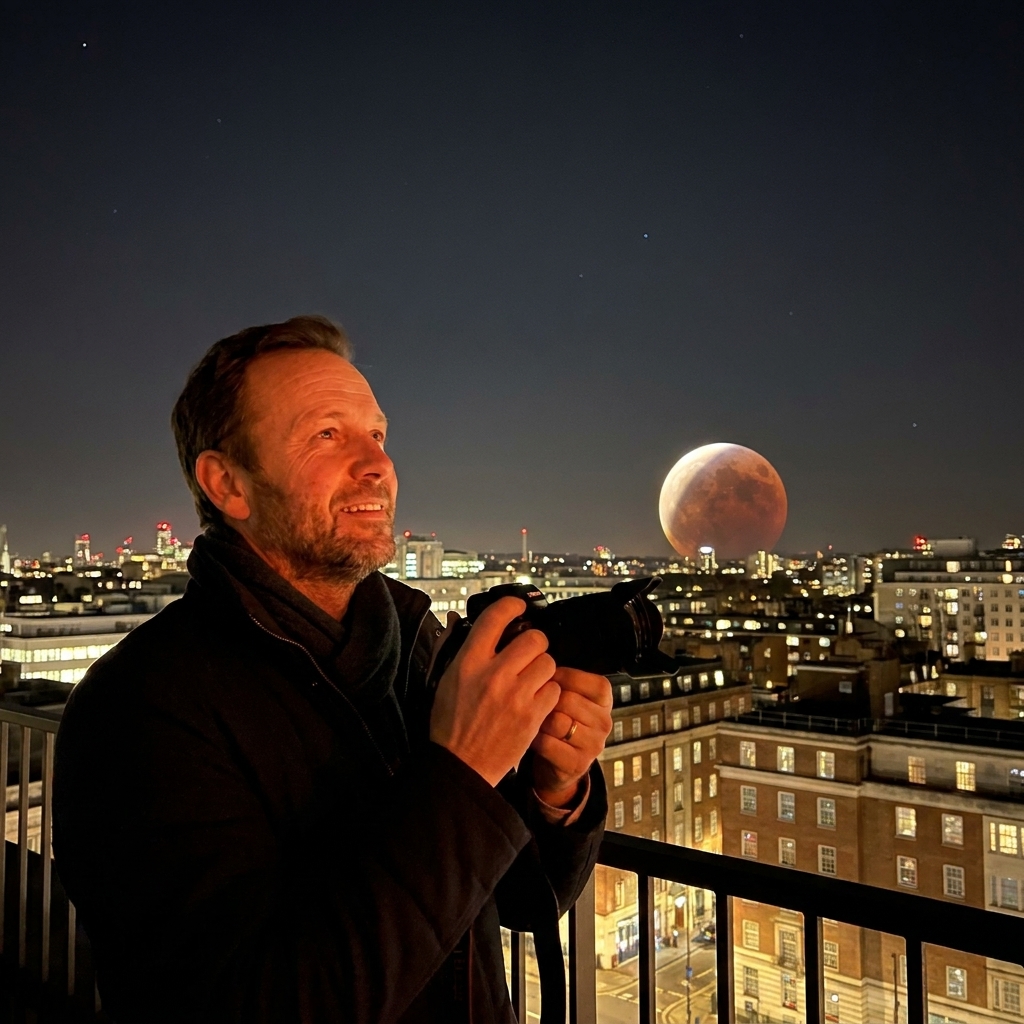
The entire Moon enters Earth’s umbra and often turns coppery red. That color comes from sunlight passing through Earth’s atmosphere. Our air scatters blue light more strongly and bends the remaining redder light into the shadow, so the Moon ends up lit by the combined glow of Earth’s sunrises and sunsets.
If you have ever enjoyed a vivid sunset, you have already met the physics behind a total lunar eclipse.
Shadows and scale
Two ideas explain most eclipse weirdness:
- Shadows have structure. The umbra is the darkest part where the light source is fully blocked. The penumbra is the lighter edge where the light source is only partly blocked.
- The Moon is not always the same apparent size. Its orbit is slightly elliptical. When it is closer to Earth (near perigee), it looks larger and is more likely to fully cover the Sun, enabling total solar eclipses. When it is farther (near apogee), it can produce annular eclipses.
For lunar eclipses, the Moon is the screen and Earth’s shadow is the action. Earth blocks the direct sunlight, and a small amount of light is filtered and bent through our atmosphere into the shadow, which is why the Moon can glow red instead of disappearing.
How long do they last?
Solar eclipse timing
- Partial phases at a given location can last around 1 to 2 hours.
- Totality is short, typically minutes. The maximum possible is a bit over 7 minutes, but most totalities are much shorter.
Lunar eclipse timing
- Whole event from start to finish can last several hours.
- Totality can last up to about 107 minutes in favorable cases.
The takeaway is practical: a solar eclipse rewards precision planning, while a lunar eclipse rewards a warm jacket and patience.
How to safely view a solar eclipse
I am going to be blunt here because your eyes are not replaceable: do not look at the Sun directly without proper protection. Your retina has no pain sensors, so damage can happen without you realizing it.
Use certified eclipse glasses
- Use eclipse glasses that comply with ISO 12312-2.
- Inspect them before use. If they are scratched, punctured, or creased through the viewing area, do not use them.
- Put them on before looking up at the Sun. Look away before taking them off.
Optics and cameras need real filters
Regular eclipse glasses are not enough to make binoculars or a telescope safe. Concentrated sunlight can damage your eyes instantly and can also damage equipment.
- Use a proper front-mounted solar filter designed for your telescope, binoculars, or camera lens.
- Never use “eyepiece” solar filters that screw into the bottom of an eyepiece. Those are unsafe because heat can crack them.
- Phones and cameras can be damaged by the Sun during an eclipse. If you are photographing the Sun, use a certified solar filter over the lens.
Pinhole projection
If you want a no-gear option that is still fun, project the Sun’s image instead of looking at it:
- Poke a small round hole in a card.
- Let sunlight pass through the hole onto a second card or the ground in shade.
- You will see a tiny image of the Sun that becomes a crescent as the eclipse progresses.
When is it safe to look without glasses?
Only during totality in a total solar eclipse, and only if you are completely inside the path of totality. The moment any bright sunlight reappears, glasses go back on immediately.
If you are not 100 percent sure you are in totality, treat it like a partial eclipse and keep the solar filters on.
Also worth saying out loud: clouds or haze can make the Sun look dimmer, but they do not make it safe to stare at without proper filters.
How to view a lunar eclipse
Lunar eclipses are safe to watch with your naked eyes. Enhance the experience with:
- Binoculars to see subtle shadow gradients and surface features.
- A small telescope for crater detail along the shadow line.
- A camera on a tripod for longer exposures during totality, when the Moon gets much dimmer.
If you have kids (or curious adults) with you, lunar eclipses are an excellent moment to point out how Earth’s shadow is curved, a simple hint that our planet is round.
What to expect
During a solar eclipse
- Shadows can look sharper.
- The air temperature may drop slightly.
- Near totality, the light can feel oddly “flat,” like a dimmer switch on the world.
- In totality, you may see bright planets or stars.
During a lunar eclipse
- The Moon gradually dims and changes color.
- In totality, you can often see more stars because the Moon is less bright.
- The red hue can vary from gray-brown to deep copper depending on Earth’s atmospheric conditions.
Quick checklist
For a solar eclipse
- Confirm whether your location is in the path of totality (if it is a total eclipse), not just a high-percentage partial.
- Get ISO 12312-2 eclipse glasses from a reputable source.
- If using optics or a camera, use a proper front-mounted solar filter.
- Arrive early, because traffic and cloud dodging are real.
For a lunar eclipse
- Check the Moon’s rise and set times for your location.
- Pick a spot with a clear view of the sky and minimal light pollution.
- Bring a chair, warm layers, and a hot drink.
FAQ
Can you get eye damage from watching a lunar eclipse?
No. The Moon is reflecting sunlight, and even at full moon brightness it is safe to look at directly.
Why does the Moon turn red during a total lunar eclipse?
Sunlight passes through Earth’s atmosphere, which scatters bluer light and bends redder light into Earth’s shadow. The Moon is lit by the combined glow of all Earth’s sunrises and sunsets.
Can I use sunglasses, smoked glass, or my phone as protection for a solar eclipse?
No. Regular sunglasses are not strong enough, and improvised filters can be dangerous. A phone screen may make the Sun look dim, but it does not protect your eyes, and your camera sensor can still be damaged without a proper solar filter.
Is it true you can look at the Sun during totality?
Yes, but only during the fully total phase of a total solar eclipse, and only if you are inside the path of totality. The partial phases before and after still require proper solar filters, and the moment totality ends, filters go back on.
Which is rarer, a solar eclipse or a lunar eclipse?
Globally, both happen every year, but a total solar eclipse is rare for any specific location because the path of totality is narrow. A total lunar eclipse can be seen by everyone on the night side of Earth, so it feels more common from the perspective of a single observer.
A final note
If you ever want to see physics turn into an actual, honest-to-goodness memory, take a friend outside for an eclipse. Bring the right safety gear if the Sun is involved, give your eyes time to notice the subtle changes, and let yourself enjoy the fact that orbital mechanics are not just equations. They are something you can watch unfold in real time above your own neighborhood.