If you have ever heard nuclear fission described as “splitting atoms” and fusion as “smashing them together,” you have the gist, but not the story. The story matters because the details determine what these technologies can realistically do for our power grids, our climate goals, and our safety.
Let’s unpack both processes the way I used to in my classroom: with a few sturdy metaphors, no hand-waving, and plenty of real-world grounding.
The core difference
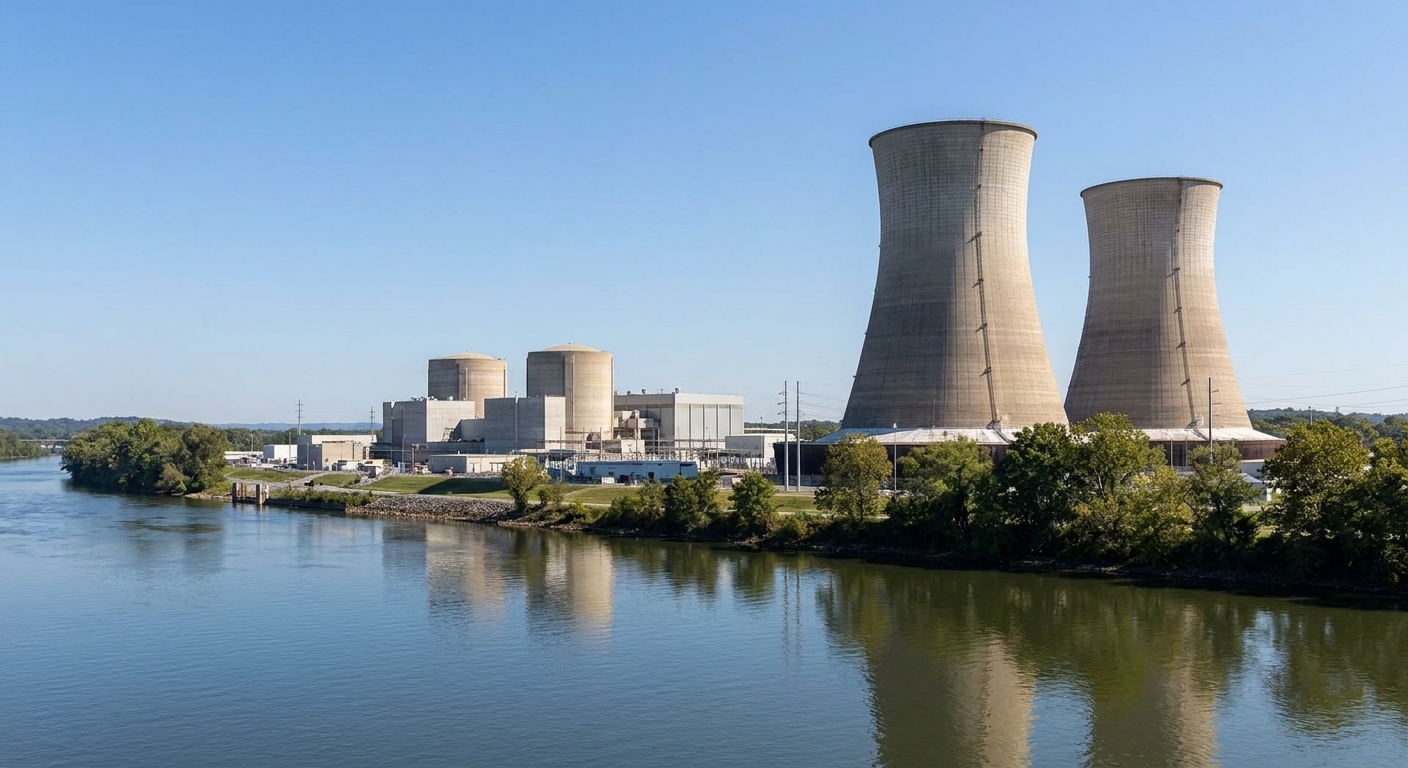
Fission releases energy by splitting a heavy nucleus (usually uranium-235 or plutonium-239) into smaller nuclei.
Fusion releases energy by joining light nuclei (typically hydrogen isotopes like deuterium and tritium) into a heavier nucleus (usually helium).
In both cases, a tiny bit of mass turns into a lot of energy via Einstein’s famous relationship E = mc^2.
The deeper “why” is the same too: both processes move nuclei toward a more tightly bound, lower-energy state on the binding energy curve. You can think of the nucleus as a tightly wound spring. Fission cuts the spring so it snaps open. Fusion locks two smaller springs into a more stable one and sheds the extra energy.
How fission works
Splitting heavy atoms and a chain reaction
In a fission reactor, a neutron hits a uranium-235 nucleus and makes it unstable. The nucleus splits into two smaller fragments plus a few extra neutrons. Those neutrons can go on to split more nuclei.
This is the key word: chain reaction. If each fission event, on average, causes one more fission event, the reactor is steady. If it causes more than one, power rises. If it causes less than one, the reaction dies out.
How a reactor turns that into electricity
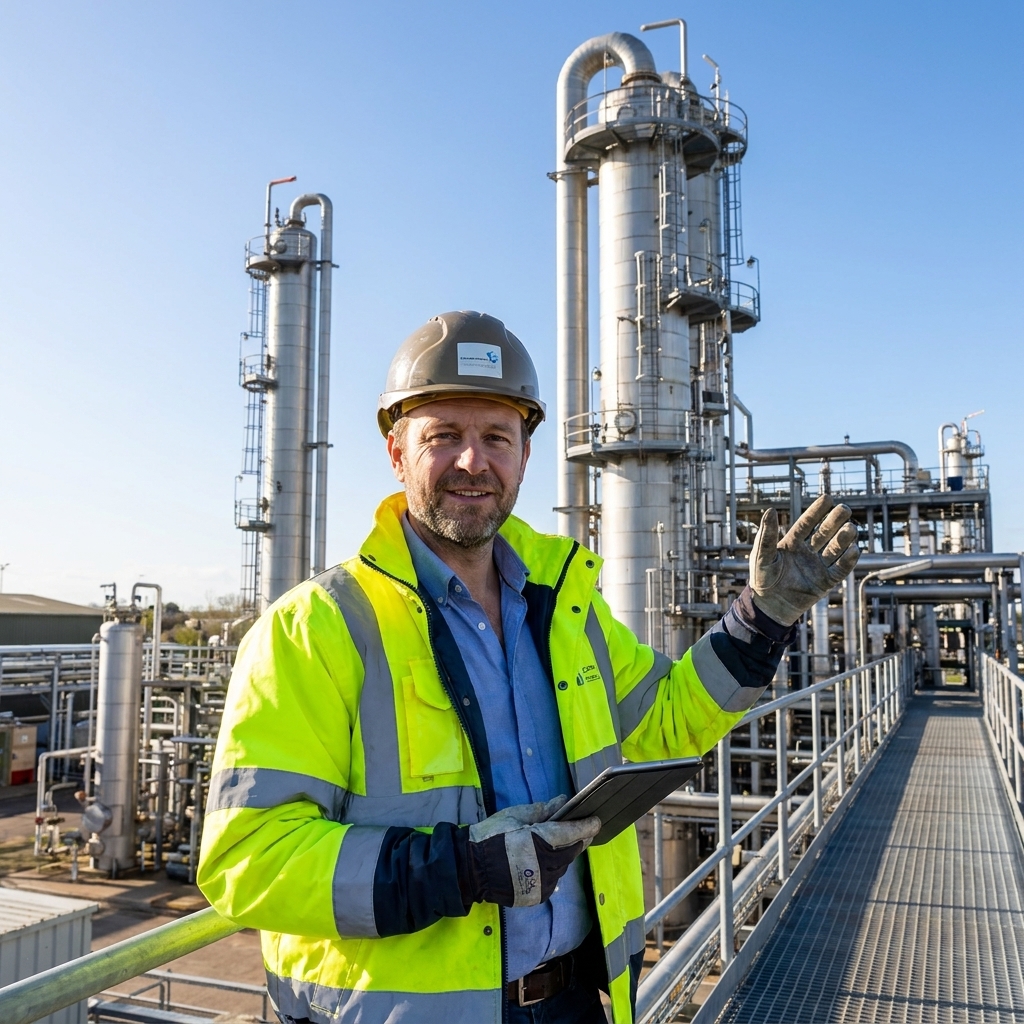
Most commercial reactors are, at heart, sophisticated kettles:
- Fuel (uranium in ceramic pellets) sits in fuel rods.
- Moderator (often water) slows neutrons to make fission more likely.
- Control rods (materials that absorb neutrons) regulate the chain reaction.
- Heat drives a steam cycle that spins a turbine, which spins a generator.
The steam cycle details depend on the reactor type. In a pressurized water reactor (PWR), the primary water loop is kept hot but not boiling, and it heats a separate loop to make steam. In a boiling water reactor (BWR), water boils in the reactor vessel and the steam goes directly to the turbine.
The “nuclear” part is mainly about the heat source. The rest looks a lot like any other steam plant.
How fusion works
Making stars on purpose
Fusion is what powers the Sun. But the Sun cheats by having a lot of gravity. Here on Earth, we have to force nuclei close enough to fuse despite their natural electric repulsion.
That means fusion fuel must be in a super-hot, electrically charged state called plasma, often heated to tens of millions of degrees. At those temperatures, no solid container can simply hold it like soup in a pot.
Two main approaches
Fusion labs generally use one of these strategies:
- Magnetic confinement (tokamaks and stellarators): powerful magnetic fields corral the plasma away from the walls.
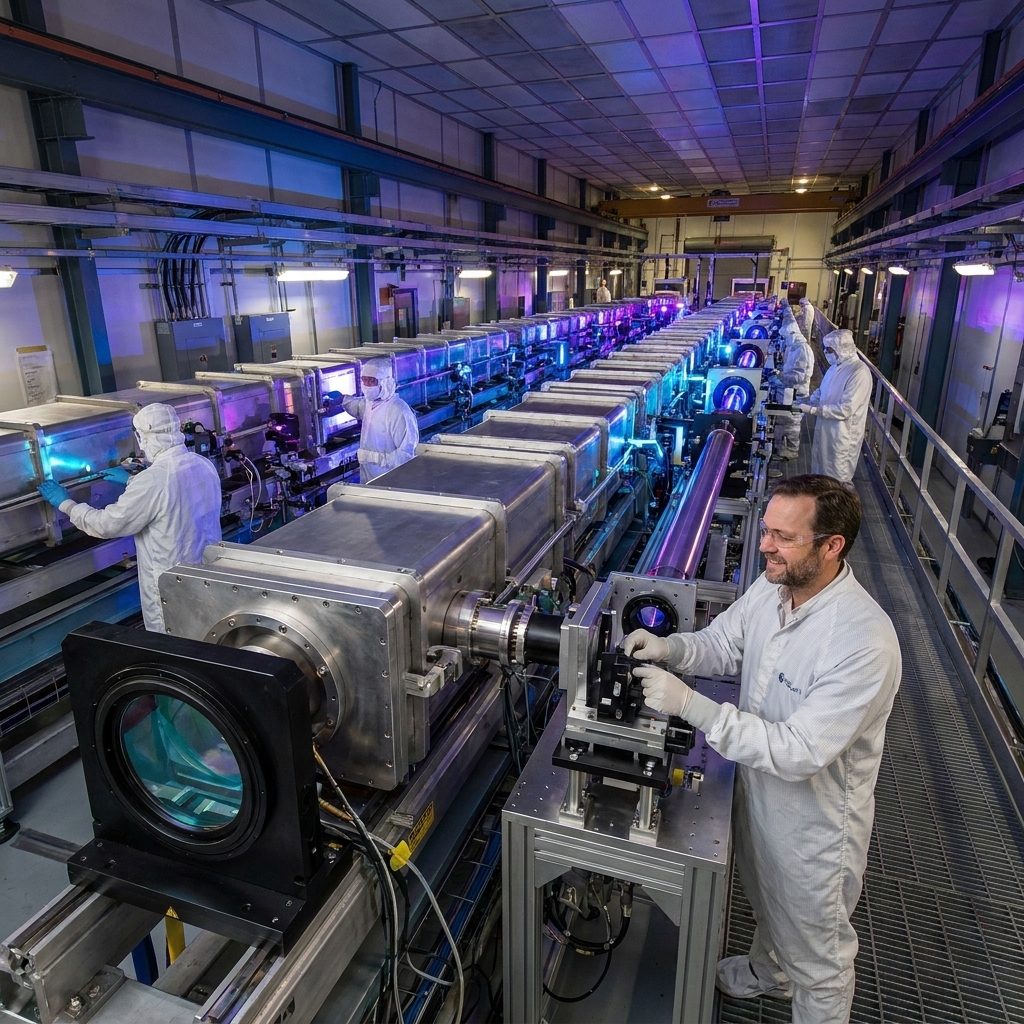
- Inertial confinement: extremely intense lasers compress a tiny fuel pellet so quickly that fusion happens before the material can fly apart.
The central engineering challenge is not just getting fusion to happen. It is getting to reliable net electricity with a machine you can maintain economically.
It helps to separate three “breakeven” ideas that get blended together in headlines:
- Plasma gain (often described as Q): fusion energy out of the plasma compared with heating power into the plasma.
- Facility gain: whether the whole facility uses less energy than it produces (including magnets, lasers, cryogenics, pumps, and everything else).
- Grid gain: net electricity delivered to the grid after converting heat to electricity and powering the plant itself.
Progress is real, but the finish line for a power plant is the last one.
Fuel
Fission fuel
Most reactors use enriched uranium, meaning the percentage of uranium-235 has been increased from its natural level. Some designs can also use plutonium-based fuel or, in advanced concepts, thorium (as a fertile material that can breed fissile uranium-233).
Fission fuel is energy-dense and compact, which is why submarines can run for long periods without refueling. The flip side is that the fuel cycle requires careful control because some materials are usable in weapons if diverted.
Fusion fuel
The most “near-term” fusion fuel combination is deuterium + tritium. Deuterium is abundant in seawater. Tritium is rare in nature and is typically produced by absorbing neutrons in lithium, which is why many fusion reactor concepts include a lithium blanket to breed tritium.
Fusion fuels are not the same kind of proliferation risk as enriched uranium. That said, any high-neutron-flux system deserves serious safeguards thinking. In principle, a D-T machine could help produce certain isotopes if someone deliberately introduced fertile material, even though that is not what power-plant designs are built to do. Tritium itself is radioactive and must be handled securely.
There are also other fusion pathways people talk about, like D-D, D-helium-3, or proton-boron. They are intriguing, but they generally demand tougher conditions than D-T, which is why D-T dominates “first generation” fusion thinking.
Waste and environment
Fission waste
Fission produces radioactive fission products and also creates transuranic elements (like plutonium) through neutron capture. Some of these byproducts remain hazardous for very long times.
The volume of spent fuel is relatively small compared with fossil fuel waste streams, but it is intensely radioactive and heat-generating, so it requires shielding and cooling at first, then long-term storage or reprocessing.
It is worth separating two ideas that often get mashed together:
- Technical reality: Deep geological disposal has well-developed engineering methods and strong safety cases for isolating high-level waste over long times. Finland’s Onkalo repository is a concrete example of this approach moving from theory to reality, with other national programs at different stages.
- Societal reality: Siting, consent, policy continuity, and public trust can be harder than the physics.
Fusion waste
Fusion itself does not produce fission fragments, so you do not end up with spent fuel rods full of long-lived fission products. However, the high-energy neutrons from deuterium-tritium fusion can activate reactor materials, making some components radioactive over time.
Many designs aim for most activated components to fall to lower waste classifications within about a century, but the details depend heavily on material choices, neutron exposure, and plant layout. In other words, fusion waste is expected to be simpler than fission’s in key ways, but it is not “no waste.”
Carbon emissions
Both fission and fusion are low-carbon electricity sources in operation. Their lifecycle emissions mainly come from mining, construction, fuel processing, and supply chains. On the climate front, both belong in the “can help a lot” category, with fission being deployable now and fusion being a potential future multiplier.
Which is safer?
Safety is not one thing. People mean different risks when they ask this question, so let’s name them.
1) Accident potential
Fission: A fission reactor contains a large amount of radioactive material and produces decay heat even after shutdown. That means safety systems must continue removing heat. Modern reactor designs use multiple layers of safety, including passive systems that rely on physics (like natural circulation) rather than pumps, but the underlying hazard is real.
Fusion: A fusion reactor typically contains a small amount of fuel in the machine at any moment. If confinement fails, the plasma cools quickly and the reaction stops. That gives fusion an inherently different accident profile: it is difficult to get a runaway energy release like a fission chain reaction. The main hazards shift to neutron activation, tritium handling, and industrial-scale systems (high power, cryogenics, and complex maintenance).
2) Radiation release and long-term contamination
Fission: In severe accidents, some radioactive isotopes can be released if multiple barriers fail. The probability is designed to be very low, but the consequence can be high, which is why fission safety is so intensely regulated.
Fusion: There is no large inventory of fission products. That generally reduces the worst-case long-term contamination scenarios. But tritium can escape if not tightly managed, and activated components require controlled disposal.
3) Waste longevity
Fission: Long-lived high-level waste is the headline challenge.
Fusion: Waste is expected to be shorter-lived overall in many designs, but it is not zero and it is not automatic.
4) Proliferation and security
Fission: Enrichment and reprocessing can pose proliferation pathways if misused.
Fusion: Generally lower direct proliferation risk, but not “no security concerns.” High neutron fluxes and tritium handling still demand robust safeguards and oversight.
So which is safer?
If we are talking about catastrophic accident potential, fusion has a strong intrinsic advantage because it is hard to sustain the reaction when conditions are disturbed.
If we are talking about real-world availability and demonstrated safety systems, fission has decades of operational experience, mature regulation, and proven designs that can be made very safe when built and run well.
My teacher’s answer is: fusion looks safer in principle, fission can be safe in practice, and “safe” is always a systems question, not a slogan.
Why plants look big
People sometimes imagine fusion as a small glowing box that powers a city. The reality is more industrial.
Even if the fusion core is compact, you still need:
- powerful magnets or lasers
- thick shielding for neutrons
- heat exchangers and turbines
- tritium breeding and processing systems (for D-T designs)
- remote handling robots for activated components
Fission plants are large partly because of safety systems, containment structures, and the scale of steam-cycle equipment. Fusion’s balance of plant may end up looking similarly substantial.
What happens next?
Fission’s near-term role
Fission is already a major source of low-carbon electricity in several countries. Its future viability hinges less on whether it works (it does) and more on:
- cost and construction timelines
- public trust and regulation
- waste policy
- new designs such as small modular reactors and advanced reactors that aim for passive safety and flexible deployment
Fusion’s long game
Fusion has made real progress, but turning experiments into power plants is like going from a single perfect sourdough loaf to a bakery that produces thousands a day with consistent quality. The recipe is only step one. You need the ovens, the logistics, and the repeatability.
To anchor that progress with specifics:
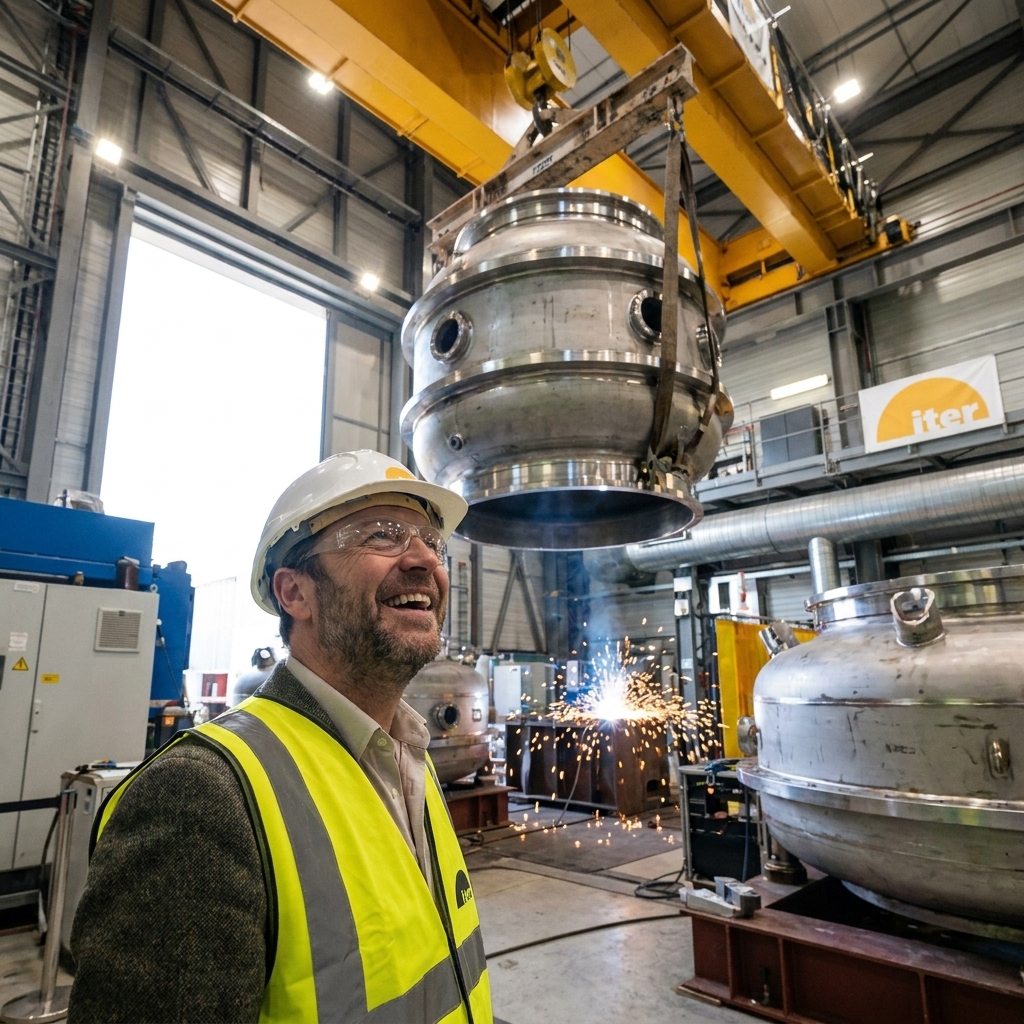
- ITER is being built to demonstrate sustained high-performance burning plasma conditions and to study the systems needed for a future plant. It is not designed to put electricity on the grid.
- NIF has achieved ignition-class shots in inertial confinement, an important scientific milestone, but it does not yet translate to a power plant. A plant would need far higher repetition rates, durable target production, and efficient energy conversion.
Key hurdles include:
- achieving sustained operation that supports net electricity
- developing materials that survive intense neutron bombardment
- closing the tritium fuel cycle reliably
- building machines that can be maintained economically
Fusion is best thought of as a potential future pillar, not a substitute for near-term decarbonization tools we can deploy now.
Quick myth-busting
“A fission reactor can explode like a nuclear bomb.”
A commercial power reactor is not built like a bomb. Nuclear weapons require specific materials, geometries, and rapid assembly conditions that power reactors do not have. Reactors can, however, suffer severe accidents involving overheating, hydrogen explosions, or releases of radioactivity if multiple safety layers fail.
“Fusion is perfectly clean.”
Fusion avoids high-level fission waste, but deuterium-tritium fusion produces fast neutrons that activate materials, and tritium requires careful handling.
“Fusion is always 20 years away.”
The timeline has slipped repeatedly, but progress is real. The honest view is that the remaining problems are mostly engineering at extreme conditions, which is exactly the kind of work that can take longer than anyone wants.
FAQ
Does fusion produce radiation?
Yes. Deuterium-tritium fusion releases a high-energy neutron, which is a form of radiation. Those neutrons are a major design challenge because they can damage and activate reactor materials.
Is fission bad for the environment?
It is low-carbon and has a small land footprint, but it produces long-lived radioactive waste and carries accident and security risks that require strict management. Like many technologies, the environmental story depends on governance and engineering quality.
Why not just wait for fusion?
Because climate and energy reliability are problems on today’s calendar. Even optimistic fusion timelines do not remove the need for near-term low-carbon solutions, including renewables, storage, grid upgrades, efficiency, and, where politically and economically feasible, fission.
Which will power the future?
Likely a mix. Fission can provide steady low-carbon power now and for decades. Fusion could become a powerful add-on later if it reaches economic, reliable operation at scale.
Bottom line
Fission splits heavy atoms, is commercially proven, and provides large amounts of low-carbon electricity today, with the tradeoffs of long-lived waste and a need for rigorous safety systems.
Fusion joins light atoms, promises a different and potentially safer accident profile and less long-lived waste, but remains an engineering mountain before it can become an everyday power source.
If you take one idea with you, make it this: both are ways of tapping the same deep nuclear energy reservoir, but they live in very different chapters of the technology story, and “safer” is a question that only makes sense once we specify which risks we are comparing.