Curiosity, with all its quills showing.
If you have ever checked the Air Quality Index and wondered whether “Orange” means “cancel everything” or “just close a window,” you are in good company. AQI is designed to be a quick public health translation of air pollution measurements into a single number and a color. The trick is knowing what is being measured, which pollutant is driving the score, and what that color means for people who are more vulnerable to pollution.
What the AQI number represents
The AQI is a scale from 0 to 500 used to communicate how clean or polluted the air is, and what associated health effects might be a concern. Higher numbers mean higher pollution and higher risk.
One detail that often gets missed: in the US EPA AQI, the AQI you see is usually the worst (highest) AQI among several pollutants measured in your area at that time. That means the AQI is not an average of everything in the air. It is more like a “most concerning right now” headline. (Other countries use similar ideas, but the details can vary.)
Common AQI drivers: PM2.5 and ozone
Different pollutants can generate an AQI value, but for many day-to-day situations, PM2.5 and ozone are frequent culprits:
- PM2.5 (fine particle pollution): Tiny particles 2.5 micrometers wide or smaller. These can come from wildfire smoke, wood burning, vehicle exhaust, industrial sources, and even some indoor activities. Because they are so small, they can reach deep into the lungs.
- Ozone (ground-level ozone): Not the protective ozone layer high in the atmosphere. This is a lung-irritating gas formed when sunlight reacts with pollutants including nitrogen oxides (NOx) and volatile organic compounds (VOCs) from vehicles, industry, and other sources. It often peaks on warm, sunny afternoons.
Many AQI reports also track other pollutants, depending on the monitoring network and conditions, such as PM10, carbon monoxide, sulfur dioxide, and nitrogen dioxide. But if you are trying to interpret an AQI quickly, start by checking whether PM2.5 or ozone is listed as the “main pollutant.” That tells you a lot about what kind of exposure you are dealing with.
Why AQI can behave differently by pollutant
AQI is tied to pollutant concentrations measured over specific time windows. Ozone often reflects an 8-hour standard, while PM2.5 is often reported with a 24-hour standard and may use near-real-time methods (like NowCast in the US) to better reflect current conditions. Translation: AQI can sometimes lag, spike, or smooth out depending on what is driving it.
AQI colors (0 to 500), decoded
Here is what the standard AQI categories mean, including what they imply for sensitive groups. Sensitive groups often include children, older adults, pregnant people, and people with heart or lung disease (such as asthma or COPD). Definitions can vary by agency, and people who do strenuous outdoor work or exercise can also be effectively “sensitive” because they breathe more air and more deeply.
Green: 0 to 50 (Good)
What it means: Air quality is considered satisfactory, and air pollution poses little or no risk.
Sensitive groups: No special precautions are usually needed.
Yellow: 51 to 100 (Moderate)
What it means: Air quality is acceptable. However, there may be a moderate health concern for a small number of people who are unusually sensitive to air pollution.
Sensitive groups: If you notice symptoms such as coughing, throat irritation, or shortness of breath, consider dialing back strenuous outdoor activity.
Orange: 101 to 150 (Unhealthy for Sensitive Groups)
What it means: Members of sensitive groups may experience health effects. The general public is less likely to be affected.
Sensitive groups: This is the “pay attention” zone. Consider reducing prolonged or heavy exertion outdoors, shifting exercise indoors, and taking symptom changes seriously.
Red: 151 to 200 (Unhealthy)
What it means: Everyone may begin to experience health effects, and members of sensitive groups may experience more serious effects.
Sensitive groups: Avoid prolonged or heavy exertion outdoors. If you have an action plan for asthma or heart conditions, this is a good time to follow it carefully and keep rescue medications accessible.
Purple: 201 to 300 (Very Unhealthy)
What it means: Health alert. The risk of health effects is increased for everyone.
Sensitive groups: Avoid outdoor activity as much as possible. For many people, this is also a “limit errands” day, especially if wildfire smoke is the source.
Maroon: 301 to 500 (Hazardous)
What it means: Health warning of emergency conditions. Everyone is more likely to be affected.
Sensitive groups: Stay indoors with cleaner air if you can. Follow local public health guidance. If symptoms become severe or do not improve, seek medical care.
Read an AQI report like a detective
An AQI app or website usually offers more than just a number. These extra clues help you decide what to do next.
1) Identify the main pollutant
If the main pollutant is PM2.5, think particles and smoke. If it is ozone, think sun-driven chemistry and afternoon peaks. Your best protective steps differ depending on which one is driving the AQI.
2) Check timing and trend
- Ozone often rises through late morning and afternoon on warm, sunny days, then drops in the evening.
- PM2.5 from wildfire smoke can spike at odd hours, linger overnight, or surge when winds shift.
If you can see an hourly graph, you can plan around peaks. A morning walk might be fine on an ozone day, but the same walk might be worse during morning smoke pooling in a valley.
3) Know where the data comes from
Some AQI maps blend readings from official regulatory monitors with readings from lower-cost sensors. Both can be useful, but they do not behave identically. If your area has only one sensor nearby, treat the AQI as a strong hint, not an absolute truth for every street.
If you use an indoor or backyard particle monitor, it can help you learn patterns (cooking, vacuuming, door drafts), but placement matters. Keep it away from direct cooking plumes and obvious airflow blasts if you want a steadier read on your everyday indoor air.
What to do on wildfire smoke days
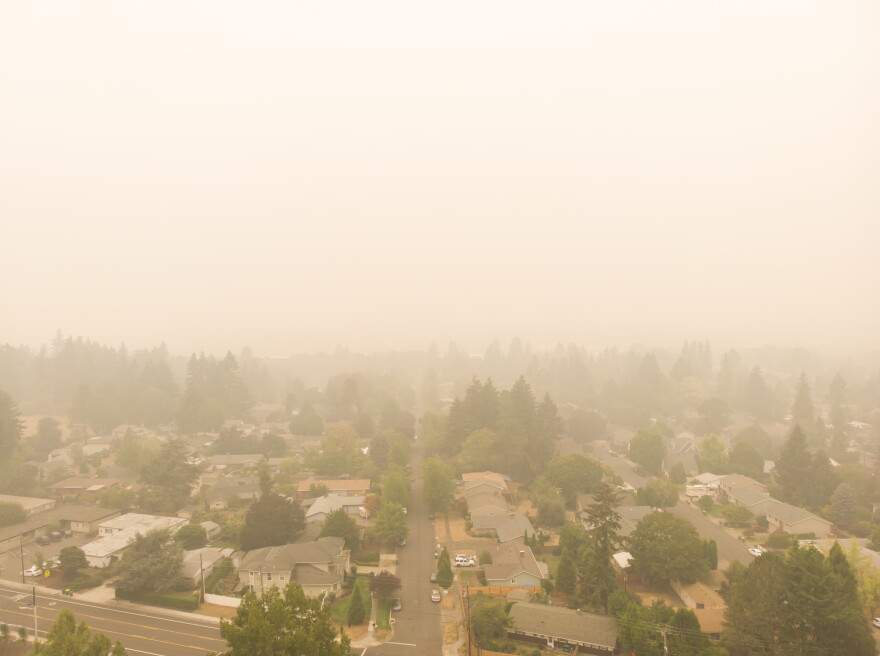
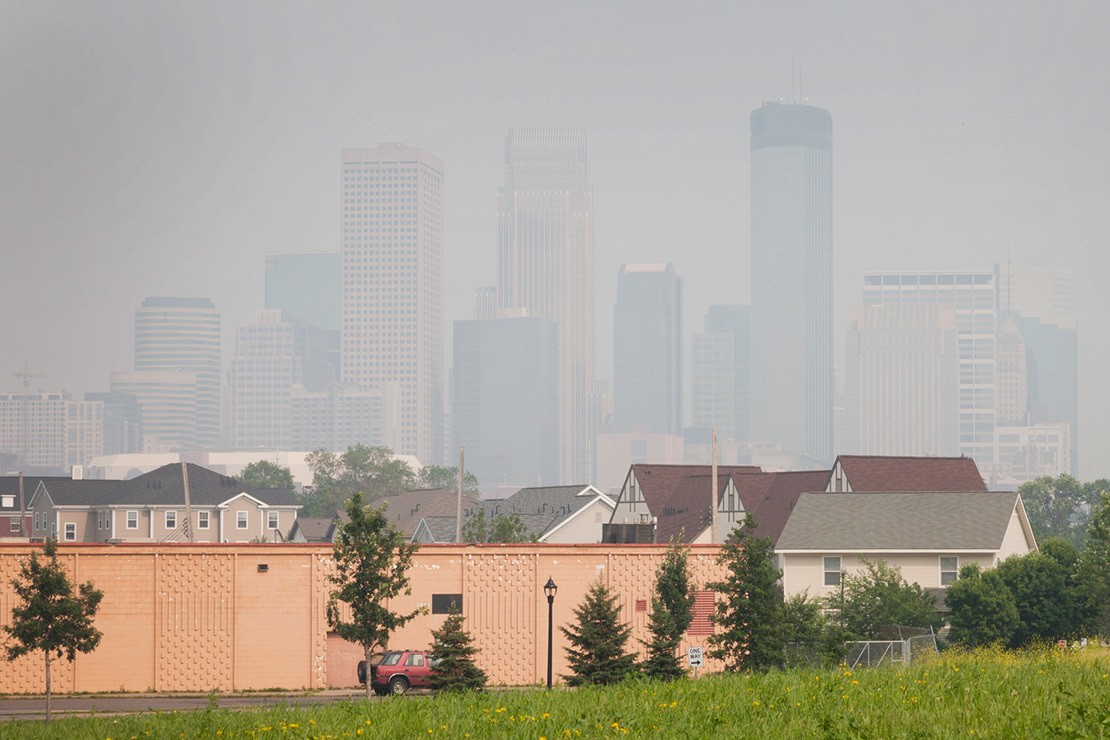
Wildfire smoke is one of the fastest ways for AQI to jump from “fine” to “stay inside.” Smoke is typically tracked as PM2.5 on AQI reports. Here are practical steps that reduce exposure without turning your day into a science project.
Step 1: Make one room a cleaner-air space
- Close windows and doors.
- If you have air conditioning, set it to recirculate if your system supports it and it is safe for your setup.
- Run a HEPA air purifier sized for the room if you have one.
- If you do not have a purifier, improving filtration on a forced-air system can help, if your system can handle it.
Step 2: Reduce indoor particle sources
On smoke days, indoor air can get a double hit: particles sneak in from outdoors, and then everyday activities add more.
- Avoid burning candles or incense.
- Skip frying or other high-smoke cooking if you can.
- If you use a kitchen exhaust fan that vents outdoors, know that it can increase negative pressure and pull more outdoor air in through gaps. When outdoor air is very smoky, using the fan less (and cooking simpler) can sometimes help.
- Vacuuming can resuspend dust unless the vacuum has good filtration.
Step 3: If you must go outside, reduce dose
- Keep outings shorter and less strenuous.
- Choose the least smoky time of day if you can, guided by hourly AQI trends.
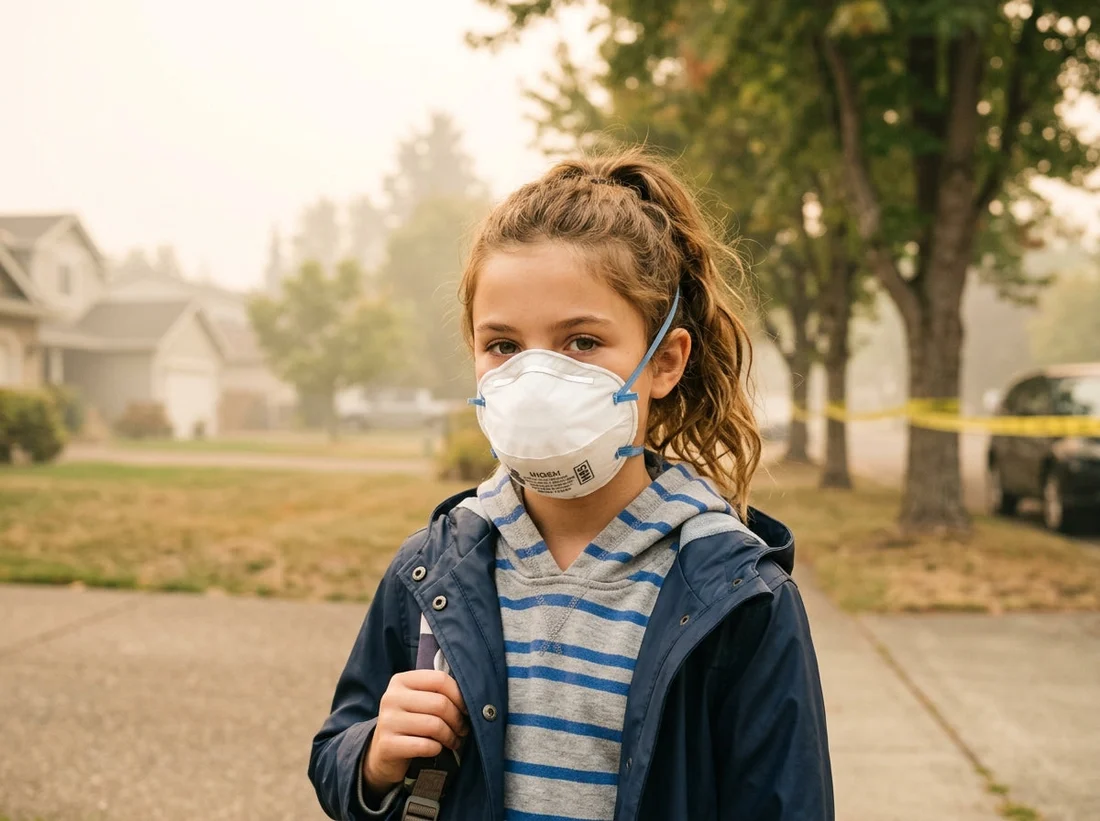
- Wear a well-fitting respirator such as an N95 (or similar, like KN95 or P100) when smoke is heavy. Loose face coverings do not filter fine particles reliably.
Step 4: Be extra cautious with sensitive groups
For children, older adults, pregnant people, and people with asthma, COPD, or heart disease, smoke can trigger symptoms sooner and more intensely. Pay attention to early signs like coughing, wheezing, chest tightness, unusual fatigue, headaches, or dizziness. If you have a condition-specific action plan from a clinician, follow it.
Step 5: Use your body as a sensor, but not the only one
Smoke irritation can be obvious, but pollution can also be harmful before it feels dramatic. AQI helps you act before symptoms show up, especially for kids who may not describe symptoms clearly.
When to get urgent help
Seek urgent medical care for warning signs such as severe shortness of breath, chest pain or pressure, blue or gray lips, confusion, fainting, or symptoms that are rapidly worsening.
Common AQI questions
Is AQI the same everywhere?
The idea is similar, but details can vary by country and agency. In the United States, the Environmental Protection Agency AQI is a common reference point, and the 0 to 500 scale with the familiar colors is widely used. If you travel, check which system your app is using.
Why is my AQI high when the sky looks clear?
Ozone is invisible, and even PM2.5 can be elevated without obvious haze. Some people notice irritation, others do not. This is why the “main pollutant” label is so helpful.
Why is it worse near roads?
Traffic corridors can have localized pollution patterns that a distant monitor may not fully capture. If you exercise outdoors, choosing routes away from heavy traffic can reduce exposure, even on moderate AQI days.
Should I open windows when it is hot if AQI is bad?
If the AQI is high due to PM2.5 or ozone, open windows generally bring in more polluted air. If indoor heat is a serious risk, prioritize cooling and follow local health guidance. When possible, cool with recirculated air and filtration rather than outdoor ventilation during peak pollution.
AQI at a glance
If you only remember three steps, make them these:
- Check the color and number to gauge urgency.
- Check the main pollutant, especially PM2.5 versus ozone.
- Adjust time and intensity of outdoor activity, with extra caution for sensitive groups and on wildfire smoke days.
AQI is not meant to scare you. It is meant to give you a readable, evidence-based nudge, so you can breathe a little easier, on purpose.