If you have ever heard a tornado described as an EF2 or EF4, that label is not a “wind speed reading” the way a thermometer reads temperature. The Enhanced Fujita Scale is a damage-based rating assigned after the storm, using careful ground and aerial surveys to estimate what winds were likely required to cause the damage that actually happened.
That detail matters, because it clears up one of the biggest misconceptions I run into when talking weather science. An EF rating is not something a meteorologist plucks off a radar screen in real time, and it is not usually based on an anemometer that sat inside the tornado. It is a forensic reconstruction, the way an investigator might infer speed from skid marks and crumpled metal.
What the EF Scale measures
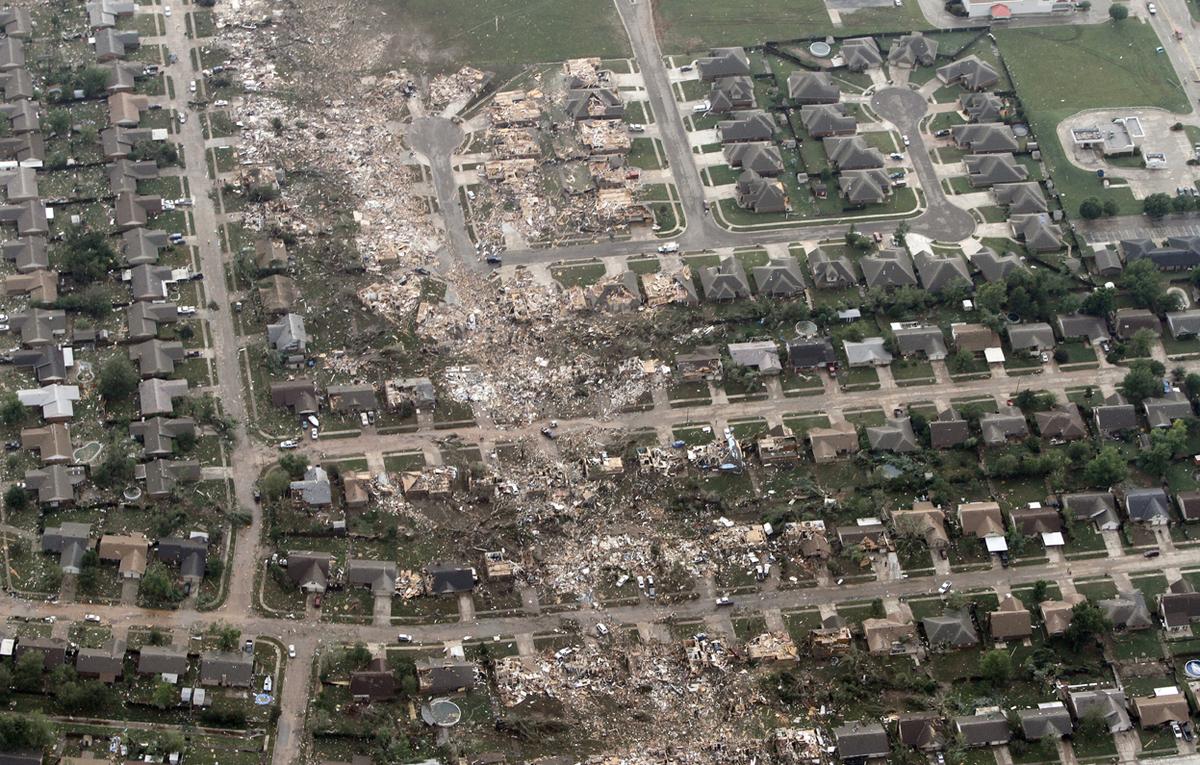
The Enhanced Fujita Scale, often shortened to EF Scale, measures a tornado’s intensity by looking at the damage it caused. Survey teams examine many different types of structures and objects, called damage indicators, and record how badly each one was damaged, called the degree of damage.
From there, they estimate a wind speed range that would be consistent with that damage. The key word is “estimate.” Real tornado winds can vary wildly over short distances, and the same wind can cause very different outcomes depending on construction quality, how long the wind acts, and what debris becomes airborne.
Why not measure wind directly?
In a perfect lab, we would drop anemometers into every tornado and call it a day. In the real world:
- Tornadoes are often narrow targets compared with hurricane wind fields. Even large tornadoes concentrate the worst winds into a relatively small area.
- Anemometers are rarely in the right place at the right time, and if they are, they might be damaged or ripped away.
- Operational radar does not measure peak surface winds directly. Doppler radar measures radial velocity of targets in the radar beam (often precipitation or debris) and the beam typically samples higher above the ground the farther you are from the radar. Mobile and research radars can sometimes scan lower levels, but EF ratings are still assigned from damage evidence on the ground.
That is why the EF Scale is built on damage evidence collected after the fact, even in an era of very good radar.
Damage indicators
The Enhanced Fujita Scale uses a catalog of damage indicators (DIs), which are things tornadoes commonly hit. Think of them as standardized test objects. A few examples surveyors routinely use:
- One- and two-family homes
- Manufactured homes (and whether they are tied down)
- Apartments and small retail buildings
- Schools
- Metal buildings and warehouses
- Transmission line towers and power poles
- Trees (hardwood vs softwood)
For each DI, surveyors assign a degree of damage (DoD). That can range from minor roof covering loss to complete destruction. Each DoD corresponds to an expected wind estimate, plus a plausible range around it.
Important nuance: surveyors also account for construction quality. A well-anchored, code-compliant home can withstand higher winds than a poorly anchored home before failing. Two houses with the same “looks bad to me” damage might not imply the same winds once you inspect the connections, fasteners, and foundation.
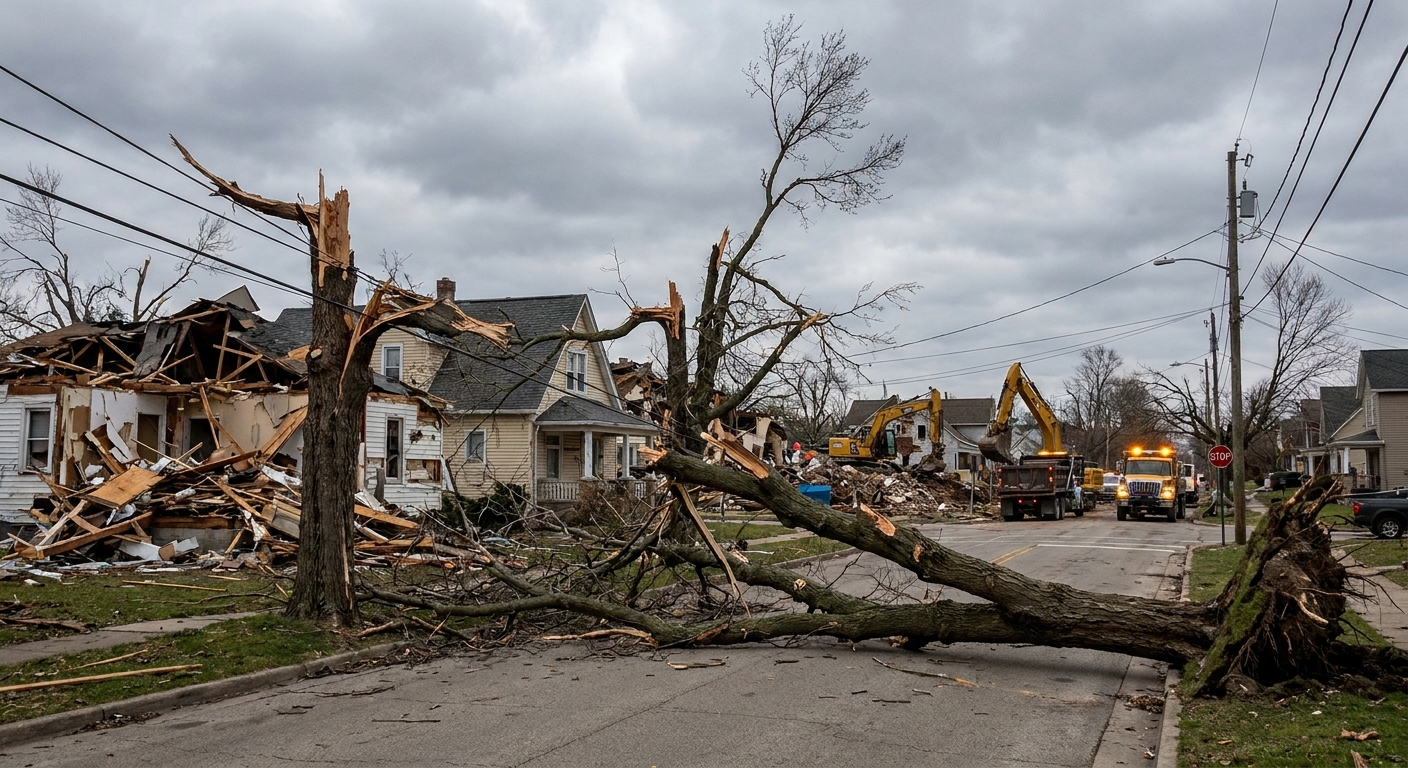
EF0 to EF5 ratings
EF ratings are best understood as damage ratings tied to estimated wind ranges. The wind speeds are not guaranteed measurements at any one point. They are the winds most consistent with the observed damage, using the EF damage indicators and degrees of damage.
The wind ranges below follow NWS EF Scale guidance as commonly published by NOAA and local National Weather Service offices.
EF0: light damage (about 65 to 85 mph)
EF0 tornadoes can still be dangerous, especially to people outdoors or in vehicles, but their damage is typically limited.
- Shingles or roof covering peeled off
- Gutters and siding damaged
- Small branches snapped, shallow-rooted trees pushed over
- Minor damage to outbuildings
EF1: moderate damage (about 86 to 110 mph)
At EF1, damage becomes more structural, and weak points in buildings start to matter a lot.
- Roofs more substantially damaged
- Exterior doors damaged or blown in
- Windows broken
- Mobile homes pushed off foundations or overturned, especially if not well anchored
- Larger trees snapped or uprooted
EF2: considerable damage (about 111 to 135 mph)
EF2 tornadoes can cause major damage to well-built homes, and this is often where entire neighborhoods start showing a clear damage path.
- Roofs torn off frame houses
- Walls may collapse, especially around garage doors and attached garage areas
- Large trees snapped, power poles down
- Light objects become dangerous missiles
EF3: severe damage (about 136 to 165 mph)
At EF3, failure often moves beyond the roof and into the home’s main structure. You start seeing damage that reflects both strong winds and the way buildings come apart under repeated impacts and pressure changes.
- Entire stories of well-constructed homes destroyed
- Significant damage to large buildings
- Some heavy vehicles can be overturned or displaced
- Forests can show widespread snapping and debarking in spots
EF4: devastating damage (about 166 to 200 mph)
EF4 damage is catastrophic, and the survey often focuses on how well structures were anchored, because poor anchoring can mimic higher-wind outcomes.
- Well-constructed homes leveled, leaving debris piles
- Cars thrown and mangled
- Large objects displaced
- Severe damage to steel-frame and masonry structures
EF5: incredible damage (200 mph and above)
EF5 is reserved for the most extreme damage signatures, and it is relatively rare. Surveyors look for strong evidence that the destroyed structures were well built and well anchored, because EF5 is about what the wind likely had to do, not just what happened to be flimsy.
- Strong-frame homes swept from foundations, with anchoring failures carefully evaluated
- Reinforced concrete and steel structures heavily damaged
- Vehicles thrown long distances
- Ground scouring and extreme tree damage in places
One subtle but crucial point: an EF5 rating does not mean “the tornado was uniformly EF5.” It means that somewhere along the path, the tornado produced winds consistent with EF5-level damage indicators.
How ratings are assigned
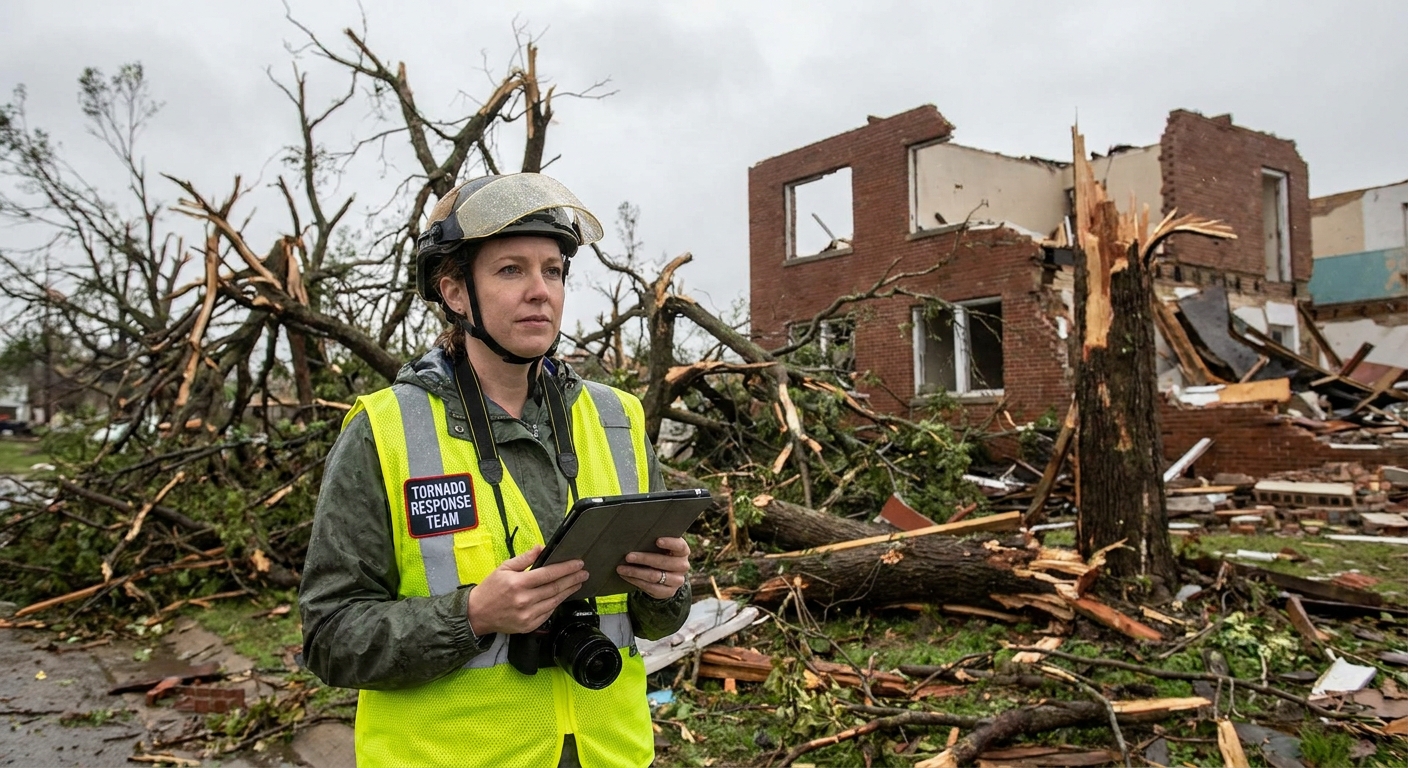
Once the storm has passed and it is safe, a damage survey begins. In the United States, EF ratings are typically assigned by the local National Weather Service forecast office, sometimes with support from engineers, emergency management, and other partners. The final rating is often a consensus call based on the strongest, best-documented damage.
The exact process varies by event and agency, but generally includes:
- Mapping the damage path to determine length, width, and continuity
- Identifying damage indicators that can anchor the analysis (homes, schools, towers, trees)
- Assigning degrees of damage for each DI based on observed failure modes
- Estimating winds from the EF guidance for those DIs and DoDs
- Choosing a final EF rating that reflects the most intense, well-supported damage
Modern surveys often incorporate aerial imagery and high-resolution satellite data, which helps especially in rural areas or where access is limited. But the nuts and bolts are still fundamentally the same: match real-world damage to standardized indicators.
Why wind speeds are ranges
It is tempting to treat EF wind speeds like a speedometer reading, but tornado damage does not translate neatly into a single peak gust. Here is why the EF Scale uses ranges and why uncertainty is baked in:
- Construction variability: Two “similar” houses can differ in anchoring, nail patterns, and maintenance.
- Debris effects: A 2x4 through a window is not “just wind.” It is wind plus projectiles.
- Exposure time: A brief burst and a sustained blast can produce different failures.
- Micro-scale variation: Tornado winds can change dramatically across tens of meters.
So when you see an EF rating, read it as: “Based on the best available damage evidence, this tornado’s peak intensity was most consistent with this category.”
A key limitation
Because the EF Scale depends on damage indicators, it can miss a tornado’s true peak intensity if the storm spends most of its life over open country. A violent tornado that crosses fields and sparse tree cover may leave few high-quality indicators, which can make the rating conservative even if the winds were stronger than the damage record suggests.
Tornadoes vs derechos
Another common mix-up is using the EF Scale like a general “storm strength meter” for any wind damage. It is not. The Enhanced Fujita Scale is for tornadoes, which produce rotating winds and typically a narrower, more focused damage path.
A derecho, by contrast, is a long-lived, widespread windstorm that produces a long swath of straight-line wind damage, usually associated with fast-moving thunderstorms. The damage pattern often looks more like trees and debris laid down in similar directions over a broad area rather than the converging, chaotic signature a tornado can leave.
Both can be destructive. But the EF Scale is not designed to rate derechos.
EF Scale cheat sheet
- EF0: 65 to 85 mph, light damage
- EF1: 86 to 110 mph, moderate damage
- EF2: 111 to 135 mph, considerable damage
- EF3: 136 to 165 mph, severe damage
- EF4: 166 to 200 mph, devastating damage
- EF5: 200 mph and above, incredible damage
FAQ
Is the EF rating determined by radar?
No. Radar can suggest rotation and help confirm a tornado occurred, but the EF rating itself comes from post-storm damage surveys. Doppler radar measures motion along the radar beam, often well above the surface, and it does not provide a direct readout of the peak winds at rooftop level inside the core.
Can two tornadoes with the same EF rating be very different?
Absolutely. EF ratings represent the peak damage-based intensity. One EF3 might have a short, narrow path and another might be long-tracked. One might pass mostly through fields, leaving limited damage indicators, while another hits dense housing where detailed indicators exist.
Does “EF5” mean the tornado had 200+ mph winds everywhere?
No. It means the tornado produced EF5-consistent damage somewhere along its path. Tornado intensity can fluctuate rapidly.
Why do officials sometimes change a tornado’s rating later?
As more evidence becomes available, including better imagery or closer inspection of how structures were built and failed, surveyors may refine the degrees of damage and adjust the estimated winds.
Is the Enhanced Fujita Scale the same as the Fujita Scale?
They are related, but not identical. The EF Scale is an updated system designed to better connect damage to wind estimates using more detailed damage indicators and engineering input.