I used to tell my physics students that Earth has “quiet protectors” you never see, but you absolutely benefit from. One of the biggest is ozone high in the stratosphere, a thin concentration of the three-oxygen form of oxygen (O3) that helps block much of the Sun’s most harmful ultraviolet (UV) radiation.
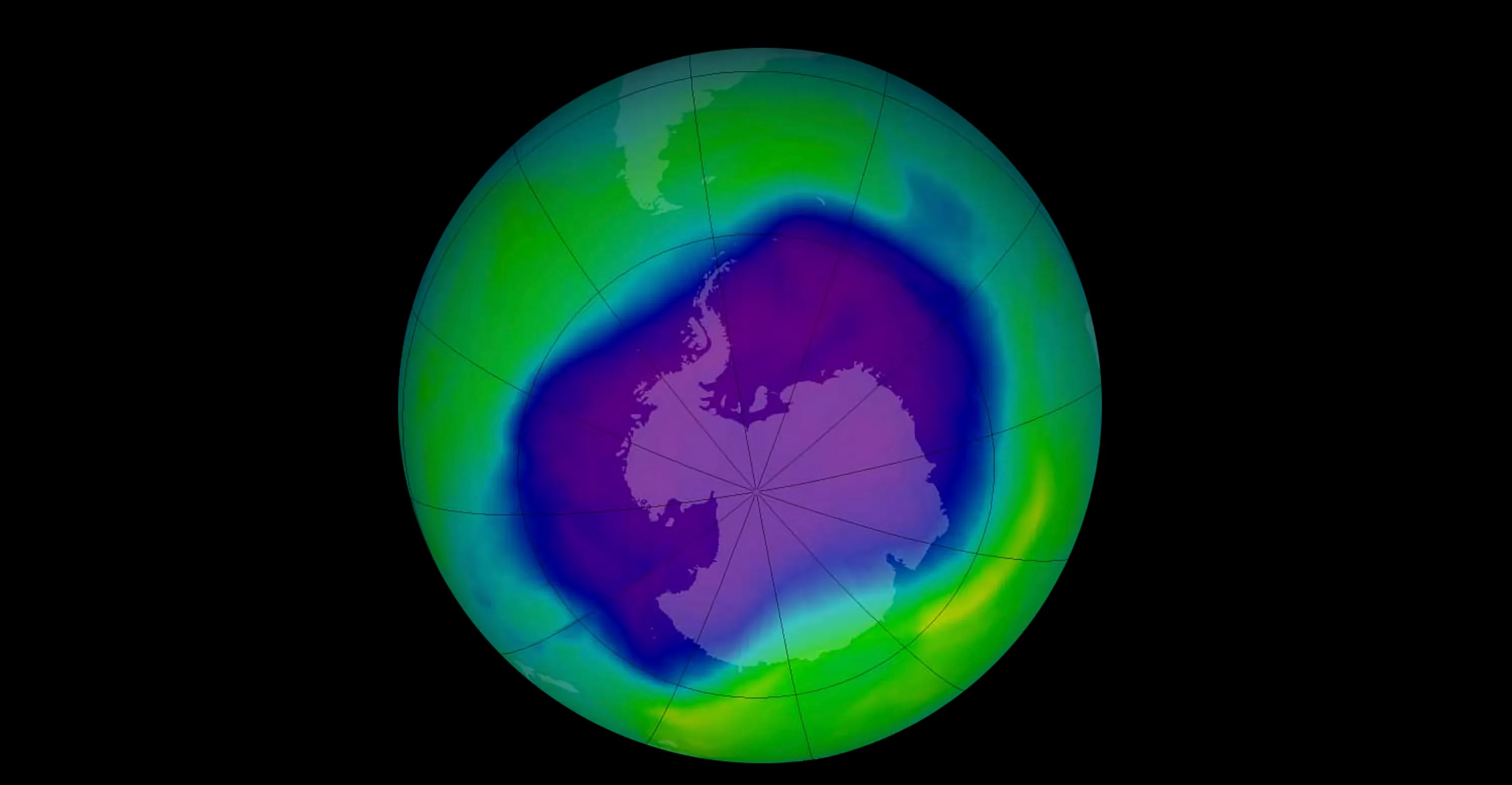
The ozone hole is what happens when that protection takes a dramatic, seasonal hit over Antarctica. Despite the name, it is not a literal puncture in the sky. It is a region where the amount of ozone above a location drops far below normal levels for that time of year.
Why does that matter? Because when total column ozone drops, more UV-B (and, in general, less-filtered UV overall) can reach the surface, raising risks like skin damage and cataracts, and stressing ecosystems.
Ozone 101: a protective trace gas
Ozone is a molecule made of three oxygen atoms, written as O3. Most oxygen in the air is the two-atom version, O2, the stuff we breathe. Ozone is far rarer, but in the stratosphere it plays an outsized role because it absorbs energetic UV light.
Ozone is constantly being created and destroyed naturally. Sunlight can split O2 into individual oxygen atoms, which can then stick to O2 to make O3. UV light can also break ozone apart again. Under ordinary conditions, those processes roughly balance out, with atmospheric transport and naturally occurring catalytic loss cycles (involving nitrogen, hydrogen, chlorine, and bromine chemistry) also shaping how much ozone is in any given region.
In terms of what ozone absorbs: it blocks nearly all UV-C and most UV-B. UV-A is only weakly absorbed, which is one reason sunscreen still matters even on days when the ozone layer is doing its job.
What the ozone hole is
The ozone hole is a seasonal, chemical depletion of stratospheric ozone over Antarctica, most intense in the Southern Hemisphere spring. Scientists typically talk about it in terms of how much ozone is in the entire column of air overhead, from the ground up through the atmosphere.
When that column amount drops below a widely used threshold, the region is counted as part of the “hole.” It grows and shrinks through the season, like a bruise that darkens and then fades.
Why Antarctica gets hit hardest
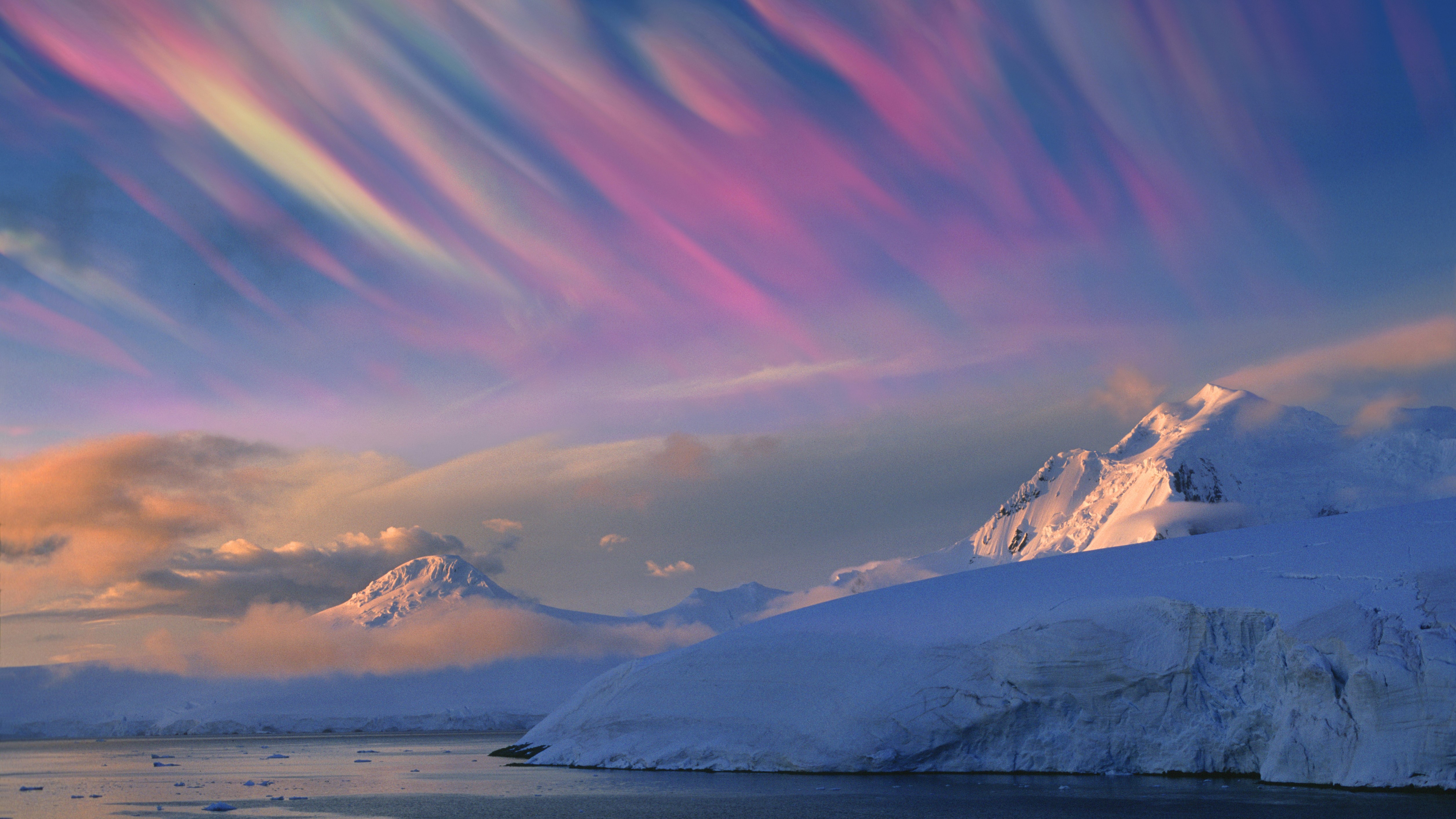
Antarctica is a perfect setup for extreme ozone loss because the stratosphere above it gets very cold for long stretches of the year. That cold matters because it allows a special type of cloud to form high up where clouds are otherwise rare.
There is also a second key ingredient: the polar vortex, a fast, swirling wintertime wind pattern that helps isolate Antarctic air. That isolation keeps the air cold and keeps the reactive chemistry and ozone-poor air bottled up over Antarctica until the vortex weakens later in spring.
Polar stratospheric clouds
These high-altitude clouds are called polar stratospheric clouds (PSCs). They form in the stratosphere when temperatures drop low enough for certain particles and compounds to condense. PSCs are not the puffy water-clouds you see outside your window. They are made from tiny particles that can include nitric acid plus water (sometimes as droplets or crystals), or water ice, depending on conditions.
Here is the key idea: PSCs provide surfaces for chemical reactions that are slow or unlikely in the gas phase. Think of them like a countertop in a kitchen. A countertop does not provide ingredients, but it makes chopping and mixing much easier. PSC particles give chlorine-containing chemicals a place to meet and react efficiently.
CFCs and other halogens
The chemical actors behind the ozone hole trace back to chlorofluorocarbons, better known as CFCs. For decades, CFCs were used in refrigeration, air conditioning, foam blowing, and aerosol propellants because they have low toxicity and are chemically inert in the lower atmosphere.
That inertness is exactly why they became a problem. CFC molecules can drift upward over time into the stratosphere, where higher-energy sunlight can break them apart and free chlorine.
Chlorine is not alone. Bromine from halons and related compounds is less abundant than chlorine, but it is extremely efficient at ozone destruction per atom. In the Antarctic spring, both halogens matter, with chlorine usually taking center stage in the classic explanation.
Why a little chlorine goes a long way
A single chlorine atom can take part in reaction cycles that destroy ozone over and over again, in some cases destroying thousands of ozone molecules before it is tied up again. It is less like a one-time attacker and more like a match that can ignite many small fires.
Most of the time, a lot of stratospheric chlorine is tied up in “storage” forms that do not rapidly destroy ozone. The Antarctic winter sets the stage for trouble because chemistry on PSC particles converts some of that stored chlorine into forms that can become highly ozone-destroying when sunlight returns.
How the hole forms each year
The seasonal sequence is straightforward. Here is the typical pattern over Antarctica:
- Winter (dark, extremely cold stratosphere): Temperatures plunge. Polar stratospheric clouds form. Chemical reactions on PSC particles shift chlorine into forms that can later become very reactive. The polar vortex helps keep this cold, primed air mass isolated.
- Early spring (sunlight returns): As the Sun rises over Antarctica again, light triggers reactions that generate reactive chlorine and bromine. Ozone destruction speeds up dramatically, and the column amount of ozone can fall fast.
- Late spring into summer (warming stratosphere): Conditions that favor PSCs fade. Ozone-destroying chemistry slows, the polar vortex weakens and breaks down, and mixing with ozone-richer air from lower latitudes increases. The “hole” shrinks and eventually disappears for the year, although the ozone-poor air can drift and influence UV levels well beyond Antarctica at times.
This is why you often hear that the ozone hole is “seasonal.” The chemistry has a specific window where it runs like a well-tuned machine: cold first, then sunlight.
How scientists measure it
Scientists measure ozone in a few complementary ways, but the headline “ozone hole” numbers you see in news updates usually come from total column ozone measurements. That means the total amount of ozone in a vertical column of air above a given location. Less column ozone generally means less UV filtering, especially for UV-B.
Dobson Units
Total column ozone is commonly reported in Dobson Units (DU). You can think of DU as a convenient way to express how much ozone is overhead, even though the ozone is spread across many kilometers of altitude.
By convention, the “ozone hole” is often mapped as the area where total column ozone falls below 220 DU. That threshold is not magic physics. It is a practical benchmark that helped scientists consistently identify unusually depleted ozone over Antarctica.
Satellites and balloons
- Satellites can scan large areas daily, making them ideal for tracking the hole’s size, shape, and evolution through spring.
- Ground-based instruments such as Dobson and Brewer spectrophotometers measure ozone by analyzing how the atmosphere absorbs specific wavelengths of sunlight.
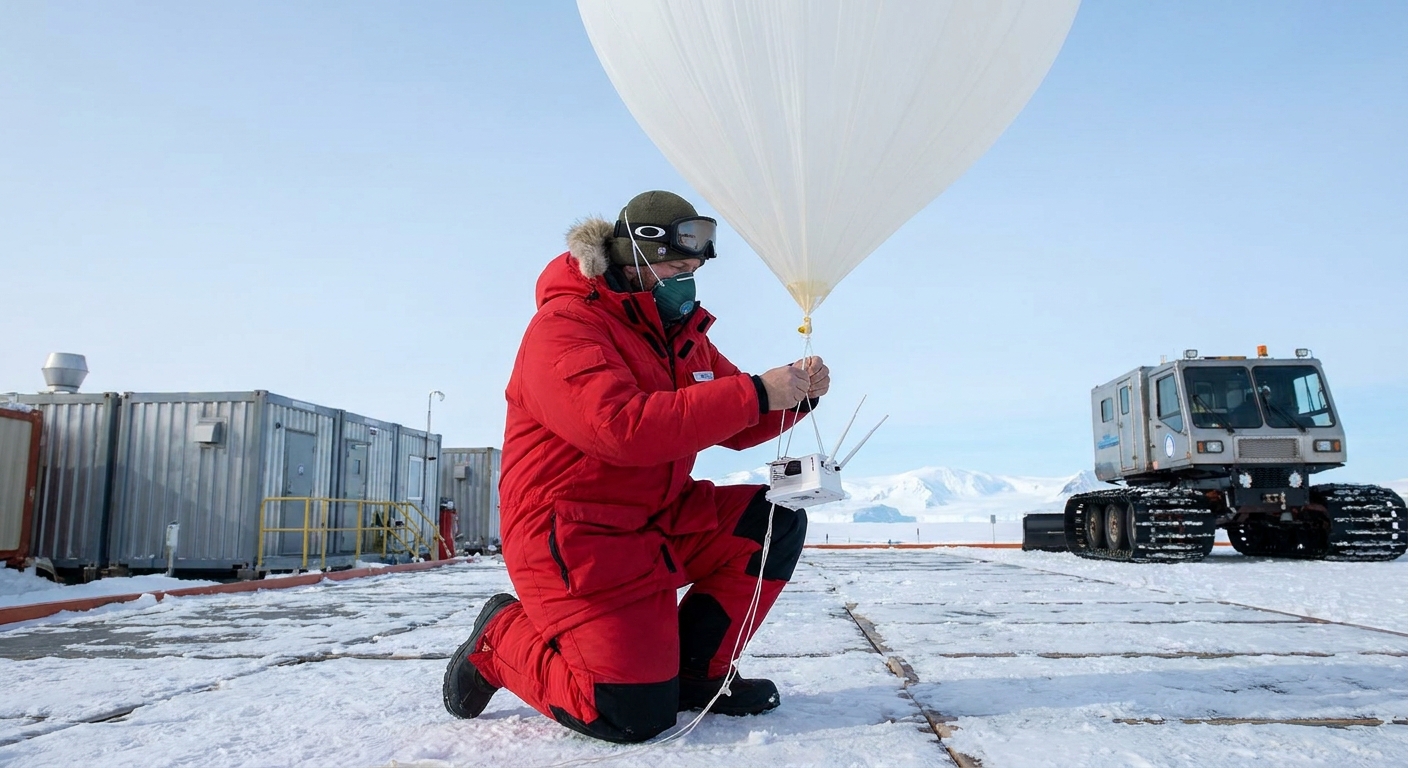
- Weather balloons carrying ozonesondes directly sample ozone as they rise, providing detailed vertical profiles that help confirm what satellites see from above.
Common misconceptions
Is it a literal hole you could fly through?
No. The air is still there. The term describes reduced ozone concentration over a region, not an absence of atmosphere.
Is the ozone hole the same everywhere on Earth?
No. The most dramatic and consistent depletion is over Antarctica. Ozone can vary naturally and can be affected by chemistry elsewhere, but the classic “ozone hole” is specifically the Antarctic springtime event.
Does it happen year-round?
No. It forms in spring and fades as stratospheric conditions change later in the season.
Are we still dealing with it?
Yes, but the story is also one of the most encouraging examples of global environmental problem-solving. Because CFCs and related chemicals persist a long time in the atmosphere, recovery is gradual. Even with strong international action, halogen levels in the stratosphere take decades to decline.
That means you can still see substantial ozone holes in some years, especially when stratospheric conditions are unusually cold and stable. The long-term expectation, supported by observations and atmospheric chemistry modeling, is a slow recovery as ozone-depleting substances continue to decrease. Many scientific assessments project Antarctic ozone returning toward pre-1980 benchmarks around the middle of this century, with the exact timing depending on future emissions and natural variability.
FAQ
Why is the ozone hole strongest over Antarctica?
Antarctica’s stratosphere is generally colder and more consistently cold for longer stretches, which favors more frequent and extensive polar stratospheric cloud formation. The polar vortex also helps isolate the air mass, allowing reactive chemistry to ramp up and ozone losses to become severe before mixing can bring in ozone-rich air from lower latitudes.
What altitude is the ozone hole at?
Most of the depletion is in the stratosphere, not near the ground. The measurements used to define the hole usually refer to the total ozone in the whole atmospheric column, but the chemical destruction is concentrated at stratospheric altitudes where ozone is naturally most abundant.
How big is the ozone hole?
It changes from year to year and week to week during spring. Scientists often describe it by its area (how much of Antarctica is under very low ozone values) and by how low the ozone gets at its minimum. Satellites are especially useful for tracking those changes over the season.