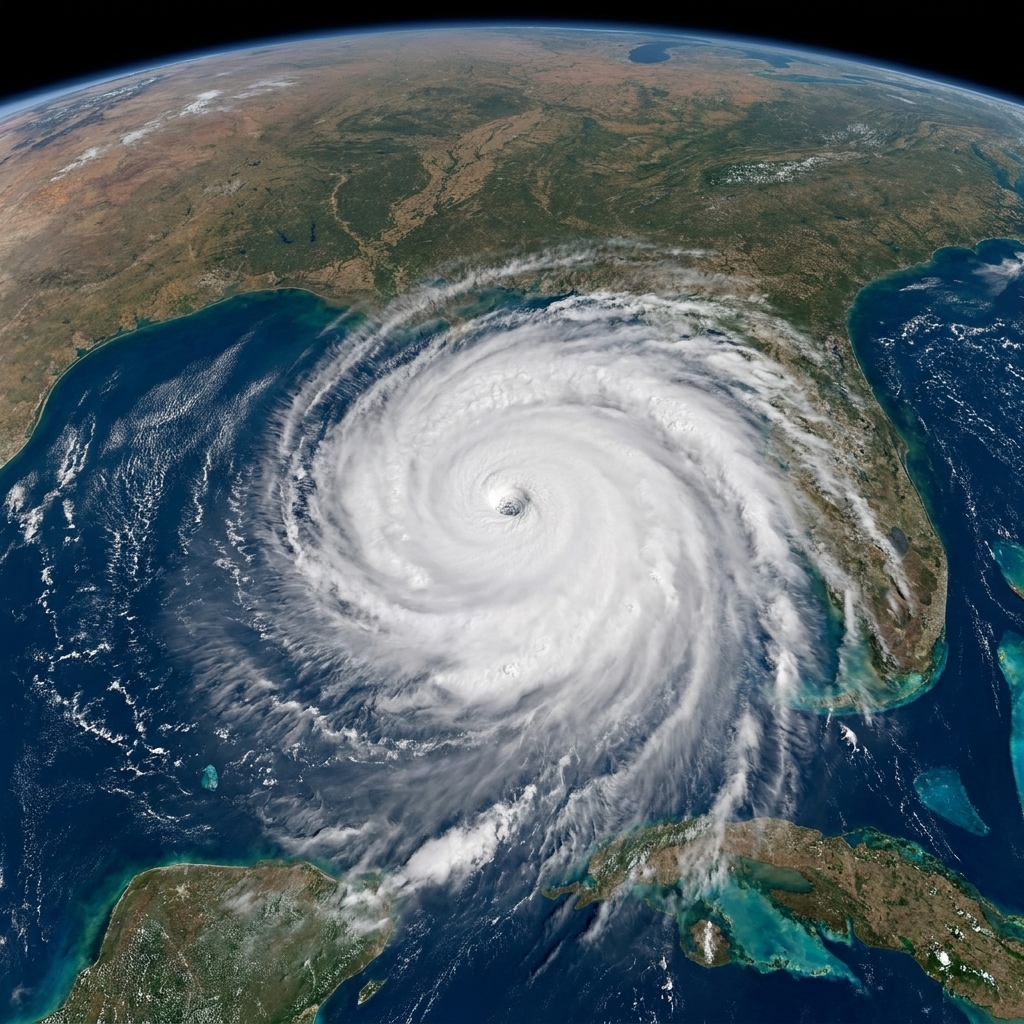
When I taught high school physics, I’d sometimes start class by asking, “So, what’s the weather doing?” Hands would shoot up: raining, windy, weirdly warm for October. Then I’d ask a second question: “What’s the climate like here?” Suddenly it was sweaters, snowy winters, humid summers, the stuff you pack for.
That little pause is the whole difference. Weather is the atmosphere’s mood right now. Climate is the personality you only learn by watching for a long time.

Weather is day to day
Weather describes the conditions of the atmosphere over short time scales: minutes, hours, and days. It includes things like:
- Temperature
- Humidity
- Cloud cover
- Rain or snow
- Wind speed and direction
- Air pressure
When you check a forecast, you are asking a weather question: Will it rain this afternoon? How hot will it get tomorrow? Weather is immediate and can be local or regional, and it can shift quickly because the atmosphere is a moving fluid.
One key point: a single storm or heat wave is a weather event, even if it is extreme.
Climate is the long pattern
Climate is not a single day’s conditions. It is the statistics of weather over long periods, typically 30 years or more. (That 30-year baseline is the standard used for climate normals by organizations such as the World Meteorological Organization.) Instead of asking “What will happen tomorrow?” climate asks questions like:
- How hot are summers here, on average?
- How often do we get days above 95°F?
- Do heavy downpours happen more frequently than they used to?
Those are pattern questions. And patterns require lots of data points.
Think of it this way: weather is one roll of the dice. Climate is the record you build after thousands of rolls, where you can estimate the odds.
One hot day vs. a hotter trend
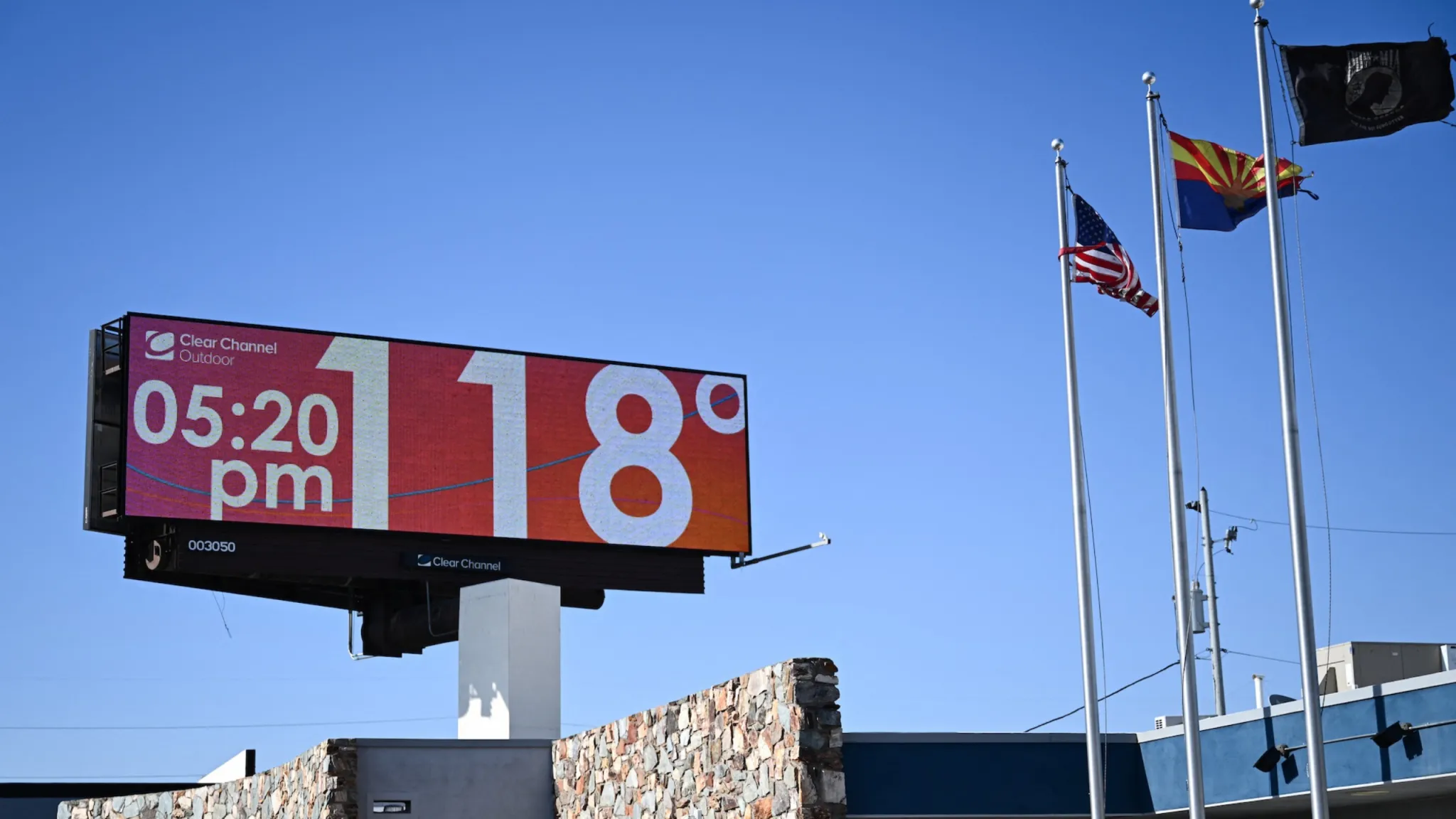
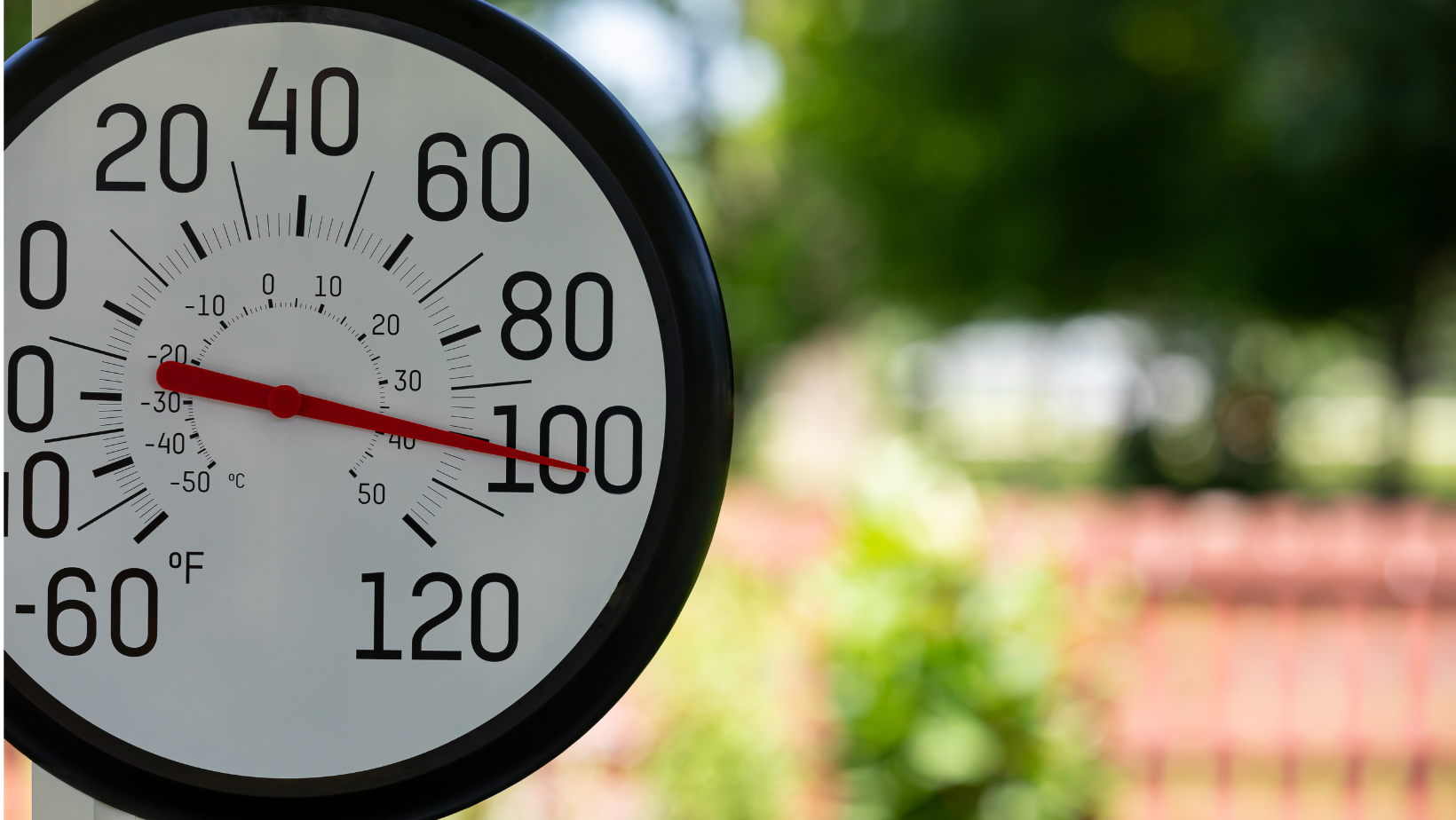
Let’s say your town hits 100°F on a random Tuesday.
- Weather statement: “It reached 100°F today.”
- Climate statement: “Days at or above 100°F are becoming more common here over recent decades.”
That second sentence describes a trend, not today’s reading. It is describing a shift in frequency.
You can have a blazing hot day in a generally mild climate, and you can have a relatively cool day during a long-term warming trend. That is why “cold day” and “warming climate” are not in conflict. They are different time scales.
Weather and climate scales
One more wrinkle I used to emphasize with students: both weather and climate can be described at different spatial scales.
- Weather can be hyper-local (a thunderstorm over one neighborhood) or regional (a cold front sweeping across multiple states).
- Climate can describe a city, a mountain range, a whole country, or the planet as a whole.
The core difference stays the same either way. Weather is short-term conditions. Climate is long-term patterns.
Why 30 years?
You will often hear scientists and meteorological agencies talk about 30-year normals. A “normal” is basically a baseline, built from three decades of measurements, used to describe what is typical for a place.
The 30-year window is long enough to smooth out a lot of year-to-year noise, but short enough to reflect gradual shifts. Some agencies update these normals on a decadal schedule using the most recent 30-year period, including NOAA in the United States.
How a 30-year normal is made
Imagine you want the “normal” high temperature for July in your city.
- Step 1: Gather daily high temperatures for every day in July for 30 years.
- Step 2: Average them. You might compute one average for all July days, or calculate a separate normal for each calendar day (July 1, July 2, and so on).
- Step 3: Repeat for precipitation, humidity, wind, and other variables if needed.
But climate scientists do not stop at averages. They often track:
- Extremes: hottest day each year, heaviest 1-day rainfall
- Counts: number of 90°F days, number of freeze nights
- Percentiles: how often temperatures land in the top 1% for that location
This is how climate becomes measurable: it is weather data turned into long-term statistics.
And it is not only temperature. A place’s climate can also be described by metrics like a later average first frost date, a longer wildfire season, or an increase in the number of days with very heavy rain.
Forecasts and climate are different
It is tempting to treat climate like a super-long forecast, but they are not the same tool.
Weather forecasts
- Try to predict specific conditions on specific days
- Depend heavily on today’s atmospheric measurements
- Lose accuracy the farther out you go because tiny uncertainties grow
Climate assessments
- Describe long-term shifts in averages, variability, and extremes
- Rely on many years of observations, plus physical understanding of the climate system
- Often use tools like climate models and reanalysis datasets to test explanations and estimate probabilities
- Talk about probabilities and trends rather than what will happen on Tuesday at 3 p.m.
A helpful analogy: a weather forecast is like predicting the next few notes in a song you are hearing live. Climate is identifying the genre from an entire playlist.
Common mix-ups
“If climate is warming, why did we get a snowstorm?”
A snowstorm is weather. Climate warming is a long-term trend. A warmer climate can still produce cold days and snow, especially in winter. The climate question is whether the odds and character of cold events are changing over decades.
“Is an extreme event proof of climate change?”
A single event, by itself, is usually not enough. Climate change shows up most clearly in patterns: shifting averages, changing frequencies, and trends in extremes across many events.
“So climate is just the average?”
Not just the average. Climate includes variability and extremes too. Two places can share the same average temperature but have wildly different swings and risks.
A simple takeaway
Weather is what you get. Climate is what you expect.
If you remember only one thing, make it this: weather is the atmosphere on short time scales, and climate is the statistics of weather over decades. One hot afternoon is weather. A long-term increase in how often hot afternoons happen is climate.