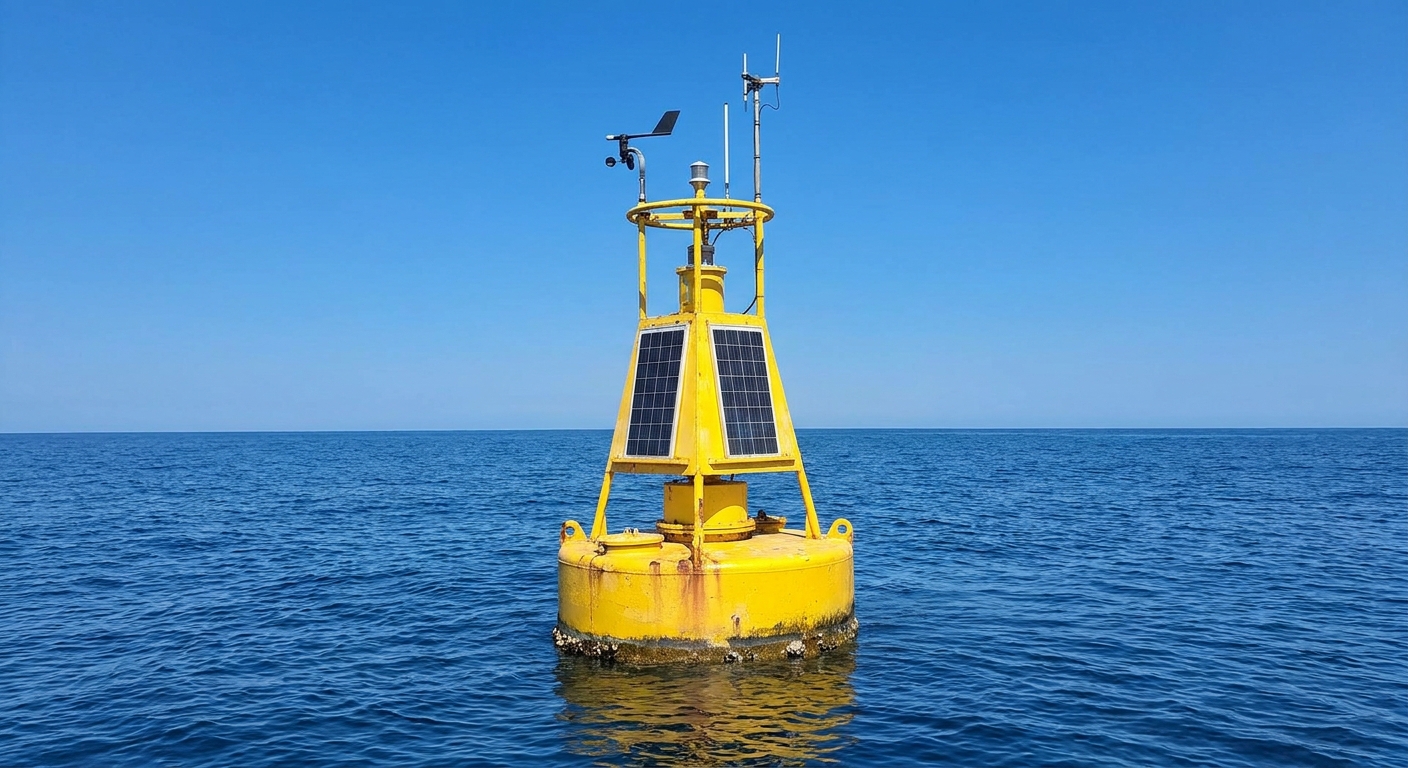
The ocean has a superpower that is easy to underestimate from the beach: it can swallow an enormous amount of heat without instantly looking “hot.” If you want a measurement that tells you how much extra energy Earth is actually storing as the climate warms, ocean heat content is one of the best places to look.
Ocean heat content is not just “how warm the sea surface feels today.” It is the total heat stored in the ocean over a defined depth, often calculated for layers like the upper 700 meters or 2,000 meters, though products vary and you will also see 0 to 300 m or even full depth estimates. That depth-integrated view matters because the large majority of the planet’s excess heat is taken up by the ocean. Assessments such as the IPCC AR6 and summaries from major science agencies commonly put it at around 90 percent (with some variation by time period and method). Much of that heat can sit below the surface for years to decades before it strongly influences weather patterns, sea level, and ecosystems.
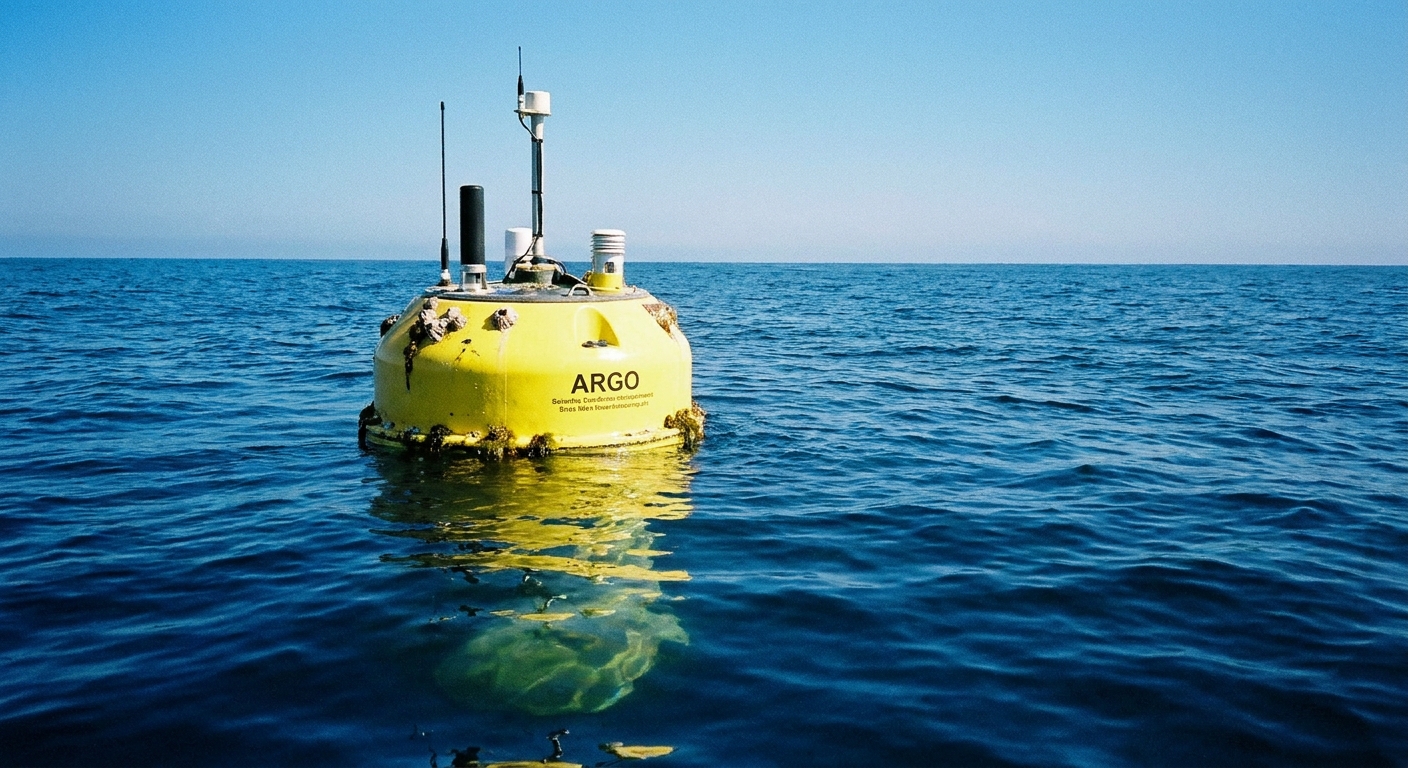
The simplest definition
Ocean heat content (OHC) is the amount of thermal energy stored in a volume of seawater, usually reported for a particular layer such as 0 to 700 m or 0 to 2,000 m, across an ocean basin or the whole globe.
In physics class terms, it is closely related to a familiar idea: if you know how much water you have, how much its temperature changed, and how much energy it takes to warm water, you can estimate the heat added.
A plain-language way to write the core idea is:
Heat added ≈ density × heat capacity × temperature change × volume, summed through the depth you care about.
Scientists compute OHC from:
- Temperature profiles through depth, not just the surface
- Seawater density and heat capacity, because water is a very effective heat sponge
- Area and depth of the region being measured
Because the ocean is so massive, even a small average temperature increase spread through hundreds or thousands of meters represents a staggering amount of energy.
Why most extra heat goes into the ocean
When greenhouse gases reduce how efficiently Earth sheds heat to space, the planet builds up an energy imbalance. That excess energy has to go somewhere.
It mostly goes into the ocean for a few reasons that are wonderfully unglamorous and very powerful:
- Water has high heat capacity. It takes a lot of energy to raise the temperature of seawater even a little.
- The ocean is huge. It covers about 71 percent of Earth’s surface and has deep layers that can store heat.
- Mixing and circulation transport heat downward. Winds, waves, eddies, and large-scale currents push heat below the surface, spreading it out.
The atmosphere warms quickly and dramatically, but it is thin. The ocean warms more slowly, but it is where most of the accumulated heat ends up being stored.
OHC vs surface temperature
This is one of the most common points of confusion: sea surface temperature and ocean heat content are related, but they are not the same measurement and they do not always move together.
Sea surface temperature is a thin-layer reading
Sea surface temperature represents the very top of the ocean, but the exact thickness depends on how it is measured. Satellites often estimate a skin temperature of the uppermost micrometers to millimeters. Many in-water sensors and ship measurements are closer to a bulk temperature, commonly representing roughly the upper 1 to 10 meters. Either way, SST can change quickly, sometimes within days, due to sunlight, wind, rainfall, and storms.
Ocean heat content is a depth-integrated inventory
Ocean heat content asks a bigger question: how much heat is stored in the water column down to a chosen depth? That makes it less jumpy than surface temperature, and far more informative for tracking long-term warming.
Think of it like this: sea surface temperature is the thermometer reading on the top shelf. Ocean heat content is the total heat stored in the whole pantry.
A marine heatwave can erupt at the surface without representing a huge change in total ocean heat content. Conversely, the ocean can quietly accumulate heat at depth even when surface temperatures wobble up and down from year to year.
How Argo measures OHC
If ocean heat content depends on temperature through depth, you need a lot of temperature profiles. For decades, those profiles were sparse: mostly ships, research cruises, and scattered instruments.
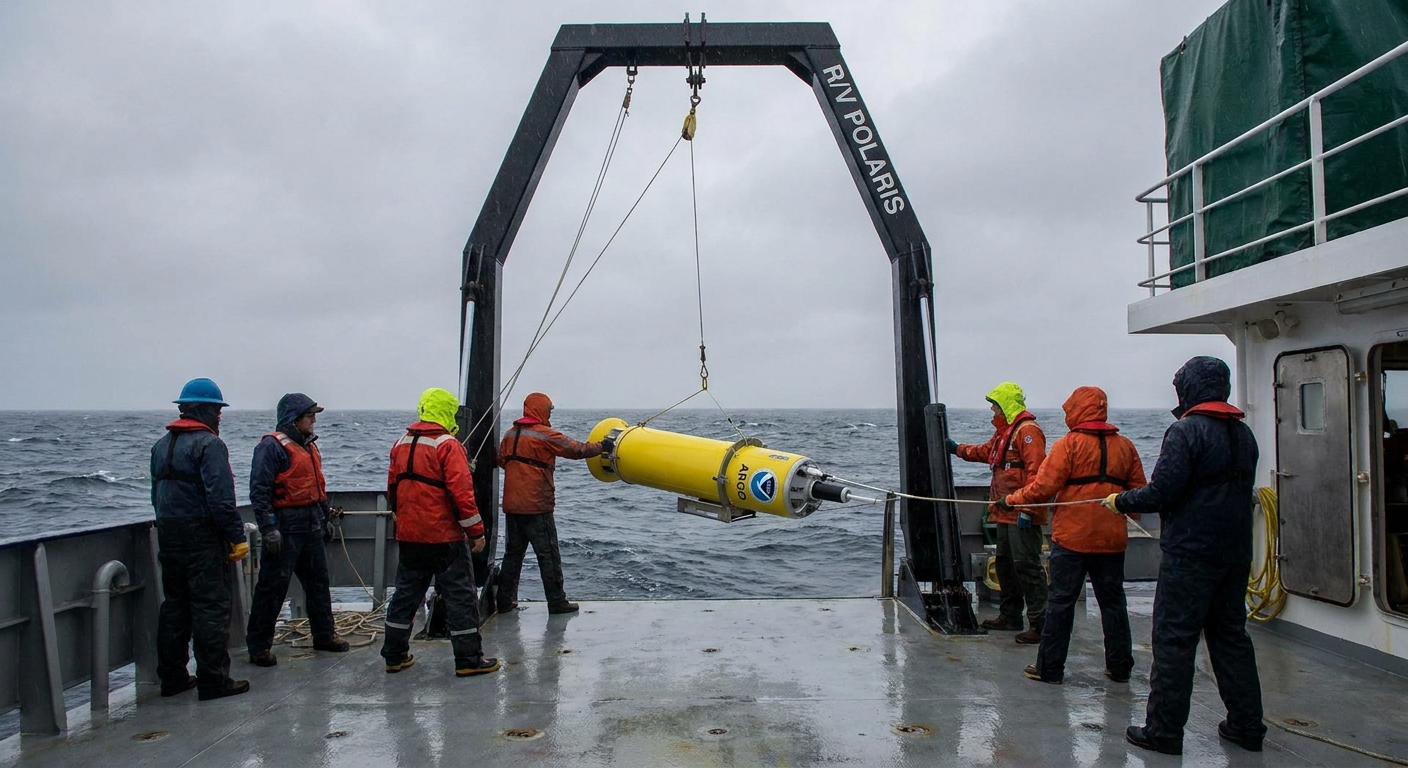
Then came Argo, a global network of autonomous profiling floats that drift with ocean currents and repeatedly dive and resurface, measuring the water column as they go. This is one of the most important upgrades to Earth observation in modern climate science.
What an Argo float does
A typical Argo float cycles on the order of every 10 days, roughly like this:
- Drifts at a “parking depth,” often around 1,000 meters, for days
- Profiles the ocean by rising from depth, commonly measuring down to about 2,000 meters in the core Argo program
- Measures pressure (depth), temperature, and salinity
- Transmits data via satellite when it surfaces
That repeating sampling gives scientists the key ingredient for OHC: temperature as a function of depth, distributed across the global ocean.
Why salinity is measured too
Salinity might feel like a side quest, but it matters. Salinity and temperature together determine seawater density and help describe the ocean’s layering, which affects mixing and circulation. And for OHC calculations, density and heat capacity are part of turning a temperature change into a heat content change for real seawater, not idealized fresh water. In many products, density is derived from measured temperature, salinity, and pressure.

What OHC is not
Because OHC shows up in climate news, it sometimes gets tangled with other ideas. Here are the clean separations.
Not the same as a surface spike
A sudden warm patch at the surface can be caused by calm winds, clear skies, or a shift in currents. It is real and can be damaging, but it is not automatically evidence that the entire water column has stored dramatically more heat. OHC is designed to track the broader heat reservoir.
Not the same as sea level rise
Sea level rise has multiple drivers. Ocean warming contributes through thermal expansion, because warmer water takes up more space. But sea level rise also depends heavily on added water from melting land ice.
Ocean heat content is best thought of as the energy account balance of the ocean. Sea level rise is one of several consequences that can follow from a growing balance, but it is not the balance itself.
Why scientists care about OHC
When I taught physics, I used to tell my students that if you want to understand a system, track its energy, not just its mood. Ocean heat content is exactly that: an energy tracker for the climate system.
It matters because it connects to several big, very human outcomes:
- Weather and storms: A warmer ocean can supply more heat and moisture to the atmosphere, influencing rainfall extremes and hurricane intensity.
- Marine ecosystems: Extra heat stresses corals, shifts fish habitats, and can worsen low oxygen zones.
- Long-term commitment: Heat stored below the surface can be mixed upward or carried into regions where it more directly affects the atmosphere later. It is not a guaranteed, immediate “payback,” but it does shape the climate system’s inertia.
- Sea level rise contribution: Warming drives thermal expansion, which adds to global mean sea level rise.
How OHC shows up in headlines
Ocean heat content is often reported as a change relative to a baseline period, and expressed in very large energy units. You may see:
- Joules (often zettajoules, which are 1021 joules)
- Warming rates over time for a layer like 0 to 2,000 m
- Maps of anomalies showing where the ocean holds more or less heat than average
If the units feel abstract, that is normal. One zettajoule is an almost-comically large number of joules, and that is the point: the ocean is storing energy on a planetary scale. The key idea to watch is trend direction and persistence. Unlike a one-week surface spike, sustained increases in depth-integrated heat are a strong signal that the climate system is accumulating energy.
If you want to look at time series yourself, major centers publish global OHC records and updates, including groups such as NOAA NCEI, the Institute of Atmospheric Physics, Chinese Academy of Sciences (IAP/CAS), and Europe’s Copernicus Marine Service products.
Limits and caveats
Ocean heat content is powerful, but no measurement is magical. A few realities to keep in mind:
- Depth matters: “Upper ocean” OHC (like 0 to 700 m) can change differently than 0 to 2,000 m. Deeper layers are harder to observe and may lag.
- Coverage has improved over time: The modern Argo era gives far better global sampling than earlier decades, which affects how far back comparisons can go cleanly.
- Some places are still hard to measure: Under sea ice, parts of marginal seas, and much of the ocean below 2,000 m, observations are sparser and uncertainties are larger than in the well-sampled upper ocean.
- Regional patterns are uneven: The ocean does not warm like bathwater. Currents and winds create hotspots and cool spots even during overall warming.
Quick FAQ
Is ocean heat content the same as global warming?
It is one of the clearest ways to measure global warming’s energy buildup. Global warming includes atmospheric warming, land warming, ice melt, and more, but OHC tracks the biggest heat storage reservoir on Earth.
Can the ocean keep absorbing heat forever?
It can absorb a lot, but not without consequences. As the ocean warms, it changes circulation, marine life, and contributes to sea level rise through expansion. Its ability to keep taking up heat and carbon also varies by region and over time.
Why not just use air temperature?
Air temperature is crucial, but it is noisier year to year because the atmosphere is thin and responds quickly to natural variability. Ocean heat content is closer to the climate system’s long-term energy ledger.
Do Argo floats measure the deep ocean?
The core Argo network focuses on the upper ocean, commonly out to about 2,000 meters. Deeper measurements require specialized Deep Argo instruments and are an active area of ongoing observation.
The takeaway
Ocean heat content is the total heat stored through a depth of ocean, and it matters because the ocean is where the large majority of Earth’s excess heat goes. Networks like Argo turn the ocean into something we can monitor in a consistent, physics-grounded way: repeated temperature profiles that let scientists estimate how the planet’s biggest heat reservoir is changing.
If sea surface temperature is the ocean’s facial expression, ocean heat content is its full body temperature, taken properly and over time.