Curiosity, with all its quills showing.
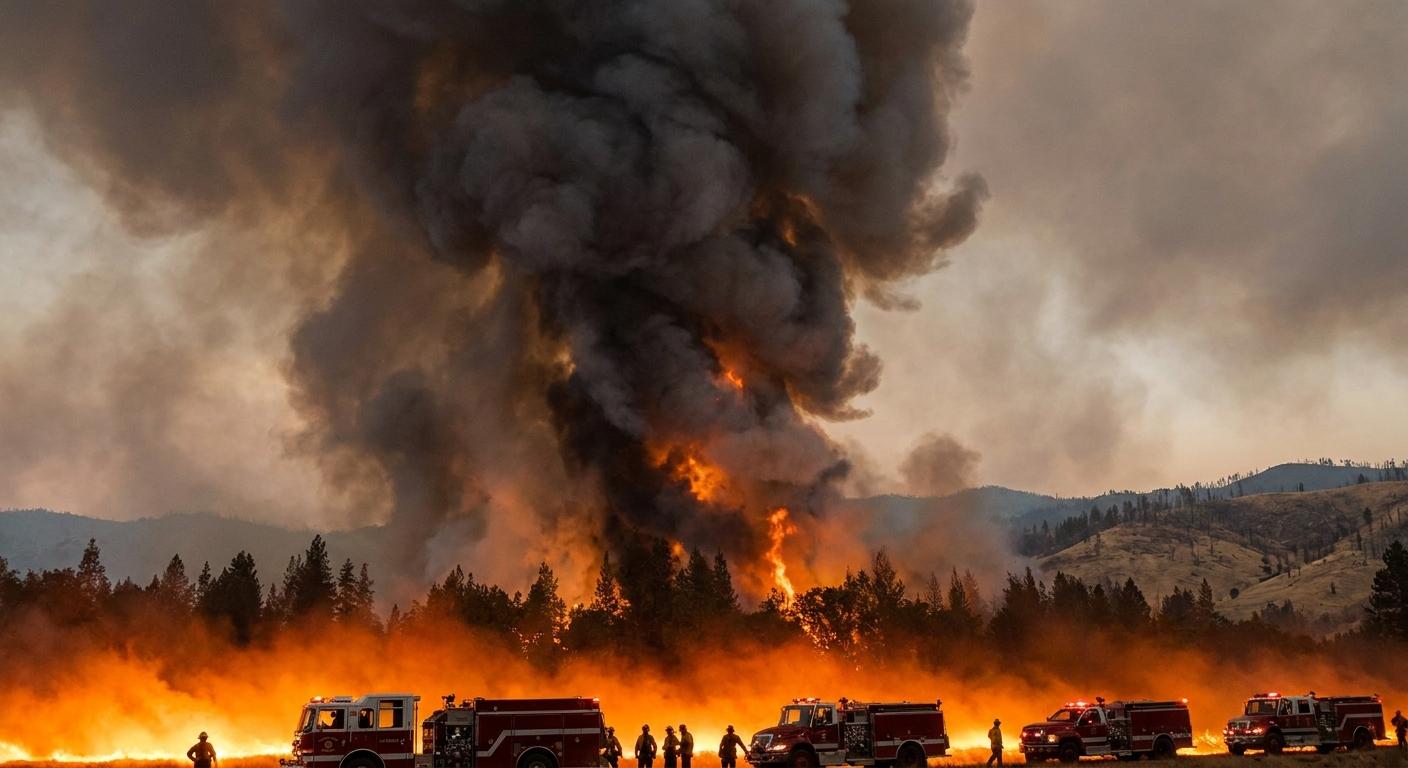
There is something hard to look away from in wildfire footage, the way a chaotic wall of flame can suddenly organize itself into a twisting pillar that looks uncannily tornado-like. If you have ever seen that, you have met one of fire behavior’s most unsettling tricks: a fire whirl. It is not a movie effect. It is a real, rotating vortex of hot air that can pull in smoke, embers, and sometimes open flame, concentrating heat and wind into a tight, fast-spinning column.
Fire whirl, defined
A fire whirl is a spinning column of air produced by a fire’s intense heat. As air near the flames heats up, it becomes less dense and rises quickly. Cooler surrounding air rushes in to replace it. If that inflowing air begins to rotate, the fire’s updraft can stretch and tighten the rotation into a visible vortex, often outlined by ash, dust, smoke, glowing embers, or flames.
You can think of it as a wildfire making its own small-scale wind machine. Many are brief and relatively small. Others grow stronger and more organized, and in rare cases they become violent enough to knock down trees, toss debris, and throw burning embers well ahead of the main fire.
How a fire whirl forms
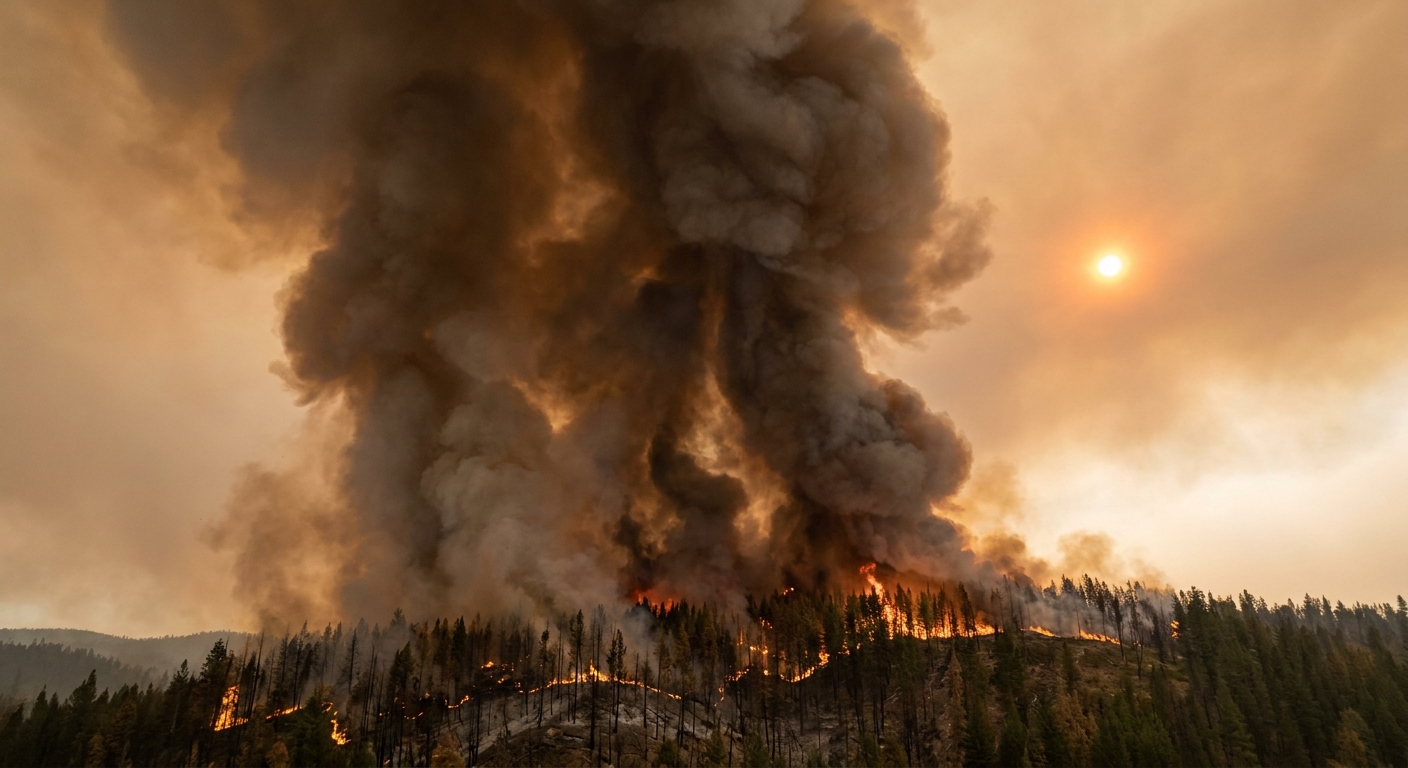
Fire whirls do not require a thunderstorm cloud base or the classic ingredients behind a supercell tornado. They often form in the boundary layer, the lowest part of the atmosphere, where wind interacts with terrain, vegetation, and the fire itself. In the most extreme situations, deep plume dynamics and pyroconvection can also play a role, especially when a large, vigorous smoke column is influencing the winds around it.
The ingredients
- Intense heat and a strong updraft: A vigorous plume rising from a hot fire creates the vertical motion needed to stretch rotation.
- A source of rotation: Wind shear, shifting winds around obstacles, and channeling through canyons or gaps can all introduce spin.
- Confinement or convergence: Anything that focuses inflow, such as a narrow drainage, a lee-side eddy, or the fire’s own inflow boundaries, can help the vortex tighten.
The stretching effect
Rotation becomes more intense when it is stretched vertically, similar to how an ice skater spins faster by pulling in their arms. In the atmosphere, that stretching happens when rising air pulls upward on a rotating pocket of air, narrowing it and accelerating the spin. A strong fire plume can do this efficiently.
How big can fire whirls get?
Fire whirls span a wide range, from quick little spinners to rare, high-end events that look like something from another planet.
- Small whirls: Many are just a few feet to a few yards across and last seconds to minutes, sometimes dancing along a fire line or across a recently burned patch.
- Larger fire whirls: Some grow to tens of yards wide and persist longer, especially when the fire is intense and the surrounding wind field supports steady inflow.
- Rare, extreme events: Under exceptional conditions, a fire-driven vortex can become powerful and long-lived enough to earn labels like “fire tornado” in news coverage. In research and incident analysis, you will more often see phrasing like intense fire whirls or fire-generated vortices, because there is no single universal naming standard and these are not the same phenomenon as classic thunderstorm tornadoes.
Putting numbers on them is tricky because measurements near an active wildfire are hazardous and rare. Still, documented case studies and field observations show the scale can range from small, dust-devil-like whirls to large vortices capable of producing damaging winds. The key point is that the physics scales: stronger heat plus better organized rotation can produce a larger, more damaging vortex.
Why fire whirls are so hazardous
Wildfires are already dangerous because they combine heat, low visibility, falling embers, and unpredictable wind shifts. A fire whirl adds another layer by intensifying and concentrating all of those hazards.
Key dangers
- Sudden wind spikes: A fire whirl can generate locally strong, erratic winds that change direction quickly, complicating firefighter safety zones and escape routes.
- Ember lofting and spotting: The rotating updraft can lift burning material high into the air, increasing the chance of spot fires ahead of the main front.
- Extreme heat in a narrow corridor: A whirl can focus flames and radiant heat, causing rapid ignitions.
- Reduced visibility: Dense smoke, ash, and dust wrapped into a vortex can turn situational awareness into guesswork.
- Debris impacts: In stronger whirls, branches, roofing, and other debris can be lofted or thrown.
Because they can develop quickly and move unpredictably, fire whirls are especially dangerous for anyone close to the fire, including firefighters working the edge, residents evacuating, and people who stop to watch or record.
Fire devils and fire whirls
Not every spinning column near a fire is the same beast.
- Fire devils: These are smaller, dust-devil-like vortices that can form over very hot ground, including burn scars. They may be mostly dust and ash with little or no visible flame.
- Fire whirls: These are typically larger and more directly tied to the active flaming front and the fire’s strong updraft, with smoke, embers, and sometimes a clearly flaming core.
The boundary between the two can be fuzzy in the real world, but the practical takeaway is simple: even a small whirl can loft embers and behave unpredictably when fuels are dry and heat is high.
Fire whirls vs. tornadoes
Fire whirls can look like tornadoes, but their “power source” is different.
What drives a tornado
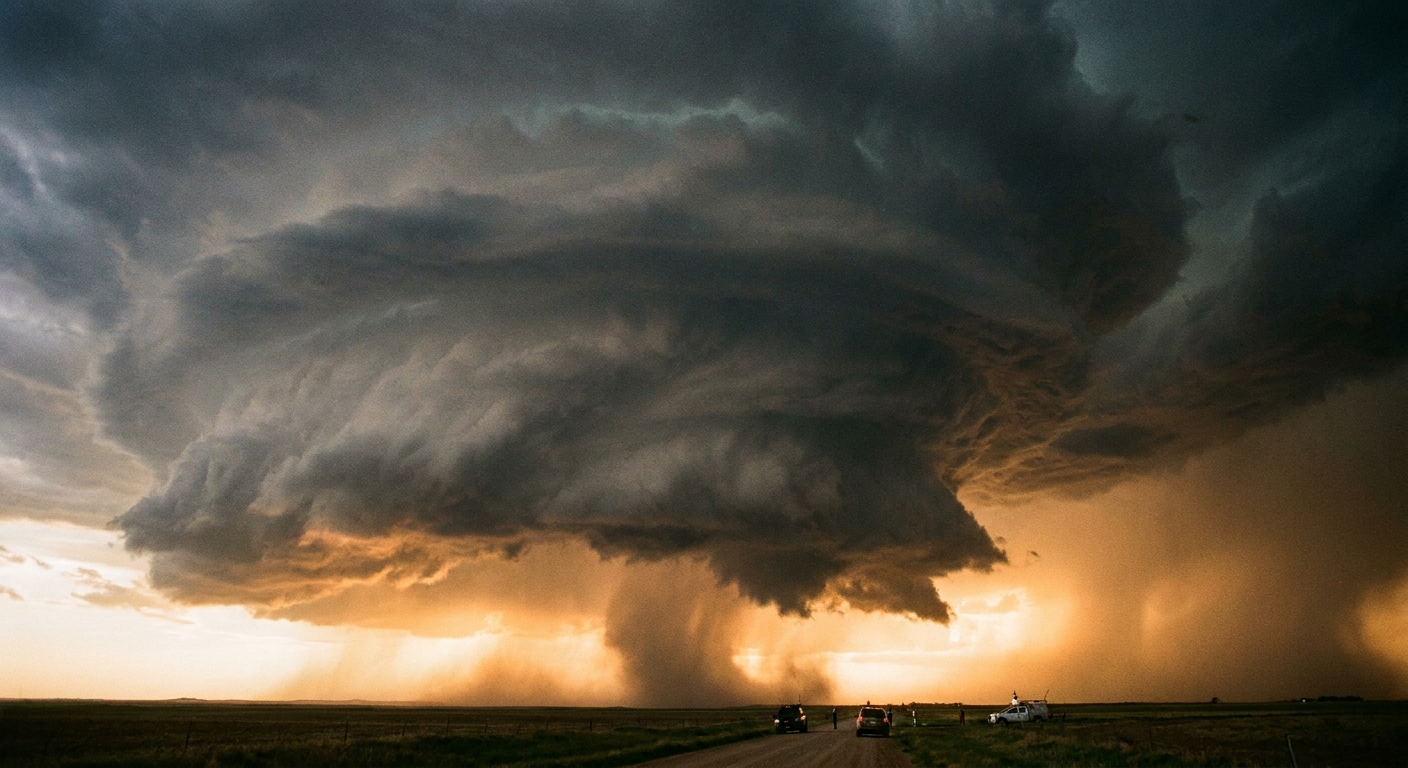
Most destructive tornadoes form from severe thunderstorms, especially supercells. Their rotation is tied to storm-scale processes and strong vertical wind shear through a deep layer of the atmosphere. The tornado is connected to a larger rotating updraft called a mesocyclone.
What drives a fire whirl
A fire whirl is driven primarily by fire-induced buoyancy, meaning the rapid rise of hot air from combustion. Wind shear near the surface can help seed or strengthen rotation, but the fire’s heat is central. In a subset of extreme wildfire situations, deep plume dynamics and pyroconvection can strengthen and organize the circulation, but it is still a fire-driven system rather than a thunderstorm one.
Why the distinction matters
- Forecasting: Meteorologists look for different signals. Thunderstorm tornado potential involves storm ingredients like instability and wind shear aloft. Fire whirl potential is more tied to fire intensity, plume behavior, terrain, and near-surface wind patterns.
- Safety guidance: Tornado advice often involves sheltering in place. Wildfire advice emphasizes evacuation, defensible space, and avoiding smoke and heat exposure.
Fire whirls vs. haboobs
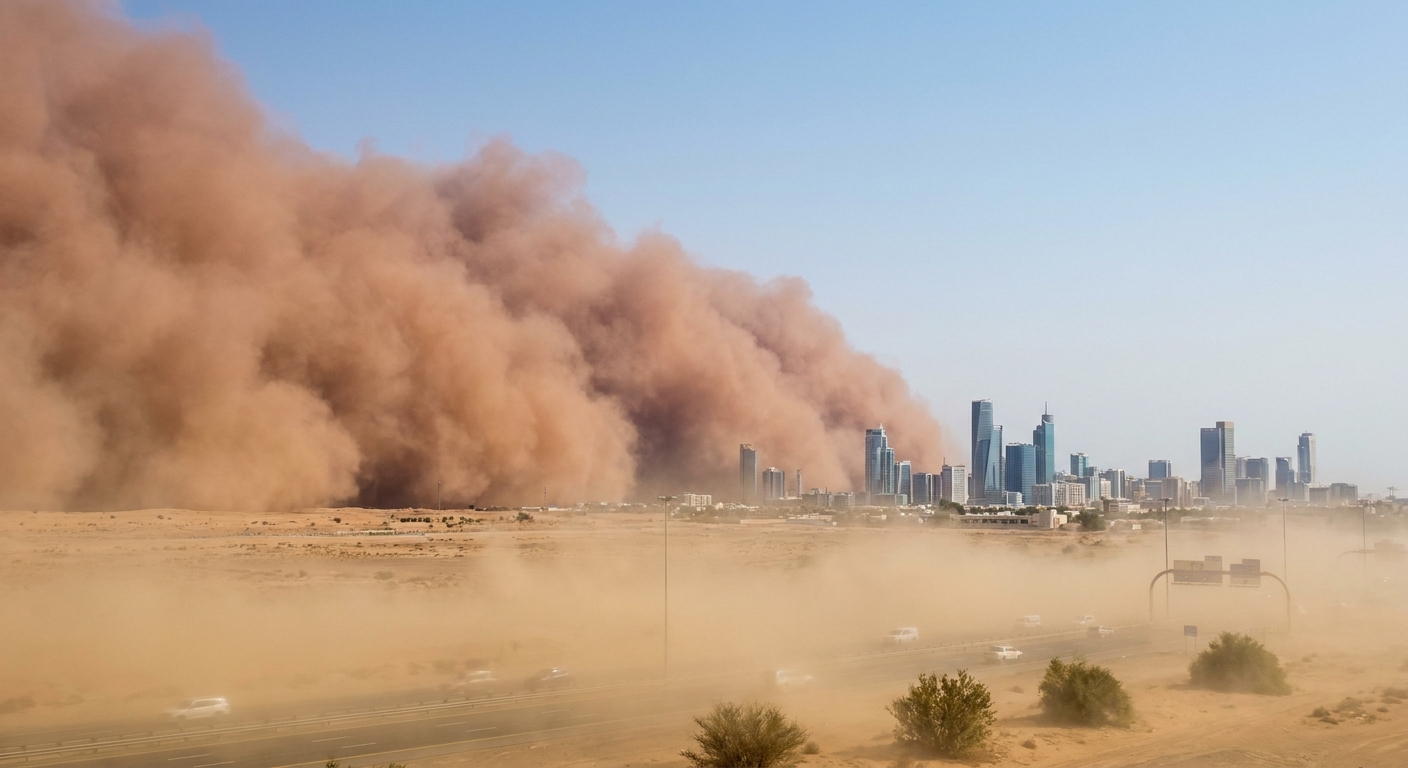
A haboob is a large, advancing wall of dust, typically created when thunderstorm outflow winds surge across dry ground and loft dust into the air. It can be towering and dramatic, but it is not a vortex of flame and it is not powered by fire.
In short:
- Fire whirl: a rotating column linked to intense heat from a fire, often containing smoke, embers, and sometimes flames.
- Haboob: a broad dust front driven by strong outflow winds, often from thunderstorms, usually not rotating as a tight column.
Notable cases
Fire whirls have been documented for decades, but a few modern incidents helped the public recognize just how intense fire-generated vortices can become.
Carr Fire (California, 2018)
The Carr Fire near Redding produced an extreme fire-generated vortex that was widely recorded and later analyzed by scientists and weather agencies, including the National Weather Service. Investigators described severe, localized damage and intense winds consistent with a powerful circulation embedded in the wildfire environment. It is often referred to informally as a “fire tornado” in news coverage, but the safer, more precise framing is that it was an intense, fire-driven vortex rather than a classic supercell tornado.
Canberra bushfires (Australia, 2003)
During the 2003 bushfires, firefighters and researchers documented fire whirls and other intense plume-driven behavior. Australia’s fire science community has contributed extensively to understanding how fire, terrain, and wind interact to produce dangerous vortices.
Can fire whirls be predicted?
Predicting the exact time and location of a fire whirl is difficult because it depends on fine-scale details like local wind shifts, slopes, fuel patterns, and the evolving shape of the fire perimeter. Still, firefighters and meteorologists watch for conditions that increase the odds:
- Very intense burning that produces a strong, vertical plume
- Changing or gusty winds, especially where terrain can twist and channel flow
- Steep, complex topography that encourages eddies and convergence
- Plume-dominated fire behavior, when the fire’s convection strongly influences local winds
Another way to say it: risk climbs when heat release is high and the landscape and wind field help focus inflow into the fire. Modern fire weather forecasting, incident meteorology, and high-resolution fire behavior modeling aim to anticipate periods when fire behavior may become more extreme, including the potential for vortices and rapid spread.
What to do if you see one
If you are close enough to see a fire whirl clearly, you are close enough to be at risk.
- Do not approach for a better view. Fire whirls can shift direction quickly.
- Move away from the fire area and toward safety. Follow evacuation orders immediately.
- Avoid canyons, draws, and chimneys of terrain where winds and heat can funnel.
- If driving, prioritize getting out of the area safely rather than stopping to film. Smoke can drop visibility in seconds.
For firefighters and trained personnel, protocols for lookouts, communications, escape routes, and safety zones are designed for exactly this kind of sudden escalation.
Quick questions
Is a fire whirl always made of flame?
No. Some are mostly smoke, ash, and dust with little visible flame, especially if the rotation is occurring near hot ground or within a smoky plume. Others have a clearly flaming core.
How long do they last?
Many last seconds to a few minutes. Larger, more organized vortices can persist longer if the fire continues feeding a strong updraft and the surrounding winds support rotation.
Are they becoming more common?
Fire whirls have always occurred, but as fires grow larger and more intense under hot, dry, windy conditions, the environments that support extreme fire behavior can occur more often in some regions. The best-supported statement is cautious: intense fires can create more opportunities for intense fire-driven phenomena.
Can a fire whirl start a new fire?
Yes. By lofting embers and burning debris, a whirl can increase spotting, igniting new fires ahead of the main front.
The takeaway
A fire whirl is a rotating, fire-driven vortex born from a simple exchange: hot air rises, cooler air rushes in, and under the right wind and terrain conditions that inflow begins to spin. Many are short-lived. A small number become dangerously strong, amplifying heat, wind, and ember transport in exactly the wrong place and time.
When wildfire footage shows a twisting column rising from the flames, it is worth treating it as more than spectacle. It is a sign the fire is energetic enough to reshape the air around it, and that is when wildfire behavior can turn especially unpredictable.