At-home medical tests have always promised something wonderfully modern: answers without the waiting room. For years, the tradeoff was that you often got convenience at the cost of confidence. A faint line. A confusing app message. A result that made you wonder if you did something wrong, or if the test itself was just… flimsy.
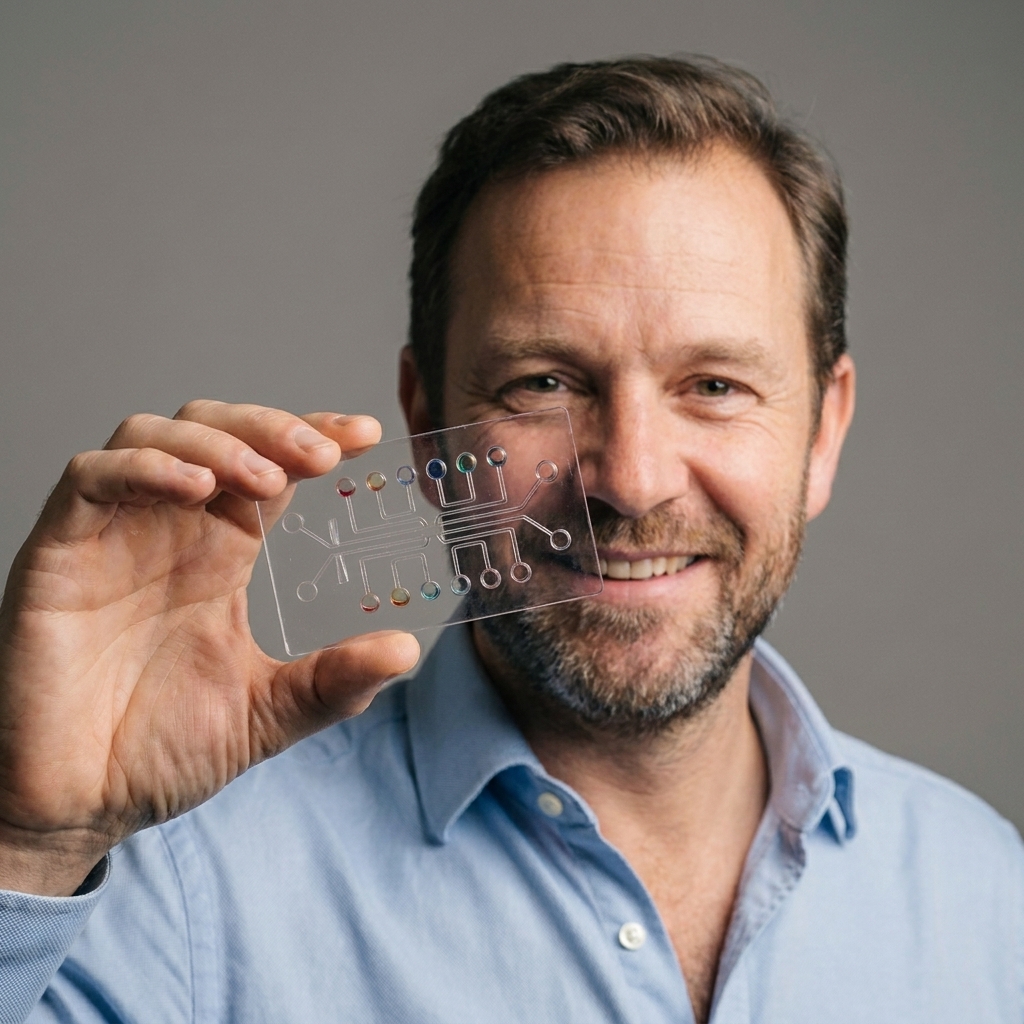
Now a different kind of hardware is quietly raising the bar: lab-on-a-chip technology. These devices use microfluidics, the engineering of manipulating microliter-to-nanoliter volumes (tiny volumes) through microscale channels, to perform many of the same types of steps a clinical lab would do, but inside a disposable cartridge about the size of a credit card or a thick USB stick.
As a former physics teacher, I love this shift because it is not magic. It is engineering. It is the difference between trying to cook a soufflé in a windy backyard versus inside a temperature-controlled oven. When you control the environment, you get more reliable outcomes.
One important caveat up front: lab-on-a-chip can improve reliability and performance, but accuracy is ultimately device- and assay-specific. Some chip systems mainly improve usability and consistency, while others genuinely push sensitivity or reduce false positives. The details depend on what is being measured, and how well the product is validated.

What “lab-on-a-chip” means
A traditional diagnostic lab does a handful of repeatable things:
- Measure a sample (blood, saliva, urine, or a nasal swab extract)
- Move it through preparation steps (filtering, mixing with reagents, concentrating the target, breaking open cells or viruses, etc.)
- Run a reaction (an immunoassay, an enzymatic test, a nucleic-acid amplification step like PCR, and so on)
- Read a signal (color, fluorescence, electrical change)
- Check controls to ensure the test ran correctly
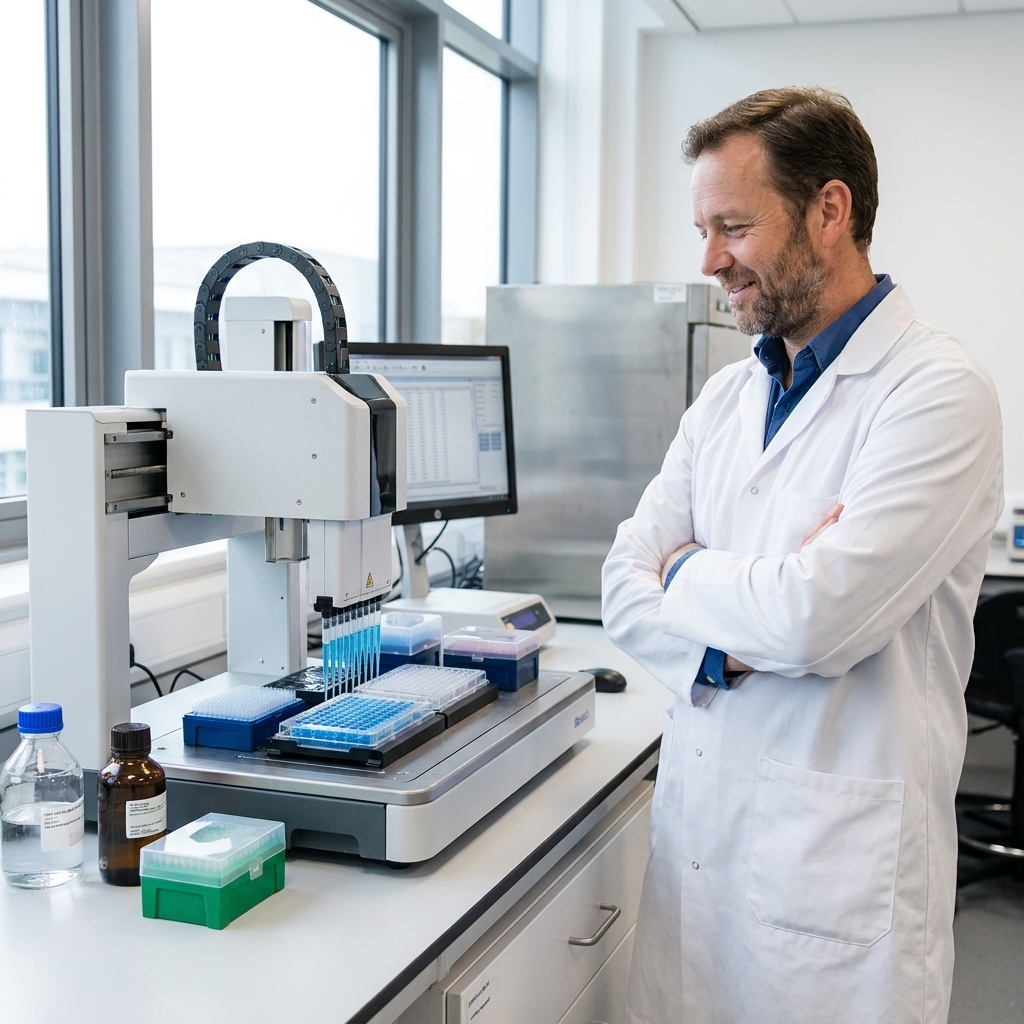
A lab-on-a-chip device compresses a subset of those steps into a micro-engineered pathway. Instead of a technician pipetting microliters into tubes, the cartridge itself becomes the technician. Channels, valves, membranes, and reaction chambers guide the sample like a miniature theme-park ride, except the passengers are molecules.
That said, “lab-on-a-chip” does not automatically mean “everything a hospital lab would do.” High-complexity labs may add rigorous extraction, calibration curves, replicate testing, and formal quality programs. A chip can bring lab-like behavior into the home, even if it cannot reproduce the full lab universe.
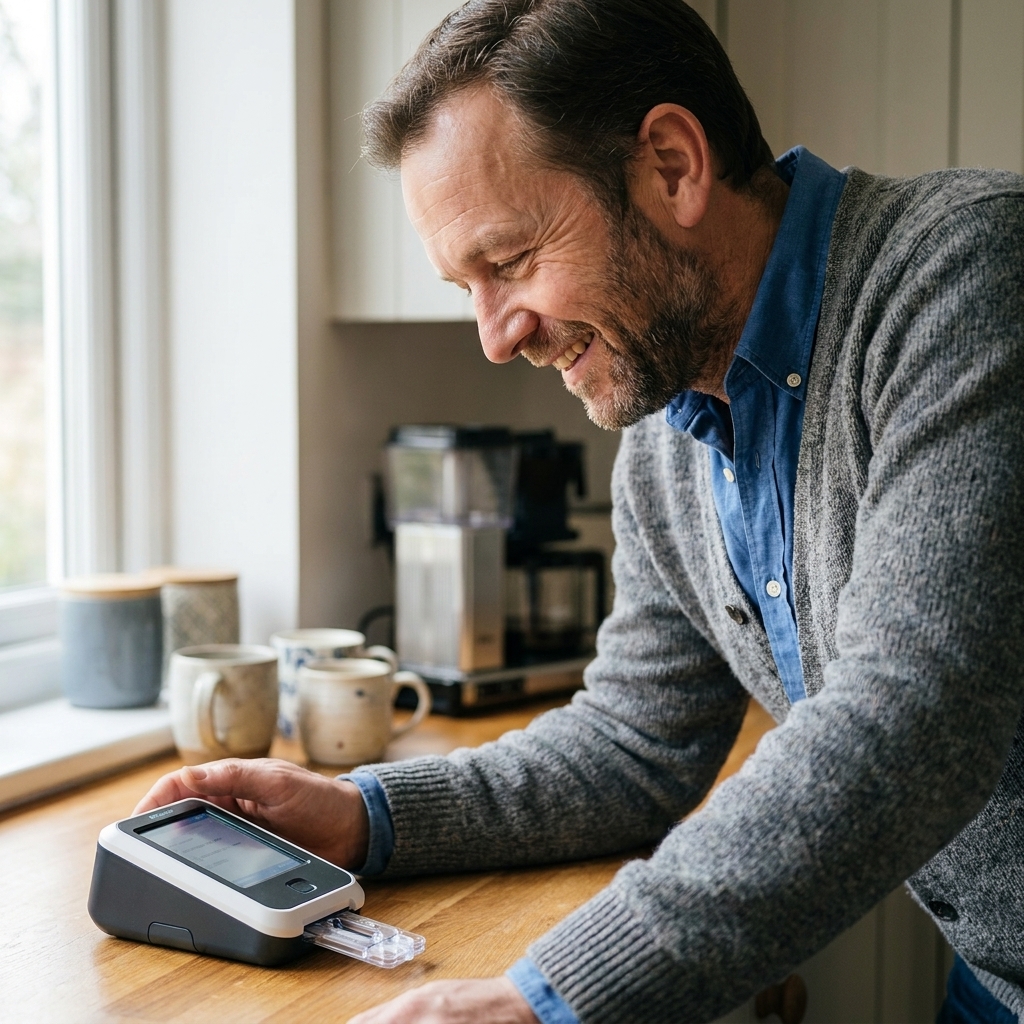
Some consumer devices use the chip as part of a small reader, while others are fully self-contained. Either way, the chip is what brings automated fluid handling and more standardized chemistry into an at-home format.
Microfluidics and accuracy
To understand why lab-on-a-chip can improve accuracy, it helps to zoom in. When liquids move through human-hair-scale channels (often tens to hundreds of micrometers), their behavior changes in useful ways.
1) Predictable flow, fewer surprises
In many microfluidic systems, flow tends to be laminar, meaning layers of liquid slide past each other smoothly instead of churning turbulently. That predictability helps with timing and repeatability.
One nuance (and a fun physics-teacher footnote): laminar flow does not automatically make mixing “easy.” In very small channels, mixing can be diffusion-limited unless the chip includes engineered mixers (serpentine paths, obstacles, droplet merging, or clever geometry) or simply allows more time. The good news is that microfluidic designers can make mixing consistent by design, not by wishful thinking.
2) Tiny volumes, tighter control
Clinical labs work with small volumes too, but at-home tests historically had to tolerate messy realities: inconsistent swabbing, uneven drops, user timing, and temperature swings. Microfluidics helps by:
- Metering sample volume using channel geometry or capillary action
- Standardizing how reagents dissolve and combine
- Reducing contamination risk because everything is enclosed
If you have ever baked with a kitchen scale instead of eyeballing flour, you get the idea. Measurement is half the battle.
3) Chemistry and surfaces: a tool, not a guarantee
Microfluidic chips can be coated or structured to encourage specific interactions. For immunoassays, for example, surfaces can be designed to bind particular proteins more efficiently, which may increase sensitivity or speed up capture steps.
But surfaces are also a place where reality likes to sneak in. Poor coatings can increase nonspecific binding, inhibit reactions, or raise background noise. In other words, microfluidics gives you more knobs to turn, but it still demands good design and manufacturing discipline.
How chips can improve home tests
Accuracy is not a single number. It is a bundle of practical questions: Did the test detect what it claims to detect? Does it miss cases? Does it produce false alarms? Does it behave the same way on a Tuesday night as it did in validation studies?
It also helps to separate a few terms people blur together:
- Sensitivity: how often the test catches true positives
- Specificity: how often it avoids false positives
- Precision: how consistent results are run to run
- Accuracy: the everyday “gets the right answer” idea, though regulators and studies often report performance as sensitivity, specificity, and agreement with a reference method
Lab-on-a-chip can help by attacking common failure points.
Built-in sample prep
Many classic rapid tests are “mix and read” formats. That simplicity is great, but it can struggle when the target is scarce, the sample is messy, or interfering substances are present.
Chips can include steps like:
- Filtration to remove debris
- Cell lysis to release nucleic acids or proteins
- Concentration using membranes or capture zones
- Wash steps that reduce background noise
In a clinical lab, these steps are a big reason results are stable. Putting some of them on-chip can narrow the gap between home and lab, depending on the assay and implementation.
More consistent timing and temperature
Some assays are extremely sensitive to timing and temperature. Nucleic-acid amplification is the obvious example: PCR relies on temperature cycling, while isothermal methods rely on holding a tight temperature range.
In a lab-on-a-chip system paired with a small reader, the device can manage temperature and timing automatically. That removes a very human source of error: starting a timer late, reading too early, or letting a test sit on a cold windowsill.
Improved signal detection
When you read a faint line with your eyes, your brain becomes part of the instrument. Chips often move signal detection toward optics or electronics:
- Optical readers can measure subtle color or fluorescence changes more reliably than humans
- Electrochemical sensors can detect binding events as electrical signals
- Multiple sensing zones can provide redundancy and internal comparisons
The result is often better consistency, and fewer “is that line real?” moments. Whether it is also more sensitive or more specific depends on the chemistry and validation.
Stronger internal controls
A well-designed chip can run controls in parallel . That might include a positive control to confirm chemistry worked, a negative control to check for contamination, or process controls that confirm the sample actually moved through the device.
Controls do not just improve accuracy. They improve trust, because the device can tell you when a result is invalid instead of forcing you to guess.
Typical workflow
Different brands use different architectures, but many follow a similar rhythm. Think of it as a tiny automated assembly line.
- Sample entry: A swab, drop of blood, or saliva enters a sealed port.
- Metering: The chip admits a precise volume into the microchannels.
- Mixing: Reagents stored dry or in blister packs are released and combined.
- Reaction: The mixture enters a chamber where binding or amplification happens.
- Detection: The chip or reader measures an optical or electrical signal.
- Verification: Control lanes or chambers confirm the run is valid.
This closed-loop handling is a big deal. It reduces exposure to the environment, reduces user handling, and makes the device behave more like a standardized instrument.
Where you see it
Lab-on-a-chip is not limited to one kind of test. It is a platform idea, like GPS or the touchscreen, that shows up in different products.
Infectious disease
Some at-home and near-patient devices use microfluidics to automate amplification-based detection or improve sample handling. For example, there are consumer-facing molecular COVID-19 tests that pair single-use cartridges with a small reader, and clinic-focused cartridge analyzers used at the point of care (think GeneXpert-style systems). Mentioning these is not an endorsement, just a way to anchor the concept in something you may have seen.
Metabolic and chronic monitoring
Microfluidic cartridges can support more complex panels, especially where consistent sample handling and calibration help. (A note on glucose: modern glucose strips often use capillary fill and electrochemical sensing, which is related in spirit, but not always “lab-on-a-chip” in the strict microchannel-and-valves sense.)
Reproductive and hormone testing
Hormone levels can be subtle. Microfluidics can help by standardizing sample volume and enabling more quantitative readout compared with purely visual strips, depending on the design.
Wellness and emerging diagnostics
As sensors get smaller and manufacturing scales up, expect more home tests to move from “binary strip” to “mini lab with a reader”. Not all of them will be clinically meaningful, but the underlying engineering is powerful.
What to look for
Not all “high-tech” tests are equally validated. If you are shopping for a lab-on-a-chip device, here are practical questions that usually signal a more trustworthy product.
Clear performance metrics
Look for published or plainly stated sensitivity and specificity (or positive and negative agreement compared to a reference method). Bonus points if the company explains performance across different stages of illness or different biomarker ranges.
Strong controls and good errors
A good system should be willing to say, “This run is invalid, try again.” That is better than giving you a confident wrong answer.
Collection that matches real life
If the test requires hero-level precision, it might not be a great at-home experience. Chips help, but they cannot erase bad sampling. Favor devices that use intuitive collection and have safeguards against underfilling or improper insertion.
Regulatory status and intended use
Depending on your country, you may see different regulatory pathways. In the United States, for example, some tests are FDA cleared or authorized for specific uses, while others are marketed for general wellness with different evidentiary expectations. The important thing is to understand what the test claims to do, and what it does not.
If a test result could change a medical decision, it should be backed by clinical validation and used in a way consistent with its intended use. When in doubt, confirm with a clinician-grade test.
Limitations
I am optimistic about lab-on-a-chip, but optimism pairs nicely with realism.
Sampling still matters
A beautifully engineered chip cannot fix a poor swab or a contaminated collection cup. A meaningful share of errors begin at the collection step, especially when technique, timing, or cleanliness is inconsistent. Think nasal swabs that do not collect enough material, or urine samples contaminated by poor collection hygiene.
Biology is messy
Two people can have the same infection and different detectable levels at different times. Biomarkers fluctuate with hydration, diet, sleep, and medication. The device can be accurate and still produce a surprising result because your body is dynamic.
Chip-specific failure modes exist
Tiny channels come with their own tiny headaches: bubbles that block flow, clogging from particulates, reagent stability over shelf life, and manufacturing variability that shows up as run-to-run differences if quality control is weak. Good products design around these problems, but they are part of the engineering reality.
More complexity can mean more cost
Cartridges with valves, membranes, and multiple reagents can be more expensive than simple strips. Over time, manufacturing scale can help, but today you might pay more for that built-in automation.
The big picture
The story of lab-on-a-chip is the story of shrinking a room full of equipment into something you can hold in one hand. Microfluidics brings discipline to the chaotic parts of at-home testing: measured volumes, controlled timing, sealed environments, and reader-based readouts.
In other words, it is not just making tests smaller. It is making them more consistent. And in diagnostics, consistency is where accuracy starts to feel like something you can actually rely on.
FAQ
Is lab-on-a-chip the same as a rapid antigen test?
Not necessarily. Some rapid tests use lateral flow strips, which are simple and fast, but not always microfluidic in the lab-on-a-chip sense. Lab-on-a-chip usually implies engineered microchannels and automated fluid handling, often paired with a reader.
Does lab-on-a-chip mean PCR at home?
Sometimes, but not always. Some chip-based systems perform nucleic-acid amplification (PCR-like or isothermal methods). Others are immunoassays or electrochemical tests. “Chip” describes the miniaturized platform, not a single chemistry.
Why do chips help compared to a simple strip?
Because they can standardize the messy steps: how much sample enters, how reagents mix, how long reactions run, and how the signal is measured. They also make it easier to include internal controls. Whether that translates into higher sensitivity or specificity depends on the specific product.
Should I trust an at-home result over how I feel?
Treat symptoms and results as pieces of the same puzzle. If a result conflicts with strong symptoms or high exposure risk, follow the test guidance for repeat testing or confirmatory testing, and consider medical advice.