
I love a good sensor story. Tiny lights, clever algorithms, and a slab of glass on your wrist that tries to decode your body in real time. As a former physics teacher, I cannot help but admire the audacity.
But here is the catch: a smartwatch is usually a fitness tracker first, and a medical monitor only in very narrow, regulated situations. That does not mean it is useless. It just means we should treat most wearable numbers like a weather forecast, not a courtroom transcript: great for patterns, sometimes shaky in the moment.
Let’s break down what the science says about accuracy for heart rate, blood oxygen, and sleep stages, and how to use your data without being misled by it.
Fitness tracker vs. medical monitor
In medicine, a monitor is expected to be reliable across a wide range of bodies and conditions, with known error bounds, and with performance validated in clinical studies. It is also typically used in a context where the stakes are high: dosing medications, detecting emergencies, guiding diagnosis.
Consumer wearables live in a different ecosystem:
- Different goal: motivate behavior, show trends, encourage activity, and flag possible issues.
- Different oversight: some features are regulated or cleared in some countries and others are strictly “wellness” estimates. The same watch can include both, depending on the feature and region.
- Different testing: companies do internal testing, and some publish validation studies, but the level of independent scrutiny varies widely by feature and model.
- Different environment: your wrist is a chaotic measurement site: motion, sweat, skin tone differences, tattoos, ambient light leaks, strap fit, and temperature changes.
The practical takeaway: for most people, wearables are best at answering “How is this changing over time?” not “What is the exact medical value right now?”
Heart rate
How your watch measures it
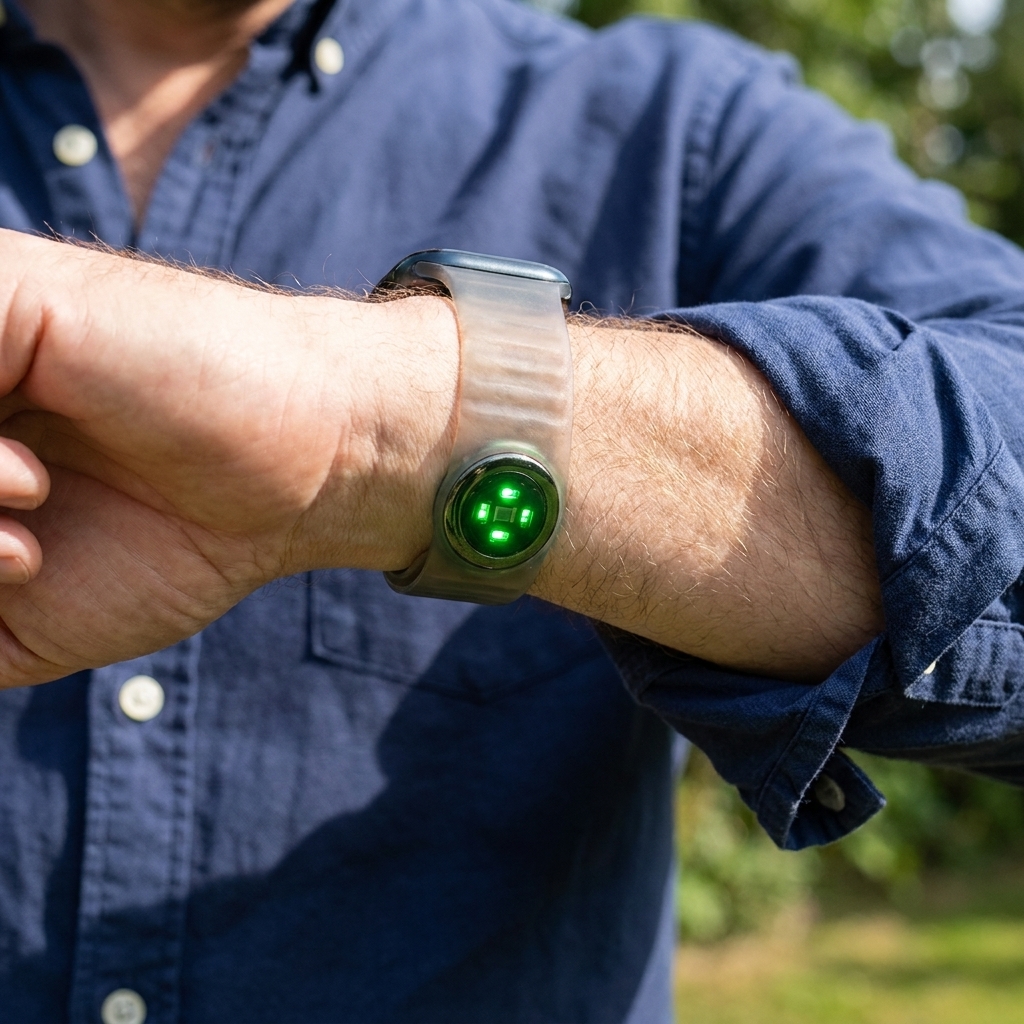
Most smartwatches measure heart rate using photoplethysmography (PPG). Green LEDs shine into your skin and a sensor reads tiny changes in reflected light as blood volume pulses through capillaries. Your heart is not being measured directly. Your watch is measuring a light signal that is correlated with your heartbeat and then cleaning it up with algorithms.
What accuracy typically looks like
In controlled conditions, many modern wearables can track heart rate reasonably well, especially at rest or during steady, rhythmic exercise like jogging on a treadmill. Accuracy often degrades when:
- Motion is messy: interval training, weightlifting, rowing, basketball, cycling on rough pavement.
- Contact is inconsistent: loose straps, the watch sliding, sweat acting like a lubricant.
- Blood flow changes: cold weather, Raynaud’s, or simply low peripheral perfusion.
- Optics get complicated: tattoos (especially dense, dark ink under the sensor) and some skin and tissue differences can reduce signal quality. This is device- and person-dependent, so treat it as a “can” not a “will.”
If you care about minute-to-minute heart rate during exercise, a chest strap is still the consumer gold standard. It uses electrical sensing (ECG-based R-R intervals) for heart rate, which is generally more robust to wrist motion than optical PPG. It is excellent for training precision, but it is not a substitute for a diagnostic multi-lead ECG in a clinical setting.
Rule of thumb: use wrist heart rate for trends and zones, but use a chest strap when precision matters, especially for intervals or data-driven training plans.
When heart rate should make you pause
Wearables can sometimes catch patterns worth discussing with a clinician, like persistently high resting heart rate, unusual spikes, or irregular rhythm notifications on devices that have that feature. But a single weird reading is not a diagnosis. If your watch says your heart rate is 180 while you are sitting still and you feel fine, you likely just met the monster under the bed called motion artifact.
On the other hand, if you have symptoms (chest pain, shortness of breath, fainting, new palpitations), do not outsource the decision to your wrist. Seek medical care.
A quick note on watch ECG features
Some watches include an on-demand, single-lead ECG recording. This can be genuinely useful if you capture a strip during symptoms and share it with a clinician. Still, it is user-initiated (not continuous), it can miss intermittent issues, and a “normal” reading does not rule out a problem. Think of it as a better note in your notebook, not a final verdict.
Blood oxygen (SpO2)
What SpO2 is and how watches estimate it
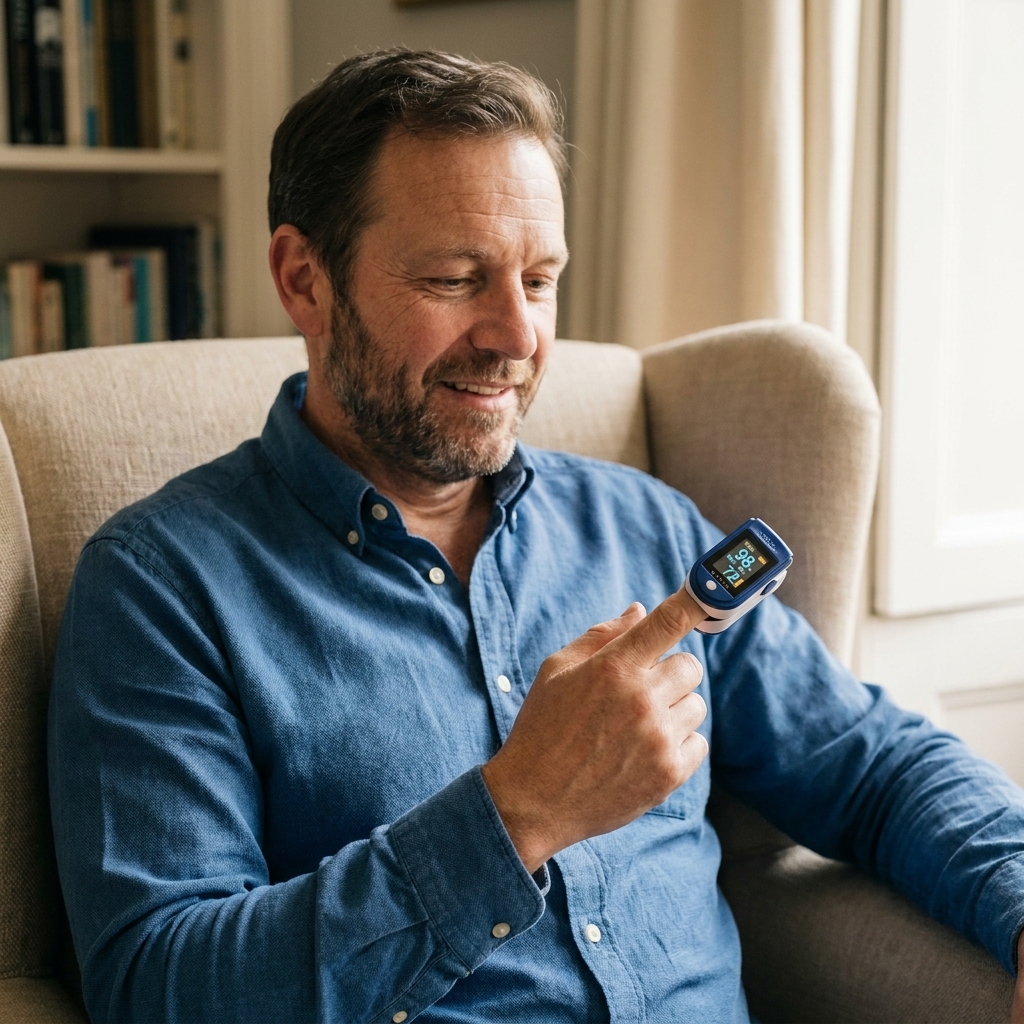
SpO2 is the percentage of hemoglobin in your blood that is carrying oxygen. Medical pulse oximeters often clip to a fingertip or earlobe and use red and infrared light through tissue where placement is consistent and the signal can be strong.
Watches attempt something similar on the wrist, but the wrist is a tougher neighborhood: thicker tissue, more motion, more variable perfusion, and less consistent positioning.
Why wrist SpO2 can be jumpy
- Poor fit: even small gaps can let ambient light in and distort the signal.
- Cold environment: less peripheral blood flow means weaker signals.
- Movement: tiny shifts can overwhelm the subtle optical differences between oxygenated and deoxygenated blood.
- Skin and tissue differences: optical path length and scattering vary from person to person, and algorithms may not perform equally well across all populations.
In practice, many wearables can provide a rough estimate under ideal conditions, particularly when you are still, warm, and the watch is snug. But they are not a replacement for a medical pulse oximeter, especially if you are using the number for clinical decisions.
And to be fair, fingertip oximeters are not magical truth machines either. They can also struggle with motion, poor perfusion, nail polish or acrylic nails, and certain hemoglobin abnormalities. The difference is that many medical devices are clinically validated with clearer performance expectations, and the measurement site is often more forgiving than the wrist.
Important: A “normal” SpO2 reading on a watch should not be used as reassurance if you feel unwell. If you are short of breath, dizzy, or turning blue around the lips, treat it as a medical situation, not a gadget situation.
Where wearable SpO2 can help
SpO2 trends can be useful for:
- Altitude trips: seeing how your body adapts overnight.
- Sleep context: noticing repeated overnight dips that might warrant a conversation about sleep-disordered breathing.
- Illness recovery: observing broad trends when paired with symptoms, temperature, and rest.
Just keep the boundary clear: consumer wearables are generally not validated to diagnose conditions like sleep apnea. Overnight dips can also be artifact from fit, movement, or cold skin. If you are concerned, confirm with medical-grade testing and clinician guidance.
Sleep stages
What your watch measures at night
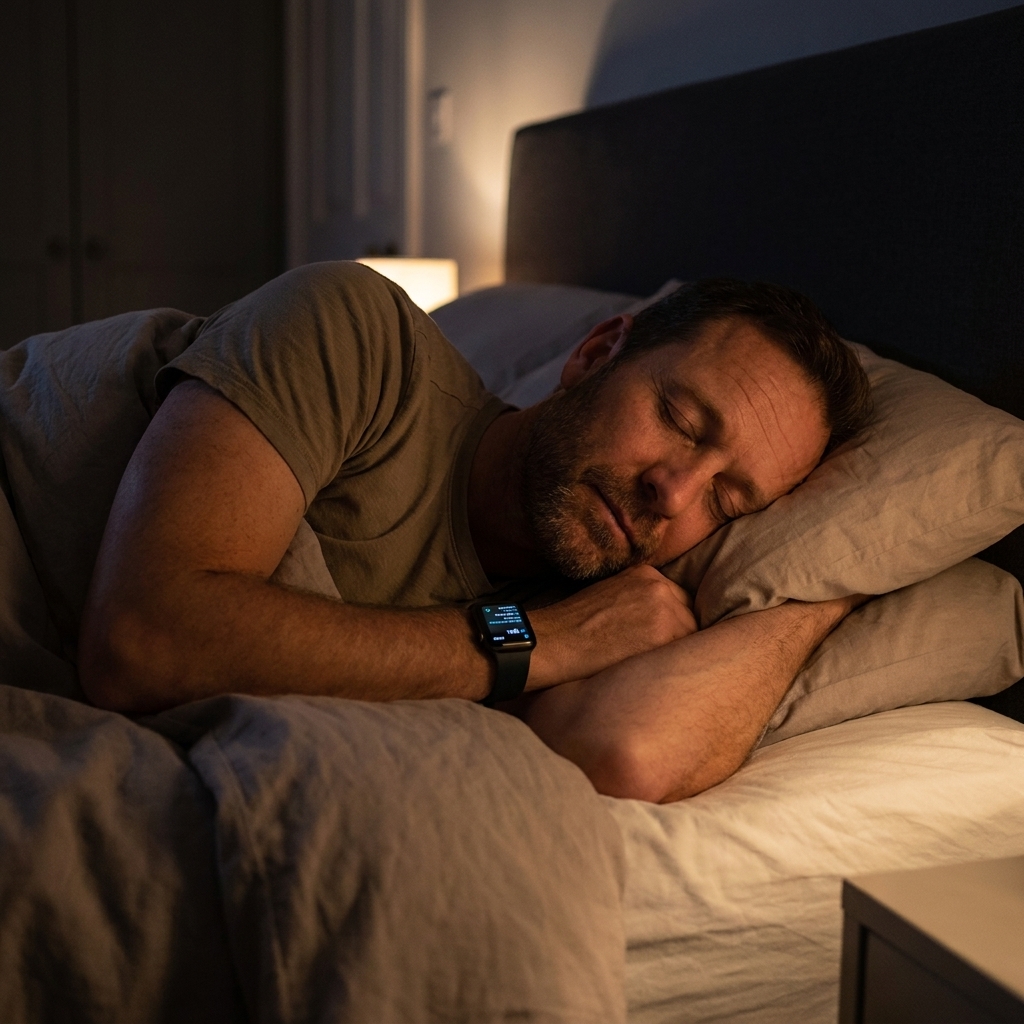
Most wearables infer sleep from a mix of:
- Movement: accelerometers detect tossing, turning, and stillness.
- Heart rate and variability: patterns shift across sleep and wake states.
- Sometimes skin temperature or respiration estimates: depending on the device.
In a sleep lab, the gold standard is polysomnography, which uses brain waves (EEG), eye movements, muscle tone, airflow, oxygen, and more. Your watch is trying to guess what your brain is doing without measuring your brain. That is like trying to tell which song is playing by watching the dance floor through a keyhole.
What wearables do well
Many devices are reasonably good at:
- Bedtime and wake time estimates (especially if your sleep is fairly regular).
- Total sleep time as a ballpark number.
- Detecting awakenings that involve movement.
Where they struggle
Sleep stage classification (light, deep, REM) is where confidence should drop. Wearables can misclassify stages because the signals overlap, and because stage changes are ultimately defined by EEG patterns. You might see “deep sleep” rise or fall based on algorithm updates, strap tightness, or a restless dog jumping on the bed.
Use sleep stages as storytelling, not as a clinical report. The most actionable sleep metrics are often the simplest:
- Consistency: a regular schedule beats perfect stage charts.
- Duration: are you giving yourself enough time to sleep?
- Interruptions: alcohol, late caffeine, stress, noise, and screens are frequent culprits.
Why readings drift
If you ever taught a lab class, you know the difference between a neat textbook problem and a teenager trying to measure acceleration with a meterstick and enthusiasm. Wearables live in the real world too, and their error sources are predictable:
- Signal-to-noise: PPG signals are small, motion signals are huge. Algorithms try to subtract the noise, but subtraction is never perfect.
- Model limits: many devices rely on population-trained models. If the training data does not represent your physiology well, accuracy can suffer.
- Placement: small shifts can change pressure, light leakage, and perfusion. (Good news: you can control this one.)
- Context: cold, dehydration, stress, caffeine, and medication can shift circulation and heart rate dynamics.
- Algorithm updates: your device can change behavior after a firmware update. Same body, different math.
How to get better readings
Heart rate
- Wear the watch snug and a finger-width above the wrist bone.
- For workouts with lots of wrist flexion (lifting, kettlebells), consider a chest strap or an upper-arm optical band.
- Warm up in cold weather to improve peripheral blood flow.
SpO2
- Measure while still, seated, and warm.
- Keep the sensor area clean and the strap secure.
- Repeat measurements rather than trusting a single number.
Sleep
- Focus on bedtime consistency and total sleep time.
- Use trends over weeks, not a single dramatic night.
- If you suspect sleep apnea (loud snoring, choking awakenings, daytime sleepiness), pursue medical evaluation regardless of your sleep stage graphs.
Who should be extra cautious
A few groups tend to run into more false alarms or noisier data:
- People with arrhythmias or frequent ectopic beats: both optical heart rate and algorithmic “irregular rhythm” flags can get confused, and reassurance can be misleading.
- People with poor circulation: Raynaud’s, very cold environments, or low perfusion can degrade both heart rate and SpO2.
- High-movement athletes: interval-heavy sports and strength training are prime territory for motion artifacts.
- People with tattoos at the sensor site: especially dense, dark ink directly under the sensor can reduce optical signal quality.
- Anyone prone to health anxiety or compulsive checking: noisy data plus constant monitoring is a recipe for stress, not insight.
When wearables help
Wearables shine as early warning systems and habit mirrors. They can:
- Spot trends in resting heart rate or fitness over time.
- Nudge behavior (more movement, better sleep routines).
- Capture rare events if your device includes ECG capability and you record during symptoms.
- Provide context to bring to a clinician, especially when paired with notes about symptoms and timing.
Think of your wearable as a notebook that logs your physiology. It is not the doctor. It is not the lab. But it can bring better questions to your next appointment.
When not to rely on it
- Emergencies: chest pain, severe shortness of breath, fainting, one-sided weakness, confusion. Do not troubleshoot with a watch.
- Medication decisions: do not adjust beta blockers, oxygen therapy, or sleep meds based on wearable numbers alone.
- Reassurance seeking: repeatedly checking can fuel anxiety and still provide noisy data.
If you need clinical accuracy at home, ask about devices designed for it: a validated blood pressure cuff, a fingertip pulse oximeter, or clinician-directed ambulatory monitors.
Quick FAQ
Are smartwatches accurate enough for heart rate zones?
Often, yes for steady cardio, and less reliably for intervals or strength training. If zones drive training decisions, a chest strap is a smart upgrade.
Can my watch detect atrial fibrillation?
Some models can flag irregular rhythms and some include on-demand ECG recordings. These features can be useful, but false positives and false negatives happen, and performance varies by device and update. Treat it as a prompt to follow up, not as a final verdict.
Why does my SpO2 drop at night on my watch?
Sometimes it reflects normal variation or sensor noise. Repeated overnight dips can also be seen with sleep-disordered breathing, but wearables are not validated to diagnose sleep apnea. If the pattern is consistent and you have symptoms like loud snoring or daytime sleepiness, discuss it with a clinician.
Is sleep stage tracking real?
It is an inference, not a direct measurement. The most reliable outputs are usually sleep duration and timing. Stages can be interesting, but they are not a substitute for a sleep study.
The bottom line
Your smartwatch is a remarkably capable trend detector living in a very imperfect measurement location: your wrist. Heart rate is generally the most dependable metric, SpO2 is more fragile, and sleep stages are best treated as educated guesses.
If you use wearables the way we use good science, by looking for patterns, understanding uncertainty, and checking claims against better instruments when stakes are high, they can be empowering. If you treat them as medical truth, they can be confusing at best and dangerously misleading at worst.
And if you ever find yourself obsessively refreshing your stats at 2 a.m., take it from a former teacher: sometimes the best experiment is simply going to sleep.