The first time I watched snow fall as a kid, I assumed the sky was basically a giant freezer shaking out tiny ice chips. Years later, after teaching physics long enough to see a thousand student "wait, really?" faces, I can tell you the truth is weirder and more beautiful.
A snowflake is not a frozen raindrop. Most of the time, it starts as water vapor, the invisible gas form of water, and it grows into a crystal in air that is below freezing. (Snow can also get modified on the way, especially when supercooled droplets freeze onto it.) The secret ingredients are a few microscopic "starter seeds" and a growth trick clouds use when liquid water and ice share the same space.
Step 1: Start with a cold cloud
Many snow-producing clouds are what meteorologists call mixed-phase clouds. That means they contain both:
- Supercooled liquid droplets (liquid water existing below 0 C or 32 F)
- Ice crystals
Supercooled droplets sound like a mistake the universe should correct immediately, but they can persist because forming ice requires building an organized crystal lattice. That orderly structure usually needs a little help to get started.
And mixed-phase is common, but not mandatory. In very cold clouds that are mostly ice, crystals can still grow directly from vapor by deposition.
Step 2: Ice nuclei start the first crystals
In many clouds, the first ice forms when water molecules lock onto a tiny particle called an ice nucleus. Think of an ice nucleus as a microscopic scaffolding that makes it easier for water molecules to line up into an ice crystal.
Ice nuclei can be bits of mineral dust, clay, soot, or biological particles like pollen. They are not all equally effective. Some mineral dusts are especially good at encouraging ice at relatively warm subfreezing temperatures, while others need colder conditions before ice will reliably begin. Soot can sometimes play a role, but its effectiveness depends a lot on how the particles are coated and aged in the atmosphere.
Step 3: The Bergeron process grows ice fast
Once you have at least a few ice crystals mixed in with supercooled droplets, a powerful growth mechanism can kick in: the Bergeron process, also called the Wegener Bergeron Findeisen process.
Here is the key idea in plain language. At the same subfreezing temperature, the atmosphere "prefers" to keep water molecules in the air over liquid water more than over ice. In technical terms, the saturation vapor pressure over ice is lower than over liquid water.
So in a mixed-phase cloud:
- Water vapor tends to deposit directly onto ice crystals.
- Supercooled droplets tend to evaporate a bit to replace that vapor.
- The ice crystals grow at the expense of the liquid droplets.
That is why snow crystals can balloon from microscopic to visible sizes surprisingly quickly. They are basically winning a molecular tug-of-war.
Why snowflakes have six sides
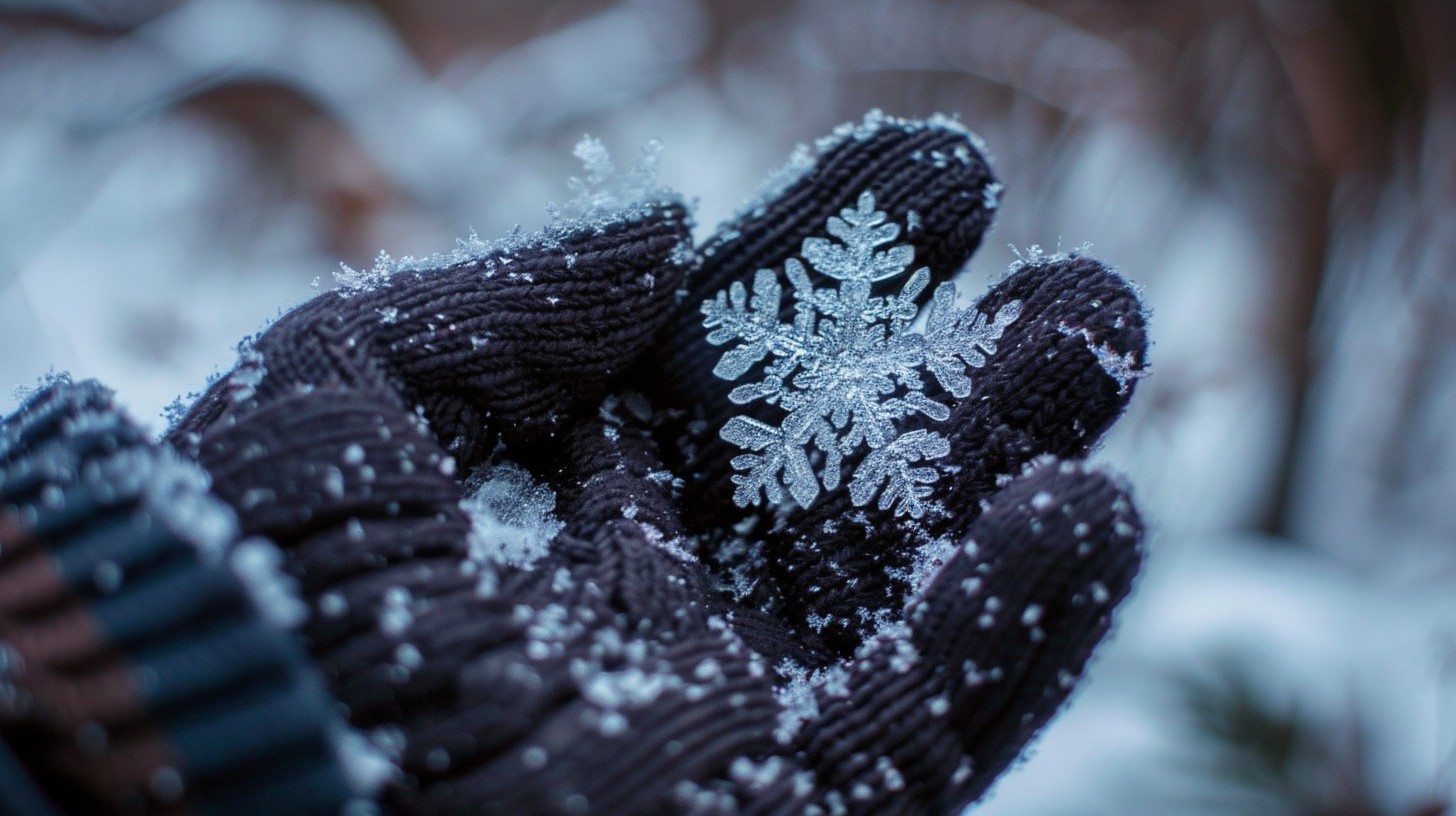
Snow crystals are made of ordinary water, but the way water molecules bond in ice creates a hexagonal crystal structure. That hexagonal symmetry is why snowflakes often show six arms or six-fold patterns.
Important caveat: not every falling snow crystal looks like a perfect star. Many are simple prisms, plates, needles, or clumps. The hexagon is the underlying geometry, but the final shape depends on the crystal's growth conditions.
What controls snowflake shape
If you have ever heard that "no two snowflakes are alike," the reason is not magic. It is physics plus chaos. A snow crystal grows while it is being jostled through slightly different pockets of temperature and moisture inside a cloud.
Two variables matter most:
- Temperature of the air the crystal is passing through
- Supersaturation with respect to ice, basically how much extra water vapor is available for deposition
Plates, needles, and dendrites
At some temperatures, crystals tend to grow faster along their flat faces, producing plates. At others, they grow faster along their length, producing columns or needles. When there is plenty of vapor available, growth can become unstable and branchy, producing the classic feathery dendrites people think of as snowflakes.
A helpful mental picture: crystal growth is like building a tiny city out of water molecules. When resources are plentiful and growth is rapid, the edges can sprout suburbs and side streets, which become those delicate branches. When resources are scarce, growth stays compact and simple.
Why snow feels fluffy or heavy
What you feel under your boots depends on crystal type, temperature, wind, and what happens as flakes fall and pile up.
- Fluffy powder is more likely when crystals stay dry and airy, often in colder air and in situations where wind does not pack them down.
- Wet, sticky snow is common when temperatures are near freezing. Crystals can pick up a thin liquid coating, which makes them glue together.
- Dense snow can result when crystals collide and aggregate into larger clumps, when wind packs them, or when crystals get coated and compacted.
Two processes are worth highlighting:
- Aggregation: Many big flakes are not one crystal. They are a handful of crystals that collided and stuck together like airborne Velcro.
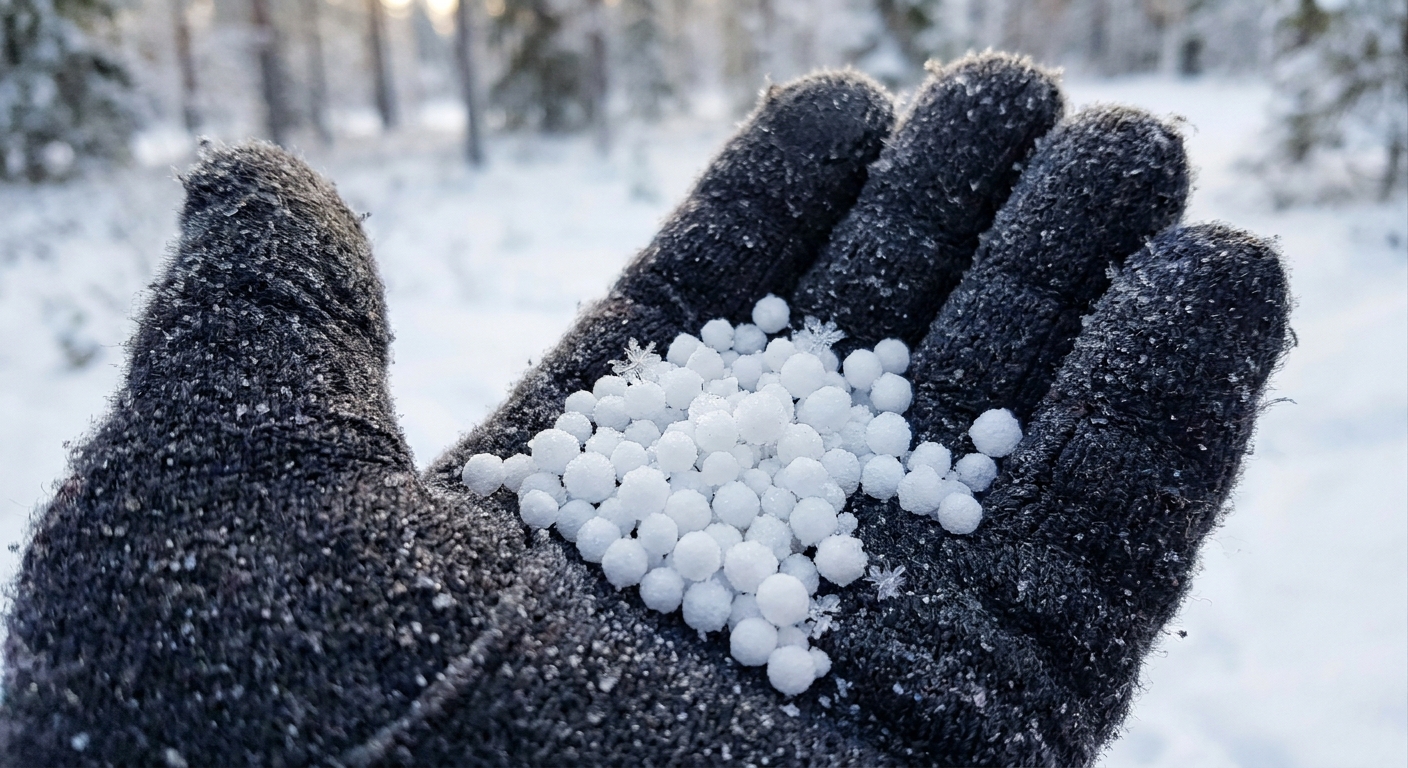
- Riming: Supercooled droplets can freeze onto a falling crystal, building a crust that makes it heavier and less delicate. If riming goes far enough, you can end up with graupel.
How snow reaches the ground
Growing a snow crystal is only half the battle. To reach your driveway as snow, it must fall through a column of air that stays cold enough.
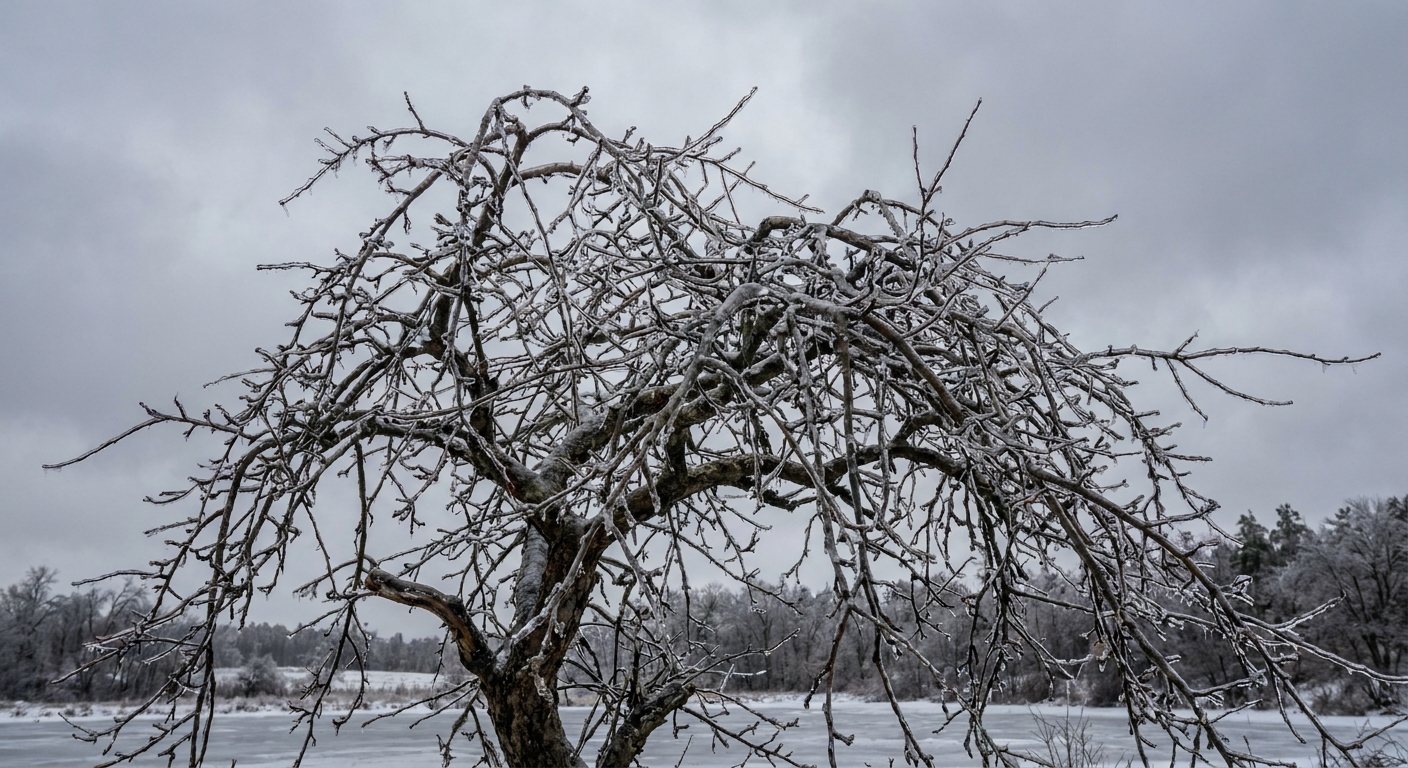
If there is a warm layer aloft, a snowflake can melt into raindrop form. If it then falls back into a shallow freezing layer near the ground, it can refreeze into sleet, which is very different from snow in both sound and slipperiness. If droplets freeze onto objects after hitting them, that is freezing rain, another entirely different hazard.
Quick contrasts
Snow has close cousins that look similar at a glance but form differently.
- Graupel forms when a snow crystal gets coated by supercooled droplets that freeze on contact, creating a soft, pellet-like ball. It is snow that got armored.
- Sleet (North American usage) is usually melted snow that refreezes into hard ice pellets before reaching the ground. In the UK and Ireland, "sleet" often means a messy mix of rain and snow.
- Hail forms in strong thunderstorm updrafts, where ice cycles up and down through layers of supercooled water, building onion-like layers. That deep convective engine is not typical of ordinary snow clouds.
Lake-effect snow
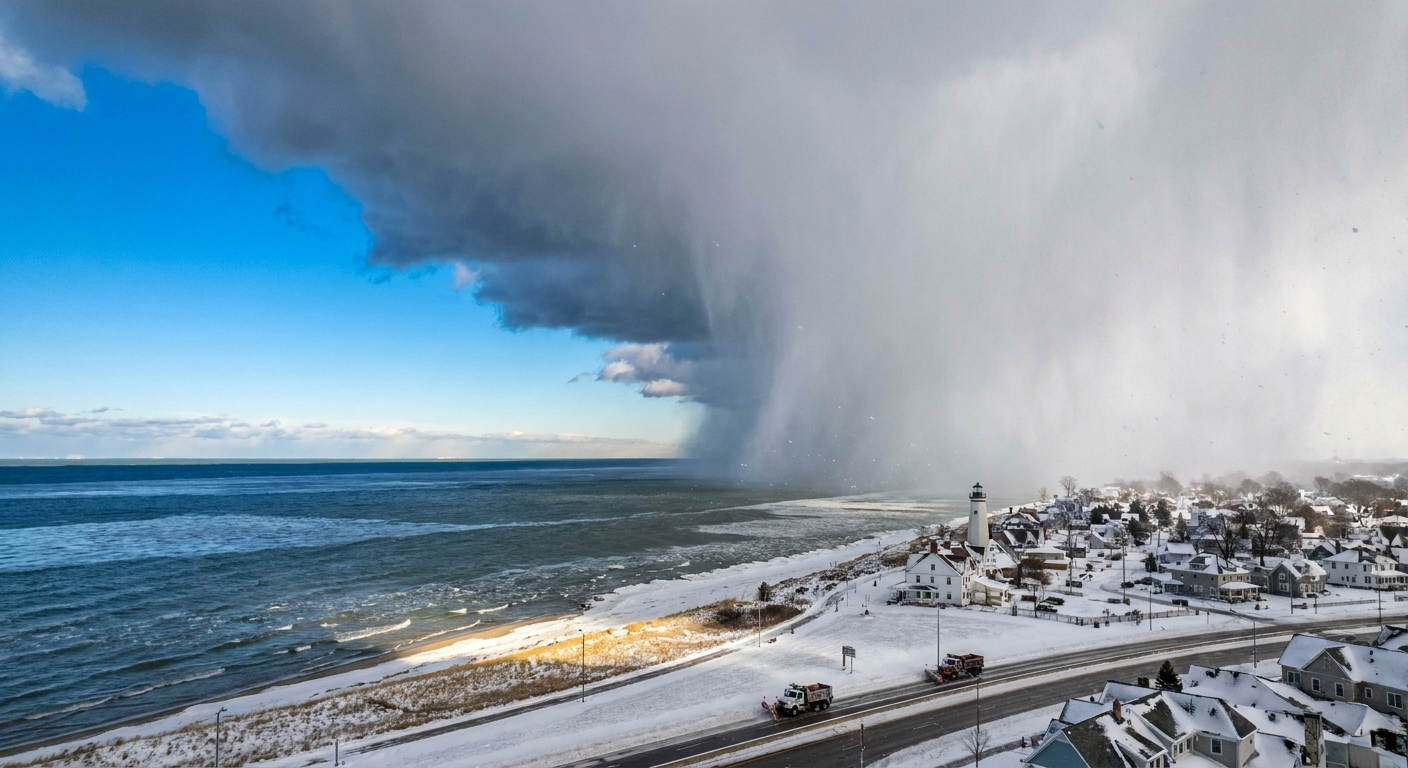
Lake-effect snow is not a different kind of crystal recipe. It is a different setup. Cold air blowing over relatively warm lake water picks up heat and moisture, then rises and cools into narrow, intense snow bands downwind. The flakes forming inside those bands still rely on the same basics: ice nuclei, vapor deposition, and growth shaped by temperature and humidity.
Snow formation summary
If you want the whole story as a quick chain of events:
- Moist air rises and cools below freezing.
- Some droplets remain supercooled while a few particles act as ice nuclei.
- Ice begins to form on those nuclei.
- The Bergeron process feeds vapor to the ice, growing crystals efficiently.
- Crystals change shape as they pass through different temperature and humidity layers.
- Crystals may collide and clump into larger flakes, and may get rimed by supercooled droplets.
- If the air below stays cold enough, they reach the ground as snow.
FAQ
Can snow form when the ground is above freezing?
Yes. Snow forms in the cloud. If the layer of air near the ground is only slightly above freezing and not too deep, flakes can survive the trip down. They may melt on contact, which is why you can see snow falling while roads stay wet.
Does snow always need dust or particles to form?
In the real atmosphere, almost always. Pure, particle-free freezing is possible in the lab, but clouds are full of aerosols. Those tiny particles dramatically raise the odds that ice crystals can get started.
Is it true that no two snowflakes are alike?
Two flakes can look very similar, especially if they grew in nearly identical conditions. But the path through a cloud is turbulent and constantly changing, so perfectly identical growth histories are extremely unlikely.
Why do some storms produce big, fluffy flakes?
Big flakes are often aggregates, clusters of multiple crystals stuck together. That tends to happen when crystals are plentiful, the air is fairly moist, and temperatures sit near a range where crystals stick easily without instantly collapsing into wet slush.