Curiosity, with all its quills showing.
A hygrometer looks simple on the outside: a number, a percent sign, maybe a comfort zone bar. Inside, it’s doing something surprisingly physical. It is either letting a hygroscopic material change shape, watching an electrical property shift, comparing wet and dry cooling, or directly measuring the temperature where water vapor becomes liquid. Four paths to the same destination: humidity.
Let’s take them one by one, then talk about accuracy, calibration, placement, and a quick at-home check you can do with salt.
First, what “humidity” is a hygrometer reporting
Most consumer hygrometers display relative humidity (RH), the percentage that tells you how full the air is compared to the maximum it could hold at that temperature. Warm air can hold more water vapor than cool air, so RH is always tied to temperature.
Some instruments, especially chilled-mirror units and many weather-station sensors, can also provide dew point or can be used to compute it. Dew point is a temperature. If you cooled the air down to that temperature, the air would reach saturation (100% RH) and water would begin to condense.
That matters because two rooms can both read 50% RH, yet feel different if their temperatures differ. The instrument is not being fickle. The physics is.
Hair hygrometers: humidity makes fibers change length
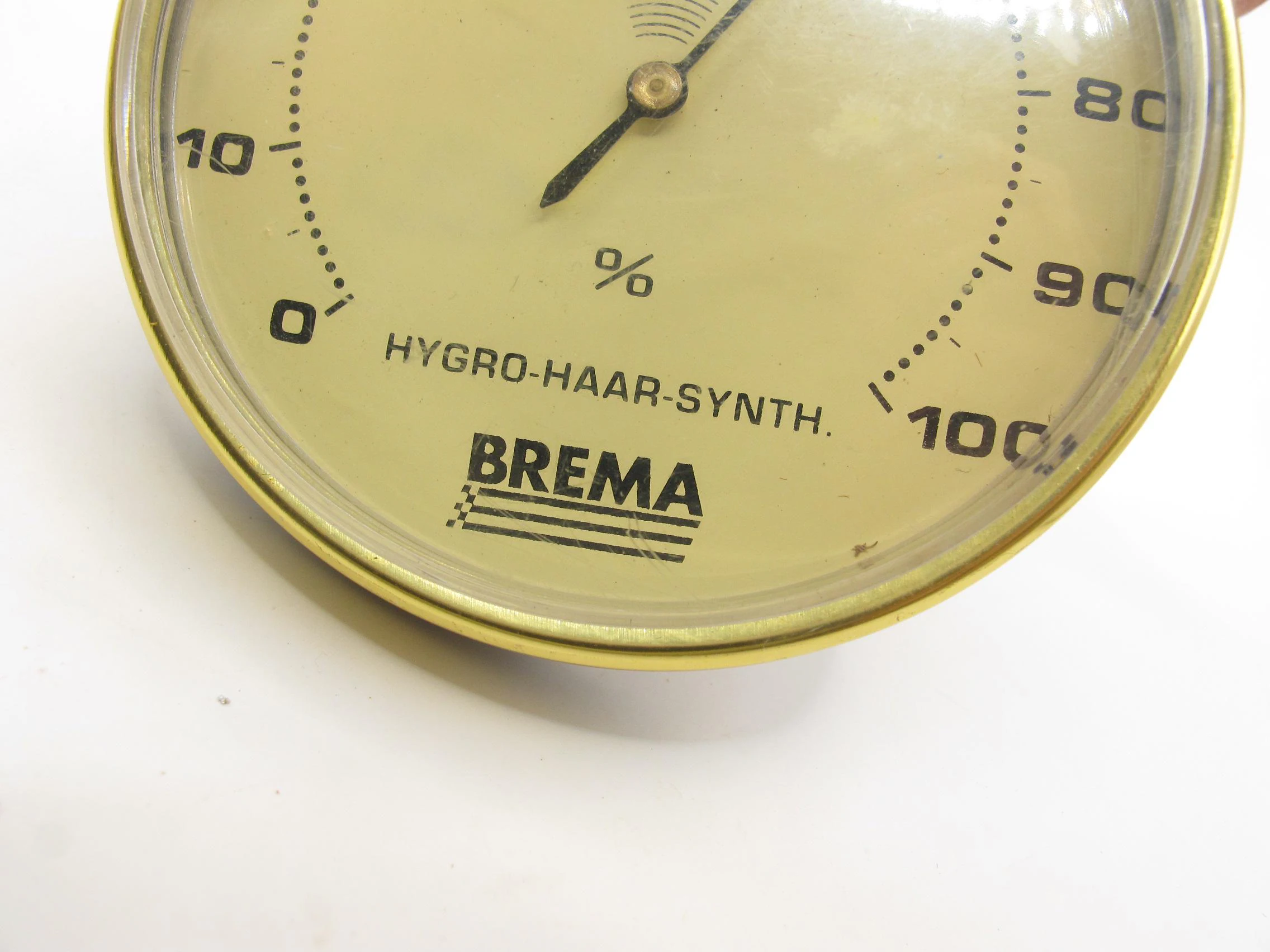
The classic analog dial hygrometer often uses a bundle of hair, historically human or animal hair that has been cleaned and de-greased. Hair is hygroscopic, meaning it absorbs and releases water from the air. As it takes up moisture, its length changes slightly. Some modern mechanical hygrometers use synthetic hygroscopic materials instead of hair, but the idea is the same: humidity changes the material, and the mechanism turns that change into a needle movement.
Inside the instrument, that tiny change is amplified with a lever and spring system that moves a pointer across a dial.
What they do well
- Intuitive and low-tech: no batteries, and the mechanism is easy to grasp.
- Stable in a narrow range: decent for “is the room around 40% to 60%?” style checks.
Common limitations
- Calibration drift: the hair can age, get contaminated by oils or dust, or lose responsiveness over time.
- Nonlinearity: performance often worsens near very low or very high humidity.
- Temperature effects: the mechanics can be influenced by temperature changes and hysteresis, meaning the reading can depend on whether humidity is rising or falling.
Capacitive hygrometers: a sensor that changes its electrical behavior
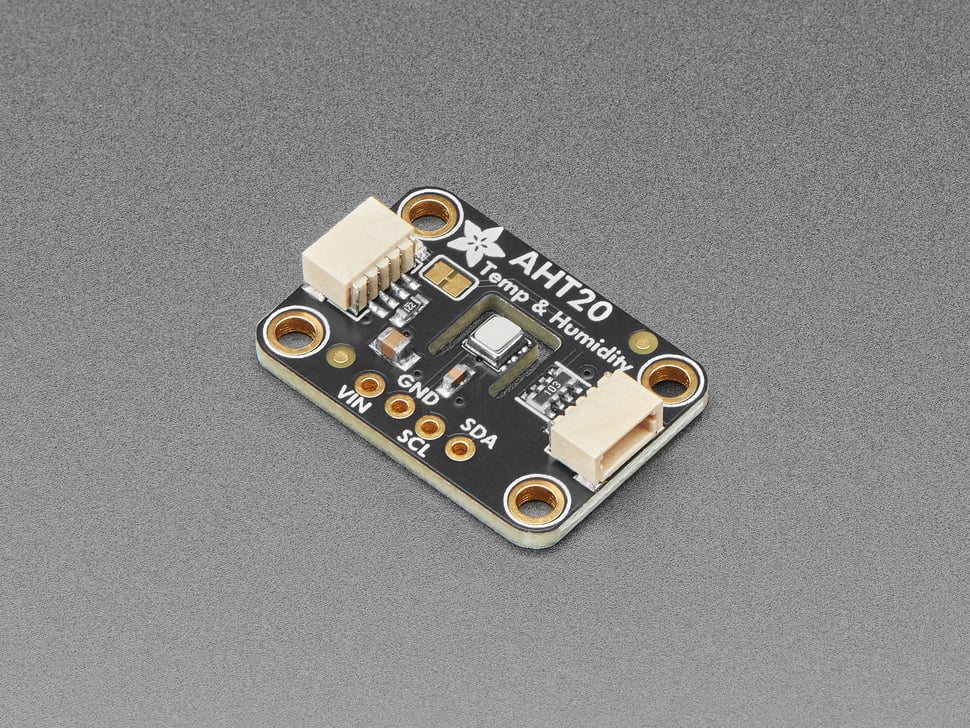
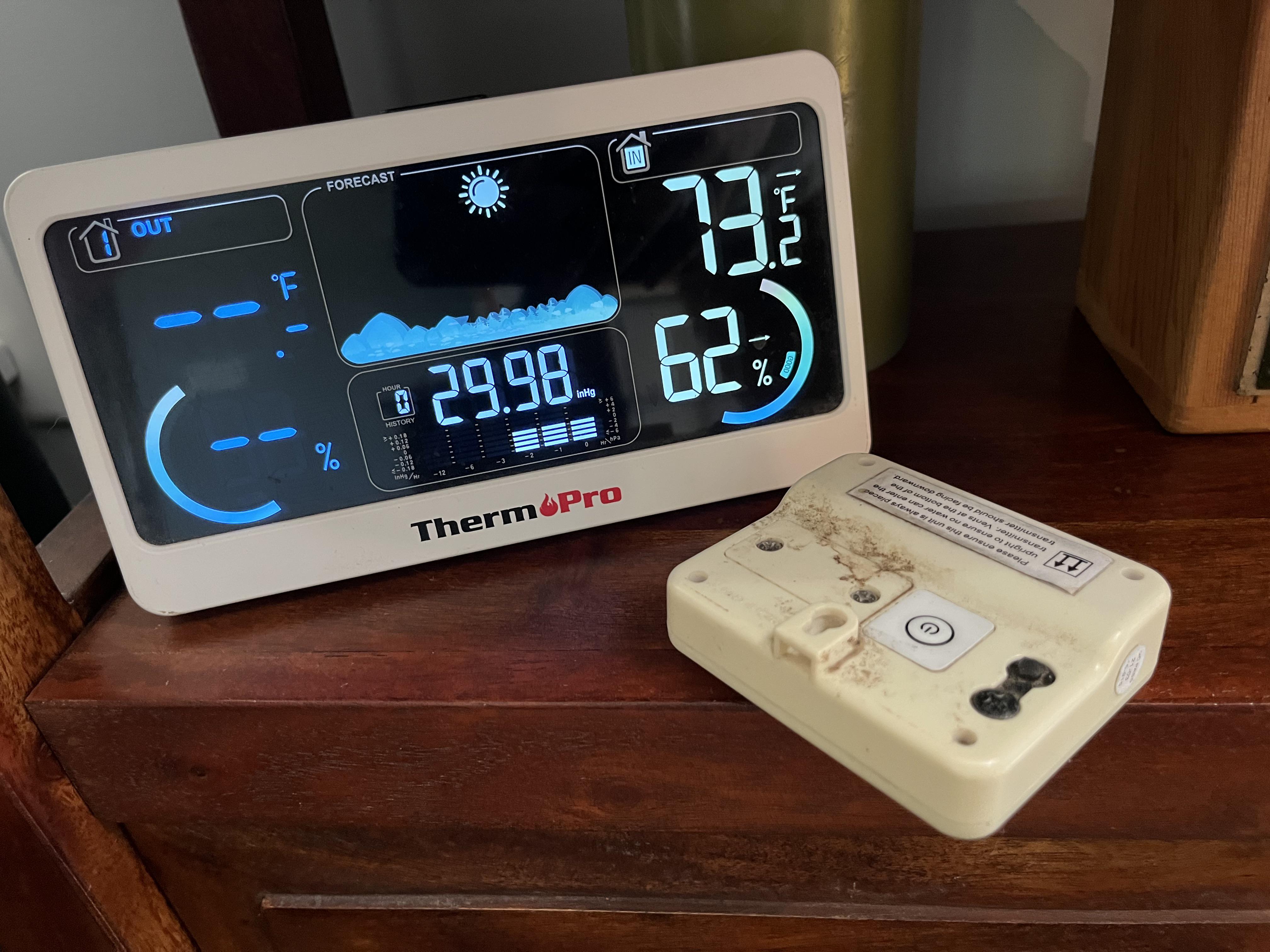
Most small digital hygrometers today are capacitive. They use a humidity-sensitive material, usually a thin polymer film, sandwiched between conductive layers. That structure behaves like a capacitor.
When water molecules diffuse into the sensing layer, the material’s dielectric properties change. The sensor’s capacitance changes in a predictable way. Electronics measure that change, apply a calibration curve, and output relative humidity. Many chips also include a temperature sensor so the device can compensate for temperature effects and report RH more correctly.
You will also see resistive humidity sensors in the world, where humidity changes electrical resistance rather than capacitance. They exist in everything from industrial probes to budget devices, but in the typical modern room hygrometer, capacitive polymer sensors are the main act.
What they do well
- Fast response: they typically react quickly to changes, especially with good airflow.
- Compact and low power: ideal for wall units, data loggers, and thermostats.
- Good general accuracy: many consumer units are specified around ±2% to ±5% RH, often best in the middle of the range.
Common limitations
- Contamination sensitivity: dust, oils, cleaning sprays, and volatile chemicals can bias readings.
- Condensation risk: if the sensor gets wet, it can temporarily read high or behave erratically until it dries.
- Long-term drift: polymer sensors can drift slowly over months and years, especially in harsh environments.
Chilled-mirror hygrometers: measuring dew point directly
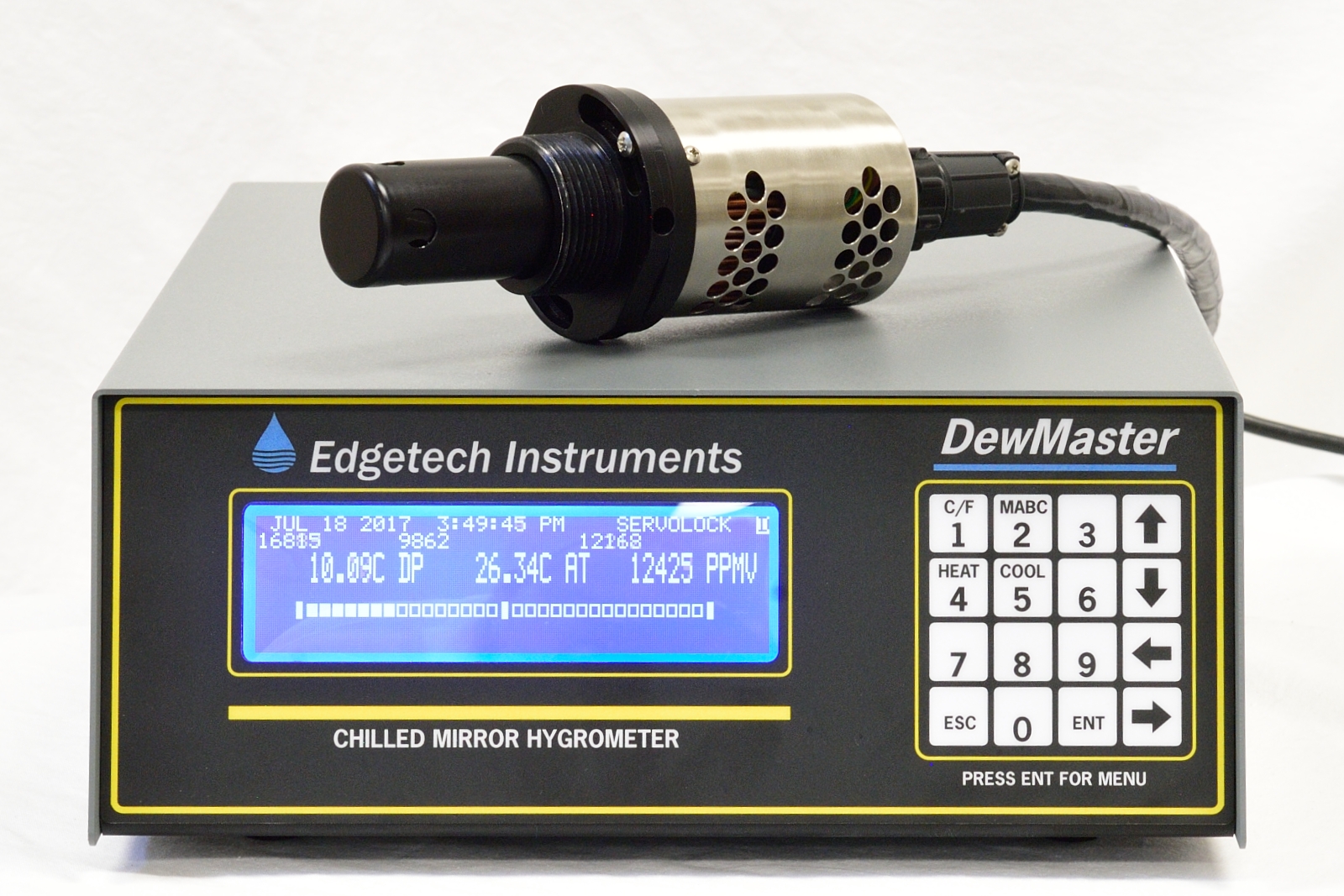
If you want to watch humidity measurement turn into a little physics demonstration, chilled-mirror hygrometers are the ones. They measure dew point directly.
The instrument cools a tiny mirror until water just begins to condense on its surface. An optical system detects that first appearance of dew. The mirror temperature at that moment is the dew point. From dew point plus ambient temperature, the device can calculate relative humidity.
This method is often treated as a reference standard because it is tied to an observable phase change: vapor to liquid. In labs and calibration settings, chilled-mirror instruments are used to check other humidity sensors.
What they do well
- High accuracy and traceability: when maintained and properly calibrated.
- Dew point output: extremely useful in compressed air, HVAC diagnostics, meteorology, and materials processing.
Common limitations
- Cost and complexity: more expensive than typical room hygrometers.
- Maintenance: the mirror must stay clean; contamination changes how condensation forms and is detected.
- Not always happy in dirty air: particulates and aerosols can foul the sensing surface.
Psychrometers: humidity from wet-bulb cooling
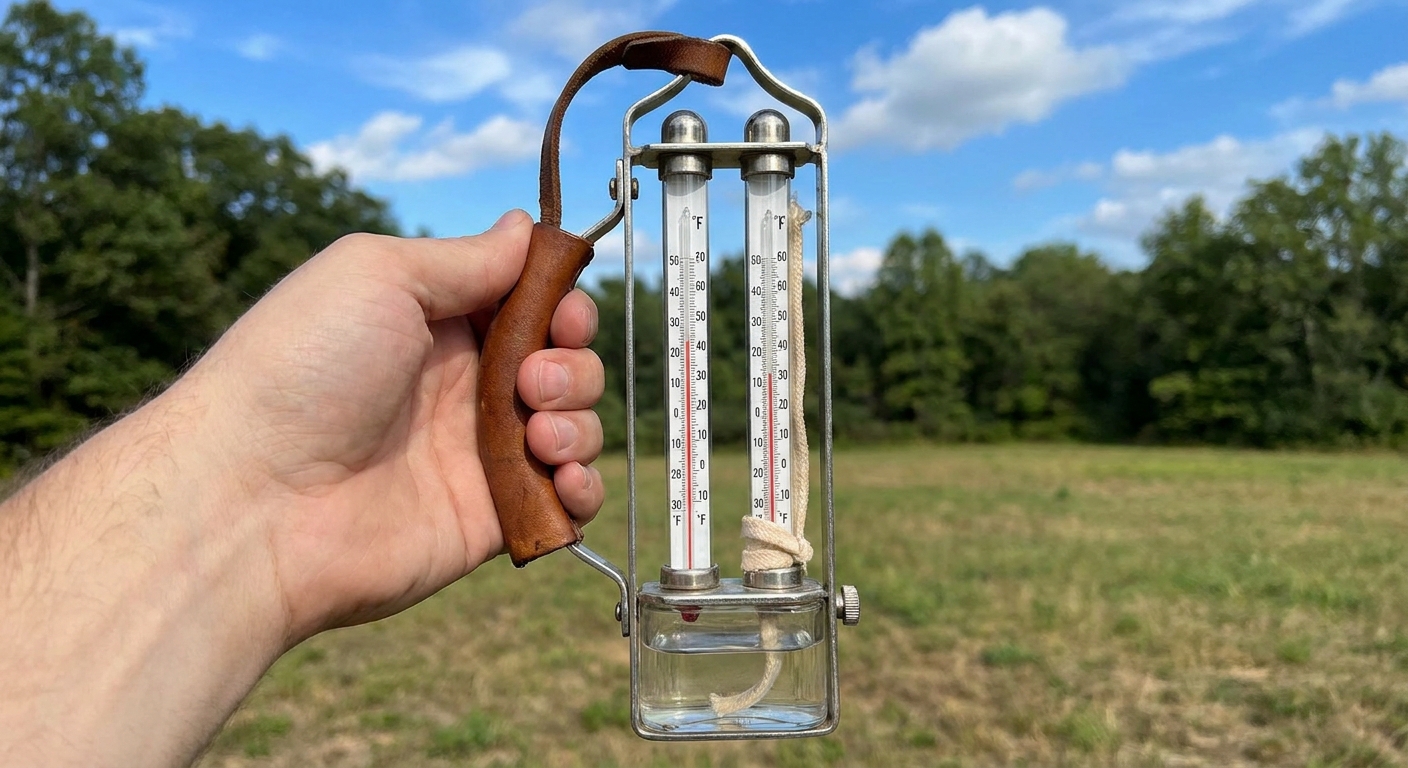
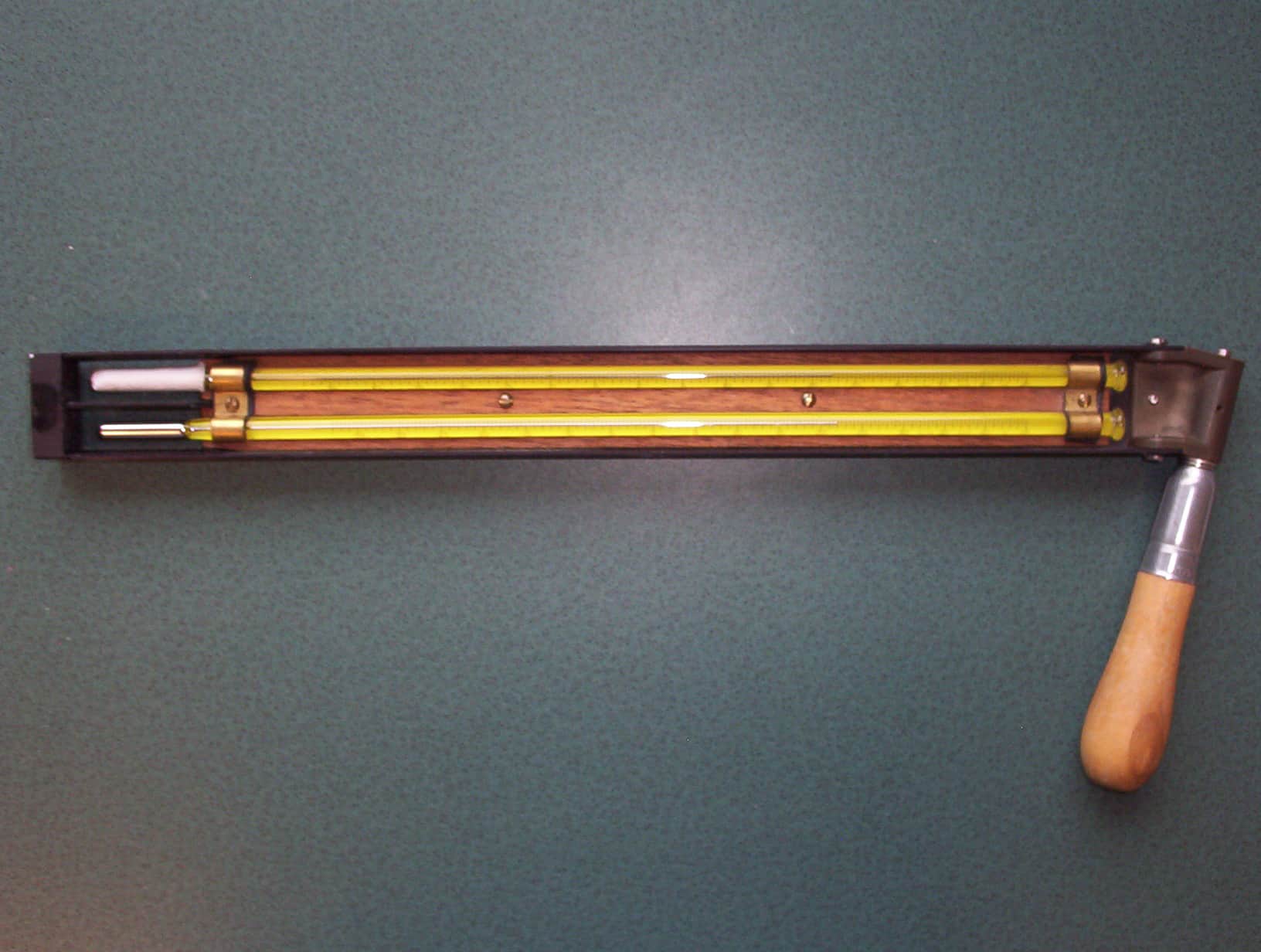
A psychrometer uses two thermometers: one measures the normal air temperature (the dry-bulb), and one has a wet wick around its bulb (the wet-bulb).
Water evaporates from the wet wick, and evaporation cools the thermometer. The drier the air, the faster evaporation happens and the more cooling you get. The wetter the air, the less evaporation, and the wet-bulb temperature stays closer to the dry-bulb temperature.
The difference between dry-bulb and wet-bulb temperatures, along with pressure assumptions, lets you compute relative humidity. Traditional “sling psychrometers” are spun through the air to provide airflow. Stationary psychrometers use a fan.
What they do well
- Conceptually transparent: it is an energy and evaporation measurement, not a black box sensor.
- Useful as a check: with good technique, they can validate another hygrometer.
Common limitations
- Technique sensitive: airflow, wick cleanliness, water purity, and stabilization time matter.
- Slow in still air: without enough airflow, the wet-bulb will not cool properly.
- Less convenient: not a set-and-forget monitor.
Accuracy: what to expect, and what the specs really mean
Humidity accuracy is commonly stated as “±X% RH.” That means if the true humidity is 50% RH, a ±3% RH sensor should read somewhere between 47% and 53% under the conditions where that spec applies.
And that last clause matters. Manufacturers almost always tie accuracy specs to specific conditions, such as around 25°C, a mid-range humidity band (often 20% to 80% RH), and non-condensing air.
Three details that often hide in the fine print:
- Accuracy depends on humidity range. Many sensors are most accurate from about 20% to 80% RH and degrade near the extremes.
- Accuracy depends on temperature. Extreme heat or cold can increase error or slow response.
- Accuracy is not the same as resolution. A device can display 0.1% RH steps while only being accurate to ±3% RH. The extra decimal is not lying, it is just more precise than it is accurate.
If you are choosing a hygrometer for indoor comfort, instrument-grade accuracy is usually less important than consistency and good placement. If you are protecting instruments, storing cigars, running an incubator, or managing a cellar, tighter accuracy and calibration checks start to matter.
Calibration basics: adjusting vs. verifying
Calibration has two practical meanings in everyday use:
- Verification: you compare the hygrometer to a known humidity environment and note the error.
- Adjustment: you change the device’s offset so its reading matches the reference.
Some analog hair hygrometers have a small adjustment screw on the back. Many digital units do not let you truly calibrate, but you can sometimes apply an “offset” in an app or simply remember, “this one reads 4% high.”
Even if you cannot adjust, verification is still valuable because it tells you whether your numbers are trustworthy.
Placement: where you put it can matter more than what you bought
Humidity is local. A hygrometer measures the air it is sitting in, not the air you wish it were measuring.
- Avoid direct sunlight. Sun warms the sensor and nearby surfaces, pushing readings off.
- Keep it away from vents and drafts. Supply registers, fans, and open windows create microclimates.
- Do not press it against an exterior wall. Cold or hot walls can bias temperature, and therefore RH.
- Give it breathing room. Do not bury it behind books or inside a tight shelf cubby unless that is the space you actually want to monitor.
- Let it equilibrate. After moving a hygrometer, give it time to settle. Thin digital sensors respond quickly, but the environment around them might not.
One more quiet factor: the enclosure. Two identical sensor chips can behave very differently depending on casing design. Tiny vent holes, a recessed sensor, or a bulky housing can slow response time and create lag. If one hygrometer always seems late to the party, the plastic around it may be the reason.
The salt test: a simple way to check a hygrometer
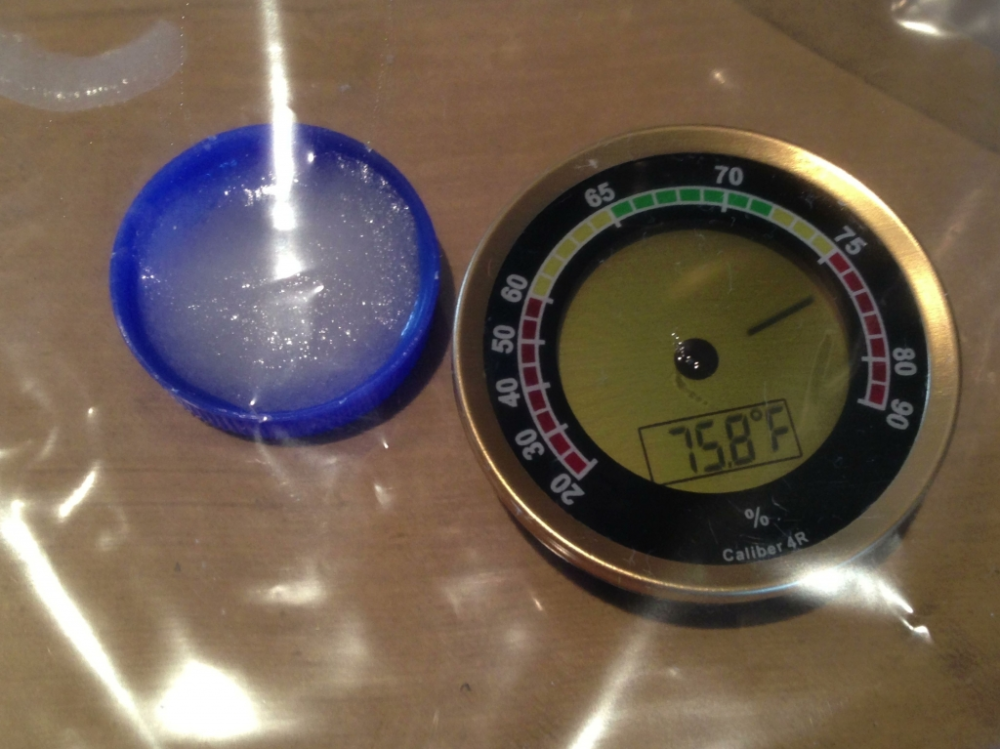
If you want one reliable at-home checkpoint, the salt test is the classic. It uses the fact that a saturated salt solution creates a fairly stable relative humidity in a sealed container at normal room temperatures.
For common table salt (sodium chloride), that equilibrium is roughly 75% RH around typical indoor temperatures (roughly 20°C to 25°C). It shifts slightly with temperature, and different salts create different set points, but as a sanity check it is wonderfully practical.
How to do it
- Get a small airtight container (a food storage box or jar with a good seal).
- Add salt to a bottle cap or small dish. A few spoonfuls is plenty.
- Add a little water and stir until it looks like wet sand or slush. You want some undissolved salt remaining so the solution stays saturated.
- Place the hygrometer inside without letting it touch the salt mixture.
- Seal the container and leave it at room temperature for 8 to 12 hours (longer for slower instruments).
- Read the hygrometer. It should be close to 75% RH. The difference is your approximate offset.
Interpreting the result
- If your hygrometer reads 72% RH, it is about 3% low at that point.
- If it reads 80% RH, it is about 5% high.
Two cautions worth keeping on the workbench:
- Temperature matters. Do the test where the temperature is steady, not in a sunlit window or near a heater.
- One point is not the whole story. A hygrometer can be accurate at 75% RH and still be off at 30% RH. But a single checkpoint is far better than none.
Which hygrometer type should you trust?
Trust is earned in two ways: the physics of the sensing method and your own verification.
- For everyday indoor monitoring: a decent capacitive digital hygrometer is usually the most practical mix of cost, convenience, and performance.
- For a low-tech analog display: hair hygrometers can be satisfying and serviceable, especially if they have an adjustment screw and you check them occasionally.
- For field checks or teaching the concept: psychrometers are excellent, provided you can supply airflow and patience.
- For high-accuracy reference work: chilled-mirror hygrometers are the gold standard, with the price tag and maintenance to match.
If you only remember one thing, make it this: humidity numbers are most useful when you pair them with context. Know what your instrument measures, place it where the air is representative, and give it a quick check with a salt test now and then. The percent sign will start feeling less like a guess and more like a measurement.
FAQ
Why do two hygrometers in the same room disagree?
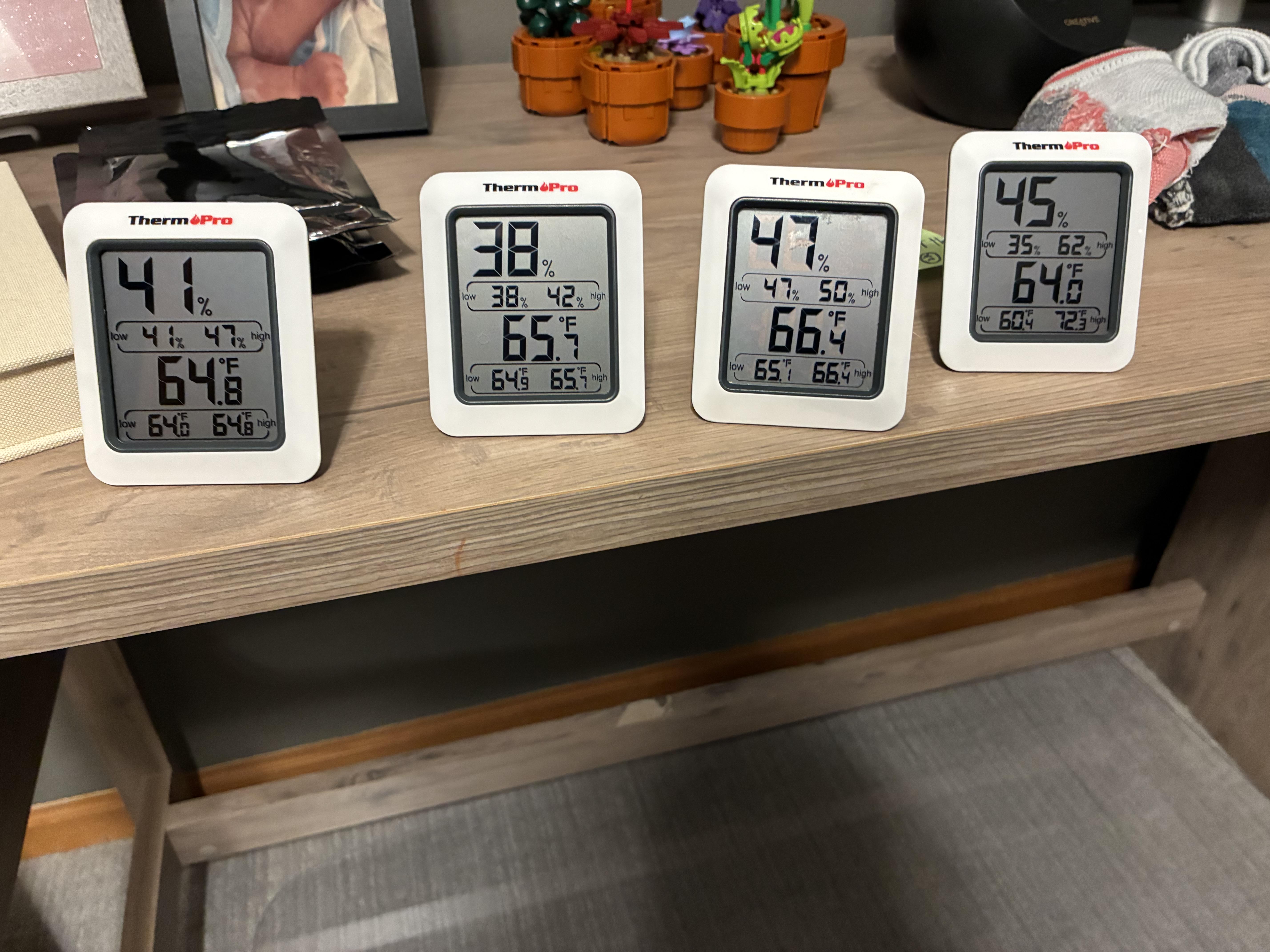
It can be real and it can be instrument error. Small humidity gradients form near windows, plants, bathrooms, and vents. Also, consumer sensors often have ±2% to ±5% RH accuracy, so two “correct” devices can disagree by several points. Put them side by side for a full day and see whether the gap stays consistent.
Does a hygrometer need airflow?
Most sensors benefit from gentle airflow because it helps them sample the room’s air rather than a tiny pocket of air warmed or cooled by nearby surfaces. Psychrometers require airflow to work properly.
Can humidity sensors be damaged?
They can be degraded by condensation, dust, oils, and certain chemicals. If a sensor gets wet, let it dry in normal room air and avoid heat blasting it. Persistent drift after a drying period may indicate contamination or aging.
Is dew point more reliable than relative humidity?
Dew point is often more directly tied to the actual water vapor content of the air, while RH changes with temperature. Neither is “more honest,” but dew point can be easier to compare across different temperatures. Chilled-mirror instruments measure dew point directly, and many digital sensors compute it from temperature and RH.