Black holes have a reputation problem. They sound like cosmic drain plugs, silently sucking up everything in sight. In reality, they are more like the Universe’s most extreme “gravity labs,” where space and time get pushed to their limits. The twist is that the most important part of a black hole is also the part you cannot see directly.
So let’s demystify the big ideas without sanding off the real physics: how black holes form, what the event horizon actually is, what scientists mean by a singularity, and how we study an object whose defining feature is that it hides information from view.
What a black hole is (and what it is not)
At its core, a black hole is a region of spacetime where gravity is so strong that there exists a boundary you can cross but never return from. That boundary is the event horizon . If you are outside it, escape is possible. If you are inside it, every possible future path points deeper inward.
A few quick myth-busters that will save you headaches later:
- Not a vacuum cleaner. From far away, a black hole’s gravity looks like the gravity of any other object with the same mass. If the Sun were magically replaced with a black hole of the same mass (please do not), Earth would keep orbiting in nearly the same way.
- Not “a hole” in the usual sense. It is not an empty tunnel or portal you fall through. It is a region where spacetime is intensely curved by concentrated mass-energy.
- Not automatically lethal at a distance. The danger zone is close in. Far out, it is just gravity.
How black holes form
In general relativity, a black hole forms when mass-energy gets compressed inside a critical size so that a horizon appears. For a simple non-rotating case, that “size” is the Schwarzschild radius. A common intuition-builder is to say the escape velocity would have to exceed the speed of light, but that is an analogy borrowed from Newtonian thinking , not the full formation criterion.
Stellar-mass black holes
Most black holes we talk about in everyday astronomy are stellar-mass black holes, created when a massive star runs out of fuel.
- While a star is alive, outward pressure from hot gas and radiation balances inward pull from gravity.
- When nuclear fuel dwindles, that outward push weakens.
- The core collapses. In some cases you get a supernova, and the leftover core becomes a neutron star.
- If the leftover core is massive enough, even neutron degeneracy pressure cannot halt the collapse, and a black hole forms.
There is a threshold here. Observations show neutron stars at about 2.0 to 2.3 times the Sun’s mass, and theory suggests an upper limit on the order of 2 to 3 solar masses depending on the still-uncertain physics of ultra-dense matter. Above that, collapse continues.
Supermassive black holes
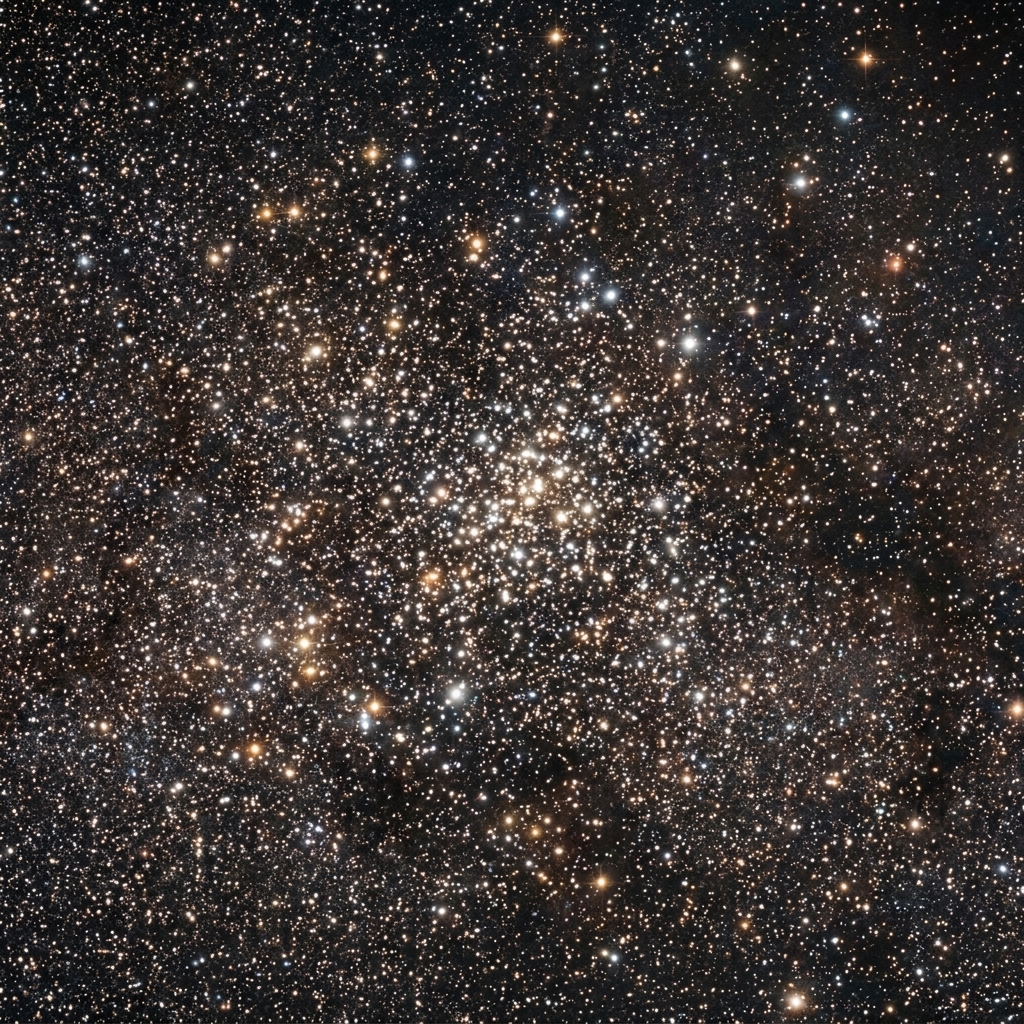
At the centers of many, and likely most, massive galaxies, including the Milky Way, sits a supermassive black hole, with millions to billions of solar masses. The evidence is especially strong in bulge-dominated galaxies, while some smaller or late-type galaxies may lack a confirmed central supermassive black hole. How these monsters formed so early in cosmic history is still an active research area, but leading ideas include:
- Growth by feeding: a smaller seed black hole accretes gas and merges with other black holes over time.
- Direct collapse: in the early Universe, huge gas clouds may have collapsed into massive seeds without first becoming ordinary stars.
- Runaway mergers: dense star clusters can create heavy black holes that later grow further.
Scientists are still testing which pathways dominated, and it may be “all of the above” depending on the era and environment.
Now for the simple geometric punchline that ties formation to the “point of no return”: once enough mass-energy is packed inside a small enough radius, a horizon forms.
Gravity and the point of no return
One of the cleanest ways to build intuition is with escape velocity. To leave Earth without falling back, you need about 11.2 km/s. Escape velocity increases if you pack more mass into the same radius, or shrink the radius around the same mass.
In Newtonian terms, you can imagine pushing this to an extreme until the escape velocity reaches the speed of light c. In general relativity, that same threshold shows up as the radius where a horizon appears for a non-rotating black hole, called the Schwarzschild radius:
r_s = 2GM / c^2
Where G is the gravitational constant and M is the black hole’s mass. The key takeaway is proportionality: the event horizon radius scales linearly with mass. Double the mass, double the horizon radius.
If you like concrete numbers, the Schwarzschild radius is about 3 kilometers per solar mass. A black hole with the Sun’s mass would have an event horizon only a few kilometers in radius (about twice that across). A black hole with four million solar masses, like Sagittarius A* in our galaxy, has a horizon radius on the order of millions of kilometers.
Event horizon basics
The event horizon is not a physical surface like the crust of a planet. It is a mathematical boundary in spacetime. A useful way to say it is:
The event horizon is the place where “outward” stops being a direction you can travel into the future.
Outside the horizon, you can choose a path that increases your distance from the black hole. Inside, all future-directed paths lead inward. This is why light cannot escape: it is not that light “gets tired” or “slows down” in the usual sense, it is that the geometry of spacetime makes escape impossible once you cross.
What would you see near one?
If you hovered near a black hole (a wildly impractical idea, but great for thought experiments), several famous effects show up:
- Gravitational time dilation: clocks deeper in a gravitational well tick more slowly relative to far-away clocks. This is not sci-fi, it is GPS engineering, just turned up to maximum.
- Extreme light bending: light from stars behind the black hole can be bent around it, distorting the view.
- Redshift: light climbing away loses energy and shifts to longer wavelengths.
In distant-observer coordinates (the way you would naturally label time far from the black hole), you never actually see an object cross the horizon in finite time. Its light gets more redshifted and dimmer, and the signals become undetectable quickly. From the falling object’s own perspective, it crosses the horizon in a finite amount of time without noticing a “wall” (assuming the black hole is large enough that tidal forces at the horizon are mild).
Singularity basics
At the center of the simplest black hole solutions in general relativity lies a singularity, where density and spacetime curvature become infinite in the mathematics. That word gets used like it is a physical object, but in physics it is better treated as a flashing warning sign.
A “math breakdown” alarm
When a model predicts infinities, it often means we have pushed it past its domain of validity. Newtonian gravity, for example, works wonderfully for planets but fails for Mercury’s orbit in subtle ways, and fails spectacularly near black holes. General relativity fixes Mercury and predicts black holes, but at the singularity it predicts an infinity, which strongly hints that we need a more complete theory that includes quantum effects.
So what is the singularity “really”? We do not know. Leading candidates involve some form of quantum gravity that prevents true infinities. This is an open frontier.
Do all black holes have the same interior?
Real black holes rotate. Rotating (Kerr) black holes have more complicated interiors than the textbook non-rotating case, with additional horizons in the math. But caution is wise here: these interior structures are difficult to confirm observationally because, by design, the interior is causally sealed off.
Disks, jets, and brightness
The funny thing about black holes is that the black part is often not what astronomers observe. The fireworks come from the neighborhood around them.
Accretion disks
When gas falls toward a black hole, it usually has some sideways motion, so it forms an accretion disk. Friction and magnetic turbulence heat the gas to astonishing temperatures, producing light from visible all the way up to X-rays.
In other words, black holes are dark, but the infalling material can glow like a furnace.
Relativistic jets
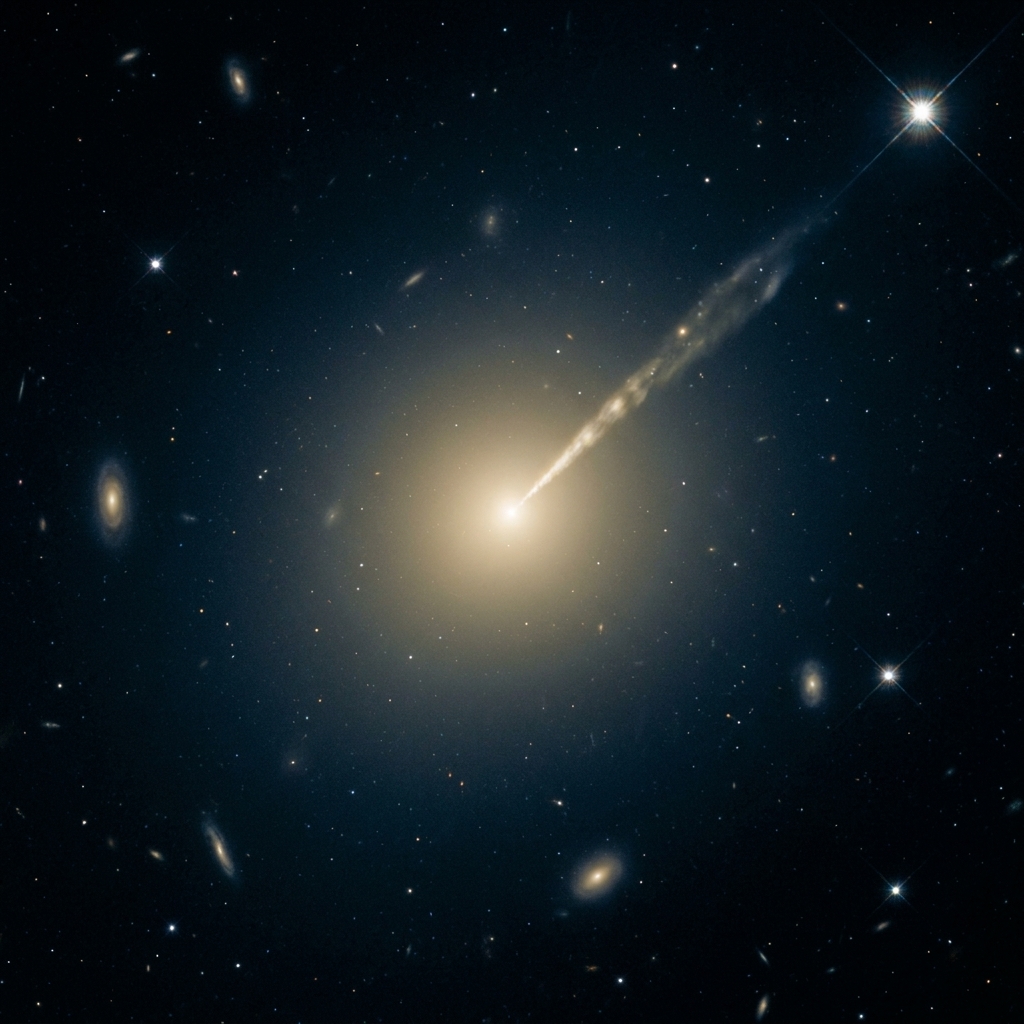
Some black holes launch narrow beams of plasma called jets that shoot out along their rotation axis at near light speed. We are still working out the details, but magnetic fields in the disk and the black hole’s spin appear to play key roles. In some systems, these jets can shape their host galaxies by heating or blowing out gas that would otherwise form stars.
How we study black holes
Black hole astronomy is basically the art of inference. We study what black holes do to their surroundings, and what they do to spacetime itself.
1) Star orbits
At the Milky Way’s center, astronomers track the orbits of stars whipping around an unseen object. The best explanation, by far, is a supermassive black hole (Sagittarius A*). These stellar orbits let scientists measure the central mass with high precision.
2) X-rays and radio light
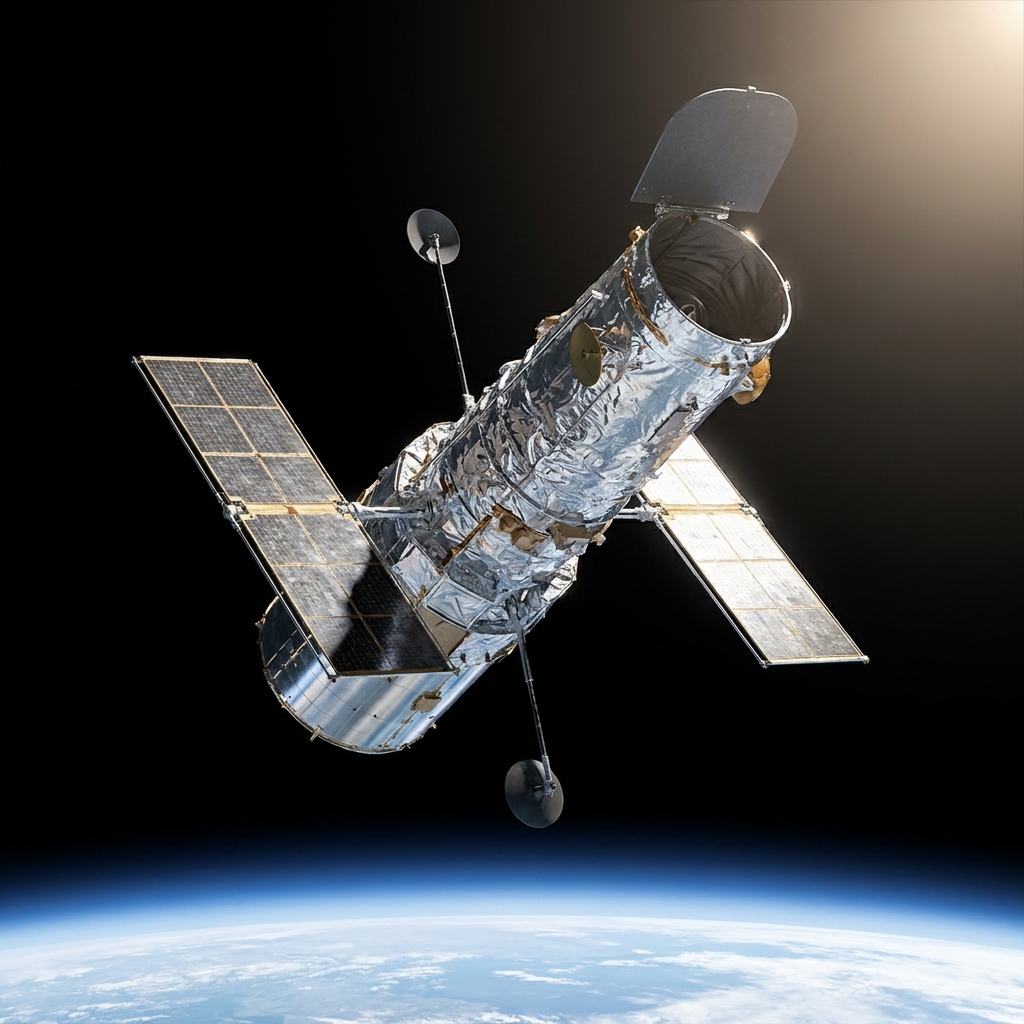
When gas spirals in, it heats up and emits high-energy light. Space telescopes sensitive to X-rays, along with radio observatories, help map the behavior of this plasma. Variability, flares, and spectral signatures can reveal the dynamics close to the horizon.
3) Gravitational waves
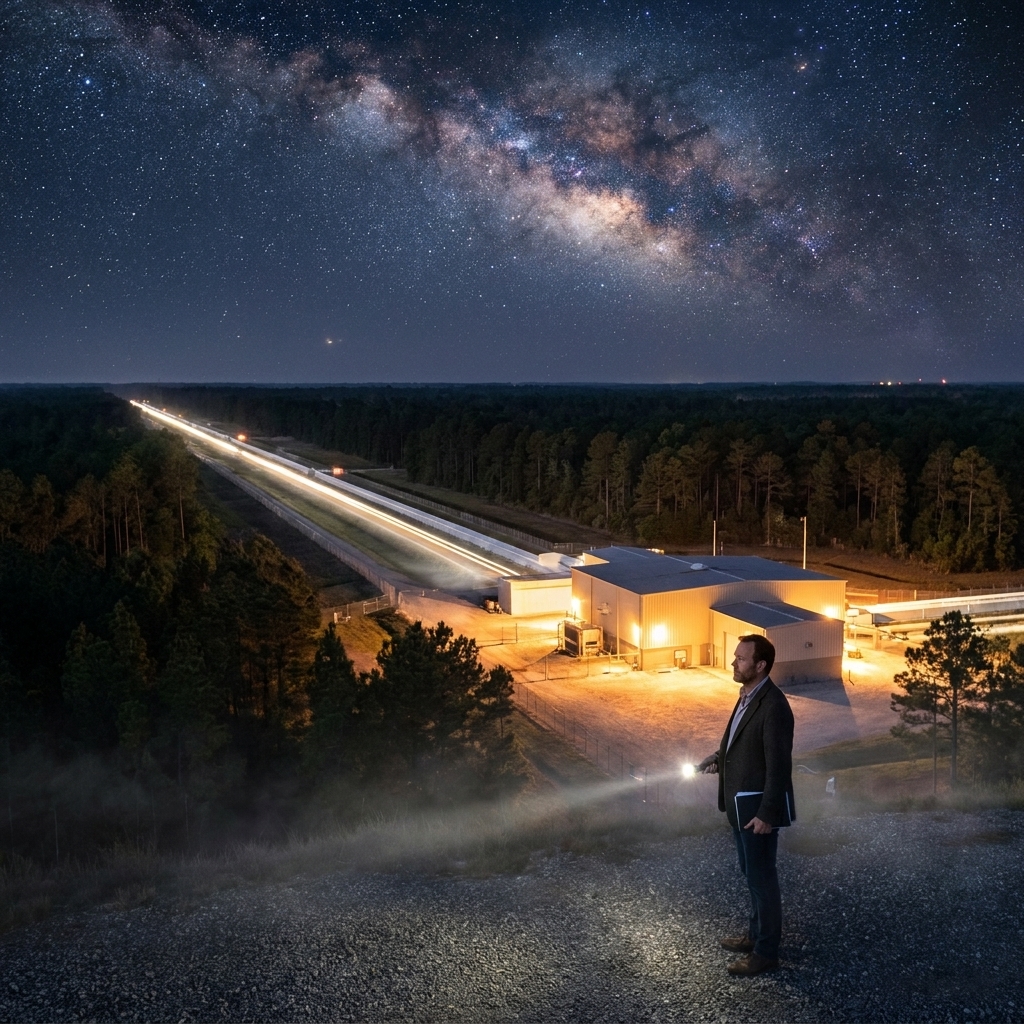
When two black holes collide and merge, they send ripples through spacetime: gravitational waves. Detectors like LIGO, Virgo, and KAGRA measure incredibly tiny distortions in space to reconstruct the masses and spins of the merging pair. This is “black hole astronomy” done with gravity instead of light.
4) Event Horizon Telescope
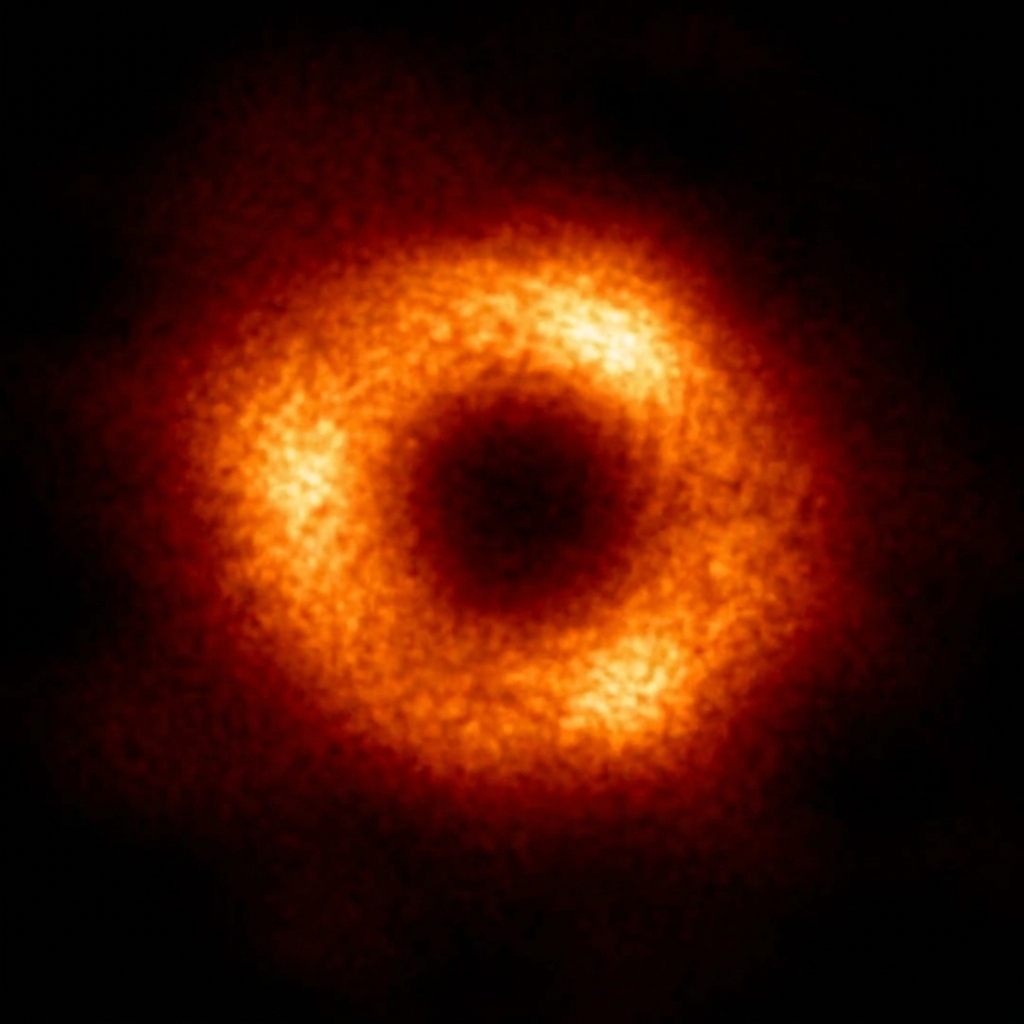
The Event Horizon Telescope (EHT) links radio dishes across Earth into a planet-sized instrument. That gives it enough resolution to see horizon-scale structures in nearby supermassive black holes like M87* and Sagittarius A*. The result is not a snapshot of a physical surface, but a view of a bright emission ring from hot plasma, with a dark “shadow” region caused by light being captured.
Tidal forces and spaghetti
If you have ever heard that black holes stretch you into spaghetti, that is tidal gravity. The gravitational pull on your feet is stronger than the pull on your head, so you get stretched.
Two important clarifications:
- Tidal forces depend on size. For stellar-mass black holes, tides near the horizon can be lethal. For supermassive black holes, the horizon is so large that tides at the horizon can be surprisingly gentle. The real trouble comes later as you fall deeper.
- Orbits can be stable at safe distances. You can orbit a black hole like any other mass if you stay far enough out. Close in, stable orbits disappear, and the plunge begins.
Common questions
Can a black hole swallow the whole Universe?
No. Black holes grow by accreting matter and by mergers, but they do not “suck” at a distance more than any other object of the same mass. Their influence falls off with distance, and cosmic expansion plus the distribution of matter prevents runaway swallowing on that scale.
If light cannot escape, how can we see one?
We see the environment: glowing gas in accretion disks, jets, gravitational lensing of background light, stellar orbits, and gravitational waves. The EHT images the shadow cast by light-bending and capture, not a literal surface.
What happens to information that falls in?
This is one of the deepest open problems in theoretical physics, often called the black hole information paradox. Quantum theory says information should not be destroyed, but classical general relativity plus Hawking’s calculation of black hole evaporation creates tension. Hawking radiation is expected to be extraordinarily tiny for astrophysical black holes, so it is not something we observe directly, but it matters hugely for the underlying rules.
Are wormholes real?
Wormholes appear as mathematical solutions under certain conditions, but there is no evidence that traversable wormholes exist in nature, and they typically require exotic forms of matter or energy that we have not observed in the needed way.
The big picture
Black holes are not cosmic monsters so much as cosmic rule-checkers. They tell us that gravity can curve spacetime so strongly that even light loses its escape routes. The event horizon is the clean, elegant boundary where “out” stops meaning what it used to mean. The singularity is the reminder that our current physics, as brilliant as it is, is not the last chapter.
And the best part is that we are not just telling stories anymore. We are measuring black holes with orbiting stars, listening to them with gravitational waves, and even capturing horizon-scale silhouettes using a telescope the size of Earth. For something defined by darkness, black holes have an amazing way of lighting up our understanding.