If you have ever seen one of those jaw-dropping space images that looks like someone spilled glitter across velvet, you have probably met the Hubble Space Telescope. And if you have heard about a newer telescope finding ancient galaxies and sniffing the chemistry of alien skies, that is the James Webb Space Telescope.
They are often spoken about like a “before and after” photo of astronomy, but the truth is more interesting. Hubble and Webb are less like replacements and more like two senses. Hubble is our sharp-eyed visible-light scout. Webb is our infrared night-vision specialist, built to see through cosmic dust and reach farther back in time.
The quick takeaway
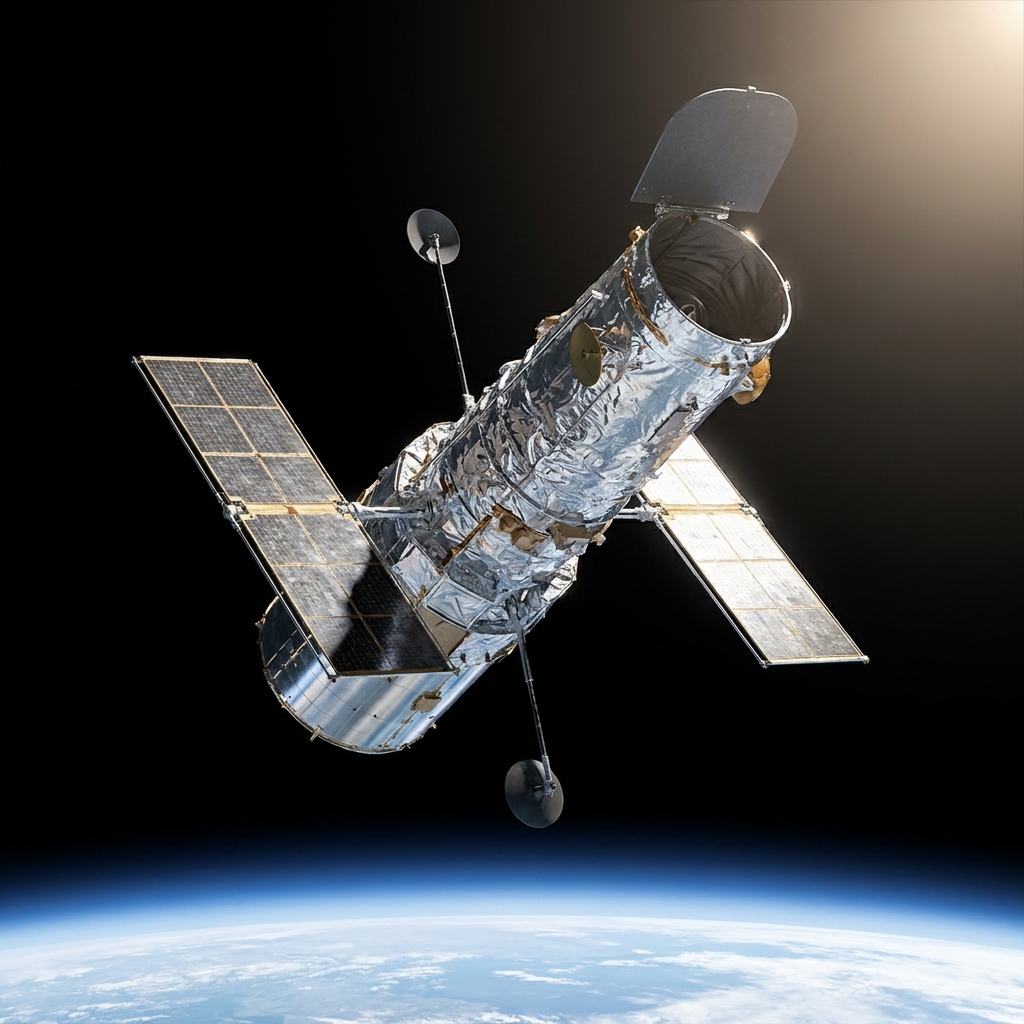
- Hubble sees ultraviolet and visible light, plus a meaningful slice of near-infrared (out to about 1.7 microns). It orbits Earth and has been serviced by astronauts.
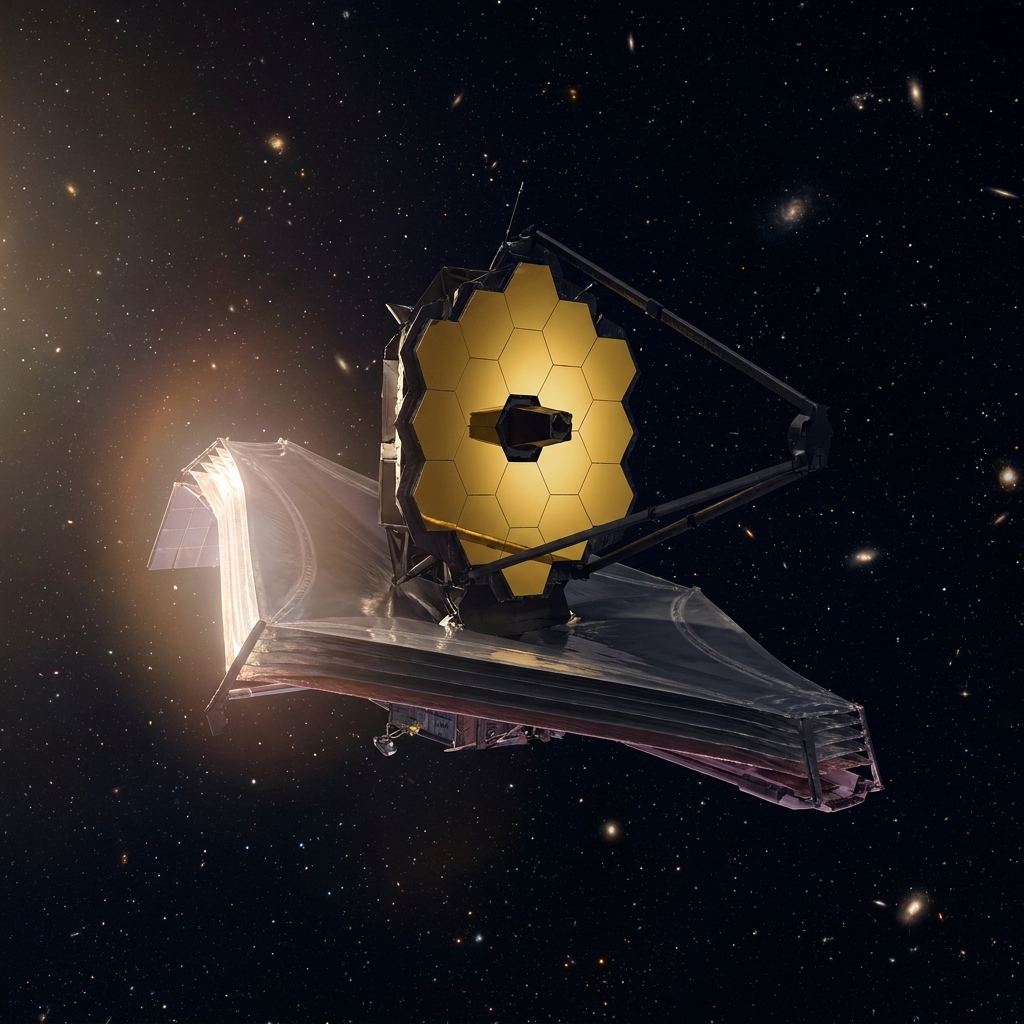
- James Webb sees mostly infrared light (roughly 0.6 to 28 microns), making it excellent for early galaxies, star formation hidden by dust, and exoplanet atmospheres. It operates far from Earth at the Sun-Earth L2 point and is not serviceable by current crewed spacecraft.
- They are complementary. Many of the best results come from using them together, plus other observatories.
Wavelengths at a glance
- Hubble: ~0.1 to 1.7 μm (UV, visible, near-IR)
- Webb: ~0.6 to 28 μm (near-IR through mid-IR)
These ranges overlap a bit, but their strengths land in very different parts of the spectrum.
Where they live
Hubble: close enough to fix
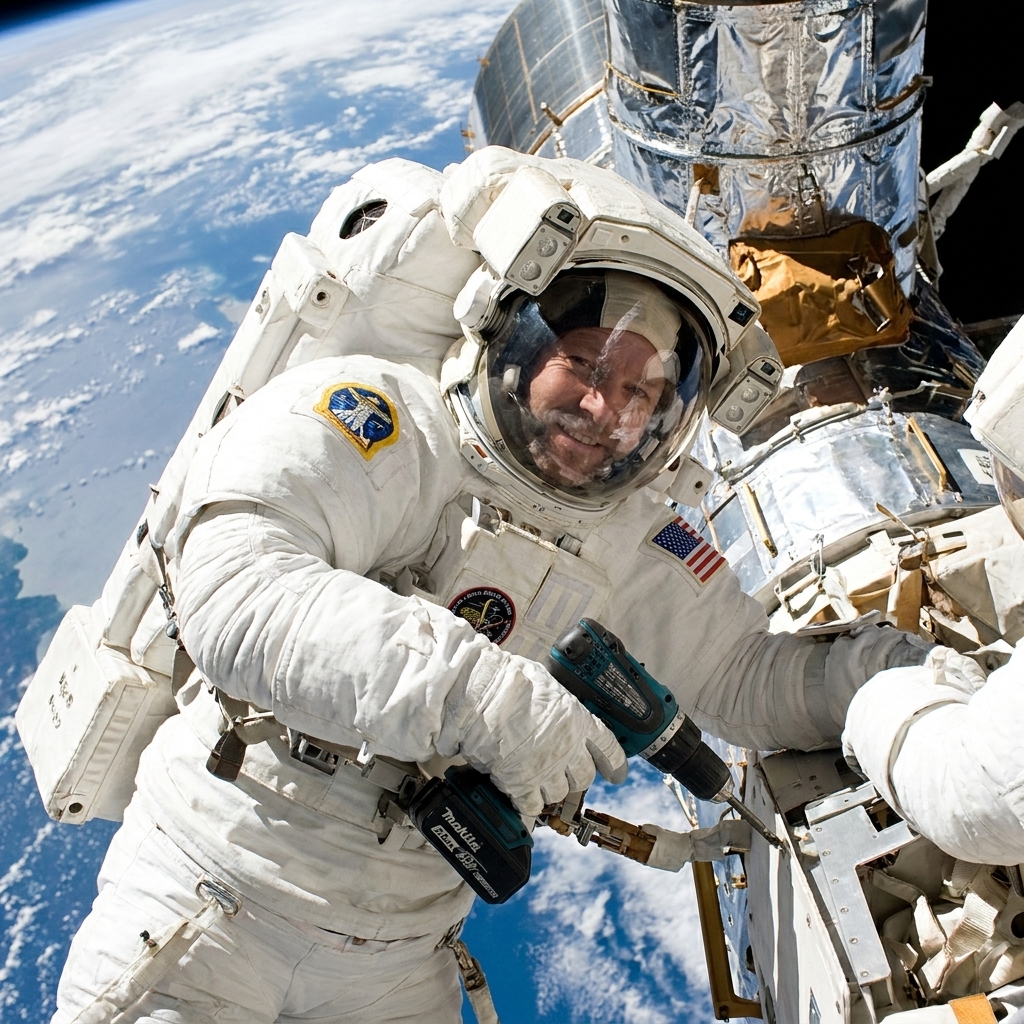
Hubble orbits Earth in low Earth orbit, roughly a few hundred kilometers up. That matters because low Earth orbit made astronaut servicing missions feasible, and Hubble was designed from the start to be upgraded. When parts wore out or new technology became available, Space Shuttle crews could visit and essentially give Hubble a tune-up. Those upgrades dramatically improved its performance and extended its usefulness.
Webb: far away for a reason
Webb operates around the Sun-Earth L2 point, about 1.5 million kilometers from Earth. That is far, about four times the distance to the Moon. It is there because Webb is an infrared telescope, and infrared astronomy is often about detecting heat. To do that well, you want a stable environment, minimal interference from Earth’s warmth, and an easy geometry for keeping the telescope shaded and cold.
What they see
Light comes in many flavors. Visible light is the tiny slice our eyes evolved to detect. Ultraviolet is shorter wavelength, higher energy. Infrared is longer wavelength, lower energy, and often tied to warmth, dust, and chemistry.
Hubble’s home turf: UV and visible
Hubble excels in ultraviolet and visible light, with some near-infrared capability. That makes it ideal for studying hot, energetic phenomena and for producing detailed views of galaxies, nebulae, and stars in wavelengths that feel most “natural” to human intuition.
Webb’s superpower: infrared
Webb is optimized for near- and mid-infrared. This matters for three big reasons:
- Dust is less of a bully in infrared. Many stellar nurseries are wrapped in dust clouds that block visible light. Infrared can slip through, revealing what is forming inside.
- The early universe is redshifted. As the universe expands, light from very distant galaxies stretches to longer wavelengths. What started as ultraviolet or visible billions of years ago often arrives to us as infrared today.
- Molecules leave fingerprints in infrared. Many atmospheric gases and ices absorb and emit strongly in infrared, which is crucial for studying exoplanet atmospheres and chemistry in space.
Why space matters for UV
Even the best ground-based telescopes have to look through Earth’s atmosphere, which absorbs most ultraviolet light. That is why Hubble’s ultraviolet view is so special. If you want UV, you have to go to space.
Space also removes atmospheric blurring, so both Hubble and Webb can produce consistently stable, high-resolution data in their own wavelength ranges.
Mirrors and design
Hubble: one classic mirror
Hubble’s primary mirror is a single piece about 2.4 meters across. It is a straightforward, beautifully engineered design, and it delivers remarkable sharpness, especially in visible light.
Webb: segmented and larger
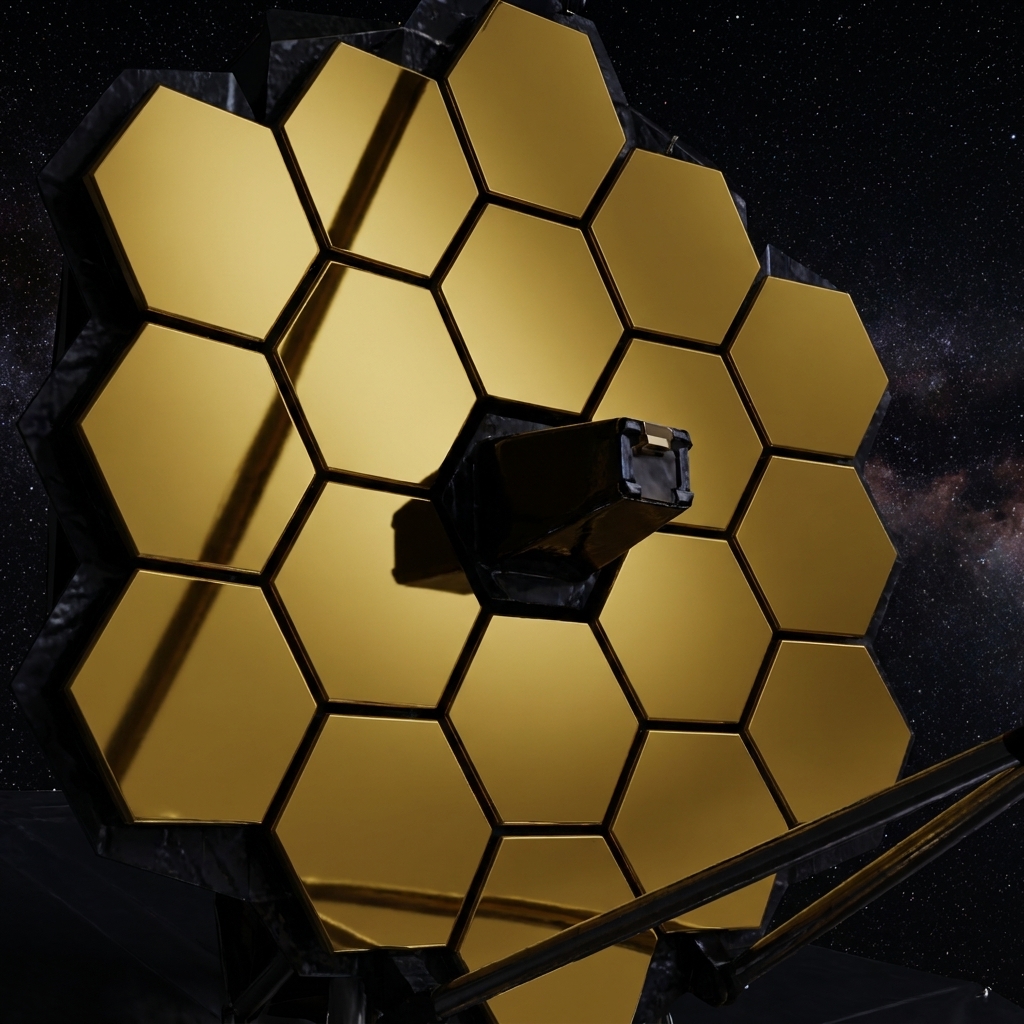
Webb’s primary mirror is about 6.5 meters across and made of 18 hexagonal segments. Why segments? Because you cannot fit a single mirror that large into a rocket fairing. Segments fold for launch, then deploy and align in space with astonishing precision.
In practical terms, a larger mirror means Webb can collect more light. That is the difference between easily detecting a faint object that would otherwise be below the noise, at the same distance and exposure time. It is not just about prettier pictures. It is about reaching fainter targets and doing more sensitive spectroscopy.
Keeping cool
Here is one of my favorite “aha” moments to share: an infrared telescope is always fighting itself. Anything warm emits infrared light. That includes the telescope. So Webb has to be cold, very cold, to avoid drowning out the faint infrared signals from the cosmos.
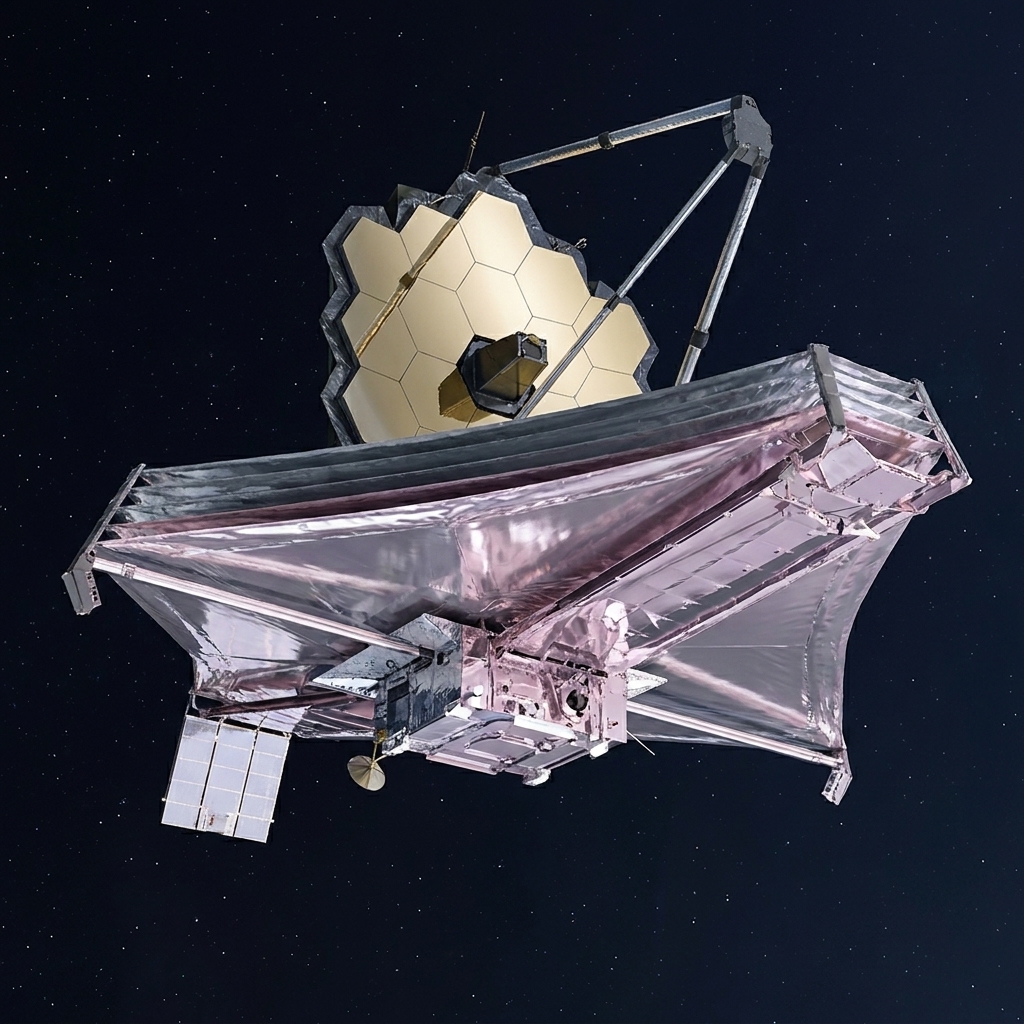
That is why Webb carries a tennis-court-sized, five-layer sunshield. It blocks heat and light from the Sun, Earth, and Moon. On the shaded side, the telescope and most instruments operate around roughly 40 to 50 K. And Webb’s mid-infrared instrument, MIRI, uses a cryocooler to reach about 7 K for the coldest measurements. Hubble does not need that extreme cryogenic strategy because it is not primarily a mid-infrared observatory.
How they do science
Both telescopes do two main jobs: imaging (taking pictures) and spectroscopy (splitting light into a rainbow-like barcode to learn composition, temperature, motion, and more).
Hubble’s toolkit
Over decades, Hubble has carried multiple generations of cameras and spectrographs. Its instruments have been upgraded over time, which is part of why it remained scientifically cutting-edge far beyond its original expected lifetime.
Webb’s toolkit
Webb’s suite is designed from the ground up for infrared astronomy, including sensitive cameras and powerful spectrographs. One highlight is its ability to perform detailed spectroscopy on faint targets, which is essential for reading the chemical signatures of distant galaxies and exoplanet atmospheres.
Images show you what something looks like. Spectra tell you what something is made of, how it is moving, and often how it got that way.
Image sharpness
This is where people expect a simple scoreboard, but optics is sneakier than that. Sharpness depends on mirror size and wavelength. Shorter wavelengths can achieve finer resolution for a given mirror.
- Hubble is famously sharp in visible light. It was built for it.
- Webb is extremely sharp in infrared. Its large mirror gives it excellent resolution at those longer wavelengths.
So the “winner” depends on what color of the universe you are trying to see. If you want crisp visible-light structure in a nearby galaxy, Hubble is still a heavyweight. If you want to peer into a dust-choked star-forming region or chase the earliest galaxies, Webb is the specialist you call.
Signature discoveries
Hubble’s greatest hits
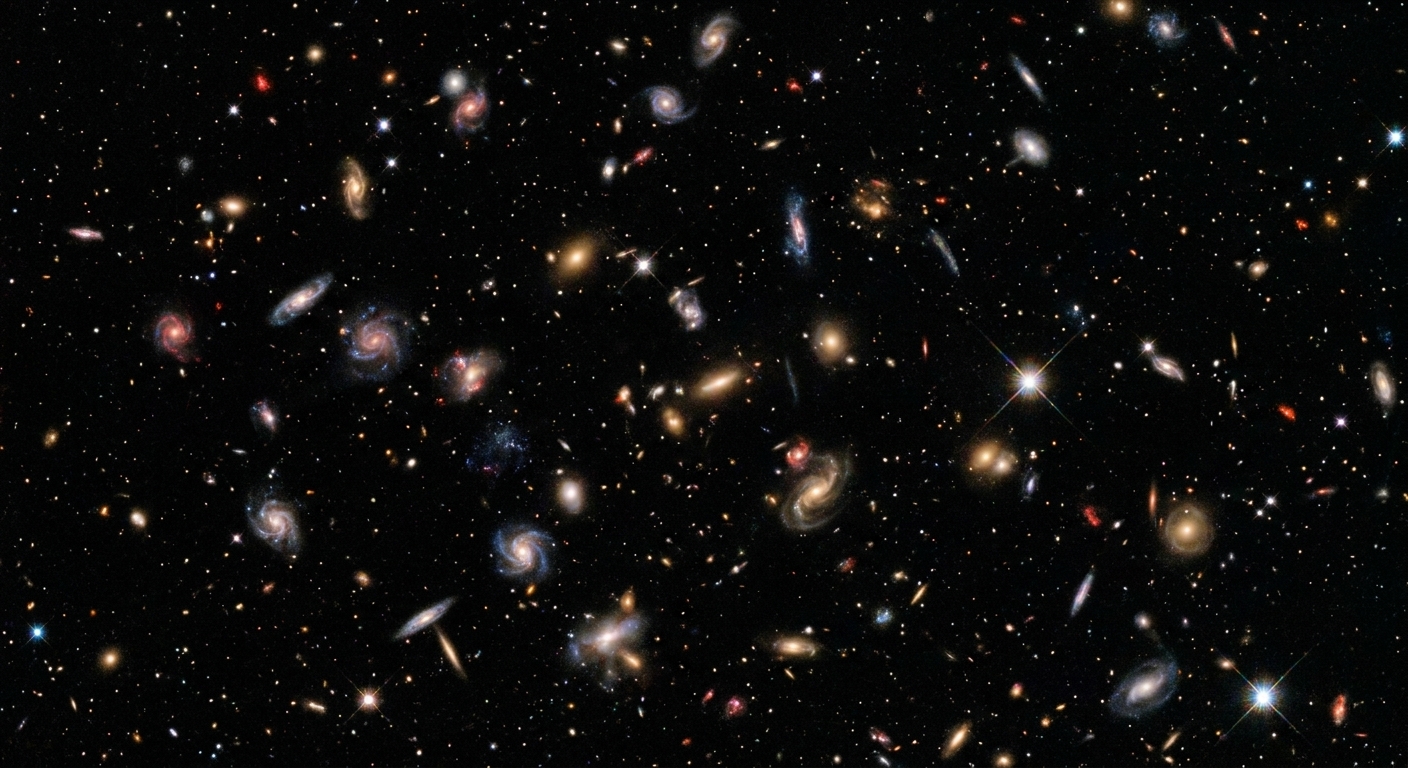
- The Hubble Deep Field and Ultra Deep Field: long exposures that revealed thousands of distant galaxies in what looked like a blank patch of sky, reshaping our sense of cosmic scale.
- Refining the expansion rate of the universe: Hubble data helped tighten measurements of the Hubble constant by observing Cepheid variables and supernovae in other galaxies.
- Planet-forming disks and stellar evolution: iconic images of protoplanetary disks and nebulae that turned abstract textbook ideas into something you can almost touch.
- Dark energy evidence (with other work): observations of distant supernovae contributed to the realization that cosmic expansion is accelerating.
Webb’s early fireworks
- Early galaxies: Webb has found and characterized galaxies from very early epochs, pushing observations deeper into cosmic history.
- Star formation behind dust: infrared views reveal structures and embedded young stars that visible-light telescopes struggle to detect.
- Exoplanet atmospheres: Webb has demonstrated detailed atmospheric measurements using transit spectroscopy, detecting and constraining molecules that help describe these worlds.
- Solar system details: despite being built for deep space, Webb can study planets, moons, rings, and small bodies in our own neighborhood in infrared.
Why Webb does not replace Hubble
Think of astronomy like listening to an orchestra. If you only hear the violins, you miss the cellos. If you only hear the cellos, you miss the violins. Hubble and Webb listen to different parts of the cosmic soundtrack.
Hubble remains uniquely valuable for:
- Ultraviolet astronomy that Webb cannot do.
- Long-term monitoring of changing objects, building time-lapse stories of variable stars, supernova remnants, and active galaxies.
- Continuity with decades of prior observations, which is crucial when you want to compare “then” and “now.”
Webb brings strengths Hubble cannot match:
- Infrared sensitivity and access to mid-infrared wavelengths.
- Seeing through dust to regions where stars and planets are forming.
- Deeper reach into the early universe via redshifted light.
When they team up
Some of the most productive observing campaigns combine data from multiple telescopes. A common approach is to use Hubble for high-resolution visible and ultraviolet context, then use Webb to probe the infrared physics and chemistry. Add in other observatories, like X-ray telescopes or radio arrays, and you get a multi-wavelength portrait that is richer than any single instrument could provide.
A concrete example: Hubble can map the sharp optical structure of a galaxy, including star clusters and dust lanes, while Webb can look through that dust to reveal embedded star formation and measure infrared spectral features from complex molecules in the same regions. Together, you get both the “skeleton” and the “weather” of the system.
FAQ
Can James Webb take pictures like Hubble?
Yes, Webb takes stunning images, but they are primarily in infrared. The colors you see are typically assigned to represent different infrared wavelengths in a way our eyes can interpret. Hubble also uses color mapping often, but its wavelengths are closer to what human vision expects.
Why are Webb images sometimes described as “older” light?
Because looking far away also means looking back in time. Light takes time to travel. When Webb observes a galaxy billions of light-years away, it is catching photons that left that galaxy billions of years ago.
Will Hubble keep working now that Webb is up?
As long as its systems remain healthy and it can maintain operations, Hubble continues to be scientifically valuable. Its ultraviolet capabilities and its long observational record make it hard to replace.
Which telescope is better for exoplanets?
For atmospheric chemistry, Webb has a major advantage because many key molecular signatures show up strongly in infrared, especially at longer wavelengths. Hubble has also studied exoplanet atmospheres, especially in visible and near-infrared, and remains useful for certain measurements and long-term monitoring.
The big picture
If Hubble is the telescope that taught humanity to see the universe in high definition, James Webb is the one teaching us to see it in a new light, literally. One is not the sequel that makes the original obsolete. They are two chapters in the same story, written in different wavelengths.
And if you ever find yourself staring at a Webb image late at night, trying to wrap your head around ancient galaxies, remember this comforting thought: you are not just looking at a picture. You are catching a message that has been traveling for most of the age of the universe, finally arriving in a gold mirror’s open hand.