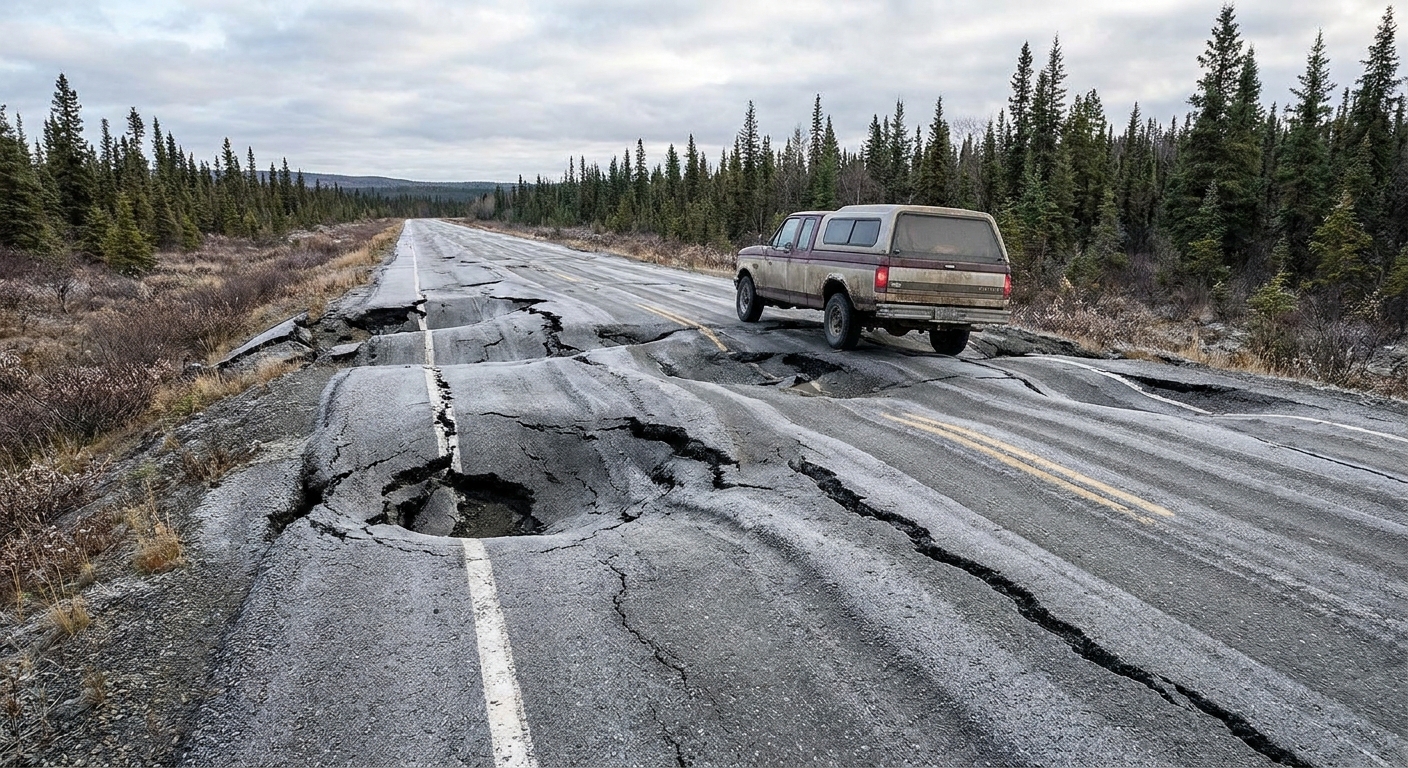
The first time I watched a road in Alaska buckle, it looked less like “damage” and more like the ground had decided to exhale. The asphalt rose in a smooth hump, cracked, and then slumped into a shallow dip. It was a perfect reminder that permafrost is not just frozen dirt. It is an entire landscape held together by ice.
Permafrost is ground (soil, sediment, or rock) that stays at or below 0°C (32°F) for at least two consecutive years. That is the definition, and it is strict in a way that makes it useful. If the ground thaws long enough to rise above freezing and stay there year after year, it stops being permafrost.
Permafrost and the active layer
If permafrost were a kitchen freezer, the permanently frozen layer is the cold, reliable bottom. But the “lid” is leaky and seasonal. In many places, the topmost ground thaws in summer and refreezes in winter.
This is why you will sometimes hear scientists describe permafrost regions as a system with two parts:
- The active layer: the surface layer that thaws each warm season and refreezes when temperatures drop.
- The permafrost table: the boundary below which the ground remains frozen year-round. Above it is the active layer. Below it is permafrost.
The thickness of the active layer varies a lot. It depends on air temperature, snow cover (snow insulates), vegetation, soil type, moisture, and how much sun the ground receives. In colder regions it can be relatively thin. In warmer permafrost zones it can be much thicker, and it is especially sensitive to warming trends and disturbance.
Where things change
Even though permafrost gets the headline, the active layer is where daily life, ecosystems, and engineering projects feel the difference between “frozen” and “not frozen.” In summer, meltwater can move through it and roots can push into it. Microbes wake up too, and while cold and ice slow them down dramatically, thaw gives them liquid water and time to break down organic matter much faster than they can in frozen ground. In winter, the surface locks back up again.
That freeze-thaw rhythm matters because it controls:
- Drainage: Permafrost acts like an underground barrier, so water often sits near the surface, creating wetlands and ponds.
- Plant life: Many Arctic plants are adapted to shallow rooting and soggy summer soils.
- Stability: When ice-rich ground thaws, it can lose strength and settle, a process called thaw subsidence.
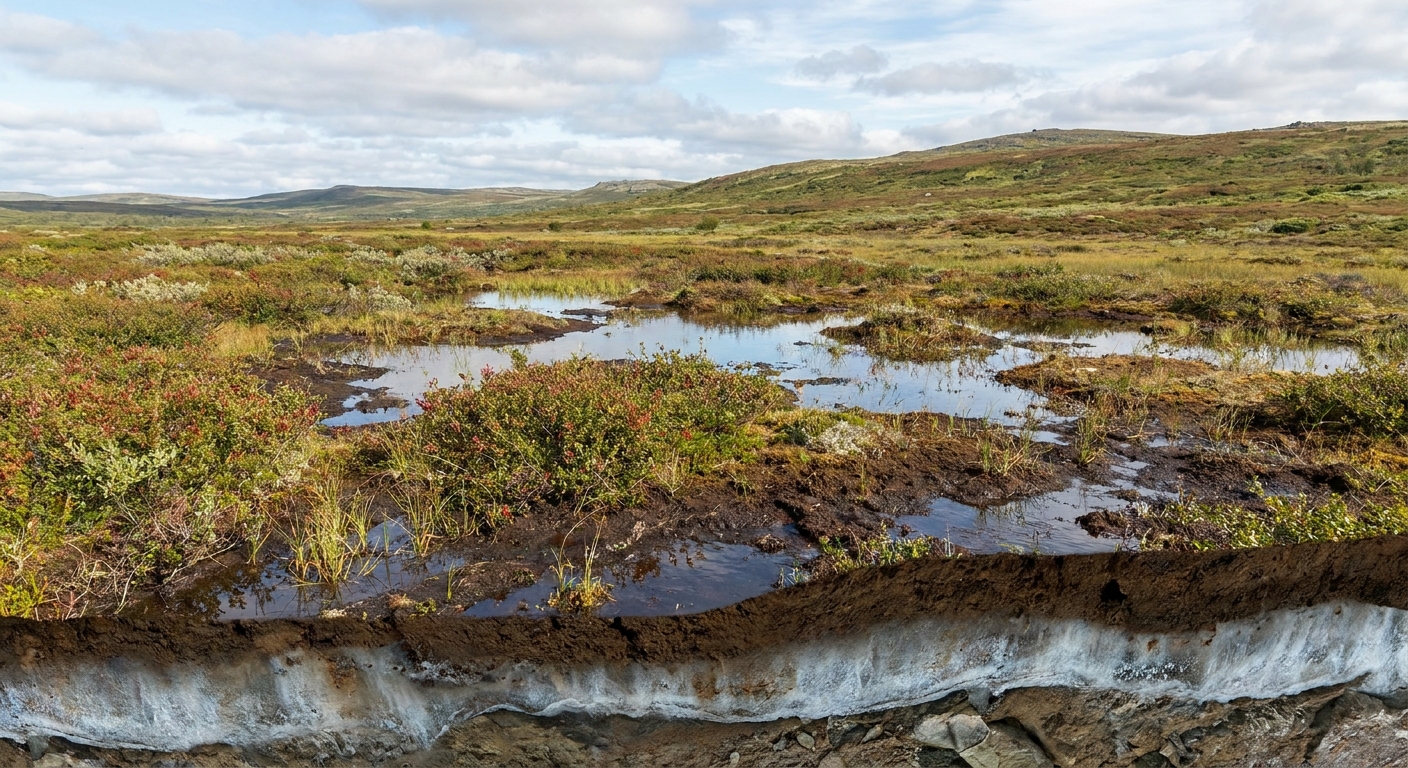
Ice wedges
One of the coolest structures in permafrost is something you can walk over for years without realizing it is there: ice wedges.
Here is the basic idea in everyday terms. When extremely cold winter air chills the ground, the frozen surface can crack. In spring and summer, meltwater trickles into those cracks and refreezes. Repeat that cycle for centuries, and the crack slowly fills with vertical slabs of ice that grow into wedge shapes.
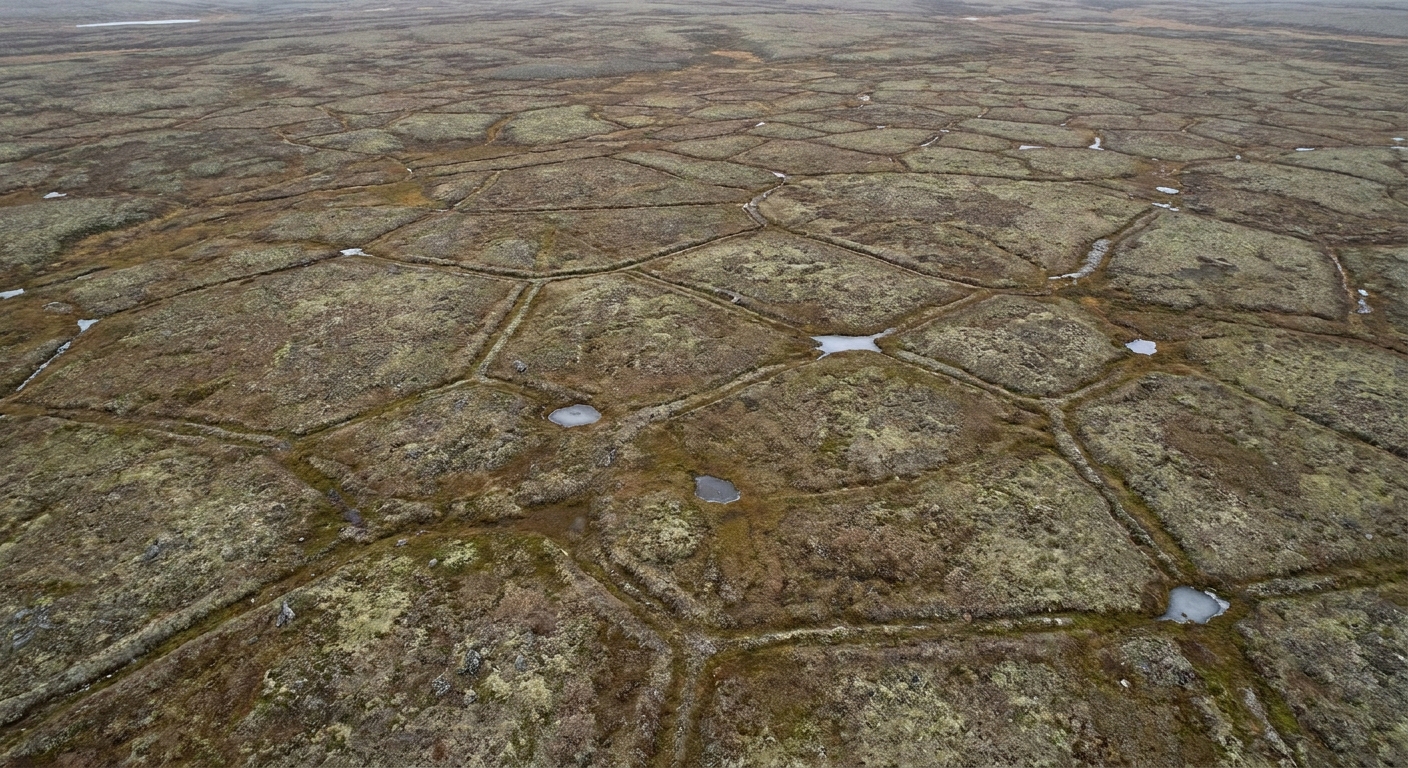
Over time, networks of ice wedges can form polygon patterns across the landscape. If you have seen aerial photos of Arctic ground with honeycomb-like polygons, you are often looking at the surface expression of ice-wedge networks.
Ice wedges matter because they are a big reason some permafrost is ice-rich. When ice-rich permafrost thaws, it can collapse dramatically, reshaping the surface into pits, troughs, and ponds.
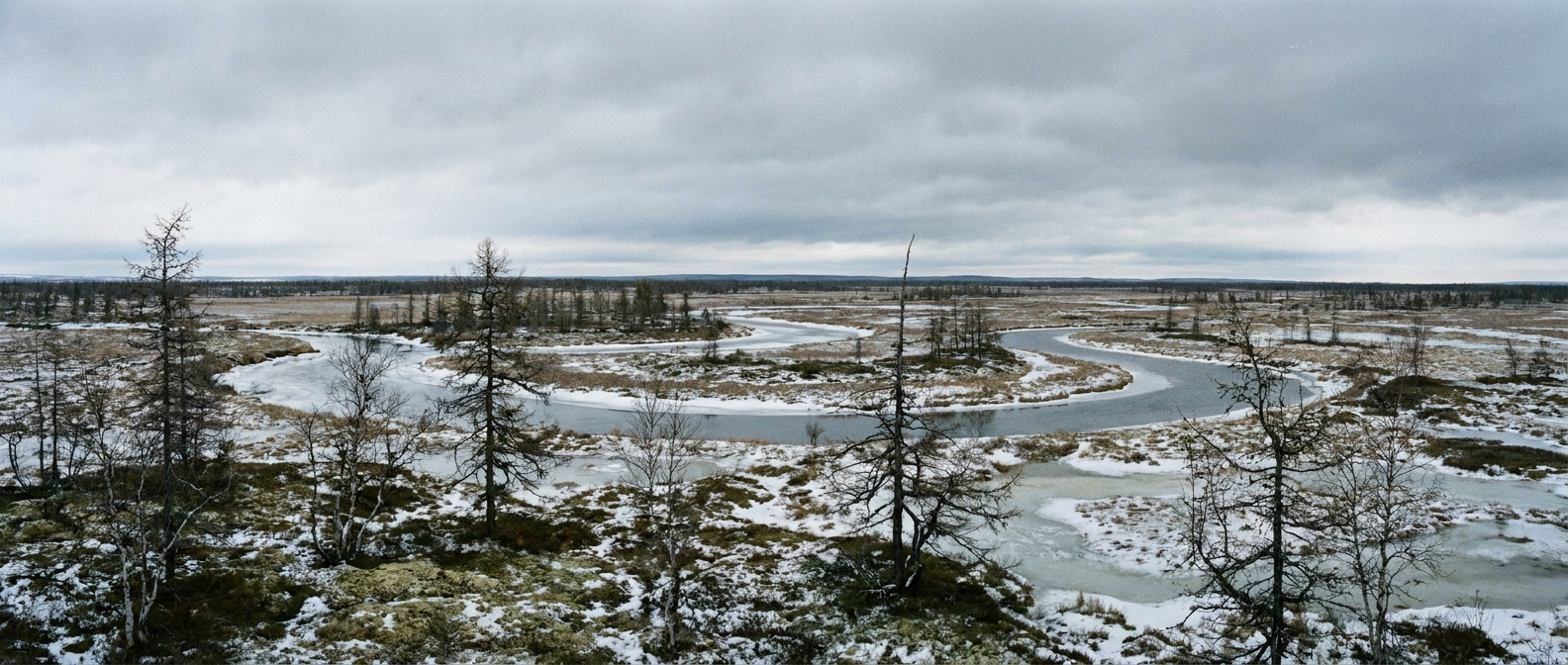
Where permafrost is found
Permafrost is strongly associated with the Arctic, but it is not limited to it. It shows up wherever the long-term ground temperature stays cold enough.
High latitudes
The largest permafrost regions are in the Northern Hemisphere, across parts of:
- Alaska
- Canada
- Greenland
- Russia and Siberia
- Scandinavia
In these places, permafrost can be continuous (covering most of the landscape) or discontinuous (patchier, with thawed areas in between). Farther toward the margins it can also be sporadic or isolated, showing up in colder pockets while nearby ground stays seasonally thawed.
High mountains
Permafrost can also exist at high elevations even at lower latitudes. Think of cold mountaintops and plateaus where average temperatures stay low enough that the ground remains frozen for years on end. Mountain permafrost can be harder to map because it is often patchy, influenced by slope direction, shade, snow drift patterns, and local geology.
What thaw does
Permafrost thaw is not just “some extra mud.” It can change the ground’s strength, its shape, and even its chemistry. Three consequences tend to dominate the conversation: infrastructure, landscapes, and carbon.
1) Roads and buildings can shift
In many permafrost regions, buildings, pipelines, and roads were designed around the assumption that the ground below would stay frozen and stable. When that ice begins to melt, the ground can settle unevenly. Engineers call this differential settlement, and it is the reason you might see:
- Tilting foundations
- Cracked walls and buckled floors
- Warped roads and runways
- Strained water and sewer lines
Some structures are built on piles that extend into stable frozen ground, and some roads use insulation layers or special gravel designs to keep the ground colder. These strategies can help, but they become harder and more expensive as warming increases and the active layer deepens.
2) The surface can collapse
When thaw causes the surface to collapse and reshape, scientists often use the term thermokarst. It can create new ponds, drain old lakes, and turn relatively flat terrain into a rumpled surface of depressions and ridges. In the real world it might look like a lake shoreline slumping into the water, or polygon troughs deepening as ice wedges degrade. Those changes affect ecosystems and local hydrology, and they can also shift surface wetness and vegetation in ways that influence fuel and moisture patterns during fire seasons.
3) Carbon can escape
Permafrost is not only frozen ground. In many places it is also a deep freeze for ancient organic material, like roots, leaves, and other plant matter that accumulated over thousands of years. While it stays frozen, decomposition is heavily constrained by cold temperatures, limited liquid water, and reduced microbial activity. When it thaws, microbes get more access to water and organic matter, and that decomposition can release carbon dioxide and, in waterlogged conditions, methane.
That matters because CO2 and methane are greenhouse gases. More greenhouse gases trap more heat. More heat can thaw more permafrost. It is not the only climate feedback on Earth, but it is a powerful one, and it is one reason permafrost research gets so much attention.
Living with thaw
In places where thaw risk is rising, the practical response is usually a mix of monitoring and design changes. That can mean drilling and sampling to understand how ice-rich the ground is, tracking ground temperatures over time, and designing foundations and roads to reduce heat transfer into the soil.
Depending on the site, that might include elevating buildings, improving drainage so water does not pool and speed thaw, using air convection embankments, or installing thermosyphons that pull heat out of the ground in winter. None of it is a magic fix, but good site investigation and maintenance can buy time and reduce surprises.
Common misconceptions
Permafrost is not a slab of ice
Permafrost is frozen ground. It can be packed with ice, or it can be mostly soil and rock with ice filling pores and cracks. The amount of ice is a huge part of why thaw can be subtle in one place and catastrophic in another.
It is not always snowy on top
Permafrost does not require a constant blanket of snow. Snow cover varies, and it can actually insulate the ground, sometimes keeping it warmer than you might expect. Windy areas can be scoured nearly bare in winter, while drifts pile up in others, and that difference matters to how the ground freezes.
It can exist under the ocean
Some permafrost formed when sea levels were lower and land was exposed. When oceans rose, parts of that frozen ground ended up submerged. Subsea permafrost is an active research area, partly because thawing there can affect seafloor stability and can interact with methane hydrates and broader seafloor carbon cycling.
Permafrost in one sentence
Permafrost is ground that stays frozen for at least two straight years, capped by an active layer that thaws seasonally, often threaded with ice wedges, and found across the Arctic and cold mountain regions. When it thaws, it can destabilize roads and buildings, reshape landscapes through thermokarst, and accelerate the release of long-stored carbon.