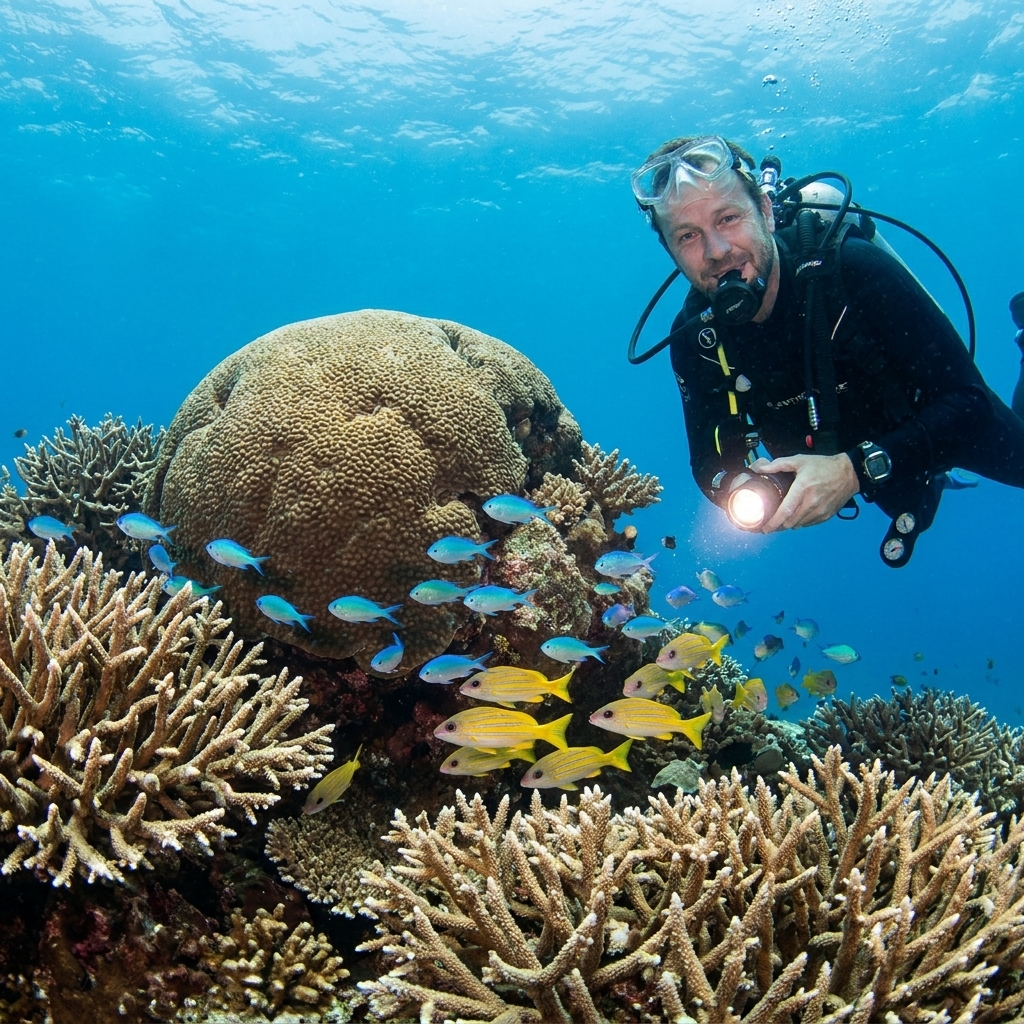
The first time I saw a bleached reef photo in a classroom slideshow, it looked like someone had drained all the color from a living city. That gut punch is part of why coral bleaching gets so much attention. But the mechanics are surprisingly specific and, in a way, heartbreakingly simple: when seawater stays too warm for too long, corals hit the eject button on the tiny algae that normally feed them.
Let’s unpack what “too warm” and “too long” actually mean, what it takes for a reef to bounce back, and how bleaching differs from another big ocean threat that often gets lumped in with it: ocean acidification.
Corals are animals with solar-powered roommates
Corals are not plants or rocks. Reef-building corals are animals that build calcium carbonate skeletons and live as colonies of tiny polyps. Their superpower is a partnership with microscopic algae often called zooxanthellae, a catch-all term for symbiotic dinoflagellates in the family Symbiodiniaceae (including multiple genera). These algae live inside coral tissue.
Here is the deal those algae offer:
- Food: The algae use sunlight to photosynthesize and share a large fraction of the sugars and other compounds they make with the coral. Think of it as an internal snack bar powered by the Sun.
- Color: Much of a coral’s brown, green, and golden tones come from these algae and the pigments involved in photosynthesis.
- Growth support: With a steady energy supply, corals can allocate more resources to building their skeletons, growing, and reproducing.
In return, the coral provides the algae with a protected home and access to nutrients and carbon dioxide.
What coral bleaching actually is
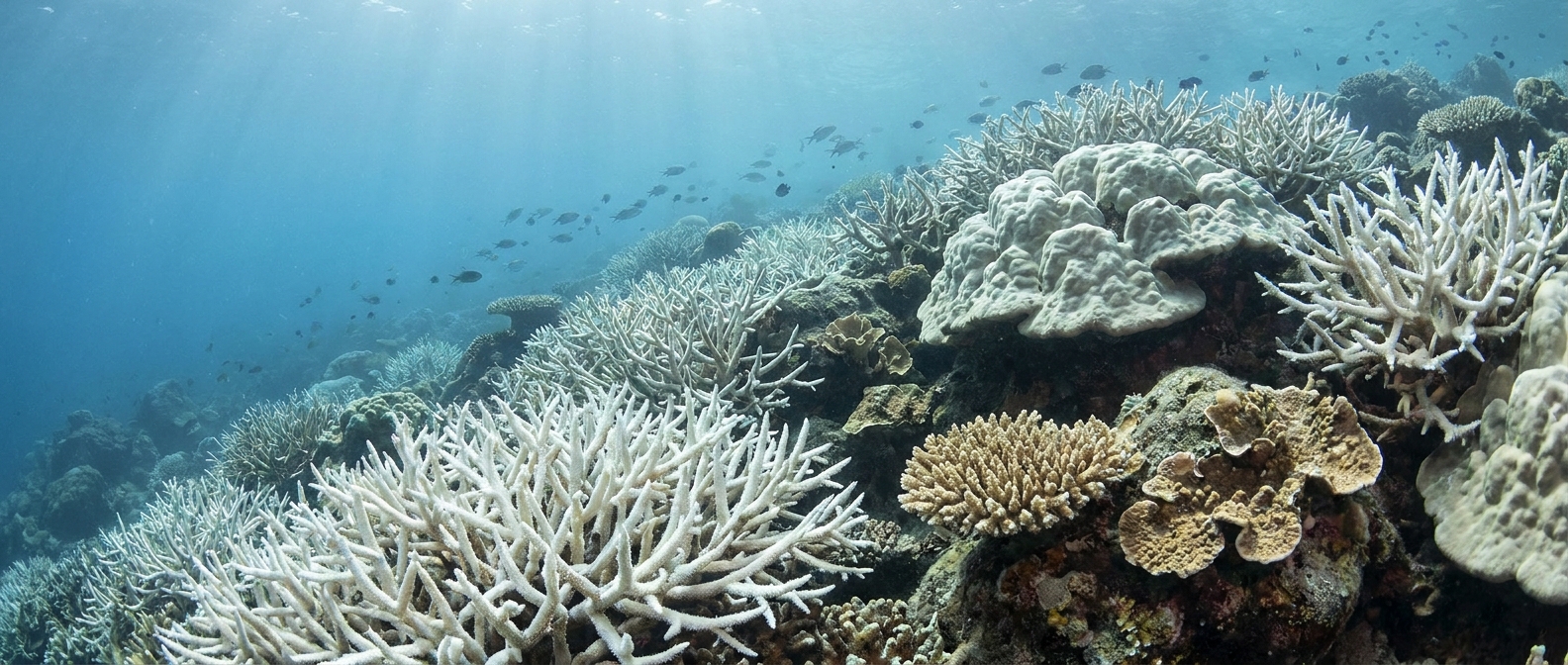
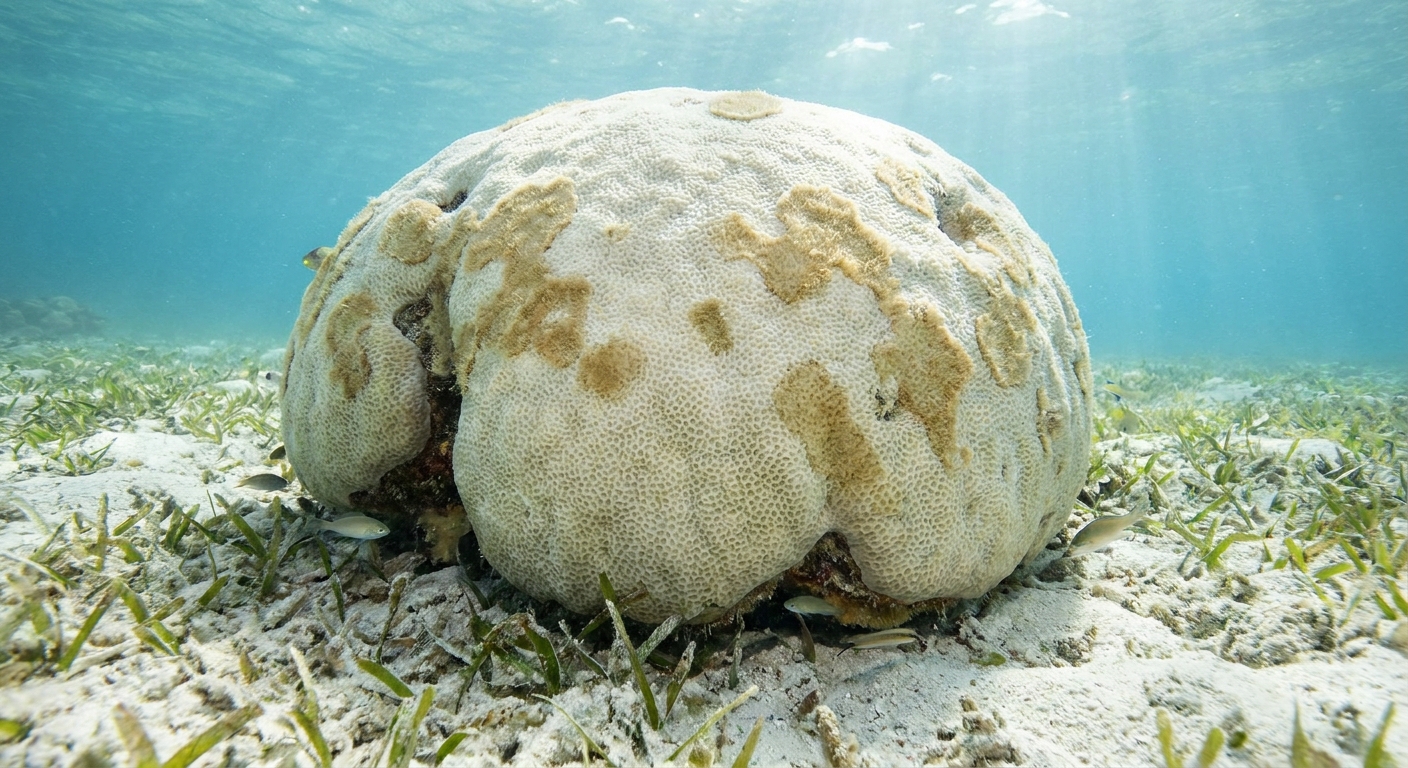
Coral bleaching is a stress response where corals lose or expel their symbiotic algae. With fewer algae (and less pigment), the coral tissue becomes more transparent, revealing the bright white calcium carbonate skeleton underneath. That is why bleached corals look pale or ghostly white.
A key point: bleaching does not automatically mean the coral is dead. It means the coral is in trouble. Without its algae partners, a coral loses a major energy source and can begin starving. If stressful conditions persist, disease risk rises and mortality can follow.
The heat and time triggers
Corals can handle some temperature variation. Many reefs naturally experience seasonal warming and cooling. The problem is heat stress that crosses a local threshold and stays there long enough to disrupt the coral-algae relationship.
Temperature is local
A common misconception is that bleaching happens at one global temperature, like “above 30°C.” In reality, reefs are adapted to their usual conditions. As a rough rule of thumb, reefs can bleach when temperatures stay about 1 to 2°C above the usual summertime maximum for long enough, but that threshold varies by location, season, and recent history.
Duration turns stress into crisis
Short warm spikes can be survivable. The biggest bleaching events tend to involve weeks of unusually warm water. This duration component matters because heat stress builds physiological damage over time.
How scientists track “too long”
One widely used way to make this measurable is NOAA’s Coral Reef Watch heat-stress metrics, including Degree Heating Weeks. It is basically a running total of how much, and for how long, sea surface temperatures sit above the expected local maximum. You do not need the math to get the point: a little warmth for a long time can be just as dangerous as a lot of warmth for a shorter time.
What is happening inside the coral
At elevated temperatures, the algae’s photosynthetic machinery can become inefficient. That can increase the production of reactive oxygen species, which are chemically reactive molecules that damage cells. Corals respond as if they are in a smoky room: they try to protect themselves by getting rid of the source of cellular stress, which often means expelling the algae or digesting them.
That protective move can backfire, because losing the algae also removes the coral’s main energy source.
Other stressors can lower the tipping point
Heat is the headline trigger, but it does not act alone. Bleaching risk can rise when heat stacks with:
- Intense sunlight (especially during calm, clear conditions)
- Pollution and nutrient runoff that disrupt coral physiology or promote harmful microbes
- Sedimentation that smothers corals, reduces light availability, and forces corals to spend energy clearing particles
- Low tide exposure in shallow reefs during hot, still days
- Disease outbreaks that take advantage of stressed corals
In other words, warming loads the dice, and local conditions can make the roll even worse.
Other bleaching triggers
Heat is the driver behind today’s mass bleaching events, but it is not the only way to push a coral into bleaching. Some corals can also bleach during cold snaps, after major salinity swings (like floodwaters or hypersaline lagoons), or from certain pollutants and toxins. Those tend to be more localized than global heatwaves, but they are part of the picture.
What recovery requires
A bleached coral is like a runner who just lost access to water mid-marathon. Recovery is possible, but it depends on conditions turning favorable quickly enough.
Cooler water, first and foremost
For corals to regain their algae, they generally need heat stress to ease. That can mean seasonal cooling, a weather shift, or changes in currents that bring in cooler water.
Time to reestablish the partnership
If a coral survives the bleaching period, algae can return through:
- Regrowth of remaining algae that were not fully expelled
- Reacquisition from the environment if compatible symbionts are available
Color can return within weeks to months in some cases, but full recovery of growth, reproduction, and reef structure can take much longer.
Enough energy to pay the bills
Without algae, corals rely more on capturing plankton and organic particles from the water. If food availability is low or the coral’s feeding ability is compromised, starvation becomes a real risk.
Low additional stress and low disease pressure
Bleached corals are more vulnerable to infection and tissue loss. Cleaner water, less pollution, and less physical damage (like anchor strikes or destructive fishing) can improve odds of survival.
Why repeated bleaching is worse
Even when corals survive a bleaching event, repeated events close together can be devastating. Corals need time to rebuild energy reserves and reproduce. When severe heat stress returns before recovery is complete, reefs can shift from coral-dominated habitats to algae-dominated ones, and that can change the entire ecosystem.
Bleaching vs. acidification
Both bleaching and ocean acidification are linked to rising atmospheric carbon dioxide and global warming, so they are often discussed together. But the mechanisms are different.
Bleaching is heat stress biology
- Main driver: prolonged elevated temperature (often compounded by high light and other stressors)
- Primary effect: loss of symbiotic algae, reduced energy supply, higher risk of starvation and mortality
- What you see: whitening or paling of coral tissue
Acidification is chemistry changing the building conditions
Ocean acidification happens as the ocean absorbs carbon dioxide from the air. CO2 reacts with seawater to form carbonic acid, which shifts the balance of carbonate chemistry and reduces the availability of carbonate ions that many organisms use to build calcium carbonate structures.
- Main driver: increasing dissolved CO2 in seawater
- Primary effect: makes it harder for corals (and other calcifiers) to build and maintain skeletons, and can increase dissolution under some conditions
- What you see: not “bleaching” color loss, but slower growth, weaker skeletons, and greater erosion over time
These two threats can also interact. A coral already struggling to build skeleton in more acidic conditions may have less resilience when heat stress arrives. Meanwhile, a bleached coral with reduced energy may have fewer resources to invest in calcification. Different mechanisms, same unfortunate direction: less robust reefs.
What bleaching means for people
Coral reefs cover a small fraction of the seafloor, but they support a huge share of marine biodiversity. When reefs degrade, the effects ripple outward:
- Fisheries: Many communities rely on reef-associated fish for food and livelihoods.
- Coastal protection: Healthy reefs help absorb wave energy and reduce storm-driven erosion.
- Tourism and local economies: Reef loss can mean fewer visitors and less income for coastal towns.
- Medicine and research: Reef species have helped inspire biomedical research, including compounds from sponges studied for anticancer activity and cone snail toxins that informed pain research.
One of the hardest parts to communicate is that bleaching is not just a “nature story.” It is infrastructure, food security, and cultural heritage wrapped into one ecosystem.
Can corals adapt?
Some corals show greater heat tolerance than others. Species differ, and even colonies within a species can vary. In some cases, corals hosting certain symbiont types appear more heat-tolerant, sometimes at a cost such as slower growth under normal conditions.
There is active research into how reefs might persist, including natural selection, acclimatization, and interventions like reef restoration and assisted evolution approaches. But adaptation has limits, especially if marine heatwaves become more frequent and intense. Biological resilience works best when it is not asked to sprint continuously.
What you can do
I am a big believer in matching actions to the scale of the problem without slipping into either despair or magical thinking. Coral bleaching is driven largely by global warming, so solutions also live at multiple levels.
Support emissions reductions
Policies and practices that cut greenhouse gas emissions are the most direct way to reduce the frequency of extreme heat stress in the ocean.
Protect reefs locally
Local stressors do not cause heatwaves, but reducing them can improve a reef’s odds of surviving one.
- Support water quality improvements and runoff reduction.
- Respect marine protected areas and sustainable seafood choices.
- Use reef-safe behavior while snorkeling and diving: no touching corals, careful buoyancy, no anchoring on reefs.
- Use sun protection responsibly and follow local guidance. Some “reef-safe sunscreen” labels are not standardized, and rules vary by place.
Back restoration and monitoring
Reef restoration is not a replacement for climate action, but it can help in targeted areas, especially where local conditions are favorable. Monitoring also matters because it helps scientists and managers identify refuges, outbreaks, and recovery patterns.
Quick questions
Is bleaching the same as coral disease?
No. Bleaching is primarily the loss of symbiotic algae due to stress, especially heat. Disease involves infection or other pathological processes. Bleaching can make disease more likely, but they are not the same thing.
Do corals bleach only because of climate change?
Heat-driven mass bleaching events have become more common as oceans warm, but bleaching can also be triggered by other extremes like cold snaps, salinity changes, and some pollutants. The large, widespread events making headlines are strongly tied to unusually warm ocean conditions.
Why do bleached corals look bright white?
Because the coral tissue becomes clearer when algae are lost, revealing the white calcium carbonate skeleton beneath.
Can a bleached reef come back?
Sometimes, yes. If temperatures return to normal soon enough and corals avoid disease and starvation, algae can return and corals can recover. If heat stress is severe or prolonged, many corals die and recovery becomes a long, uncertain process.
The takeaway
Coral bleaching is not just “corals turning white.” It is a specific physiological alarm bell: prolonged heat stress disrupts a partnership corals rely on for energy. Recovery is possible, but it requires cooler conditions and time, and repeated events can overwhelm even resilient reefs. And while bleaching often shares the stage with ocean acidification, the two are different problems: bleaching is driven by heat stress biology, acidification is driven by carbon chemistry that affects skeleton building.
When I take my dog Quark on hikes, I love pointing out ecosystems that look stable but are actually a delicate web of partnerships. Coral reefs are that idea turned up to eleven. Protecting them means protecting the conditions that let those partnerships keep working.