I used to tell my physics students that Earth is a heat engine with quirks. The Arctic is one of its biggest quirks. Turn up the planet’s thermostat a little, and the far north responds like you just opened the oven door. That outsized response has a name: Arctic amplification.
In plain terms, Arctic amplification is the well-observed pattern that the Arctic is warming faster than the globe as a whole. It is not a separate kind of climate change. It is the same global warming signal, boosted by feedbacks that are especially powerful at high latitudes.
The basic idea
Arctic amplification means that when you calculate temperature trends over the Arctic region and compare them with the global mean, the Arctic trend is larger. Since the start of routine satellite monitoring of sea ice in 1979, observations and major assessments consistently find that the Arctic has warmed roughly two to four times faster than the global average, with the ratio typically higher in the cold season than in summer. (See the IPCC Sixth Assessment Report, the NOAA Arctic Report Card, and AMAP syntheses.)
To pin that range to a concrete example: using a common definition of the Arctic as 60–90°N, the observed warming rate since the late 20th century is about 3 times the global average in many recent summaries, with larger ratios in autumn and winter. Exact values vary with the chosen Arctic boundary, season, dataset, and end year, but the headline result is robust.
A useful way to picture it is this ratio:
Arctic Amplification Factor = (Arctic temperature change) / (Global mean temperature change)
If the planet warms by 1°C over a given period and the Arctic warms by 3°C over the same period, the amplification factor is 3.
That number is not fixed. It varies by season and geography. The strongest amplification tends to show up in the cold season in regions where sea ice has retreated and left open water to store and then release heat.
One quick definition note: Arctic amplification is specifically about the Arctic. You may also hear polar amplification, which is the broader idea that high latitudes warm faster in general. In practice, the Arctic signal is clearer and stronger than the Antarctic’s, for reasons I will get to below.
Why the Arctic warms faster
Greenhouse gases warm the whole planet by reducing how efficiently Earth loses heat to space. But in the Arctic, several feedbacks act like a microphone too close to a speaker. A little warming triggers changes that cause even more warming.
Two of the biggest players, and the ones I reach for when explaining this in everyday language, are:
- Sea-ice albedo feedback: less ice means more absorbed sunlight.
- Lapse-rate feedback: the Arctic atmosphere is structured in a way that makes near-surface warming especially strong.
Sea-ice albedo feedback
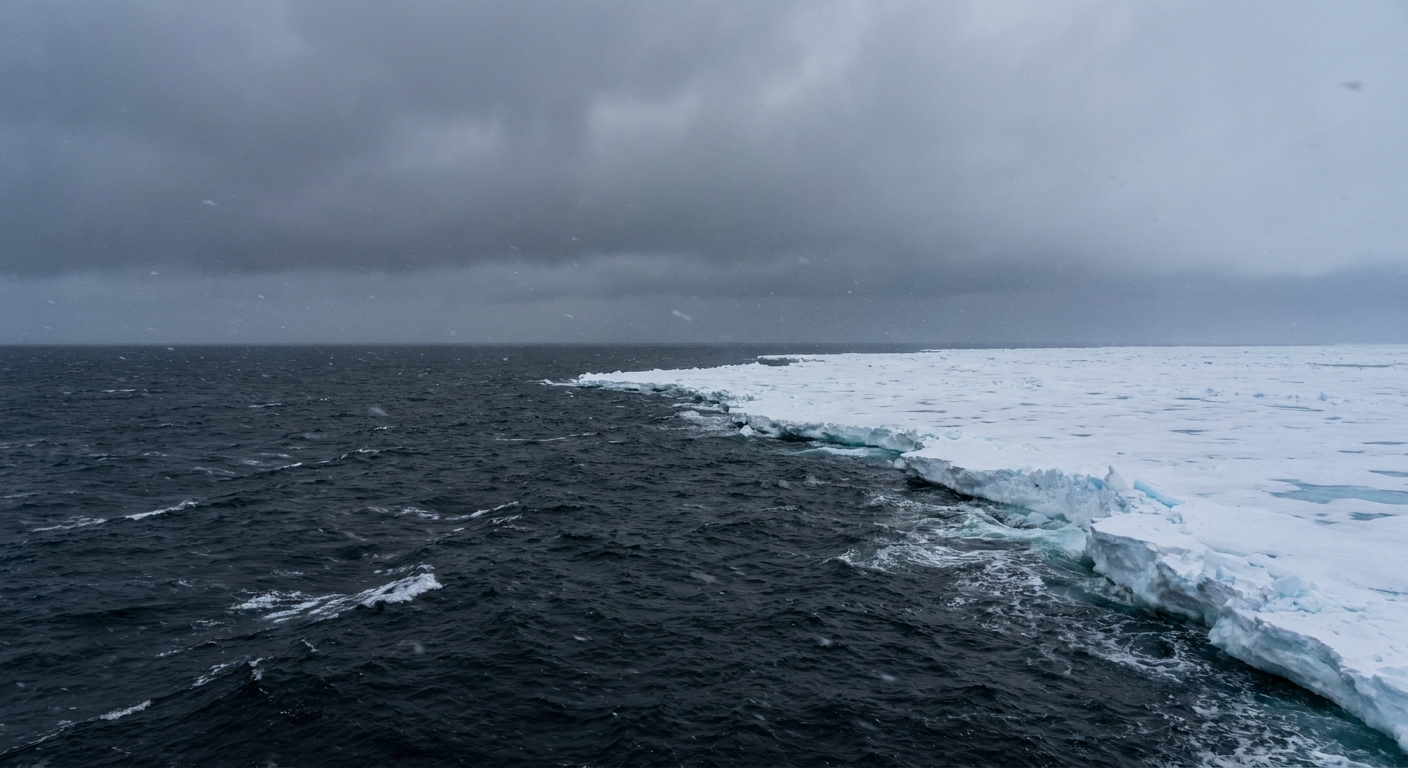
Albedo is just reflectivity. Fresh snow and bright sea ice are like a white T-shirt in the sun. They reflect a lot of incoming sunlight. Open ocean is more like a black hoodie. It absorbs much more.
Step by step
- Greenhouse warming nudges Arctic temperatures upward.
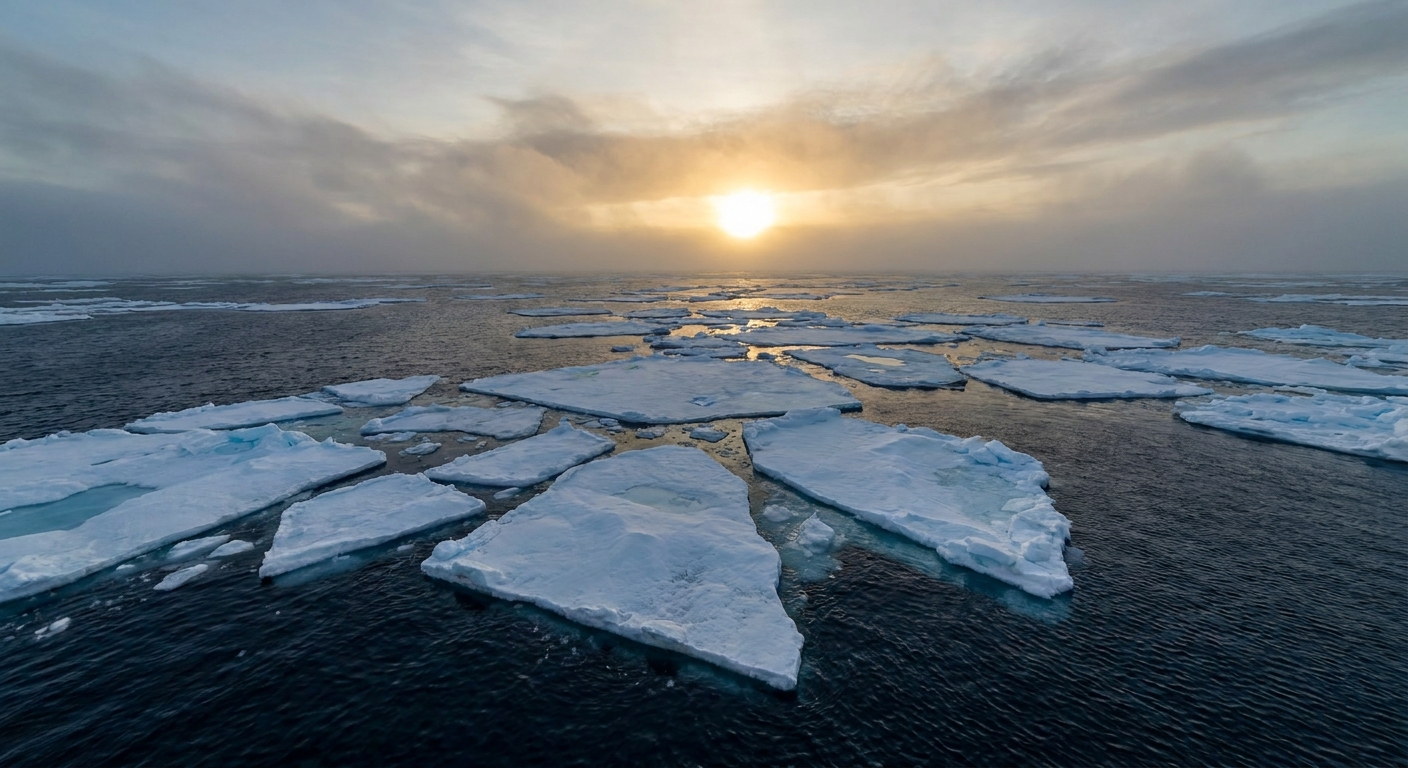
- Sea ice melts earlier in spring and summer, and it reforms later in fall.
- More dark ocean is exposed during months with sunlight.
- The ocean absorbs extra solar energy that used to be reflected back to space.
- That stored heat slows ice growth later and warms the air above the ocean, especially in autumn and winter when the ocean releases heat back to the atmosphere.
This feedback is a big reason Arctic amplification is so tightly tied to sea-ice loss. It is also why the timing matters. Losing ice in midwinter does not increase absorbed sunlight much, because there is not much sunlight to absorb. But the heat stored in summer can still show up later as warmer air in the cold seasons.
Lapse-rate feedback
The lapse rate is how temperature changes with height. In much of the tropics, warm air rises, thunderstorms mix the atmosphere, and the vertical temperature profile is shaped by that vigorous convection.
The Arctic is different. Especially in winter, it often has a stable, layered atmosphere with temperature inversions, where air near the surface is colder than the air above it. That stability reduces vertical mixing.
How it boosts surface warming
- When extra heat enters the Arctic system, it tends to stay concentrated near the surface instead of being mixed upward.
- Because the near-surface air is trapped under more stable layers, the same added energy can produce a larger near-surface temperature increase.
- In energy-balance terms, the Arctic’s vertical temperature structure changes how efficiently added heat is translated into radiation to space, and it favors strong warming near the ground. Put simply: the Arctic atmosphere is built in a way that lets surface temperatures swing big.
If sea-ice albedo feedback is the Arctic losing its reflective sunglasses, lapse-rate feedback is the Arctic’s habit of wearing a heavy, calm “blanket” of stable air that keeps extra warmth close to the surface.
Other feedbacks
Sea-ice albedo and lapse-rate feedbacks are central, but they do not work alone. Depending on the study, you will also see these contributors discussed:
- Water vapor feedback: warmer air can hold more water vapor, which is itself a greenhouse gas. The Arctic starts out very dry, so changes can be meaningful.
- Cloud feedbacks: clouds can cool by reflecting sunlight and warm by trapping infrared radiation. In the Arctic, especially during the dark season, clouds often have a net warming influence, but the sign and size of cloud feedbacks are regime-dependent and remain an active research area. For careful overviews, see IPCC AR6 and the NOAA Arctic Report Card.
- Changes in heat transport: winds and ocean currents move heat from lower latitudes toward the Arctic. Shifts in circulation can add or subtract from the trend in particular years or decades.
- Snow cover changes on land: earlier snowmelt exposes darker ground, raising absorbed sunlight, similar in spirit to sea-ice albedo feedback.
If you are looking for one “single cause,” the honest answer is that Arctic amplification is a package deal. Multiple feedbacks reinforce each other, and their importance varies across regions and seasons.
How scientists measure it
When scientists say the Arctic is warming faster, they are typically comparing temperature trends from observations and reanalyses (weather-model reconstructions constrained by data) using consistent definitions.
1) Define the Arctic
There is no single border everyone uses. Common choices include:
- Latitude-based: everything north of 66.5°N (the Arctic Circle) or 60°N.
- Arctic Ocean focused: ocean areas north of a latitude threshold, sometimes excluding land.
- Climate or ecosystem boundaries: less common for temperature-trend headlines, more common for impacts research.
The choice changes the exact number but not the big picture: the high north warms faster than the global mean.
2) Choose the metric
- Near-surface air temperature (often 2-meter temperature) is common because it matches weather station data and many climate model outputs.
- Surface temperature from satellites can differ in detail because it is tied to the skin temperature of ice, snow, and ocean.
3) Use anomalies
Scientists usually work with temperature anomalies, which are deviations from a baseline average (for example, an average over a reference period). This matters because it removes the obvious fact that the Arctic is colder in absolute terms. The key question is how fast it is changing relative to its own past.
4) Area-weight the average
Earth is a sphere, so grid boxes near the pole represent smaller physical areas than equally spaced grid boxes near the equator. To avoid overcounting the Arctic just because there are lots of tiny high-latitude grid cells, researchers compute area-weighted averages.
5) Compare the same years
Trends depend on the start and end dates. A comparison might look like:
- Global mean temperature trend from 1979 to the present
- Arctic mean temperature trend over the same years
From there, the amplification factor is just the ratio of those two trends.
What it means and what it does not
It does mean faster Arctic change
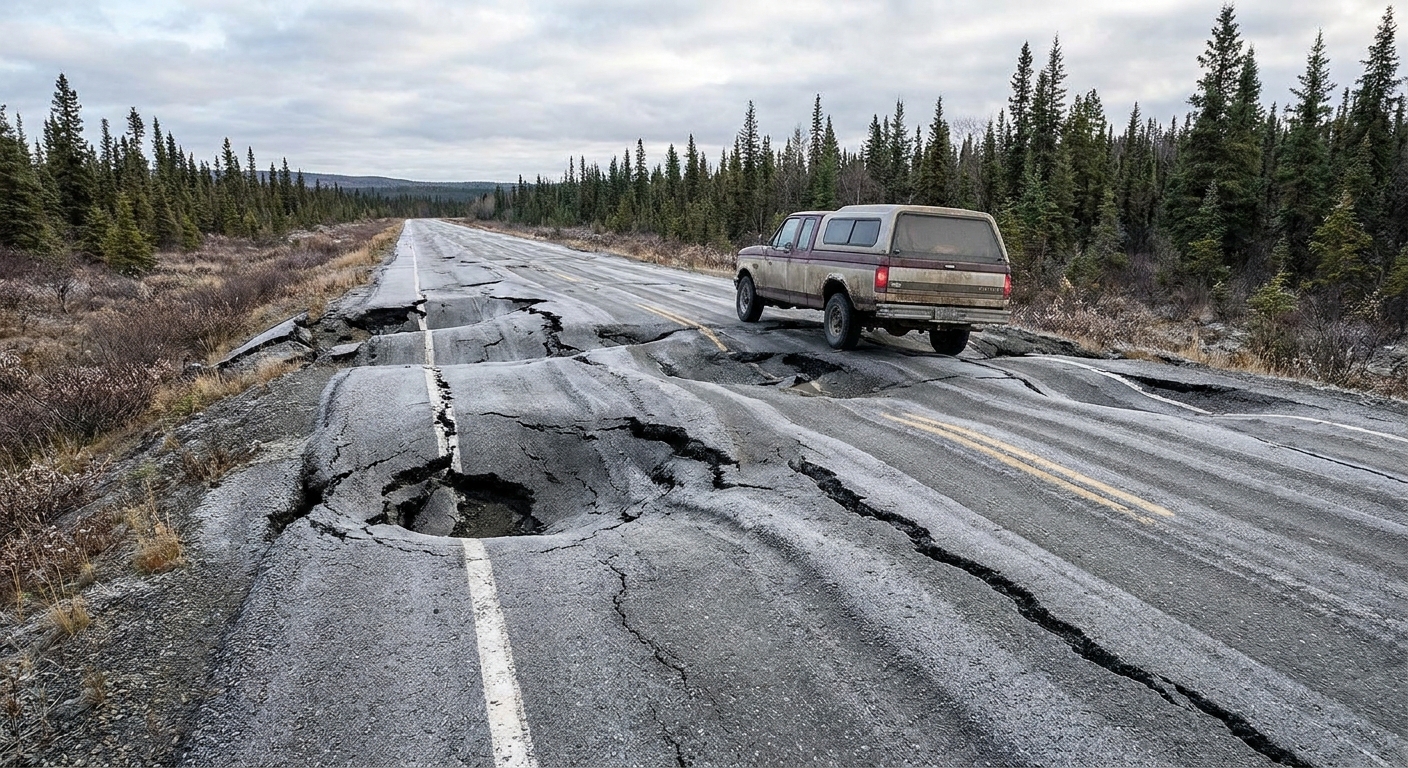
Arctic amplification is one reason changes in the Arctic can feel abrupt: sea ice decline, permafrost thaw, coastal erosion, ecosystem shifts, and infrastructure challenges in northern communities are all influenced by the rapid warming trend.
It does not mean the Arctic causes all extremes
You will sometimes hear simplified claims that a warming Arctic directly explains specific cold snaps or storm patterns farther south. The real science is more careful: the Arctic can influence atmospheric circulation, but connecting Arctic change to particular mid-latitude extremes is an active research area with mixed results depending on the event type, season, and methods used.
A safe takeaway is: Arctic amplification is robust. Its downstream effects on weather patterns are plausible and studied, but not every extreme event has a neat Arctic origin story.
FAQ
Is Arctic amplification natural variability or human-caused?
Both can play roles in any short period, but the long-term warming trend and the background conditions that enable strong amplification are driven primarily by human-caused greenhouse gas increases. Natural variability can speed up or slow down the trend temporarily, but it cannot account for most of the sustained multi-decade warming seen in observations and attribution studies assessed by the IPCC. In plain language: models and attribution studies match the magnitude and pattern far better when human forcing is included than when it is left out.
Does Antarctica show the same amplification?
Not in the same way. Antarctica is shaped by different geography and ocean circulation. Much of Antarctica is a high, cold continent surrounded by the Southern Ocean, which can absorb and move heat differently than the Arctic Ocean. Some regions, such as the Antarctic Peninsula and parts of West Antarctica, have warmed substantially, while other areas show smaller trends or different timing. The overall picture is more regionally variable than in the Arctic.
Why is Arctic amplification strongest in winter?
Winter amplification is closely linked to summer and autumn sea-ice loss. Open water stores heat during sunnier months, then releases it as the atmosphere cools, leading to especially large wintertime near-surface air temperature increases over areas that used to be covered by ice.
How do we know the Arctic is warming with fewer stations?
Scientists combine multiple lines of evidence: Arctic weather stations, ocean buoys, satellites, and reanalysis products that blend observations with physics-based models. Each has strengths and limitations, but together they paint a consistent picture of rapid Arctic warming.
The takeaway
Arctic amplification is the Arctic’s “extra loud” response to global warming. The headline mechanisms are straightforward even if the details get rich: melt reflective ice, expose heat-absorbing ocean, store energy in summer, release it later, and warm a near-surface atmosphere that is primed to hold onto that heat.
If you want to keep one mental image: the Arctic is losing a bright mirror and gaining a dark sponge. That swap alone would speed up warming. Add the Arctic’s stable, layered air, and the warming near the surface can surge ahead of the global average.