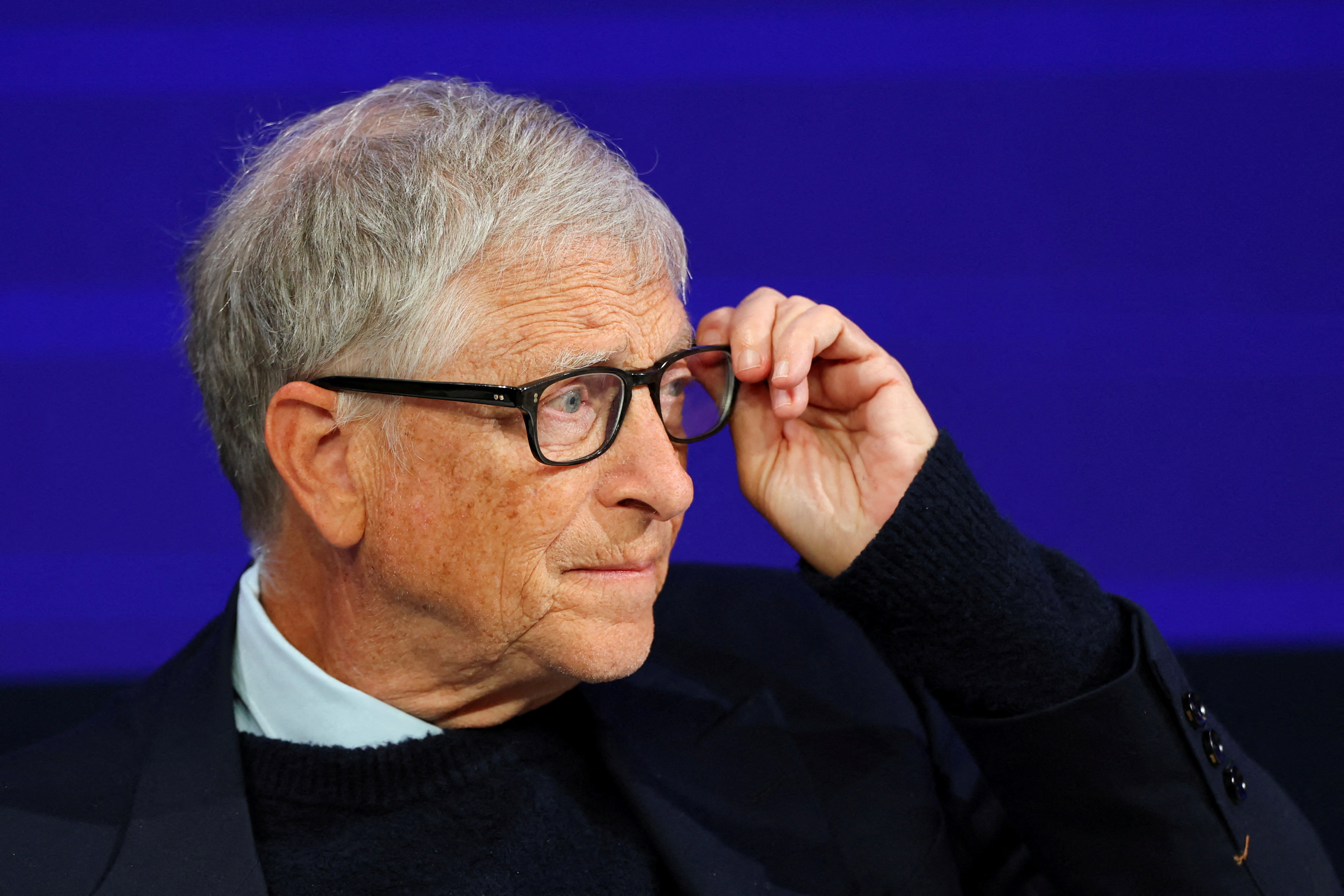
Bill Gates is back in the middle of the AI conversation for a blunt reason: he has warned that artificial intelligence could become the “most dangerous thing” humanity has ever faced, and he is not convinced our rules, tests, and institutions are keeping up.
When a high-profile tech figure uses language that strong, it tends to spark two reactions at once. One group hears “fear-mongering.” Another hears “finally, someone with influence is saying the quiet part out loud.” The more useful move is neither panic nor eye-roll. It is asking a very physics-teacher kind of question: danger compared to what, and under what conditions?
What Gates is actually warning about
Gates’ core point is not that today’s AI tools are inherently evil. It is that the trajectory of increasingly capable systems, paired with weak oversight, is a recipe for high-impact failure.
In plain language, his warning bundles three ideas:
- Capability is compounding fast. Once an AI system can do a useful task, it can often be scaled, copied, and deployed at near-zero marginal cost.
- Deployment incentives are misaligned. Companies and governments feel pressure to move first, ship quickly, and capture value, even when safety evaluation is incomplete.
- Rules are arriving late. Regulation and enforcement mechanisms tend to be slow, especially when the technology is global, software-based, and changing month to month.
The headline-grabbing phrase, that AI could be the “most dangerous thing” humans have ever faced, is doing what a smoke alarm does. It is loud by design, because he is worried the house is being rewired while the power is still on.
Why “regulation is lagging” matters more than the soundbite
In science class, I used to tell students that risk is not just about how powerful something is. It is also about how predictable it is, how controllable it is, and how widely it can spread when things go wrong.
AI scores unusually high on the “spreads quickly” axis. If a new model can write convincing text, generate code , or automate decision-making, it can be integrated into products, workplaces, and public systems almost instantly. That pace creates a familiar safety gap: the technology changes first, and only later do we build standardized tests, auditing norms, and liability structures.
Gates’ concern about lagging regulation is essentially a concern about missing guardrails. Without shared rules, the world gets a patchwork of voluntary promises, uneven enforcement, and plenty of room for bad actors to use the same tools as everyone else.
“Most dangerous” does not mean “most evil”
When people hear “dangerous technology,” they often picture a single catastrophic object, like a weapon. AI is different. It is more like a general-purpose engine that can power a hospital or a heist.
So what kinds of danger are we talking about?
1) Scale and speed of misinformation
If a system can produce believable content at massive volume, the bottleneck for influence shifts. The limiting factor becomes distribution, not creation. That is a problem for elections, public health messaging, and social trust.
2) Automation of cyber and fraud workflows
AI can lower the skill barrier for scams and cyberattacks by drafting messages, writing code, or helping attackers iterate faster. Even modest boosts in efficiency can change the economics of crime.
3) High-stakes decision-making without accountability
When AI is used to screen job candidates, flag insurance claims, prioritize policing, or guide medical workflows, errors and bias become operational, not theoretical. If no one can explain a decision , it becomes hard to appeal, audit, or correct.
4) Frontier risks from more advanced systems
Gates’ strongest language is typically read as pointing beyond today’s chatbots toward more capable systems. The worry is that as autonomy increases, failures become harder to contain, and incentives to cut corners rise.
What “AI guardrails” look like in the real world
Regulation can sound abstract, so let’s make it concrete. In practice, meaningful AI oversight usually comes down to a few building blocks, regardless of the country or political system:
- Safety testing before release for high-capability models, including evaluation for misuse and failure modes.
- Independent audits so that companies are not grading their own homework.
- Clear responsibility for harms, including when AI is embedded into larger products.
- Disclosure norms for when people are interacting with AI-generated content or AI decision systems.
- Security requirements to reduce model theft, tampering, and dangerous open deployment.
None of this requires treating AI like magic. It treats AI like other high-impact technologies: you can innovate, but you also test, certify, and accept consequences when you ship something unsafe.
Why this warning hits harder coming from Gates
Public debate often turns AI safety into a personality contest. But Gates’ influence is part of the point. He is one of the most recognizable figures associated with modern computing, and his comments are inevitably read as a signal about what tech leadership thinks is coming next.
At the same time, the surrounding chatter about wealth and family tends to ride along with anything that includes the name “Gates.” You do not have to engage that noise to understand the central issue: a prominent technology leader is urging faster oversight because he sees risk outpacing governance.
A grounded way to think about the moment we are in
If you want a durable mental model, try this: we are running a global experiment with a powerful new tool, and we are still negotiating the lab rules while the experiment is already underway.
Gates’ warning is not a final verdict on AI. It is a pressure test for the adults in the room, meaning governments, major companies, and institutions that set standards. The question is whether we can build oversight mechanisms that move at something closer to software speed, without crushing the benefits that make AI worth pursuing in the first place.
Quick answers
Did Gates say AI could be the most dangerous thing humans have faced?
Yes. The phrase that keeps circulating is his warning that AI could be the “most dangerous thing” humans have ever faced.
Is he arguing to stop AI development?
The thrust of his comments centers on oversight and safety guardrails, not a blanket halt. The emphasis is that regulation is lagging behind development.
What should readers take away?
Do not treat this as celebrity drama. Treat it as a governance problem: powerful tools are arriving faster than the systems meant to test, constrain, and assign responsibility for them.