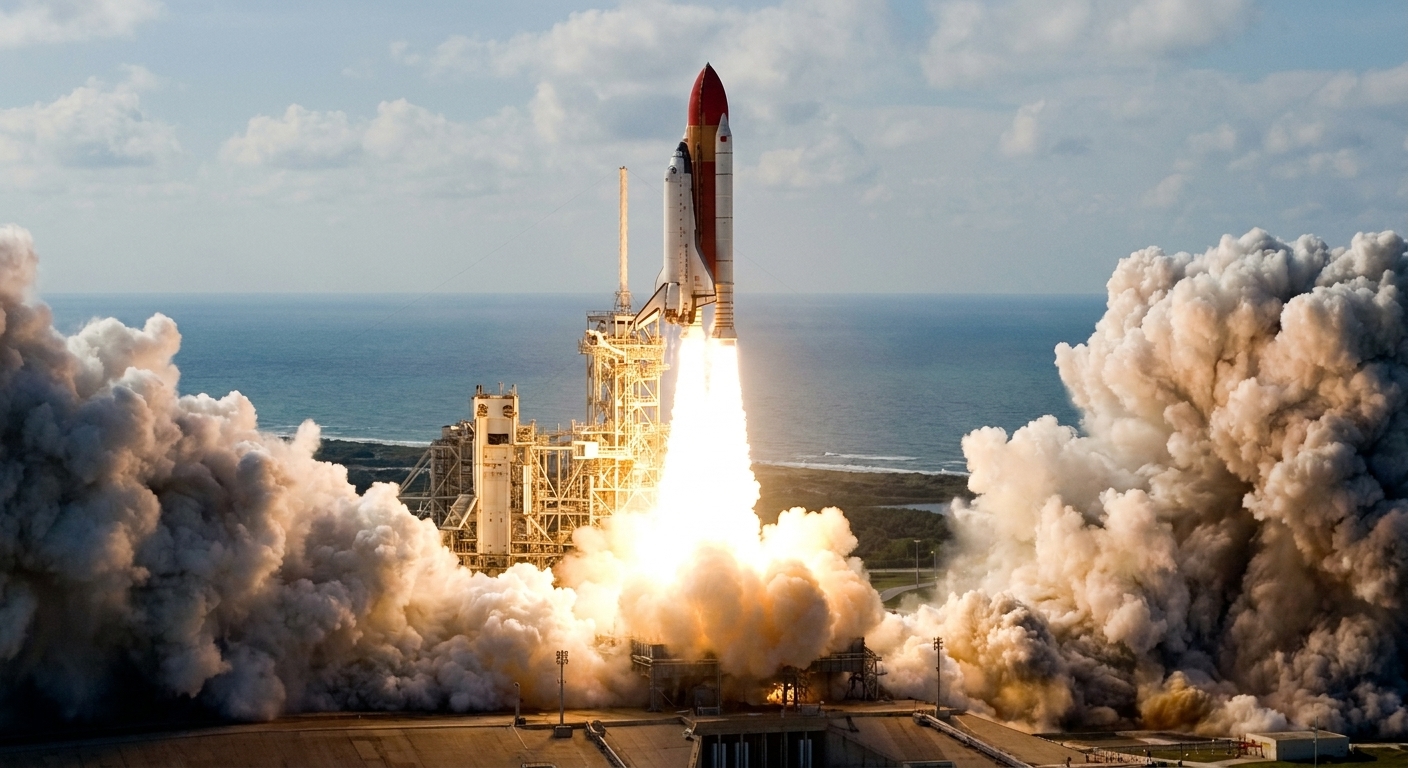
If you have ever watched a rocket launch and felt that low, chest-thumping rumble through your screen, you have already met the central character of spaceflight: propulsion. Rockets are basically controlled explosions with excellent manners. They burn propellant, throw mass out the back at high speed, and Newton’s third law does the rest.
But not all rockets “eat” the same kind of propellant. Some use solid propellant packed like a giant firework. Others use liquid propellants pumped like an industrial-scale squirt gun. Either approach can reach space. And either can be highly reliable when well engineered, well manufactured, and well operated. The tradeoffs shape everything from a mission’s budget to how finely a spacecraft can steer.
The core idea: propellant
First, a helpful vocabulary tweak. In rocket engineering, we usually say propellant, not fuel. For most chemical rockets, you need two ingredients:
- Fuel: the stuff that gets oxidized (burned).
- Oxidizer: the stuff that provides oxygen or another oxidizing chemical so combustion can happen without air.
In a jet engine, oxygen comes from the atmosphere. In a rocket, you have to bring your own. That is why rockets work in space and why propellant choices matter so much.
One quick clarity note: in many solid motors, the fuel and oxidizer are mixed together in one rubbery grain. In liquid engines, they are stored separately and only meet in the chamber.
How solid rockets work
A solid rocket motor is conceptually simple: a metal or composite casing filled with a solid propellant grain. Light it, and the exposed surface burns, producing hot gas that rushes through a nozzle to create thrust.
What is inside solid propellant?
Many modern solid motors use a mixture that includes:
- Oxidizer crystals (often ammonium perchlorate)
- Metal fuel (often aluminum powder) for extra energy
- Binder (a rubbery polymer) that holds everything together and also burns
Think of it like a very energetic synthetic rubber with oxidizer “sand” and metal “glitter” mixed in. Once ignited, it burns from the inside surfaces exposed to the combustion chamber.
Grain geometry is the throttle (sort of)
Since you cannot easily adjust how fast the chemistry burns, engineers “program” a solid motor’s thrust by shaping the propellant grain’s internal cavity. More burning surface area means more gas production and more thrust.
- A grain can be shaped to start strong and taper down.
- Or it can ramp up as surface area increases.
- Or aim for a relatively flat thrust curve by keeping surface area steady as it burns.
It is clever, but it is not the same as turning a knob mid-flight.
Strengths of solid rockets
- Mechanical simplicity: no turbopumps, fewer valves, fewer moving parts.
- High readiness: they can sit fueled for long periods, useful for missiles and some launch boosters.
- High thrust in a compact package: excellent for “get off the pad” power or short, punchy burns.
Limitations of solid rockets
- Limited controllability: once lit, they generally burn until they are done.
- Shutdown is hard: you can terminate thrust by destructive methods (like opening the casing), but that is not gentle or reusable-friendly.
- Manufacturing quality is everything: voids, cracks, or debonds in the grain can create unexpected burn surfaces, which can spike pressure.
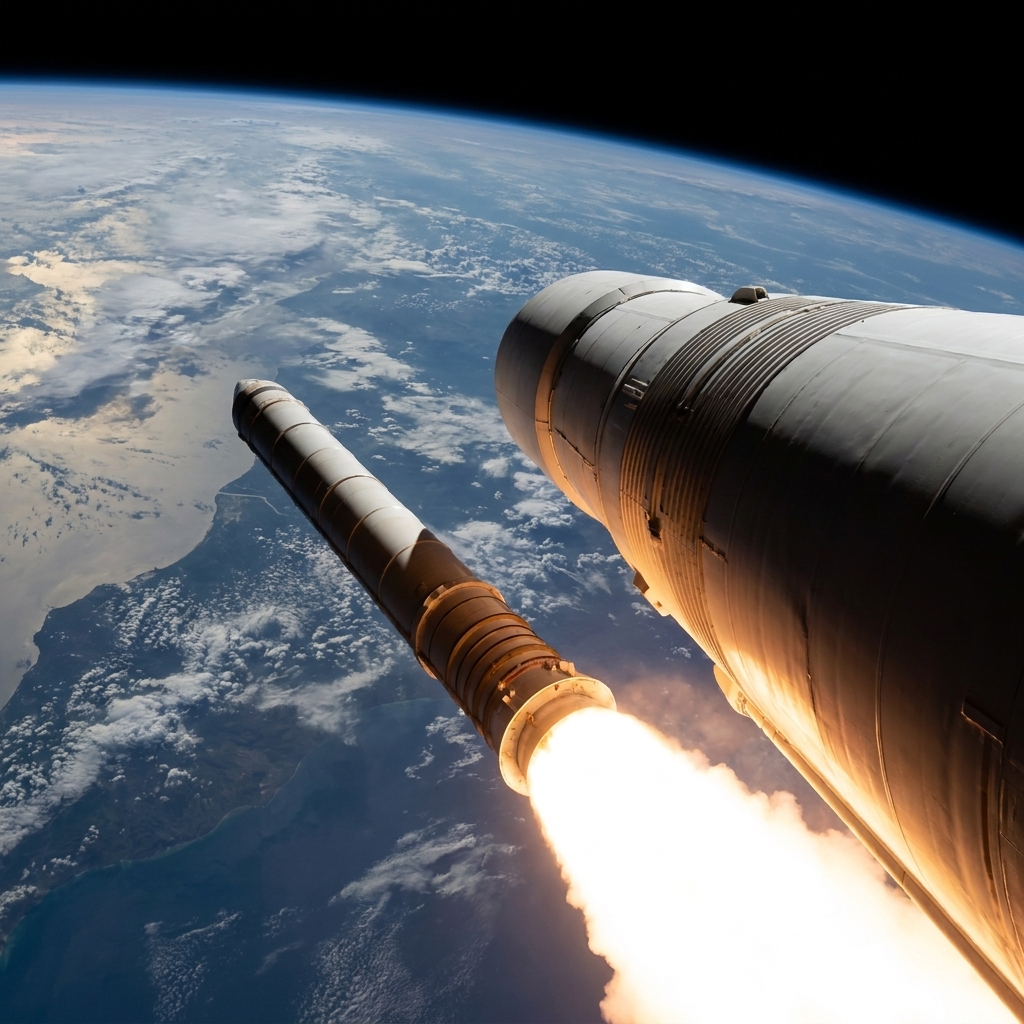
Solids are not helpless, though. Some vehicles use thrust vector control on solid boosters, such as a gimbaled nozzle or vanes in the exhaust. That lets you steer, even if you still cannot meaningfully throttle.
How liquid rockets work
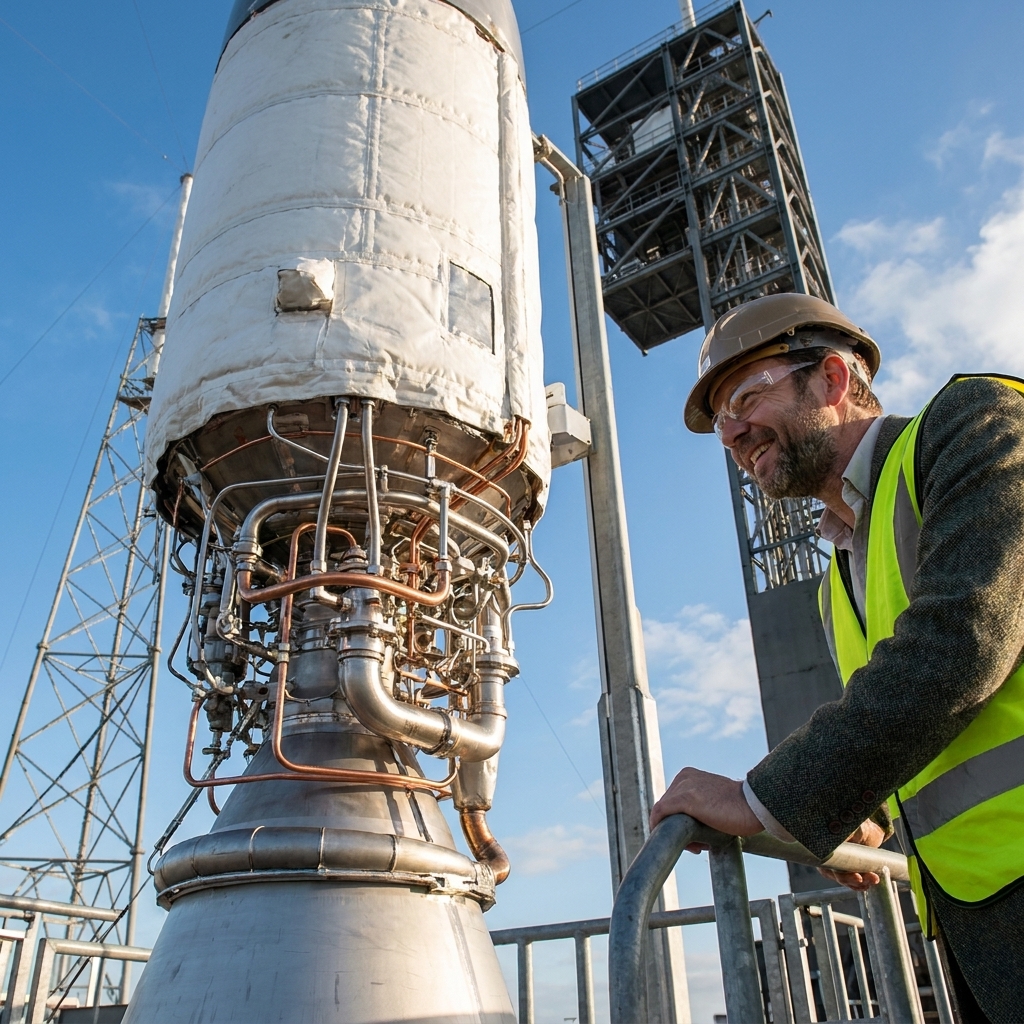
Liquid engines keep fuel and oxidizer in separate tanks, then feed them into a combustion chamber. That feed can be pressure-driven (simpler, often used on smaller spacecraft engines) or pump-driven using turbopumps (more complex, higher performance). When the propellants meet and ignite, you get high-temperature gas accelerated through a nozzle.
Common liquid propellant pairs
- LOX/RP-1: liquid oxygen and refined kerosene. A workhorse combo for many first stages.
- LOX/LH2: liquid oxygen and liquid hydrogen. Very efficient, but hydrogen is tricky to store.
- LOX/methane: gaining popularity for reusability and cleaner combustion compared with kerosene.
- Hypergolics (common for spacecraft): fuels and oxidizers that ignite on contact, great for reliable restarts and long storage, but often toxic.
Why liquids are so controllable
Because flow rates can be adjusted. That means liquid engines can often:
- Throttle up or down over a wide range
- Shut down on command
- Restart multiple times (depending on ignition system and propellant choice)
- Gimbal the engine for steering, with fine control authority
If solid rockets are like a pre-lit fireplace log, liquid engines are like a gas stove. More knobs, more plumbing, more things to check, but also more control.
Strengths of liquid rockets
- High performance potential, especially with advanced cycles and high chamber pressure
- Precision: throttle, shutdown, restart, and deep control for complex missions
- Mission flexibility: one engine can support multiple burns for orbit raising, rendezvous, or landing
Limitations of liquid rockets
- Complexity: turbopumps spin incredibly fast and handle cryogenic fluids, which is engineering on hard mode.
- More failure modes: valves, seals, pumps, lines, sensors, ignition systems.
- Handling challenges: cryogenics boil off, and some propellants are hazardous.

Efficiency: specific impulse
When people ask which rocket is “more efficient,” engineers usually reach for specific impulse, or Isp. It is a measure of how much impulse (total momentum change) you get per unit weight flow of propellant. Higher Isp means you get more total “oomph” from the same propellant weight.
In broad strokes, and with typical vacuum numbers:
- Solid motors: often around 240 to 290 seconds Isp.
- LOX/RP-1: often around 300 to 340 seconds Isp (higher in vacuum than at sea level).
- LOX/LH2: often around 430 to 460 seconds Isp.
Why do liquids often win? Better control of mixture ratio, higher chamber pressures in many designs, and propellant chemistry that can be tuned for performance. Hydrogen, in particular, produces very high exhaust velocity, which drives Isp upward.
But performance is not a single number. A slightly lower-Isp booster that is rugged and ready to go can be the right tool for the job.
Control and steering
Modern launches are less “point and pray” than most of us realize. A rocket is constantly adjusting its attitude, managing loads, and keeping the trajectory inside a tight corridor. Here is how propulsion choice affects that control.
Solids: strong, not subtle
- Thrust profile is largely pre-baked into grain geometry.
- Steering is possible on some boosters via thrust vector control, but you still cannot easily dial thrust down if the vehicle needs a gentler push.
- No easy restart once a burn is complete.
Liquids: the Swiss Army knife
- Throttle helps manage aerodynamic loads (like max-Q) and enables landing burns for reusable stages.
- Shutdown provides a safety and mission-control lever.
- Restart enables multi-burn upper stages and precise orbital insertion.
If you are trying to land a booster back on a drone ship, you want liquid engines. If you want a big kick for a short duration, a solid motor can be perfect.
Safety and risk
“Safer” depends on what phase you are talking about: manufacturing, storage, fueling, launch operations, or abort scenarios. Both systems can be engineered for high reliability, but they carry different risk profiles.
Solid rocket safety considerations
- Stored energy: a fueled solid motor is essentially a fully loaded engine waiting for ignition. This is great for readiness, but it demands careful handling.
- Grain defects: microscopic issues can become macroscopic problems under high pressure and heat.
- Limited shutdown: if something goes wrong after ignition, you cannot simply close a valve.
Liquid rocket safety considerations
- Hazardous fluids: cryogenic oxygen and hydrogen are extremely cold; oxygen-rich environments increase fire risk; some storable propellants are toxic and corrosive.
- Leak potential: plumbing-heavy systems must prevent and detect leaks.
- Turbomachinery: pumps operate under enormous stress, and failures can be energetic.
One subtle point: liquids can sometimes offer more operational control in an emergency, like throttling down or shutting off an engine. That does not eliminate risk, but it changes how failures can unfold.
Cost and reusability
This is where the conversation gets very modern, very fast.
Solids: cost-effective thrust, harder reuse
Solid motors are often cost-effective for delivering lots of thrust in booster roles, especially as strap-on boosters produced at scale. But reusability is not their natural habitat. Recovering and refurbishing solid hardware is possible, yet the propellant itself is consumed and the motor internals take a thermal beating.
Liquids: complex, reuse-friendly
Liquid engines are complex and can be expensive to develop, but they lend themselves to reusability because:
- You can throttle for landing.
- You can restart for multiple burns.
- Engines can be designed for inspection and refurbishment cycles.
That is a big reason many commercial launch providers favor liquid first stages today.
Where they show up
Solid rockets commonly power
- Booster stages that provide extra thrust early in ascent
- Military and rapid-response systems where long-term storage and quick launch matter
- Some upper-stage kick motors for short orbital adjustments
Liquid rockets commonly power
- Orbital-class first stages that benefit from throttle control
- Upper stages that need precise shutdown and sometimes restart
- Human-rated systems where controllability and abort integration are major design drivers
Hybrid rockets
Hybrids use a solid fuel and a liquid or gaseous oxidizer. They are attractive on paper because they can offer some throttling and shutdown capability while keeping a simpler solid fuel grain.
In practice, hybrids face challenges like fuel regression rates (how fast the solid fuel surface burns) and achieving high performance at scale. They are real and they fly, but they remain niche in orbital-class roles compared with mainstream solids and liquids.
Quick comparison
- Complexity: Solid (lower) | Liquid (higher)
- Throttle and restart: Solid (limited) | Liquid (strong)
- Typical efficiency (Isp): Solid (moderate) | Liquid (moderate to very high)
- Operational readiness: Solid (excellent) | Liquid (depends on propellant and design)
- Reusability fit: Solid (harder) | Liquid (better)
FAQ
Why do rockets need oxidizer?
Because there is no air in space. Most chemical rockets need an oxidizer to release energy through combustion. Rockets carry both fuel and oxidizer so they can operate anywhere from sea level to orbit.
Are solid rockets “more powerful”?
They can deliver very high thrust for their size, which is why they are excellent boosters. But “powerful” can mean thrust, total impulse, or efficiency. Liquids often win on controllability and, in many cases, efficiency.
Do liquid rockets always use cryogenic propellants?
No. Some liquids are storable at room temperature (often called storable propellants), though they may be toxic. Cryogenic propellants like liquid oxygen and liquid hydrogen offer great performance but require careful insulation and handling.
Which is safer for astronauts?
Human-rated design is a whole system problem, not just a propellant choice. Liquids offer more throttling and shutdown options, while solids can be very reliable but are harder to stop once ignited. Safety comes from redundancy, quality control, abort modes, and rigorous testing across the entire vehicle.
The takeaway
Solid and liquid rocket engines are not rivals so much as specialists. Solids are the sprinters: simple, muscular, and ready to fire. Liquids are the gymnasts: complex, precise, and capable of intricate routines like multiple burns and controlled landings.
The next time you watch a launch, listen for the story beneath the roar. Somewhere inside that flame is a carefully chosen tradeoff between chemistry, control, cost, and risk. That tradeoff is what turns a pile of metal and propellant into a machine that can, quite literally, leave the world behind.