When I taught physics, I used to tell my students that the brain is the most impressive “signal generator” we know. Roughly 86 billion neurons fire tiny electrical pulses, and somehow that living thunderstorm turns into a thought like, pick up the mug. Brain-computer interfaces, or BCIs, are our attempt to listen in on those signals and translate them into actions a machine can understand.
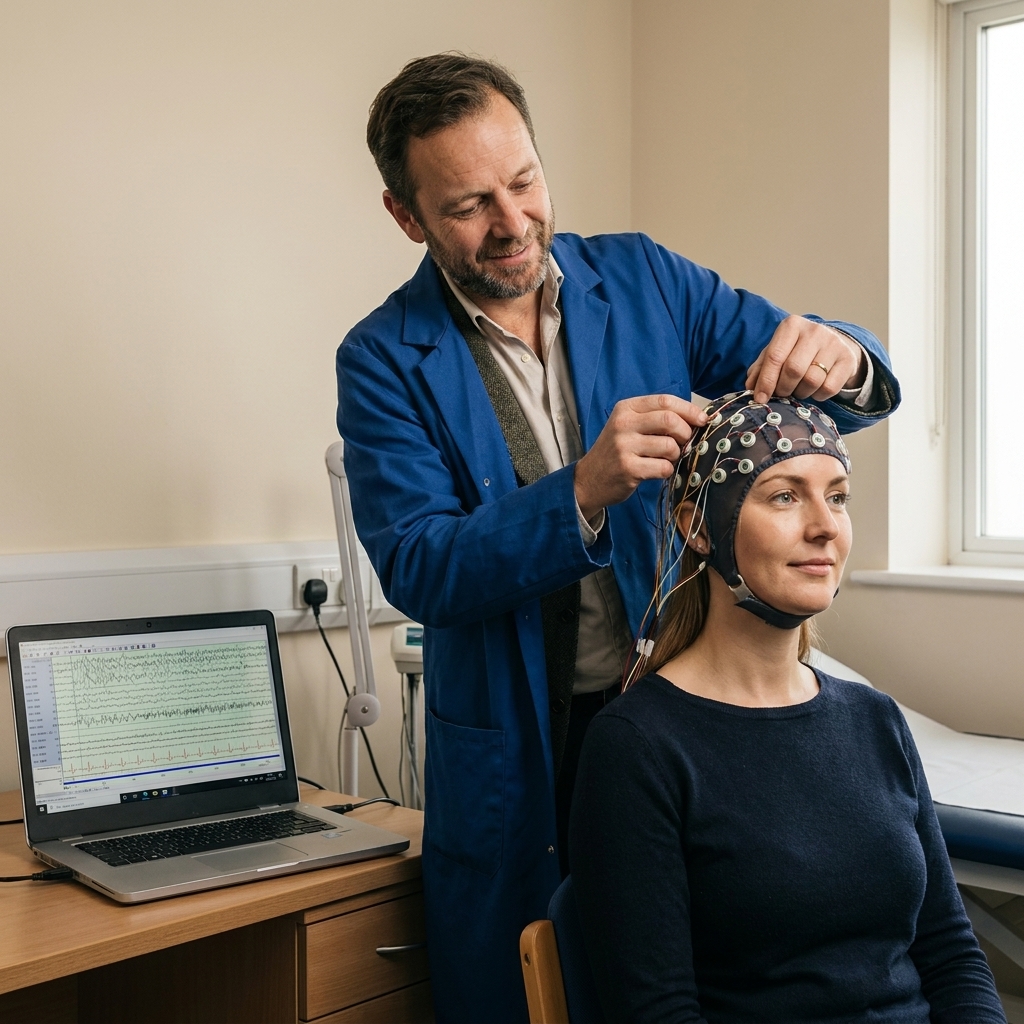
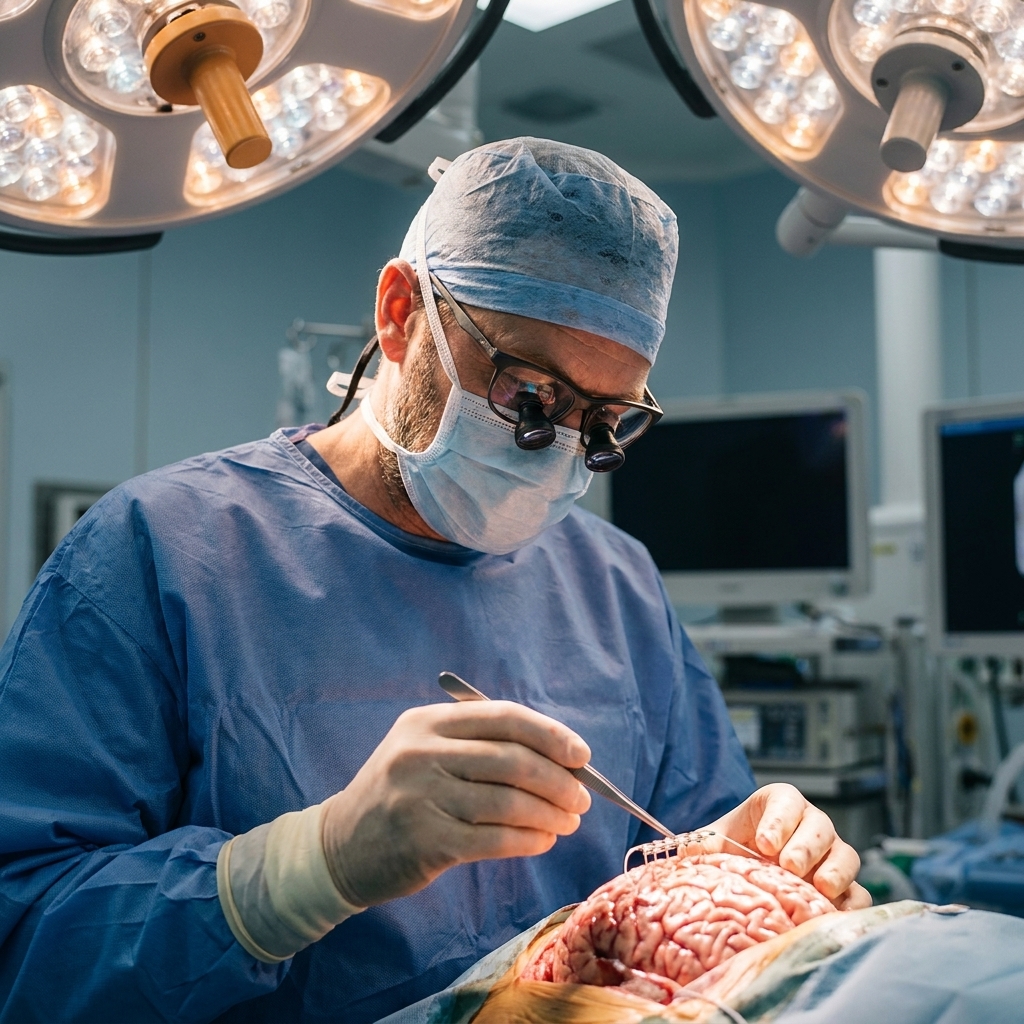
BCIs come in a few flavors. Some are noninvasive, like EEG caps that read brain activity through the scalp. Others are implanted, placing electrodes on the brain’s surface (often called ECoG) or inside the cortex for a cleaner, higher-bandwidth signal. Either way, the big idea is the same: measure neural activity, decode it with algorithms , and use it to control something in the world.
Below are 10 ways BCIs are already bridging the gap between mind and machine, restoring lost abilities, treating disorders, and nudging the edges of what human-computer interaction can be.
1) Movement after paralysis
One of the most powerful BCI applications is restoring voluntary movement for people with spinal cord injuries or neurodegenerative diseases. Here’s the key: in many spinal cord injuries, the brain can still generate a usable “movement plan,” but the message never reaches the muscles because the pathway through the spinal cord is damaged. That is often true, though not universal across every condition or stage of disease.
Implanted BCIs can decode intended movements from motor cortex activity and use that intent to drive:
- Robotic arms that reach, grasp, and rotate objects
- Computer cursors for clicking and selecting
- Functional electrical stimulation (FES), where controlled pulses activate a person’s own muscles to produce movement
Think of it like building a detour around a broken bridge: the neural “traffic” still exists, and we are rerouting it. In research demos, that can look as simple and profound as a participant moving a cursor to click an icon, or guiding a robotic gripper to pick up a bottle.
2) Thought to text
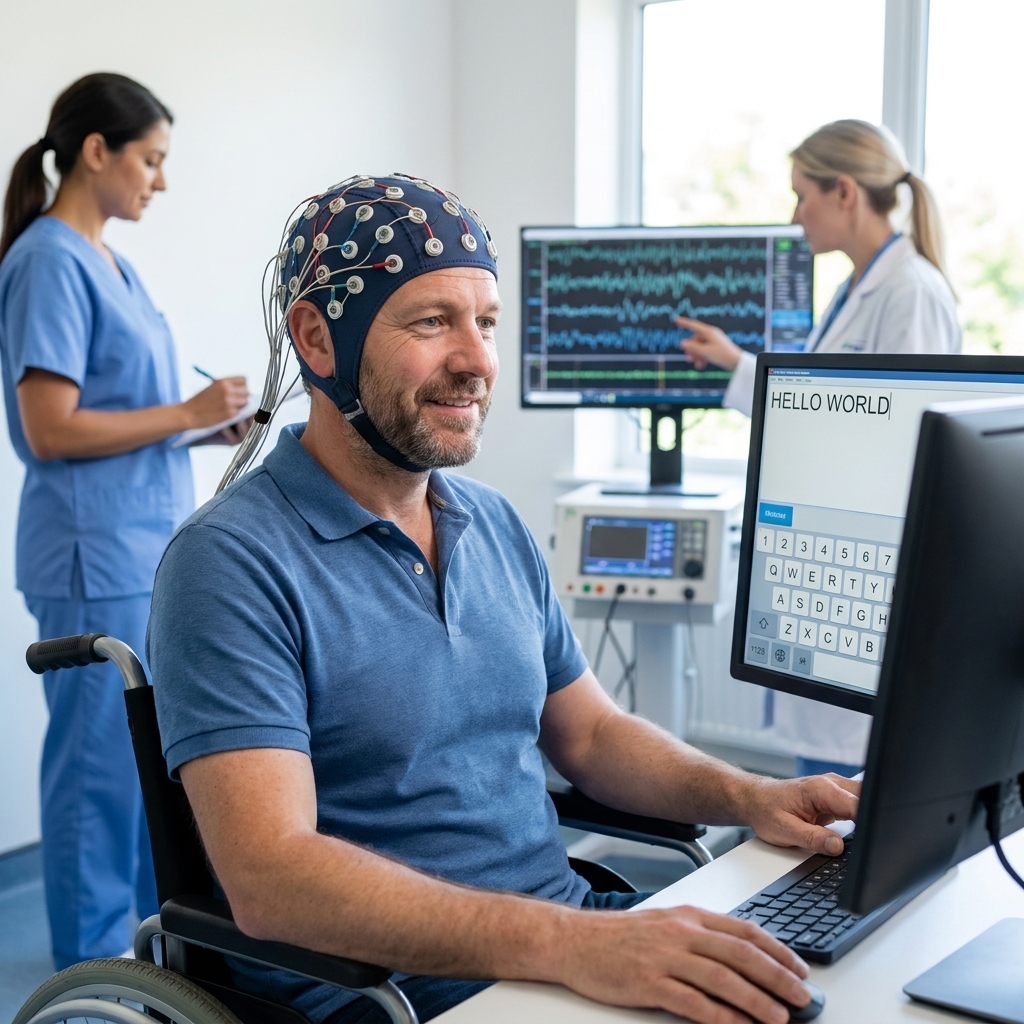
For people with severe paralysis, communication can become painfully slow, sometimes limited to eye movements or single-switch systems. BCIs aim to convert neural activity into text faster than many traditional assistive methods, and in small research cohorts, some systems have reached striking typing speeds.
There are a few approaches:
- Cursor typing: the user moves a pointer with neural signals and selects letters
- Handwriting decoding: the user imagines writing letters, and the BCI recognizes the neural patterns of those pen strokes
- Speech-related decoding: the system decodes neural activity linked to planning speech and uses it to produce text
It is not “mind reading” in the magical sense. It is pattern recognition trained on a specific person’s brain signals, often with lots of calibration. But when it works, it can be life changing.
3) Speech prostheses
Typing is great, but speech carries emotion and social ease in a way text rarely matches. Newer BCIs are working toward “neural speech prostheses” that translate brain activity into spoken words. Most of these systems are still research prototypes, often tested in controlled settings and sometimes with constrained vocabularies, but the trajectory is real.
Some systems decode:
- Intended words from activity in language and motor planning regions
- Articulator movements (jaw, tongue, lips) and then synthesize speech from those predicted movements
This second route is like reconstructing the music by tracking the musicians’ hands. If you can infer how the mouth would move, you can often generate speech that sounds more continuous and natural.
4) Touch feedback
Movement without feedback is like trying to pick up an egg while wearing thick oven mitts. You can do it, but you will crush a few eggs along the way.
Researchers have begun adding sensory feedback by stimulating somatosensory cortex with implanted electrodes. When a robotic hand touches something, sensors on the fingers can trigger carefully patterned stimulation in the brain, producing sensations described as pressure, tapping, or touch-like feelings in specific fingers.
This is a big deal because touch feedback can improve:
- Grip force control (not too hard, not too soft)
- Dexterity for delicate tasks
- Embodiment, the feeling that a tool is part of your body
5) Visual prosthetics
Vision is harder than touch, because the information bandwidth is enormous. Still, neurotechnology is exploring ways to restore partial vision to people who are blind by stimulating the visual pathway.
There are two main strategies:
- Retinal implants that stimulate surviving cells in the eye (important neural prosthetics, but not a BCI in the strict brain-computer sense)
- Cortical visual prostheses that stimulate the visual cortex directly to create patterns of light spots called phosphenes
Today’s results are typically low resolution, more like seeing a sparse constellation than a full image. But even that can help with navigation and object localization. As electrode technology improves, so does the potential “pixel count” the brain can interpret.
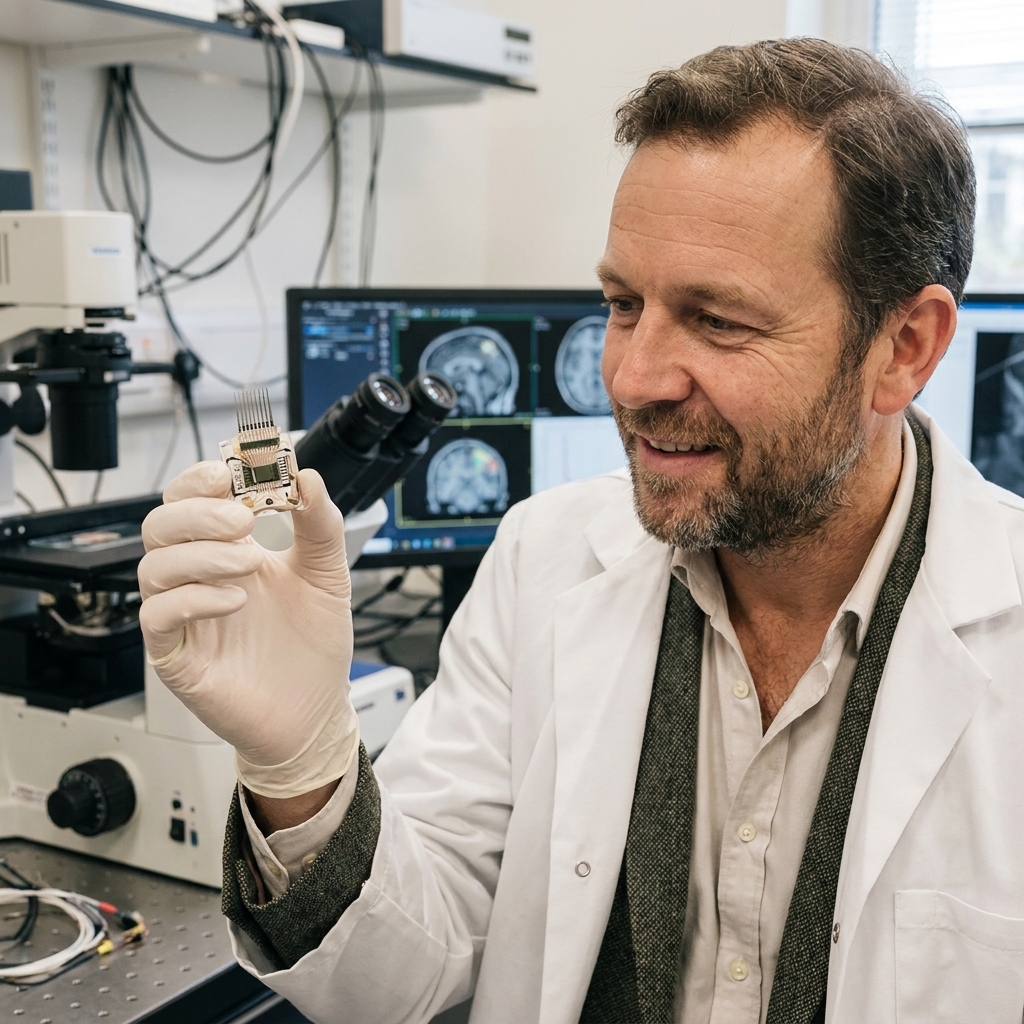
6) Treating brain disorders
Not all BCIs are about controlling external devices. Some are designed to modulate brain circuits that are misfiring.
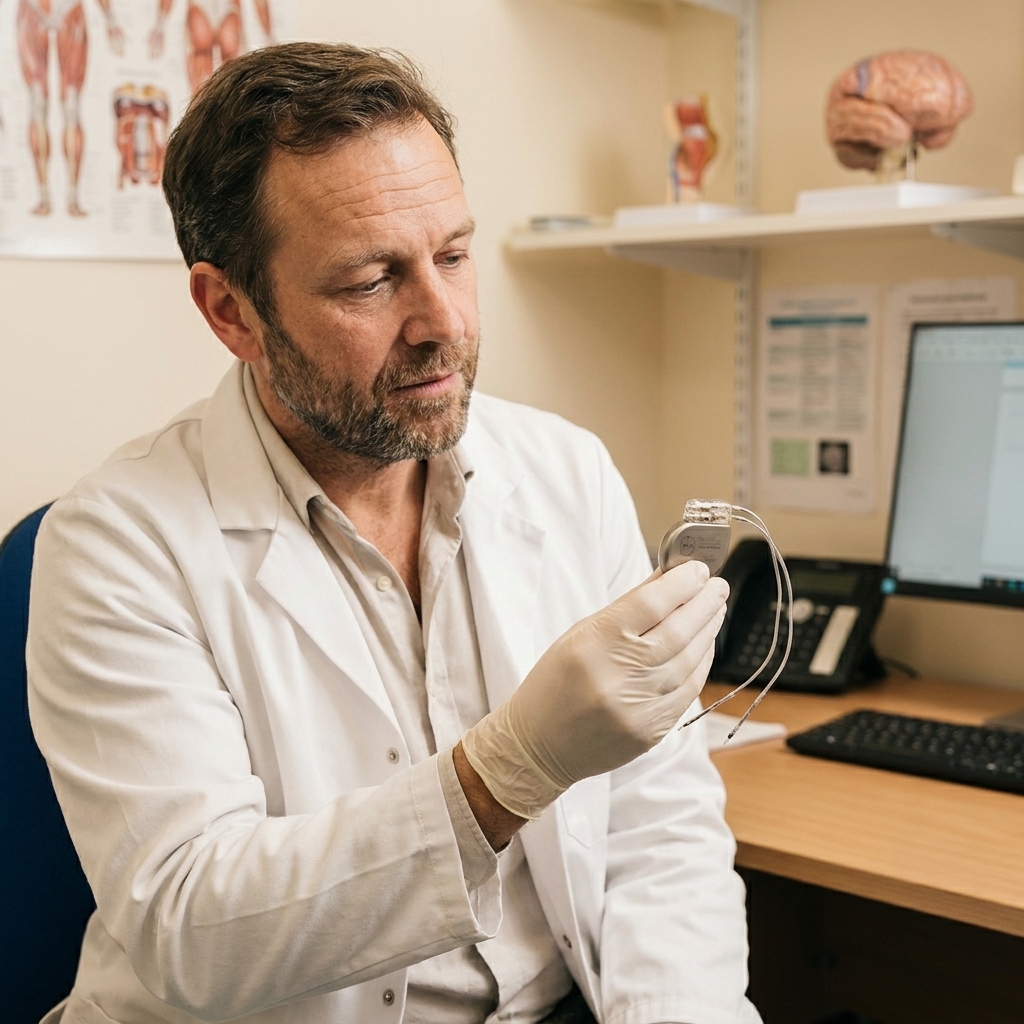
The most established example is deep brain stimulation (DBS) for Parkinson’s disease, essential tremor, and dystonia. Traditional DBS is usually open-loop, meaning it delivers stimulation according to programmed settings rather than continuously adapting to the brain’s moment-by-moment state.
But the field is moving toward “smart” stimulation, including systems that can listen for specific neural signatures and adjust stimulation accordingly. That brings us to the next step: closed-loop approaches, where the device listens and responds.
7) Closed-loop control
Traditional stimulators can be a bit like a sprinkler on a timer: it runs whether the lawn is dry or already soaked. Closed-loop BCIs aim to be more like a thermostat. They detect a neural signature linked to symptoms and adjust stimulation on the fly.
Potential advantages include:
- Better symptom control during the moments it is needed most
- Fewer side effects by avoiding unnecessary stimulation
- Longer battery life and less frequent surgeries for replacement
Closed-loop approaches are being explored for epilepsy, movement disorders, and, in research settings, conditions like depression and obsessive-compulsive disorder. The science is still evolving, and brains are wildly individual, but the feedback-control concept is solid engineering.
8) Stopping seizures
Epilepsy is one area where brain sensing has immediate value. Some implanted systems can detect early seizure activity or abnormal patterns that can lead into seizures and respond by delivering stimulation intended to disrupt runaway activity before it spreads.
It is not perfect, and it does not work for everyone. But for certain patients who do not respond to medication, responsive neurostimulation can reduce seizure frequency and severity over time. It is a tangible example of BCIs acting less like a gadget and more like a guardian.
9) Better rehab loops
After a stroke or injury, rehab is partly about teaching the brain new routes. BCIs can support this by turning therapy into a tight feedback loop: the system detects an attempted movement in the brain and immediately reinforces it with a visual cue, a robotic assist, or muscle stimulation.
That timing matters. The brain is a learning machine, and it learns best when cause and effect line up. If the moment you intend to move is paired with a successful movement, you strengthen the neural pathway. Over many repetitions, that can help rebuild function.
Some studies use noninvasive BCIs for rehab, which is appealing because it avoids surgery, even if the signal is noisier.
10) New interfaces
Now for the part that gets people excited, nervous, or both: augmentation. In the near term, BCIs could offer hands-free control for people who are not disabled, especially in environments where hands and eyes are busy. Think pilots, surgeons, or industrial workers who need another channel of control.
More realistically, the first broad “augmentation” wins may look like cognitive support tools that detect mental states and adapt, though these signals can be noisy, highly context-dependent, and prone to false positives, especially with noninvasive sensors.
- Attention monitoring that reduces distractions when focus drops
- Fatigue detection for safety-critical work
- Adaptive learning systems that slow down or change explanations when brain signals suggest confusion
This is where my teacher brain lights up. Imagine a tutoring system that notices the “almost there” pattern right before an aha moment and nudges you with the perfect hint. Then imagine it getting it wrong and nudging at the worst time. That is why careful design matters as much as clever decoding.
What is routine vs experimental
One expectation-setting note I wish every article included: some neurotech is already standard clinical care, and some is still very much in the lab.
- Clinically established: DBS for certain movement disorders, and implanted responsive neurostimulation for some cases of epilepsy.
- Active research and early trials: implanted motor BCIs for robotic arms or FES, neural typing and speech prostheses, sensory feedback through cortical stimulation, and cortical visual prostheses.
That does not make the research less meaningful. It just keeps “this exists” from being confused with “you can get this at your local hospital tomorrow.”
What is still hard
BCIs are impressive, but they are not magic, and a few stubborn challenges keep showing up in almost every lab and clinical trial:
- Signal stability: implanted electrodes can shift slightly or the brain can change around them, altering signals over time
- Calibration burden: many systems require training sessions tailored to one user
- Bandwidth limits: we are sampling a tiny fraction of the brain’s activity
- Safety and longevity: implants must last for years without infection or hardware failure
- Privacy: neural data is deeply personal, even when it is not decoding “thoughts” in a literal sense
In other words, we are building radios for a station that is constantly changing frequencies while we are still learning the language of its songs.
Ethics and trust
Privacy is only one piece of the ethics puzzle. There is also informed consent, especially for vulnerable patients who may feel pressure to try anything. There is data ownership and security, because neural data deserves the same seriousness we give medical records, and more. And there is access and bias, because algorithms trained on small, non-representative groups can perform unevenly, and high-cost implants can widen the gap between who gets help and who gets left out.
If BCIs are a bridge, then trust is the guardrail. Without it, people will not cross.
BCIs FAQ
Are BCIs reading your thoughts?
Not in the sci-fi sense. Most BCIs decode specific, trained patterns linked to tasks like moving a cursor, imagining handwriting, or attempting speech. They do not pull spontaneous secrets from your mind like a movie villain.
Do BCIs require surgery?
Not always. EEG-based BCIs are noninvasive, but they usually provide lower-resolution signals. The most capable systems today often use implanted electrodes, which require neurosurgery.
Who benefits most right now?
At the moment, the clearest benefits are for people with severe movement disorders treated with DBS and certain cases of epilepsy treated with responsive neurostimulation. For communication and motor restoration, the most impressive results are largely in research studies and early clinical trials. Consumer-grade “brain gadgets” exist, but they generally do far less than medical or research BCIs.
The bridge is stronger
Every time I read a new BCI paper, I picture two shores. On one side: the silent electrical language of neurons. On the other: the mechanical world of cursors, prosthetic hands, speech synthesizers, and stimulators. BCIs are the bridge builders, laying down planks one careful experiment at a time.
We are still early. But early is not the same as imaginary. For many patients, BCIs have already moved from “someday” to “this helped me today,” and that is the kind of science worth paying attention to.